What’s actually slowing this PC down?
Pick the symptom - the matching free tool is one click away.
The short answer: Consumer Reports’ current “20” article is not a general ranking of the 20 most reliable SUVs of every size. It is a selection of 20 recommended, fuel-efficient 2026 subcompact and compact SUVs—including gasoline, hybrid, and plug-in hybrid models—that achieve at least 28 mpg overall. Consumer Reports orders those vehicles by Overall Score, not by the same reliability ranking used in its broader SUV article.
2026 update: Consumer Reports also published a separate broad article covering 26 reliable SUVs across compact, midsized, three-row, luxury compact, luxury midsized, and luxury three-row categories. That broader article is listed by reliability score. The two articles should not be treated as interchangeable.
That distinction matters when shopping. A compact hybrid that scores well overall may be ideal for commuting, while a larger SUV from the broad list may be the better choice for towing, cargo space, or a third row. In either case, a Consumer Reports reliability prediction is a useful forecast—not a promise that every individual SUV will be trouble-free.
Why there are two different Consumer Reports “most reliable SUV” lists
The title commonly associated with this topic reflects Consumer Reports’ narrower compact-SUV article, but the publication’s current SUV coverage has two different purposes:
Do these 3 things before closing this tab:
1Fix the driver behind crashes, sound loss and screen glitches2Repair Windows errors before they cause bigger problems3Scan for outdated or missing drivers - takes under a minute#1 Best Overall

- CEL Doctor: The ANCEL AD310 is one of the best-selling OBD II scanners on the market and is recommended by Scotty Kilmer, a YouTuber and auto mechanic. It can easily determine the cause of the check engine light coming on. After repairing the vehicle's problems, it can quickly read and clear diagnostic trouble codes of emission system, read live data & hard memory data, view freeze frame, I/M monitor readiness and collect vehicle information
- Sturdy and Compact: Equipped with a 2.5 foot cable made of very thick, flexible insulation. It is important to have a sturdy scanner as it can easily fall to the ground when working in a car. The AD310 OBD2 scanner is a well-constructed mechanic tool with a sleek design. It weighs 12 ounces and measures 8.9 x 6.9 x 1.4 inches. Thanks to its compact design and light weight, transporting the device is not a problem. The buttons are clearly labelled and the screen is large and displays results clearly
- Accurate Fast and Easy to Use: The AD310 scanner can help you or your mechanic understand if your car is in good condition, provides exceptionally accurate and fast results, reads and clears engine trouble emission codes in seconds after you fixed the problem. This device will let you know immediately and fix the problem right away without any car knowledge. No need for batteries or a charger, get power directly from the OBDII Data Link Connector in your vehicle
- OBDII Protocols and Car Compatibility: Many cheap scan tools do not really support all OBD2 protocols. AD310 scanner as it can support all OBDII protocols such as KWP2000, J1850 VPW, ISO9141, J1850 PWM and CAN. This device also has extensive vehicle compatibility with 1996 US-based, 2000 EU-based and Asian cars, light trucks, SUVs, as well as newer OBD2 and CAN vehicles both domestic and foreign. Pls confirm with our customer service whether it is compatible with your vehicle before purchasing
- Home Necessity and Worthy to Own: This is an excellent code reader to travel or home with as it weighs less and it is compact in design. You can easily slide it in your backpack as you head to the garage, or put it on the dashboard, this will be a great fit for you. The AD310 is not only portable, but also accurate and fast in performance. Moreover, it covers various car brands and is suitable for people who just need a code reader to check their car
| Consumer Reports coverage | What it includes | How vehicles are ordered | Best for |
|---|---|---|---|
| 20 Most Reliable and Fuel-Efficient 2026 Compact SUVs | Recommended subcompact and compact SUVs, including gas, hybrid, and plug-in hybrid models, that achieve at least 28 mpg overall | Overall Score | Shoppers who want manageable size, fuel economy, and reliability together |
| Consumer Reports’ 26 Most Reliable SUVs for 2026 | Compact, midsized, three-row, luxury compact, luxury midsized, and luxury three-row SUVs | Reliability score | Shoppers comparing SUVs across sizes and purposes |
The 20-vehicle article was updated March 13, 2026. The broader 26-SUV article was published February 19, 2026. Both are current 2026 references, but they answer different shopping questions.
The complete model-and-score table is not exposed in the public search-visible text supplied for this article. For that reason, it would be misleading to reproduce a supposedly definitive ranked list from an unverified secondary summary. Consumer Reports subscribers should confirm the exact model year, powertrain, reliability rating, Overall Score, and recommendation status in the current Consumer Reports ratings interface before treating any model as one of the official 20.
A model name alone is not precise enough. The rating for a 2026 hybrid, for example, should not automatically be applied to the gasoline version, an earlier generation, or a redesigned 2027 model.
What Consumer Reports actually measures
Consumer Reports’ predicted-reliability rating is primarily based on owner-reported problems. Its annual auto survey asks owners what went wrong during the previous 12 months. The survey covers 20 potential problem areas, including:
- the engine and electric motor;
- the transmission;
- in-car electronics;
- infotainment and connectivity systems; and
- other mechanical, electrical, climate-control, and body systems.
Consumer Reports analyzes vehicle histories, reported problems, and repairs, then weights problems according to severity. The 2026 broad SUV coverage says the relevant annual surveys contain information on more than 380,000 vehicles. The result is a model-level prediction of how likely a vehicle is to experience problems compared with other vehicles.
That is different from a long-term ownership guarantee. Survey results describe patterns across a population of vehicles; they cannot predict whether a particular SUV has been in an accident, missed maintenance, developed a warning light, or received a defective replacement part.
Predicted reliability is not the same as Consumer Reports’ Overall Score
One of the easiest mistakes is to treat “reliable” and “recommended” as synonyms. They are related, but Consumer Reports evaluates them separately.
Predicted reliability estimates the likelihood and severity of problems. Overall Score combines several factors, including:
Rank #2
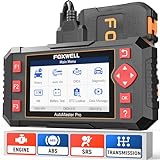
- [Easy to Use—Work Out of the Box] + [FOXWELL 2026 New Version] FOXWELL NT604 Elite scan tool is the 2026 new version from FOXWELL, designed for car owners who want to figure out the cause of issues before fixing car problems by scanning common systems like ABS, SRS, engine, and transmission. The NT604 Elite obd2 scanner diagnostic tool comes with the latest software—no need to waste time downloading software first. Plug the scanner into the OBDII port with OBDII cable to start the diagnosis.
- [Affordable] + [Reliable Car Health Monitor] Will you be confused what happens when the warning light of ABS/SRS/transmission/check engine flashes? Instead of taking your cars to dealership, this FOXWELL scanner will help you do a thorough scanning and detection for your cars and pinpoint the root cause. Note:The device is a diagnostic tool, not a repair tool. To turn off a warning light, you must first physically repair the issue causing it. Only then can the scanner be used to clear the corresponding fault code.
- [5 in 1 Car Diagnostic Scanner] Compared with obd scanners (50-100), NT604 Elite code scanner not only includes their OBDII diagnosis but also serves as ABS/SRS scanner, transmission and check engine code reader. When it’s an odb2 scanner, you can use it to check if your car is ready for annual test through I/M readiness menu. In addition, live data stream, built-in DTC library, data play back and print, all these features are a big plus for it. Note: doesn't support maintenance functions like reset or relearn. For the SRS system, NT604 Elite can read and clear common fault codes not caused by a crash, but crash/collision data cannot be cleared.
- [Fantastic AUTOVIN] + [No extra software fee] Through the AUTOVIN menu, this NT604 Elite car scanner allows you to get your V-IN and vehicle info rapidly, no need to take time to find your V-IN and input one by one. What's more, the NT604 Elite ABS SRS scanner supports 60+ car brands from worldwide (America/Asia/Europe). You don’t need to pay extra software fee. AUTOVIN may not work on some older vehicles or certain vehicle brands. If AUTOVIN fails, please input the vin code manually or go to the Diagnostic Menu to select your vehicle model.
- [Solid protective case KO plastic carrying bag] + [Lifetime update] Almost all same price-level car scanner diagnostic tool only offers plastic bag to hold the scanner.However, NT604 Elite automotive scanner is equipped with solid protective case, preventing your obd2 scanner from damage. Then you don’t need to pay extra money to buy a solid toolbox.
- road-test performance;
- predicted reliability;
- owner satisfaction;
- standard or available safety equipment; and
- crash-test results when available.
Consumer Reports’ current broad SUV list is restricted to vehicles that performed well in road tests and meet its standards for recommendation, reliability, and safety. The narrow 20-SUV article also identifies its vehicles as recommended and average-or-better for predicted reliability, but it ranks them by Overall Score rather than presenting the broad article’s reliability-score order.
In practical terms, an SUV can be highly reliable but less appealing in a road test, less satisfying to owners, or less well equipped than another model. Conversely, a vehicle with a strong driving experience may not be the best reliability choice.
How to use the two lists by shopping need
Choose the compact and fuel-efficient list for everyday efficiency
The 20-SUV selection is the more relevant starting point if you want a vehicle that is easy to park, economical to operate, and large enough for ordinary family or commuting duties. It includes both subcompact and compact SUVs, so “compact” in the article title does not mean every vehicle has identical interior space.
The 28-mpg threshold is a requirement of that Consumer Reports selection. Do not assume it is an EPA rating for every trim or powertrain; verify the specific vehicle’s fuel-economy figures, equipment, and drivetrain before buying.
Free tools Windows power users keep installed
One-click scans. No signup required.
Compact SUVs also tend to involve fewer compromises than larger models for urban driving, but they may offer less rear-seat room, cargo capacity, towing ability, and third-row flexibility.
Use the broad 26-SUV coverage for family size and capability
The broad list is the better reference if you are comparing different SUV classes. It covers two-row midsized SUVs as well as three-row models and luxury categories. This lets you weigh reliability against the reason you need an SUV in the first place:
- Compact: easier maneuverability and usually lower purchase and running costs, but less room than a midsized SUV.
- Midsized two-row: a useful middle ground for passengers, cargo, and highway comfort.
- Three-row: more seating flexibility, though the third row can reduce cargo space and increase vehicle size and operating costs.
- Luxury compact or midsized: more features and refinement, but potentially higher repair, tire, insurance, and maintenance expenses.
- Luxury three-row: the most space and equipment in the luxury group, usually with the greatest ownership-cost exposure.
Reliability should be one filter, not the entire decision. A vehicle that scores well but cannot carry your passengers, fit your garage, tow your trailer, or handle your winter roads is not a good purchase for your needs.
Powertrain trends: useful context, not a rule
Consumer Reports’ December 2025 reliability reporting found that hybrids generally had fewer problems than gas-only vehicles in that survey. Electric vehicles and plug-in hybrids tended to report more issues. That is a population-level finding, not a verdict on every individual model.
Rank #3
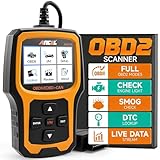
- Understand Your Check Engine Light – The ANCEL AD410 OBD2 scanner helps everyday drivers quickly read and clear engine-related fault codes, view code definitions, and understand why the check engine light is on before visiting a repair shop. With 42,000+ built-in DTC lookups, this car code reader helps reduce guesswork and makes basic vehicle diagnostics easier for beginners and DIY users
- Full OBD2 Diagnostics Made Simple – More than a basic engine code reader, this OBD2 scanner diagnostic tool supports key OBDII functions including reading/clearing codes, live data, freeze frame, I/M readiness, O2 sensor test, EVAP test, vehicle information, and MIL status. It helps you check your car’s condition, verify repairs after the issue is fixed, and communicate with mechanics more confidently
- Live Date & Real-time Vehicle Insights – View real-time engine data such as RPM, coolant temperature, fuel trim, oxygen sensor readings, and other available OBD2 parameters directly on the screen. These live data readings help you better understand how your vehicle is running, spot abnormal patterns, and make more informed repair decisions instead of relying only on a warning light
- Smog Check Readiness At A Glance – Use the I/M readiness function before a smog check or emissions inspection to see whether your vehicle’s monitors are ready. This OBD2 code scanner helps you confirm if recent repairs have brought the system back to a ready state, reducing the chance of failed inspections, retests, wasted trips, and unnecessary inspection fees
- Works With Most OBD2 Vehicles – Compatible with most 1996 and newer U.S.-based OBD2 cars, SUVs, and light trucks, as well as many 2000 and newer EU/Asian OBD2 vehicles. Supports major OBDII protocols including CAN, ISO9141, KWP2000, J1850 VPW, and J1850 PWM. This automotive diagnostic scanner is designed for wide vehicle coverage; please check compatibility with your vehicle before purchase
Several factors can explain why drivetrain type alone is not enough:
- A mature hybrid system may have a stronger track record than a newly introduced gas engine.
- A plug-in hybrid combines electric and gasoline systems, potentially increasing system complexity even while reducing fuel use.
- A new infotainment platform or driver-assistance system can create reliability complaints unrelated to the basic engine.
- Different trims and powertrains can use different transmissions, batteries, cooling systems, and electronics.
Compare the exact powertrain in the exact model year. Do not conclude that every hybrid is more reliable than every gas SUV, or that every EV or plug-in hybrid is unreliable.
Be careful with redesigned SUVs
A strong history for an outgoing generation should not automatically be carried over to a redesigned SUV. A redesign often introduces a new body, electrical architecture, engine, transmission, software, or driver-assistance system at the same time. Consumer Reports notes that a redesign year can carry additional reliability risk because the vehicle has been significantly re-engineered.
The 2026 Honda Passport is an example of why model-year precision matters: Consumer Reports identifies 2026 as a redesign year for that SUV. That does not prove the Passport will be unreliable. It means shoppers should interpret any long-term prediction with more caution than they would for a mature carryover design and should examine the 2026 rating specifically.
Recommended Free Tools
When considering a first-year redesign, ask:
- Does the prediction rely on enough data from the new generation?
- Are the engine and transmission shared with an established model?
- Has the manufacturer issued technical updates or recalls?
- Would you rather buy the final year of the previous generation, if its condition and safety equipment are acceptable?
- Does the warranty reduce your financial exposure if an early-production problem appears?
Brand reputation helps narrow the search—but not choose the SUV
Consumer Reports’ 2026 brand context places Toyota first, Lexus third, and Honda fourth for new-car reliability. That is useful background, but it is not a substitute for checking the individual model. Consumer Reports explicitly cautions that reliability can vary substantially within the same brand.
Toyota’s current SUV lineup includes the Corolla Cross, RAV4, Grand Highlander, 4Runner, Highlander Hybrid, Land Cruiser, and Sequoia. Honda’s lineup includes the HR-V, CR-V, Pilot, Passport, and Prologue. Lexus, Toyota’s upscale brand, offers the UX, NX, RX, TX, GX, and RZ families, including hybrid and plug-in hybrid variants.
Those lineup and brand facts do not mean every SUV in one of those families belongs in the current 20-vehicle list. They also do not mean a Toyota or Lexus will necessarily be cheaper to own than a lower-ranked brand. Lexus, for example, can score well for reliability while still carrying luxury-brand maintenance and repair costs.
Reliability versus total ownership cost
A reliability score estimates the likelihood of problems. It does not answer every cost question. Before choosing between two recommended SUVs, compare:
Rank #4

- Multi-Functions - Practical Multi-Functions OBD2 code reader features built-in OBD2 DTC lookup library, which help you to determine the cause of the engine light, read code, erase code, view freeze frame, I/M ready, vehicle information, data flow, real-time curve, get vehicle speed information, calculate load value, engine coolant temperature, get engine speed.
- Wide Capability - Supports 9 protocols compatible with most 1996 US-Based, 2000 EU-Based and Asian cars, and newer OBD II & CAN domestic or import vehicles. Supports 6 languages - English,German, Dutch, Spanish, French, Italian.
- 2.8" LCD Display - Designed with a clear display 2.8" Large LCD screen - white backlight and contrast adjustment. No need any battery or charger, OBD reader gets the power directly from your vehicle through the OBDII Data Link Connector.
- Compact Design - Car diagnostic scanner is equipped with a 2.5 feet long cable and made of a very thick flexible insulator.There are 6 buttons on OBD2 Scanner:scroll up/down,enter/exit and buttons that quick query VIN vehicle number& the DTC fault code.
- ABS / Airbag codes NOT Supported - It is able to read and clear check engine information which is part of OBDII system, but it cannot work with non-OBDII systems, including ABS / Airbag / Oil Service Light, etc.
- purchase price and financing;
- insurance premiums;
- fuel or charging costs;
- tire size and replacement price;
- scheduled maintenance;
- warranty coverage and exclusions;
- brake, battery, and suspension replacement costs;
- repair-shop availability in your area; and
- expected resale value.
Luxury vehicles deserve particular caution. A high reliability rating may mean fewer failures, but it does not make luxury tires, body panels, electronics, or dealer labor inexpensive. Hybrid and plug-in hybrid ownership also deserves a warranty and battery-system review, especially for a used vehicle.
Independent reader supportYour contribution helps us test, update, and keep practical guides available for everyone.A pre-purchase checklist for a reliable SUV
1. Confirm the exact vehicle
Write down the model year, generation, trim, engine, drivetrain, and transmission. Check that the Consumer Reports page you are using matches all of them. Reliability information for a two-wheel-drive version should not automatically be treated as identical to an all-wheel-drive or hybrid version.
2. Check open recalls by VIN
For a used SUV in the United States, run the vehicle identification number through the National Highway Traffic Safety Administration’s recall lookup. An individual VIN check can identify unrepaired recalls that a model-level reliability rating cannot. NHTSA states that open recall repairs are performed free of charge through the manufacturer’s dealership network.
A clean reliability forecast does not eliminate the need for a VIN check. Recall status changes over time, and two SUVs of the same model and year can have different repair histories.
The Tool Desk
Outbyte Driver Updater FREEFix the driver behind crashes, sound loss and screen glitchesFind Drivers →Outbyte PC Repair FREEClear out junk files and repair common Windows errorsFree Scan →3. Get a vehicle-history report
A vehicle history report can add accident, title, mileage, and service-history information to your research. It is especially useful when comparing several used SUVs or a vehicle priced below the local market.
Use the report as supplemental evidence, not as proof that the SUV is mechanically sound. History databases may not contain every accident or repair, and they do not replace manufacturer service records or an independent inspection.
4. Arrange an independent inspection
For a used SUV, an independent pre-purchase inspection is often more valuable than arguing over a small difference in predicted-reliability score. Have a qualified technician inspect the engine, transmission, suspension, brakes, underbody, cooling system, battery system where applicable, diagnostic codes, fluid leaks, and evidence of collision repair.
This step is particularly important when the vehicle has incomplete records, warning lights, uneven tire wear, visible body damage, a redesign-year history, or a seller who will not allow a cold start and extended test drive.
Best Value

- 【Diagnose Check Engine Light in Seconds – No Mechanic Needed】The FOXWELL NT301 OBD2 scanner instantly reads & clears engine fault codes (DTCs) with one click. Simply plug into the 16-pin DLC port, turn ignition on, and get accurate results within seconds—No prior car knowledge required. Save hundreds on dealership fees by knowing exactly what’s wrong before you visit a shop. The #1 choice car scanner for DIYers and car owners who want to take control of their vehicle’s health
- 【Clear & Reset CEL with Confidence】Unlike cheap code readers that just erase codes temporarily, NT301 works like all professional vehicle code readers: It clears the check engine light only after you’ve fixed the underlying issue. If the problem isn’t fully repaired, the fault code will reappear. So you’ll never get a false pass. Use the foxwell scanner to verify your repair work and drive with peace of mind
- 【Sm-og Check Helper – Know Your Pass/Fail Status Before the Test】With dedicated one-click I/M readiness hotkeys and a simple Red-Yellow-Green LED indicator, you’ll instantly know if your vehicle is ready for annual testing. Built-in speaker provides clear audio feedback. No guesswork—just confidence before you head to the test center. One less thing to worry about when inspection day comes
- 【Advanced OBDII Modes – O- 2 Sensor & EVAP Testing】NT301 go beyond basic code reading with enhanced OBD2 modes. Run an EVAP system check to assess fuel tank condition, and use the O- 2 sensor test to optimize air-fuel ratio, boosting fuel economy, cutting em- issions, and saving you money at the pump. The code reader for cars and trucks is like having a mini em-issions lab in your glove box
- 【Live Data Graphing – Spot Engine Issues in Real Time】View and log live sensor data in easy-to-read graphs with this OBD2 scanner diagnostic tool. Monitor ox- ygen sensors, fuel trims, coolant temperature, RPM, and more to spot suspicious values instantly. This obd scanner gives you professional-grade insight without the pro price tag—a feature you won’t find on basic $20 car code readers
5. Review maintenance records
Look for evidence that the owner followed the manufacturer’s schedule rather than merely changing oil occasionally. Confirm services such as transmission-fluid replacement, coolant service, brake work, tire rotation, hybrid-system inspections, and recall completion when applicable. A well-maintained SUV with an average forecast may be a safer used purchase than a neglected example with an excellent model reputation.
6. Inspect the tires
Consumer Reports recommends checking tire pressure monthly and before extended trips. It also advises visually inspecting tires for cuts, cracking, and bulges. Use the pressure listed on the vehicle’s door-jamb label or owner’s manual—not the maximum pressure molded into the tire sidewall.
An accurate tire pressure gauge is a small, inexpensive tool that makes this check practical at home. It helps protect tire life, handling, and fuel economy, but it cannot diagnose engine, transmission, or electrical reliability.
For a used SUV, a tire tread-depth gauge can help compare tread across all four tires and identify uneven wear. Uneven wear may point to alignment, suspension, inflation, or accident-related problems. The gauge is a screening tool, not a replacement for a technician’s inspection.
PC Slower Than It Used to Be?
A free scan shows the junk files, broken settings and background clutter dragging Windows down - then fixes them in one click.Free scan · Windows 10 & 11Crashes, No Sound, or Screen Glitches?
Random freezes, missing sound and display glitches usually trace back to one bad driver. Find and replace yours safely.Free scan · under a minute7. Carry basic roadside equipment
Consumer Reports recommends carrying an emergency kit year-round. A vehicle emergency kit can include a flashlight, jumper cables or a suitable jump starter, reflective equipment, gloves, basic first-aid supplies, water, and weather-appropriate items. This is sensible preparation for any SUV owner, including someone who buys one of the most reliable models; reliability reduces risk but does not prevent flat tires, collisions, dead batteries, or severe weather.
Common mistakes when reading SUV reliability rankings
- Confusing the two 2026 lists: the 20-SUV article is a fuel-efficient compact selection, while the broader article contains 26 SUVs across multiple classes.
- Using Overall Score as a reliability score: Overall Score includes road-test and ownership factors beyond reliability.
- Assuming “Recommended” means trouble-free: recommendation is a combined judgment, not a guarantee.
- Transferring a rating across generations: a well-established prior generation does not prove a first-year redesign will perform the same way.
- Ignoring the powertrain: gasoline, hybrid, plug-in hybrid, and electric versions can have different mechanical and electronic systems.
- Using brand reputation as a model rating: Toyota, Honda, and Lexus rank well as brands, but individual SUV results still vary.
- Ignoring ownership costs: reliability does not make luxury repairs, large tires, or complex electronics inexpensive.
- Skipping an individual-vehicle inspection: a model-level forecast cannot reveal an accident, neglected maintenance, flood damage, or a failing component on the SUV in front of you.
A practical decision framework
Use the following order rather than starting with the ranking number:
- Set the job: commuting, family seating, cargo, towing, road trips, winter driving, or a combination.
- Choose the size class: subcompact or compact for maneuverability, midsized for more room, or three-row for maximum seating flexibility.
- Choose the powertrain: compare expected fuel use, charging access, towing needs, warranty coverage, and the exact reliability record.
- Eliminate poor fits: remove vehicles that lack the required cargo space, safety equipment, ground clearance, towing rating, or local service support.
- Compare CR’s model-year ratings: look at predicted reliability, Overall Score, road-test results, owner satisfaction, and recommendation status together.
- Price the ownership: get insurance quotes, tire prices, maintenance estimates, and financing costs before deciding.
- Validate the individual SUV: complete the VIN recall check, history review, records review, test drive, and inspection.
This approach prevents a common buying error: selecting a highly rated SUV on paper and discovering later that it is too small, too expensive, poorly supported locally, or in worse condition than a competing vehicle.
Frequently Asked Questions
Is the Consumer Reports 20-SUV list the same as the 26 most reliable SUVs list?
No. The 20-SUV article is a 2026 selection of recommended subcompact and compact SUVs that meet a 28-mpg-overall threshold. The separate 26-SUV article covers several SUV sizes, including midsized, three-row, and luxury categories, and is ordered by reliability score.
Quick wins for a faster PC:
Fix the driver behind crashes, sound loss and screen glitchesFind Drivers →Clear out junk files and repair common Windows errorsFree Scan →Scan for outdated or missing drivers - takes under a minuteDriver Scan →Does a Consumer Reports Recommended rating mean an SUV will not break down?
No. Consumer Reports combines road-test performance, predicted reliability, owner satisfaction, safety equipment, and crash-test information when available. Predicted reliability is based on survey evidence and model history, so it is a forecast rather than a guarantee for an individual vehicle.
Are hybrid SUVs always more reliable than gas SUVs?
No. Consumer Reports’ December 2025 survey found that hybrids generally had fewer problems than gas-only vehicles, while electric vehicles and plug-in hybrids tended to have more issues. Those are broad survey trends; the exact model, powertrain, and model year still matter.
Can I use a current Consumer Reports rating to buy a used SUV from another model year?
Not automatically. Check the exact model year, generation, trim, and powertrain. For a used SUV, also verify recalls by VIN, review the vehicle history and maintenance records, inspect the tires, and arrange an independent mechanical inspection.
The Bottom Line
Bottom line: Consumer Reports’ current “20” article is best understood as a fuel-efficient compact-SUV selection, not a universal top-20 ranking. The broader 2026 coverage contains 26 SUVs across more vehicle classes. Use the appropriate list, confirm the exact model year and powertrain, and combine the reliability forecast with cost, safety, recall, history, maintenance, and inspection checks before buying.
Quick Recap
Product prices and availability are accurate as of the date/time indicated and are subject to change. Any price and availability information displayed on Amazon at the time of purchase will apply.