Some of the most interesting Japanese performance cars are not the ones with the biggest power figures. This list looks beyond headline horsepower at unusual engineering, distinctive character, and useful differences in how each car drives or fits into everyday life. “Underrated” is an editorial judgment, not a measurable ranking: these ten are overlooked relative to their particular strengths, not proven to be universally ignored.
What makes these JDM cars underrated?
The phrase “JDM” is often used loosely. Here, it refers to Japanese-market cars or Japan-focused variants, while noting that several nameplates changed substantially by market. The selections span SUVs, sedans, coupes, a hot hatch, and a family-oriented wagon. Their appeal is not interchangeable: some offer unusual chassis engineering, some prioritize practicality, and others stand out for a distinctive powertrain or design.
The specifications below are reported in the cited SlashGear list; they should not be assumed to apply to every year, trim, or export-market counterpart. The list is a starting point for identifying what makes each car interesting, not a substitute for checking a specific vehicle’s market, build, and condition. SlashGear’s original ten-car list
10 overlooked JDM cars and what sets them apart
| Car | What makes it stand out | Best fit |
|---|---|---|
| Isuzu VehiCROSS (1997–2001) | Unusual two-door SUV, with a reported 3.5-liter V6 and automatic-only transmission | Drivers drawn to an unconventional road-and-trail vehicle |
| Mitsubishi Pajero Evolution (1997–1999) | Three-door off-roader reported with independent suspension, wider tracks, limited-slip differentials, and a manual gearbox | Enthusiasts interested in a competition-influenced 4×4 |
| Nissan 180SX / 200SX / 240SX (1989–1998) | Related market-specific names and specifications; rear-wheel drive and enthusiast modification potential | Coupe fans who can identify the precise market and variant |
| Subaru Legacy B4 RSK (1998–2004) | Sedan practicality paired, in the cited version, with a twin-turbo flat-four and all-wheel drive | Drivers wanting a more discreet performance sedan |
| Subaru Exiga 2.0 GT Tuned by STI (2009–2018) | Three seating rows and reported STI-specific details in a family-oriented package | Those seeking an unusual enthusiast-minded family car |
| Suzuki Swift Sport (2017–2023) | Lightweight, handling-focused hot hatch | Drivers who value agility and compact dimensions |
| Toyota Celica SS III (1995–1999) | Japan-market trim reported with a naturally aspirated BEAMS engine, front limited-slip differential, and Super Strut suspension | Front-wheel-drive coupe enthusiasts interested in chassis hardware |
| Mazda RX-8 (2003–2012) | Rotary-powered sports car with rear doors and seating for more than two | Drivers seeking a distinctive sports-car layout with added access |
| Subaru SVX (1991–1996) | Distinctive canopy-like window styling, flat-six, all-wheel drive, and automatic transmission as described in the list | Grand-touring rather than compact-coupe priorities |
| Honda Prelude SH (BB5–BB9, 1997–2002) | Front-drive coupe reported with ATTS and a VTEC engine | Drivers interested in a technology-led front-wheel-drive coupe |
Isuzu VehiCROSS
The VehiCROSS is an unusual choice if your idea of a JDM car begins and ends with low coupes. The two-door SUV combines a striking shape with off-road intent and on-road usability. SlashGear describes a 3.5-liter V6 and an automatic as its sole transmission; those details should be checked against the exact vehicle and market before treating them as universal.
The Tool Desk
Outbyte Driver Updater FREEFix the driver behind crashes, sound loss and screen glitchesFind Drivers →Outbyte PC Repair FREERepair Windows errors before they cause bigger problemsFix Now →#1 Best Overall

- Pullback Action: Experience realistic racing with the pullback action feature.
- Opening Doors: Explore the intricate interior details with the opening door feature.
- 1:38 Scale: Enjoy a detailed 1:38 scale die-cast model (approx. 5 inches long).
- Authentic Design: Modeled after the iconic 1967 Ford Shelby Mustang GT500.
- Display Piece: A must-have collectible for car enthusiasts and model collectors.
Mitsubishi Pajero Evolution
The Pajero Evolution is presented as a homologation special tied to the Dakar Rally. The cited article highlights independent suspension, wider tracks, limited-slip differentials, and a manual gearbox—features that distinguish it from a conventional utility-focused 4×4. Rally history and performance figures are secondary-source claims here, so they should not be treated as independently verified specifications.
Nissan 180SX, 200SX, and 240SX
These names are related, but they are not a safe shortcut for identifying one identical specification. SlashGear distinguishes the Japanese 180SX, described as turbocharged, from the North American 240SX, described as naturally aspirated, and notes a European 200SX variant. Rear-wheel drive and modification potential are part of their appeal, but engine, equipment, and body details depend on market and year. Confirm the exact chassis and original destination market before comparing specifications or parts.
Rank #2
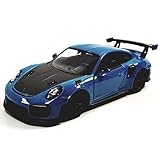
- Doors Open
- Pullback Action
- Die Cast Metal Body
- PULL BACK ACTION WITH FREE ROLLING WHEELS
A separate Nissan Heritage Collection page describes a one-off 1997 prototype based on a left-hand-drive S14 240SX (Silvia in Japan). It was a Fairlady Z design study, not the production S13 180SX: Nissan reports a modified KA24DE, a front-midship layout, 200 PS, and one prototype built. Nissan Heritage Collection
Subaru Legacy B4 RSK
The B4 RSK offers a less conspicuous alternative to a sports coupe: a sedan body with the performance character described in the source as coming from a twin-turbo flat-four and all-wheel drive. Those claims apply to the cited RSK version, not every Legacy B4. Its appeal is the combination of everyday form and a more unusual powertrain configuration.
Do these 3 things before closing this tab:
1Fix the driver behind crashes, sound loss and screen glitches2Clear out junk files and repair common Windows errors3Scan for outdated or missing drivers - takes under a minuteRank #3
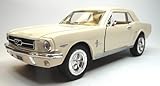
- Authentic 1:36 Scale: Meticulously crafted 1964 1/2 Ford Mustang model car with impressive 5-inch length.
- Realistic Details: Die-cast metal body with opening doors and eye-catching blue finish.
- Interactive Play: Engaging pull-back action for thrilling motion across smooth surfaces.
- Collectible Quality: Ideal for model car enthusiasts and collectors seeking miniature automotive replicas.
- Brand: KiNSMART, a trusted name in die-cast vehicle models and toys.
Subaru Exiga 2.0 GT Tuned by STI
The Exiga 2.0 GT Tuned by STI is the family-car outlier. Three seating rows make it fundamentally different from the two-door sports cars on this list, while the STI designation points to a more enthusiast-oriented version. SlashGear reports limited production, but a definitive production total is not established here; buyers should verify the identity and specification of any particular car rather than relying on an unconfirmed number.
Suzuki Swift Sport
The Swift Sport is the list’s compact, handling-first hatchback. Its lightweight positioning makes it a different kind of performance proposition from a turbocharged coupe or rally-influenced SUV: the attraction is nimble packaging rather than a promise of maximum power. Engine, weight, and performance figures can vary by generation and market, so the generation and local specification matter when making a direct comparison.
Rank #4
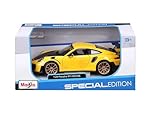
- Die-cast metal body with plastic parts
- Opening doors and engine compartment
- Detailed chassis
- Package Dimensions: 10.6 L x 23.5 H x 11.5 W (centimeters)
Toyota Celica SS III
The Japan-market Celica SS III is notable for hardware beyond its front-wheel-drive layout. SlashGear identifies a naturally aspirated BEAMS engine, a front limited-slip differential, and Super Strut suspension. These are trim-specific points, not specifications to apply to every Celica of the era. Its appeal lies in a less commonly discussed combination of engine and chassis features.
Mazda RX-8
The RX-8 pairs rotary power with a sports-car cabin that includes rear doors and rear seating, giving it a practical distinction from many two-seat coupes. Ownership requires condition-specific scrutiny: a general reliability claim cannot establish the health of an individual used car. An inspection by a specialist familiar with rotary engines is more useful than assuming every RX-8 shares the same reliability outcome.
Best Value

- Highly detailed 1:24 scale diecast model kit of 1929 Ford Model A
- Comes with everything needed for assembly including screwdriver
- Features opening parts, rolling wheels and pre-painted metal body
- Easy to assemble, creates fully functional rolling replica model car
- Fun and educational STEM activity for kids to build realistic miniature vehicle
Mazda’s official history provides context for the company’s rotary lineage, but not an independent confirmation of the RX-8’s specifications or reliability. Mazda says the Savanna launched in September 1971 with a 10A rotary in coupe and sedan body styles; the company records 5,406 units sold in its first month, a 12A engine arriving in 1972, the model’s 100th Japanese motorsport victory in 1976, and the Savanna RX-7 launch in March 1978. Those historical milestones help explain Mazda’s rotary heritage without proving claims about a later RX-8. Mazda’s rotary history
Subaru SVX
The SVX suits a different brief from a lightweight sports coupe. It is a grand tourer distinguished by its canopy-like window treatment, flat-six engine, and all-wheel drive; the cited list describes it with an automatic transmission. Its significance on this list is the combination of unusual styling and long-distance character, not a claim that it is a direct substitute for a smaller, more agile coupe.
Honda Prelude SH
The fifth-generation Prelude SH is identified in the list as a front-drive coupe with ATTS and a VTEC engine. Keep those later-model claims separate from Honda’s official retrospective on the nameplate: Honda’s page traces the Prelude from its 1978 debut through the fifth generation in 1996 and describes a new stage in 2025. Its listed 1,750 cc CVCC inline-four and 90 PS manual specification belong to the first-generation 1978 Prelude, not the later SH. Honda’s Prelude history
Independent reader supportYour contribution helps us test, update, and keep practical guides available for everyone.Which overlooked JDM cars are practical?
“Practical” depends on the job. The Legacy B4 RSK keeps a conventional sedan shape, while the Exiga adds three seating rows for family use. The VehiCROSS and Pajero Evolution serve a different need: an SUV body and off-road focus. The RX-8’s rear doors offer easier access to rear seats than a typical coupe, but that does not make it equivalent to a family sedan or wagon. The SVX is better understood as a grand tourer, and the Swift Sport as compact everyday transport with a sporty emphasis.
Quick Recap
What to check before choosing one
- Identify the exact market and trim. This is essential for the 180SX/200SX/240SX family and for Japan-specific trims such as the Celica SS III and Prelude SH.
- Verify the vehicle’s actual specification. Confirm the year, chassis, engine, transmission, drivetrain, and equipment from vehicle records and reliable market-specific documentation.
- Assess condition, not reputation. In particular, have an RX-8 inspected by a rotary specialist; a model-wide label cannot diagnose a specific car.
- Check local purchase and import rules. Prices, availability, registration eligibility, and import requirements depend on location and date; the cited list does not establish current figures.
Product prices and availability are accurate as of the date/time indicated and are subject to change. Any price and availability information displayed on Amazon at the time of purchase will apply.




