What’s actually slowing this PC down?
Pick the symptom - the matching free tool is one click away.
The 1967 Shelby Mustang GT500 marked a turning point: Ford had enlarged the Mustang platform to fit a big-block, and Shelby added a 428-powered model to its range. Its combination of size, road-car intent and distinctive styling helped make the GT500 a lasting reference point for American performance cars.
What made the 1967 GT500 different?
Ford’s enlarged 1967 Mustang gave Shelby room for a big-block V-8. Shelby American says the GT500 joined the lineup that year with a 428-cubic-inch engine; the model continued through 1970. The 1967 car was the first GT500, not simply a later name applied to an earlier Shelby Mustang. Shelby American’s history places it within the company’s Mustang story.
That distinction matters: the GT500’s importance comes not from a single race result or a verified performance ranking, but from how it brought big-block scale and Shelby’s performance identity together in a road-going Mustang.
10 reasons the 1967 GT500 still matters
1. It introduced the GT500 name to the Shelby Mustang range
The 1967 model launched a new chapter in Shelby’s Mustang lineup. The GT500 name would remain part of the model’s identity through its 1967–1970 run, according to Shelby American.
Free tools Windows power users keep installed
One-click scans. No signup required.
#1 Best Overall

- Authentic Ford Design: Each model kit accurately captures the signature style and details of iconic Ford vehicles.
- Precision-Molded Parts: High-quality, finely molded components ensure a realistic and detailed build.
- Customizable Features: Includes decals and optional parts for a personalized, unique build.
- Ideal for Hobbyists: Perfect for model builders of all skill levels, from beginners to experienced collectors.
- Display-Ready Models: Create a stunning Ford model that’s ready to showcase in your collection or as a standout display piece.
2. It brought big-block power to the Shelby Mustang
The Mustang’s 1967 enlargement created space for a larger engine, and the GT500 used a 428. That shift gave the Shelby Mustang a different scale of powertrain from the earlier small-block emphasis.
3. Its engine configuration made a clear statement
Car and Driver’s 1967 yearbook described the GT500’s 428 with two Holley four-barrel carburetors. It listed 355 horsepower and 420 lb-ft as published figures, but questioned whether those ratings reflected the engine’s actual output. They are best understood as period ratings, not independently verified measurements. Car and Driver’s contemporary coverage provides the period context.
Rank #2

- A PERENNIAL CLASSIC FOR EXPERIENCED MODELERS: AMT’s 1/25 scale 1967 Shelby GT-350 is the perfect project for muscle car builders. Add it to your collection today!
- FEATURE PACKED: The 1967 Shelby GT-350 is a historical muscle car that stands alone! Fully paintable, it features authentically detailed water-slide decals. Build it up right with a Ford 289 V8 engine and all the Shelby touches—custom rear lower pan, chrome wheels, custom taillights and front grille, bucket seats, and more. Wrapped up nicely in retro-styled packaging!
- QUICK SPECS: 1/25 Scale, 123 Parts, 7 inches long once assembled. Parts molded in white, clear and transparent red, with black vinyl tires. Some parts are chrome plated. Plastic model kit paint and cement required (Testors or Tamiya brands recommended). Paint guide included in kit. Skill Level 2. For ages 10+
- THE PERFECT PRESENT: Don't know what to get dad for his birthday? Or maybe you have an avid hobbyist or collector in your life. This model kit makes an ideal gift for any occasion!
4. It looked more aggressive than a standard Mustang
The contemporary yearbook described Shelby-specific exterior changes including a more prominent front treatment, side scoops and vents, and a rear spoiler. The yearbook said the spoiler improved adhesion at high speed; that is the period publication’s claim, not a modern aerodynamic test result.
5. It carried Shelby’s performance identity into a larger road car
Shelby’s Mustang program drew on a performance reputation built through the company’s broader Ford relationship. The GT500 translated that identity into a more substantial road car, rather than relying only on a competition image.
Windows Errors? Fix Them Before They Spread
Repair common Windows errors and clear accumulated junk for a smoother, more stable PC - no reinstall needed.Free scan · no reinstallOutdated Drivers Are Slowing You Down
One free scan finds every outdated or missing driver and matches the right update for your exact hardware.Free scan · exact hardware matchRank #3
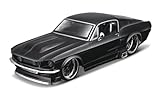
- · Opening doors and hood or other panel
- · Custom and performance detail parts
- Die-cast metal body with plastic parts
- Screwdriver included, no paint or glue needed
- Officially licensed product by Maisto with true to scale detail
6. It arrived during Ford’s Total Performance era
Shelby American’s history places the Mustang program alongside Ford’s effort to build a performance image and notes competition achievements in Shelby’s wider story. Those records should not be assigned to the GT500: the GT350 earned SCCA success, and Shelby teams achieved Trans-Am championships, but the cited history does not establish those as GT500 victories.
7. It was intended as a road car, not a 427 racer with plates
Car and Driver explicitly distinguished the GT500’s 428 passenger-car engine from the 427 racing engine. The magazine’s 1967 road test stated, “The GT 500 is not a racing car”. That distinction helps explain the car’s character: it was a formidable road-going Mustang, not the standard GT500 fitted with the 427 racing engine. The road test is contemporary reporting, not a claim about every later GT500.
Rank #4

- 1:25 scale, skill level 2, paint & glue required 169 parts Molded in white, clear and transparent red, with chrome-plated parts. Black vinyl tires Metal axle Built size: 7.125 inches long Ages 10+
8. Individual cars could have identifiable equipment combinations
A reproduced production-information record for one car lists a close-ratio four-speed manual transmission, a 3.50:1 rear axle and a 428 Police Interceptor engine. This documents that particular car’s specification; it does not establish that every 1967 GT500 had the same gearing or equipment. The individual-car record is useful as an example, not a production-wide specification sheet.
9. It remains recognizable as a collectible subject
Shelby Store lists a 1:18-scale die-cast model of the 1967 GT500 with opening panels and detailed interior and exterior. The listing shows that the first-year car has a collectible representation; it does not establish the classic car’s market value or the level of buyer demand. See the Shelby Store listing.
Best Value

- Authentic Ford Design: Each model kit accurately captures the signature style and details of iconic Ford vehicles.
- Precision-Molded Parts: High-quality, finely molded components ensure a realistic and detailed build.
- Customizable Features: Includes decals and optional parts for a personalized, unique build.
- Ideal for Hobbyists: Perfect for model builders of all skill levels, from beginners to experienced collectors.
- Display-Ready Models: Create a stunning Ford model that’s ready to showcase in your collection or as a standout display piece.
10. It is the hinge between early Shelby Mustangs and later GT500s
As the first GT500 and the opening year of a model line Shelby dates from 1967 through 1970, the 1967 car sits at a useful historical boundary. It retains the early Shelby Mustang context while establishing the larger-engine direction associated with the GT500 name.
Independent reader supportYour contribution helps us test, update, and keep practical guides available for everyone.1967 GT500 specifications and what the figures mean
| Item | What the evidence establishes |
|---|---|
| Engine | 428 cubic inches, as identified by Shelby American. |
| Carburetion | Two Holley four-barrel carburetors, described in Car and Driver’s 1967 yearbook. |
| Published power rating | 355 horsepower in Car and Driver’s period description; the yearbook questioned whether the published figure represented actual output. |
| Published torque rating | 420 lb-ft in the same period description; the yearbook also questioned this figure. |
| Transmission and axle | A reproduced record for one individual car lists a close-ratio four-speed and 3.50:1 axle; these are not confirmed as universal equipment. |
No reliable quantitative comparison set establishes a definitive acceleration, top-speed or rival-car ranking for the 1967 GT500. Its historical significance is clearer in the combination of a 428-powered road car, Shelby-specific appearance and the first use of the GT500 name.
How the GT500 differs from the GT350 and the 427 racer
The GT500 should not be conflated with either the GT350’s competition record or Ford’s 427 racing engine. The contemporary road test distinguishes the GT500’s 428 passenger-car engine from the 427 racer, while Shelby American’s history associates SCCA success with the GT350 and Trans-Am championships with Shelby teams. Those achievements form the surrounding performance story, but they are not evidence that the 1967 GT500 itself won those championships.
Quick Recap
Product prices and availability are accurate as of the date/time indicated and are subject to change. Any price and availability information displayed on Amazon at the time of purchase will apply.
Quick wins for a faster PC:
Clear out junk files and repair common Windows errorsFree Scan →Scan for outdated or missing drivers - takes under a minuteDriver Scan →



