Do these 3 things before closing this tab:
1Repair Windows errors before they cause bigger problems2Scan for outdated or missing drivers - takes under a minute3Clear out junk files and repair common Windows errors“Best” here means historically important, recognisable across eras, and still supported by enthusiast interest—not proven most reliable or best investments. This cross-era selection follows Porsche’s changing sports-car identity, from the 356 to the mid-engine Boxster, and is not a statistical ranking.
What makes a Porsche model stand the test of time?
A lasting model can matter for more than one reason: it may establish a new chapter in Porsche’s history, sustain a familiar name through changing generations, or represent a distinct approach to performance and use. The ten choices below are grouped by their place in the marque’s evolution, not ranked by reliability, value, or driving performance.
Porsche’s official history and classic-model pages document the chronology and intended roles discussed here. They do not provide comparable long-term failure rates, survival rates, ownership costs, or current market values. So this is a history-led shortlist, not a verdict on which Porsche is cheapest to own or most dependable today.
Which classic Porsche models are worth knowing?
1. Porsche 356: the starting point
Porsche Classic lists the 356 from 1948 to 1965. The company’s history identifies it as Porsche’s first sports car and credits it with helping establish the sports-car identity the brand would carry forward. Porsche retrospectively describes the first 356 as agile and unusually comfortable and reliable for a sports car of its day; that is a historical corporate description, not a modern comparison of used-car reliability. Porsche’s timeline reports 77,361 cars built by the end of production in 1965.
Recommended Free Tools
#1 Best Overall
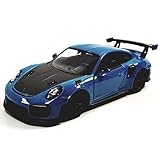
- Doors Open
- Pullback Action
- Die Cast Metal Body
- PULL BACK ACTION WITH FREE ROLLING WHEELS
The 356 Speedster versions made from 1954 to 1957 are described by Porsche as among the marque’s most sought-after models among collectors. That qualitative statement applies to those Speedsters, not to every 356 or to current prices. Porsche’s company history and timeline and the 911 F model history provide context for the early lineage.
2. Early Porsche 911 (901 / F model): the defining successor
Porsche presented the new model as the 901 in 1963. After a naming objection, it became the 911; customer deliveries began at the end of 1964. That transition makes the early 911 a central choice for any history of the marque: it succeeded the 356 while establishing a nameplate that continued across many generations. The designation “F model” identifies this early chapter, rather than every car called a 911.
For the chronology and naming account, see Porsche Classic’s Model Overview 911 F.
3. Porsche 911 Carrera / G model: a name that endured
The G-model story shows how a long-running model line can evolve without every version being identical. Porsche Classic calls the Carrera a “true long-term model” and says the name was absent from the 911 range between 1978 and 1983 before returning for model year 1984. Porsche also notes that the 911 SC was the only non-Turbo 911 in the 1978 range—one example of why a generation label alone does not tell the whole variant story.
Those distinctions come from Porsche Classic’s Model Overview 911 G. They support the Carrera’s historical staying power, not a claim that all G-models share the same specification.
Rank #2

- New 2022 Launch Model in Blue
- Officially licensed scale model collectible
- Die-cast metal with plastic parts & rubber tyres
- Working steering wheel suspension system
- Openable doors, engine cover & boot
4. Porsche 911 Turbo: the performance-focused branch
The 911 Turbo adds a different emphasis to the 911 story. Porsche’s timeline places it in the 1970s and describes a combination of performance, luxury, and everyday usability in North America. It is a useful contrast with the standard Carrera narrative: a distinct, high-performance branch within the broader 911 family.
That description is specific to Porsche’s historical account and its North American context; it should not be read as a comparison of every Turbo generation. See Porsche’s company history and timeline.
5. Porsche 911 (type 964): all-wheel drive joins the range
Porsche Classic lists the 964 generation from 1989 to 1994. Porsche’s timeline highlights a significant broadening of the 911’s technical range in 1990, when the all-wheel-drive Carrera 4 arrived alongside the rear-wheel-drive Carrera 2. The 964 earns its place here for that expansion—not because the available history establishes it as the most reliable or best generation.
Free tools Windows power users keep installed
One-click scans. No signup required.
See the Porsche Classic 911 history for the classic-model catalogue context and Porsche’s timeline for the Carrera 4 and Carrera 2 chronology.
6. Porsche 911 (type 993): a late classic-generation chapter
Porsche Classic lists the 993 from 1994 to 1998. It belongs on a cross-era list as part of the continuing 911 succession and a late chapter in the classic-generation sequence. The date range and historical place are established; claims that it is the “best,” most dependable, or most valuable 911 are not.
Rank #3
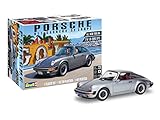
- Revell Plastic Model Car Kit #85-4521 is skill level 4 and contains 109 parts. Recommended for ages 12 and up.
- Assembled Dimensions: 7.00"x3.13"x2.19"
- 3.2-liter flat six engine. Positional front wheels & movable engine cover. Fuchs style wheels & optional front chin spoiler.
- Choice of left or right-hand drive version and either US or Euro spec front turn indicators and rear bumper guards.
- Molded in white and clear with soft black tires. Paint and glue not included.
For model chronology, consult Porsche Classic’s 911 F overview and 911 G overview; the official catalogue’s generation listings distinguish the successive eras.
Which Porsche models show a different side of the brand?
7. Porsche 928: a front-engine V-8 grand tourer
Introduced in 1978, the 928 was a major departure from the 911 formula: it put a V-8 at the front and was conceived as a comfortable grand tourer. Porsche describes it as an “easy-to-handle, comfortable and effortless grand tourer” developed with future safety regulations in mind. Porsche Classic lists the model from 1978 to 1995.
What’s actually slowing this PC down?
Pick the symptom - the matching free tool is one click away.
The 928 is a strong choice for readers interested in a long-distance touring role rather than the 911’s enduring rear-engine lineage. Porsche’s Model Overview 928 describes its role and classic support; the company timeline records its place in Porsche’s history.
8. Porsche 944: the four-cylinder transaxle sports car
The 944 arrived as a 1982 model, based on the 924 but fitted with a Porsche-built four-cylinder engine, according to the company timeline. It represents the front-engine transaxle strand of Porsche’s history and leads directly to the 968. That makes it relevant to readers whose idea of a lasting Porsche extends beyond the 911.
For the 944’s origin and its link to the 968, see Porsche’s company history and timeline.
Rank #4

- High-Quality Materials:The Porsche 911 GT3 die-cast car is made of zinc alloy,plastic parts and rubber tires,making it safe for children to play with.It features detailed interior and exterior trim, and is very sturdy.
- Function:No batteries are required, but the vehicle has a powerful pull back feature. Simply pull it back, then release your hand, and the car will go for a long distance. The doors may be opened to view the whole inside of the vehicle. So appealing to children and collectors alike.
- Size:1/36 scale vehicle model with beautiful English packaging,ideal for toddlers to play with and carry. Car collectors will appreciate the perfect small size, which allows them to collect a complete set of cars without taking up too much space.
- Grow From Play:Help children learn more about car ,expand their knowledge ,increase the hand-eye coordination and the reaction speed of the children in the play.
- Ideal Christmas Festival Gift:All of TOKAXI die-cast model cars are attractively packaged in English, making them the perfect Christmas, Birthday, Children's Day, New Year gift for kids, party favors, home decorations, or travel toys for boys and girls.gifts for boys girls.
9. Porsche 968: continuation of the transaxle line
The 968 continued the four-cylinder transaxle series as the 944’s successor. Porsche says it reached the production line in July 1991 as both a coupe and a cabriolet; Porsche Classic lists its model range as 1992 to 1995. These dates describe different milestones—production-line timing and the catalogue’s model chronology—rather than a contradiction to smooth over.
The 968 suits readers interested in the evolution of Porsche’s front-engine sports cars. Its launch and body styles are covered in Porsche’s timeline.
10. Porsche Boxster (type 986): a mid-engine roadster chapter
The Boxster brought a mid-engine roadster into the story. Porsche says the positive reception to the concept led to development and a planned arrival in 1997; Porsche Classic lists the 986 from 1997 to 2004. Its debut followed the end of the 928 and 968 in 1995, marking a new chapter after those front-engine models.
For this chronology, see Porsche’s company history and timeline.
Independent reader supportYour contribution helps us test, update, and keep practical guides available for everyone.How do these ten models compare?
| Model | Historical role | Configuration or body detail established here |
|---|---|---|
| 356 | Porsche’s first sports car; foundation of the later sports-car identity | Not stated in the cited historical summary |
| Early 911 (901 / F) | 356 successor; enduring model-line beginning | Not stated in the cited historical summary |
| 911 Carrera / G | Long-running 911 branch; Carrera name returned for model year 1984 | Not stated in the cited historical summary |
| 911 Turbo | Performance-focused 911 variant | Not stated in the cited historical summary |
| 911 (964) | Expanded technical range with Carrera 4 alongside Carrera 2 in 1990 | All-wheel-drive Carrera 4 and rear-wheel-drive Carrera 2 |
| 911 (993) | Late classic-generation chapter in the 911 succession | Not stated in the cited historical summary |
| 928 | Grand tourer and major departure from the 911 | Front-mounted V-8 |
| 944 | Front-engine transaxle sports-car chapter | Four-cylinder engine built by Porsche |
| 968 | 944 successor; continuation of the four-cylinder transaxle series | Coupe and cabriolet |
| Boxster (986) | Mid-engine roadster chapter after the 928 and 968 ended | Mid-engine roadster |
Where a detail is not stated, the table avoids inferring it from a model name. Porsche Classic’s catalogue also lists the first-generation Cayenne (2003–2010), an alternative for a more utility-oriented list; the catalogue chronology alone does not establish reliability or sales impact. See Porsche Classic’s model catalogue.
What does “stand the test of time” mean for a classic Porsche?
The models above represent several distinct configurations: the 911’s rear-engine lineage, front-engine transaxle sports cars, the 928’s front-engine V-8 touring role, and the Boxster’s mid-engine roadster format. Together they show that Porsche’s identity has been broader than a single model or layout, while the 356-to-911 succession remains central to its historical story.
For owners and restorers, Porsche Classic’s catalogue describes genuine-parts and specialist-service support for the classic models it lists. That indicates official support, not a guarantee that every part or service is available everywhere. Check the model-specific listing at Porsche Classic for its stated scope.
Quick Recap
Product prices and availability are accurate as of the date/time indicated and are subject to change. Any price and availability information displayed on Amazon at the time of purchase will apply.




