Quick wins for a faster PC:
Scan for outdated or missing drivers - takes under a minuteDriver Scan →Repair Windows errors before they cause bigger problemsFix Now →Fix the driver behind crashes, sound loss and screen glitchesFind Drivers →There is no scientifically certified ranking of Toyota engines by failure rate or average lifespan. Public longevity studies usually measure complete vehicles, not engine codes, so transmission durability, rust, climate, maintenance, and usage can distort the result. Still, an evidence-weighted ranking is possible using documented high-mileage examples, commercial and off-road service, conservative mechanical design, known failure modes, production volume, and parts support.
On that basis, the 2UZ-FE is the strongest documented Toyota gasoline endurance candidate, the 1UZ-FE is the standout luxury-car V8, the 1HZ is the best simple global-market diesel pick, and the 22R/22R-E remains Toyota’s most repairable small truck engine. The exact vehicle and its maintenance history still matter more than the Toyota badge.
How this Toyota engine ranking works
This is an editorial ranking of specific engine codes or tightly defined variants, not a claim that every engine of a particular family will reach a given mileage. Lexus engines are included because they were Toyota-developed engines; global-market engines are included but clearly labeled when they were not commonly sold in the United States.
The ranking weighs six factors:
| Criterion | Weight | What it means |
|---|---|---|
| Documented longevity | 25% | Verified high-mileage examples, fleet service, teardown evidence, and long-term owner records. |
| Design margin | 20% | Low specific output, robust block and crankshaft design, cooling capacity, and resistance to stress or overheating. |
| Simplicity and serviceability | 15% | Timing-drive design, fuel system, turbochargers, electronics, diagnosis, and ease of repair. |
| Production and application history | 15% | Use in trucks, taxis, buses, Land Cruisers, commercial vehicles, and high-volume passenger cars. |
| Known failure modes | 15% | Severity, frequency, warning signs, repair cost, and whether Toyota revised the design. |
| Parts and specialist support | 10% | Availability of parts, factory documentation, aftermarket upgrades, and experienced technicians. |
Horsepower, tuning potential, engine sound, rarity, and collector desirability are not reliability evidence. A powerful engine can have a strong bottom end yet be a poor used-car recommendation because its turbochargers, fuel system, wiring, or tuning have been abused.
#1 Best Overall
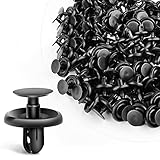
- Good quality: made from Black nylon, more durable that would not break or crack easily. Small Things but great use, satisfy your demands
- High precision: can hold your parts very tightly, won't be loose as the time passing by, also can be easily removed without causing damage
- OEM REPLACEMENT - #90467-07201 for engine splash shield, undertrays, chasis covers or heating box
- Universal plastic clips: be widely used for door trim, radiator shield yoke, fender, bumper, grille and splash shield retainer replacement.FITS SELECTED TOYOTA & LEXUS MODELS
- Package include:40PCS nylon fastener rivet clips
For context, iSeeCars longevity research and its 250,000-mile study are useful for identifying durable Toyota vehicles such as the Sequoia, Land Cruiser, and Tundra. They cannot isolate the engine from the rest of the vehicle. That distinction is important throughout this list.
The 10 most reliable Toyota engines, ranked
1. 2UZ-FE: the best-documented Toyota gasoline endurance engine
Configuration: 4.7-liter naturally aspirated V8
Common applications: Toyota Tundra, Sequoia, Land Cruiser, Lexus LX 470, and Lexus GX 470, depending on market and year
Best for: High-mileage trucks, SUVs, towing, and owners who value a heavily built engine over fuel economy
The 2UZ-FE takes first place because it has an unusually strong combination of design margin, heavy-duty applications, and public evidence. Toyota used the 4.7-liter V8 in demanding truck and Land Cruiser applications; Toyota’s historical material lists the 4,663 cc 2UZ-FE in the Land Cruiser 200.
Its most persuasive case study is a 2007 Toyota Tundra that Toyota documented after it passed one million miles with its original engine and transmission. The engine was later disassembled, and MotorTrend reported that the original internal assembly still performed strongly on a dynamometer. That does not mean every 2UZ-FE will reach a million miles. It demonstrates what this design can do under an unusually consistent maintenance and operating history.
Free tools Windows power users keep installed
One-click scans. No signup required.
The 2UZ-FE’s virtues are conservative tuning, a robust iron-block architecture, strong low-speed torque, and a duty cycle suited to heavy SUVs and pickups. It is not a high-revving sports-car engine, and that is part of its appeal. The engine generally has more mechanical margin than its vehicles need in ordinary use.
2UZ-FE problems to inspect
- Timing belt: The belt, tensioner, idlers, and water pump must be replaced on schedule. Toyota’s applicable 2004 U.S. maintenance guide lists timing-belt replacement at 90,000 miles for 2UZ-FE-equipped vehicles.
- Cooling system: A neglected radiator, fan clutch, water pump, hoses, or coolant leak can ruin an otherwise durable engine.
- Age-related accessories: Starters, alternators, seals, exhaust manifolds, and accessory brackets can be expensive on an old V8.
- Vehicle condition: Rust, worn transmissions, failed four-wheel-drive components, and neglected suspension may make a poor purchase even when the 2UZ-FE itself is healthy.
Buying advice: Buy the service history, not merely the engine code. A documented belt-and-water-pump service is worth a premium. An unknown belt history should be treated as an immediate maintenance expense.
2. 1UZ-FE: Toyota’s over-engineered luxury V8
Configuration: 4.0-liter naturally aspirated V8
Common applications: Lexus LS 400, SC 400, GS 400, Toyota Crown, Celsior, and other market-specific models
Best for: Lexus buyers, engine-swap projects, and smooth long-distance use
The 1UZ-FE was developed for the original Lexus LS 400, which Lexus describes as launching with a new 4.0-liter V8 after extensive engineering and prototype work. Toyota’s historical engine record identifies the 1UZ-FE as a 1989 development. The result was a remarkably smooth V8 with a reputation for precision manufacturing and substantial internal strength.
The Tool Desk
Outbyte Driver Updater FREEScan for outdated or missing drivers - takes under a minuteDriver Scan →Outbyte PC Repair FREERepair Windows errors before they cause bigger problemsFix Now →A reported Lexus LS 400 accumulated approximately 897,000 miles and continued toward the million-mile mark, according to Autocar’s high-mileage-car coverage. As with the Tundra, this is an important case study rather than a population-wide failure-rate statistic.
The 1UZ-FE ranks just behind the 2UZ-FE because its evidence is excellent but its typical applications are older luxury cars with more electronics and more labor-intensive packaging. Early non-VVT-i versions are often preferred by enthusiasts for their relative simplicity, but there is no public failure-rate data proving that every early version is categorically superior to every later one.
1UZ-FE problems to inspect
- Timing-belt, tensioner, idler, and water-pump history.
- Camshaft and crankshaft seal leaks, valve-cover leaks, and power-steering-fluid contamination.
- Brittle hoses, aging wiring, electronic-control-module problems, and deteriorated cooling components.
- Access-related labor costs: a small leak or belt job may be more expensive than on a four-cylinder Toyota.
Buying advice: A maintained 1UZ-FE can be extraordinarily durable, but an inexpensive neglected LS 400 is not necessarily a bargain. Budget for the entire luxury vehicle, not just the engine.
3. 1HZ: the simple global-market Land Cruiser diesel
Configuration: 4.2-liter naturally aspirated inline-six indirect-injection diesel
Common applications: Toyota Land Cruiser 70- and 80-Series models, Coaster, and other markets outside the United States
Best for: Remote-area work, overlanding, fleet service, and buyers who prioritize simplicity over acceleration
PC Slower Than It Used to Be?
A free scan shows the junk files, broken settings and background clutter dragging Windows down - then fixes them in one click.Free scan · Windows 10 & 11Crashes, No Sound, or Screen Glitches?
Random freezes, missing sound and display glitches usually trace back to one bad driver. Find and replace yours safely.Free scan · under a minuteThe 1HZ represents a different kind of reliability from the two UZ V8s. It was designed as a low-stress, naturally aspirated diesel for Land Cruiser and commercial applications. Toyota Industries lists it at 4,163 cc, 96 kW, and 285 Nm, with an inline-six layout.
Rank #2

- GENUINE OEM: Original Toyota/Lexus factory oil filter part number 90915-YZZN1, ensuring perfect fit and optimal performance for your vehicle
- COMPATIBILITY: Specifically engineered for Toyota and Lexus vehicles, maintaining manufacturer specifications and warranty requirements
- SUPERIOR FILTRATION: Advanced filter design captures harmful engine-damaging particles while maintaining proper oil flow
- QUALITY CONSTRUCTION: Heavy-duty housing and high-grade filter media provide reliable protection throughout the entire service interval
- EASY INSTALLATION: Direct replacement filter with standard threading for quick and simple oil change maintenance
Its output is modest for a full-size Land Cruiser, but modest output is part of the durability argument. There is no turbocharger to overspeed, no high-output performance calibration to maintain, and relatively little incentive to operate the engine at its limit. CarsGuide reports that many owners have recorded more than 500,000 km with naturally aspirated 1HZ engines without major issues, while also noting the engine’s limited performance.
1HZ problems to inspect
- Cooling-system condition and any evidence of overheating.
- Injector-pump condition, injector service, compression, and hard starting.
- Cylinder-head condition after overheating or prolonged heavy loading.
- Aftermarket turbo conversions. A turbocharged 1HZ can deliver more useful power, but the extra heat and cylinder pressure reduce the margin that makes the standard engine attractive.
U.S. qualification: The 1HZ was not a normal U.S.-market engine. Import legality, parts availability, emissions requirements, and specialist support vary by country and by state. A factory turbo-diesel such as the 1HD-FTE is faster, but the naturally aspirated 1HZ is easier to defend as a pure simplicity-and-endurance choice.
4. 22R and 22R-E: the classic repairable Toyota truck engine
Configuration: 2.4-liter naturally aspirated inline-four
Common applications: Toyota pickup, Hilux, 4Runner, and related commercial or utility models
Best for: Simple trucks, off-road projects, inexpensive repairs, and owners who value mechanical accessibility
The 22R/22R-E is not the most sophisticated engine here. That is exactly why it remains one of the safest old-truck recommendations. It combines a simple inline-four layout, conservative output, easy diagnosis, huge parts support, and a long history in pickups, Hiluxes, 4Runners, and commercial work.
Toyota’s Kamigo production history records approximately 6.5 million 22R engines before production ended in August 1997. That volume created a vast knowledge base and aftermarket ecosystem. Toyota’s historical material lists a 2,366 cc 22R application rated at 115 horsepower and describes the broader R family as continuing through 41 years of development.
The 22R/22R-E timing-chain qualification
Calling the 22R-E indestructible without mentioning its timing-chain system is bad buying advice. Later engines using a single-row chain and plastic guides can develop guide breakage and chain slack. LC Engineering documents how chain and guide wear can damage the timing cover and, in severe cases, allow coolant to contaminate the engine oil.
Listen for cold-start chain rattle, inspect the timing cover for wear, and ask whether the chain and guides were updated. Unknown timing-chain history should be reflected in the purchase price. A quality repair can preserve the engine’s main advantage: inexpensive, understandable service.
What’s actually slowing this PC down?
Pick the symptom - the matching free tool is one click away.
Buying advice: The best 22R-E is a maintained, unmodified example with good oil pressure and a sound timing cover—not necessarily the rarest year or the one with the biggest aftermarket catalog.
5. 1FZ-FE: the low-stress Land Cruiser inline-six
Configuration: 4.5-liter naturally aspirated DOHC inline-six
Common applications: Land Cruiser 80- and 100-Series models and other global-market Toyota utility vehicles
Best for: Heavy off-road vehicles, expedition use, and low-speed torque
The 1FZ-FE earns its place through displacement, conservative output, and the demanding vehicles it powered. Toyota technical material identifies the engine as a 4,477 cc, 24-valve DOHC inline-six producing up to 165 kW and 387 Nm in later Land Cruiser applications.
In a heavy Land Cruiser, a large naturally aspirated engine does not have to work as hard as a smaller, highly boosted engine to move the same mass. Toyota repair documentation also describes changes intended to improve water flow and engine reliability. The 1FZ-FE’s reputation is therefore based less on spectacular mileage publicity than on its long use in serious off-road and utility service.
1FZ-FE problems to inspect
- Radiator, water pump, thermostat, fan, hoses, and evidence of overheating.
- Oil leaks and timing-drive service.
- Cooling-system modifications or neglected maintenance on vehicles used in mud, sand, or towing.
- Chassis corrosion and driveline wear. On an old Land Cruiser, the vehicle can be more expensive than the engine.
Trade-off: Fuel consumption is high, and parts for older Land Cruiser applications can be expensive. The 1FZ-FE is an excellent durability choice when the vehicle’s operating cost is acceptable, not a budget commuter-engine recommendation.
6. 5VZ-FE: the dependable Toyota truck V6
Configuration: 3.4-liter naturally aspirated V6
Common applications: Toyota Tacoma, 4Runner, T100, Hilux, and related global-market models
Best for: U.S.-market trucks and SUVs that need a balance of durability, parts support, and usable power
Rank #3
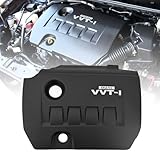
- 【COMPATIBLE WITH】 Compatible with Toyota Corolla 2009-2019, Compatible with Toyota Camry 2011-2016, Compatible with Lexus RX350 2007-2018, Compatible with Lexus RX330 2004-2006, Compatible with Lexus RX300 1999-2003, Please confirm the compatibility and part numbers before buying
- 【REPLACEMENT PART NUMBER】 11212-37010, 1121237010, 11212-0T011, 112120T011, 11212-37070, 1121237070, 11212-37071, 1121237071
- 【FITS PRECISELY】 Accepted you provide VIN to verify the compatibility. This Engine Cylinder Head Cover engineered within strict tolerances to directly replace your old or broken parts. We recommend seeking assistance from a qualified professional if you are not familiar with the installation or replacement process, to ensure proper installation and help prevent damage caused by incorrect operation
- 【PACKAGE LIST & SPECIFICATION】 1 Pcs Engine Top Cylinder Head Cover Dimensions: 23.6×18.1×4.7 Quick Installation Direct Replacement Premium Quality Notice: Slight errors in manual measurements are normal
- 【PREMIUM QUALITY】 All of the Engine Cylinder Head Cover from Chenheshor are factory inspected before shipping. Chenheshor will take responsibility for the product quality issues within 12 months
The 5VZ-FE is one of Toyota’s strongest practical truck engines. It delivered useful low-speed torque without turbocharging and was installed in large numbers across the Tacoma, 4Runner, T100, and related platforms. When Toyota introduced the Tacoma, its launch material described the new 3.4-liter V6 among the available engines and emphasized power, reduced noise and vibration, and high reliability.
Compared with the 2JZ-GTE, the 5VZ-FE is a better ordinary-ownership reliability pick because it was tuned for trucks rather than performance modification. It also has excellent U.S. parts and specialist support.
5VZ-FE problems to inspect
- Timing belt: Toyota’s applicable 2004 U.S. maintenance schedule lists 90,000-mile replacement for the 5VZ-FE. Confirm the belt, tensioner, idlers, and water pump were done together.
- Cooling-system leaks, radiator condition, and signs of overheating.
- Head-gasket history, lower-intake leaks, valve-cover leaks, and cracked exhaust components.
- Oil pressure and smoke on high-mileage engines.
Buying advice: A 5VZ-FE with documented belt and cooling-system service is a much safer purchase than one chosen only because people say Toyota V6 engines last forever.
7. 2JZ-GE: the durable naturally aspirated JZ
Configuration: 3.0-liter naturally aspirated inline-six
Common applications: Toyota Supra, Lexus GS 300, IS 300, Toyota Aristo, Crown, and other market-specific models
Best for: Smooth road cars, Lexus owners, and stock or lightly modified performance projects
The 2JZ-GE deserves a place because its cast-iron inline-six block, strong crankshaft, broad application history, and naturally aspirated operating conditions give it a large durability margin. Toyota’s historical engine record identifies the JZ family as a 1990 development, with sequential twin turbochargers introduced on the 2JZ-GTE in 1991 and VVT-i appearing on the 2JZ-GE in 1995.
The critical distinction is GE versus GTE. The naturally aspirated GE generally operates with lower cylinder pressure and thermal load than the twin-turbo GTE. The GTE has a famously strong bottom end and can support considerable power, but many examples have been modified, raced, boosted, or exposed to poor tuning. Turbocharger, intercooler, fuel-system, wiring, and calibration failures are not the same as an internal-engine failure.
Do these 3 things before closing this tab:
1Clear out junk files and repair common Windows errors2Scan for outdated or missing drivers - takes under a minute3Repair Windows errors before they cause bigger problems2JZ-GE problems to inspect
- Timing-belt replacement and water-pump history.
- VVT-i cam-gear oil leaks on applicable versions.
- Overheating, neglected oil changes, and valve-cover or front-cover leaks.
- Engine swaps, aftermarket turbo kits, wiring changes, and evidence of track or drag-racing use.
Buying advice: A stock, well-maintained 2JZ-GE is a better reliability proposition than a heavily modified 2JZ-GTE. Do not transfer the GTE’s tuning reputation directly to normal daily-driver durability.
8. 1GR-FE: a strong truck V6, but generation matters
Configuration: 4.0-liter naturally aspirated V6
Common applications: Toyota Tacoma, 4Runner, FJ Cruiser, Hilux, Land Cruiser Prado, and other global-market models
Best for: Buyers who want a newer, widely supported Toyota truck engine with more power than the 2TR-FE
The 1GR-FE is a long-lived truck V6 used across a wide range of Toyota models. Toyota places the GR family’s development in 2002 and describes later dual-VVT-i versions with roller rocker arms, regular-fuel operation, and improved output and efficiency in the Land Cruiser Prado.
It ranks below the older engines because it has more systems, more market-specific variations, and a more complicated used-buying history. An early single-VVT-i 1GR-FE should not be treated as identical to a later dual-VVT-i engine. Tacoma, 4Runner, FJ Cruiser, Hilux, and Prado versions can differ in emissions equipment, fuel calibration, cooling systems, and service requirements.
Recommended Free Tools
1GR-FE problems to inspect
- Engine generation: Identify whether the vehicle has the early single-VVT-i or later dual-VVT-i version.
- Head-gasket and cylinder-head history: A technical bulletin from Engine Professional discusses gasket considerations across 2003–2023 4.0-liter 1GR-FE applications. This supports careful inspection; it does not prove that every 1GR-FE has a systemic head-gasket defect.
- Cooling-system service, water-pump condition, coolant loss, and combustion gases in the cooling system.
- Timing-chain noise, exhaust leaks, and oil leaks.
Buying advice: Favor a well-documented later revision when the application and budget allow, but condition and cooling-system history still outrank the model year alone.
9. 2TR-FE: the underappreciated commercial workhorse
Configuration: 2.7-liter naturally aspirated inline-four
Common applications: Toyota Hilux, Fortuner, Land Cruiser Prado, HiAce, and Land Cruiser 250 in various global markets
Best for: Commercial use, simple fleet service, and buyers who value longevity over acceleration
The 2TR-FE is not famous in the same way as the 2JZ or 22R, but its global commercial exposure makes it a credible reliability candidate. Toyota places the TR series’ development in 2003. Toyota’s Prado material identifies the 2TR-FE as a 2.7-liter gasoline engine, while the Land Cruiser 250 release describes it as a basic, affordable mass-market powertrain rated at 163 PS and 246 Nm in that application.
Rank #4

- For Toyota 4Runner 1984
- For Toyota Celica 1982-1984
- For Toyota Corona 1982
- For Toyota Pickup 1981-1990
- For L4 2.4L 2366cc Engine ONLY.
Its strengths are low specific output, useful low-rpm torque, a naturally aspirated design, and years of use in work-oriented vehicles. The engine is engineered to do an ordinary job repeatedly rather than to deliver exciting acceleration.
2TR-FE problems to inspect
- Oil leaks, valve-train noise, and low compression.
- Radiator, hoses, thermostat, and water-pump condition.
- Evidence of severe commercial loading, overheating, or prolonged operation at maximum throttle.
- Application-specific emissions and fuel-system equipment.
Trade-off: In a large SUV, the 2TR-FE can feel slow, noisy, and heavily loaded. That is a performance drawback, not necessarily a durability flaw.
10. 2GR-FE: the modern high-volume Toyota V6 pick
Configuration: 3.5-liter naturally aspirated V6
Common applications: Toyota Camry, Avalon, Highlander, Sienna, Venza, Estima, and Lexus applications, depending on variant and market
Best for: Mainstream road cars and SUVs where parts availability and modern performance matter
The 2GR-FE is a reasonable top-ten choice because Toyota installed it in a large number of vehicles over a long service life. Toyota introduced the 3,456 cc engine in the Estima and later expanded U.S. production to meet demand for engines used in the Highlander, Camry, and Avalon. That volume means broad parts availability and substantial mechanic familiarity.
It is more complex than a 22R-E or 1HZ, but it provides strong power without being an exotic performance engine. Properly maintained examples can deliver long service, although its peripherals deserve close attention.
Do these 3 things before closing this tab:
1Fix the driver behind crashes, sound loss and screen glitches2Repair Windows errors before they cause bigger problems3Scan for outdated or missing drivers - takes under a minute2GR-FE problems to inspect
- Oil-cooler pipe: Toyota bulletin T-SB-0201-11 addresses oil-cooler pipe leaks or seepage on certain 2GR-FE and 2GR-FXE applications, including specified Highlander, Sienna, Venza, and Highlander Hybrid vehicles. The bulletin includes production-change VIN cutoffs, so the exact application and VIN matter.
- Water-pump leaks or bearing noise.
- VVT components, oil leaks, cooling-system condition, and fuel-system campaigns where applicable.
- Maintenance neglect, especially long oil-change intervals.
The oil-cooler-pipe issue is a peripheral-component concern, not evidence that the 2GR-FE’s core design is unreliable. Confirm whether the relevant update or repair has been completed.
Famous Toyota engines that need more careful qualification
2JZ-GE versus 2JZ-GTE
The 2JZ-GTE is mechanically impressive and can be extremely durable when stock, correctly fueled, properly cooled, and professionally tuned. But its reputation is often based on horsepower capacity rather than ordinary ownership reliability. A modified GTE has more ways to fail than a stock GE. For a reliability ranking, those engines should not be treated as interchangeable.
1UZ-FE versus 2UZ-FE
Both UZ engines are excellent, but they were designed around different applications. The 1UZ-FE emphasizes smoothness and refinement in Lexus cars; the 2UZ-FE uses a larger-displacement, truck-oriented design with a particularly strong documented endurance case. The older 1UZ’s electronic and luxury-car systems can also be more expensive to bring back to reliable condition.
1HZ versus 1HD-FTE
The naturally aspirated 1HZ is simpler and less stressed. The 1HD-FTE is a 4.2-liter turbo-diesel with a strong reputation for reliability and substantially better performance, as CarsGuide explains. For global Land Cruiser buyers who tow or carry heavy loads, the 1HD-FTE may be the better engine. For a pure simplicity ranking, the 1HZ is easier to defend. Neither was a common U.S.-market engine.
Free tools Windows power users keep installed
One-click scans. No signup required.
Early versus later 1GR-FE
Engine code alone is not enough. Identify the VVT-i version, vehicle application, emissions equipment, and maintenance history. A later revised engine may be preferable, but a properly maintained early engine is not automatically a bad one.
22R versus 22R-E
The carbureted 22R is mechanically simpler; the fuel-injected 22R-E is generally easier to live with in normal road use. Both share the broader timing-chain and guide concerns that make inspection essential.
Naturally aspirated versus turbocharged engines
Naturally aspirated engines usually have fewer heat-producing and failure-prone components, but turbocharging itself does not make an engine unreliable. The relevant questions are boost level, cooling capacity, oil supply, factory calibration, maintenance, and whether the vehicle has been modified.
Independent reader supportYour contribution helps us test, update, and keep practical guides available for everyone.Best Toyota engine by use case
| Use case | Best candidates | Why |
|---|---|---|
| U.S. truck or SUV | 2UZ-FE, 5VZ-FE, 1GR-FE, 2TR-FE, 2GR-FE | Strong parts support, widespread applications, and practical service access. |
| Lexus | 1UZ-FE, 2JZ-GE, 2UZ-FE | Excellent Toyota-developed engines, provided the surrounding luxury vehicle is maintained. |
| Global overlanding | 1HZ, 1HD-FTE, 1FZ-FE, 2TR-FE | Land Cruiser and commercial-duty experience, with different trade-offs in power and complexity. |
| Simple old Toyota truck | 22R/22R-E | Easy diagnosis, abundant parts, and inexpensive repair compared with newer engines. |
| Hybrid-specific choice | 1NZ-FXE | Proven hybrid application, but the entire hybrid system must be evaluated. |
Honorable mentions
1NZ-FXE: the hybrid special case
The 1NZ-FXE deserves recognition, but hybrid reliability must be evaluated at the system level. Toyota identifies the 1NZ-FXE as an engine developed for gasoline-electric hybrid vehicles in 1997, and Toyota’s Prius lineage identifies it in the first-generation Prius. A Motor1 teardown of a Prius with more than 300,000 miles provides useful visual evidence of engine durability, but one teardown is not a statistical sample.
Quick wins for a faster PC:
Clear out junk files and repair common Windows errorsFree Scan →Scan for outdated or missing drivers - takes under a minuteDriver Scan →Best Value

- Compatible with Toyota Camry (2002-2006), Camry Hybrid (2007-2011), Solara (2004-2008), Highlander Gas (2001-2013), Sienna (2004-2010)
- Compatible with Lexus ES300 (2002-2003), ES330 (2004-2006), RX330 (2004-2006), RX350 (2007-2009)
- Compatible with FRAM CA9360; Replacement Made for Toyota Genuine part # 17801-0H010, 17801-0H020, 17801-20040
- Helps extend performance, Protect against dirt. Improve mileage, Recommended replacement every 12,000 miles
- Suggest Replace with Cabin Air Filter CP132 (CF10132)
A healthy 1NZ-FXE can outlast a tired hybrid battery, inverter, battery cooling fan, or hybrid-control component. When buying a Prius, inspect the engine and the battery, inverter, cooling circuits, and diagnostic history together.
1HD-FTE
The 1HD-FTE is a serious global-market candidate for buyers who need Land Cruiser diesel performance. Its turbocharging and fuel-system complexity keep it outside this mainly U.S.-oriented top ten, but it can be a better working engine than the slower 1HZ when the vehicle is correctly maintained.
3B diesel
The 3B is a credible specialist choice for older Land Cruisers because of its simple, low-output diesel design and utility applications. Its current reputation relies more heavily on enthusiast and specialist experience than on the documented teardown or fleet evidence available for the engines ranked above it.
4A-FE
The 4A-FE is a strong high-volume compact-car engine candidate. Toyota identifies it as a lean-burn inline-four developed in 1990, and its Corolla history documents the 4A family’s fuel-injection and efficiency development. It is a sensible honorable mention for inexpensive commuter cars, although it lacks the heavy-duty and extreme-mileage case studies of the top-ranked truck engines.
1LR-GUE
The Lexus LFA’s 1LR-GUE V10 is a remarkable engineering achievement, but technical sophistication is not the same as statistically demonstrated long-term reliability. Only 500 LFAs were produced, so it did not receive the decades of taxi, fleet, truck, or commercial exposure that supports this ranking. It belongs in an engineering-outlier discussion, not near the top of an endurance list.
Used Toyota engine inspection checklist
Even the best engine code can be a bad purchase when the individual vehicle was overheated, modified, or neglected. Before buying any used Toyota, follow this checklist:
- Insist on a true cold start. Listen for timing-chain rattle, piston noise, belt noise, and abnormal valvetrain sounds before the engine has warmed up.
- Watch the exhaust. Blue smoke suggests oil consumption; persistent white smoke can indicate coolant; black smoke may point to fueling or calibration problems.
- Inspect oil and coolant. Look for coolant contamination in the oil, oil in the coolant, low coolant, sludge, or evidence of combustion gases in the cooling system.
- Check for leaks. Inspect cam and valve covers, timing covers, rear-main areas, VVT components, power-steering systems, and oil-cooler pipes.
- Verify the timing drive. Confirm timing-belt replacement on the 2UZ-FE, 1UZ-FE, 5VZ-FE, and 2JZ-GE. On chain-driven engines, listen for rattle and ask about chain, guide, and tensioner service.
- Scan for stored and pending fault codes. Do this even if the check-engine light is off.
- Perform compression or leak-down testing when justified. It is especially worthwhile on a high-mileage engine, a modified vehicle, or a purchase where an engine rebuild would change the decision.
- Match the engine code to the vehicle and market. The same family name can hide different VVT systems, fuel systems, emissions equipment, cooling layouts, and factory calibrations.
- Inspect the cooling system thoroughly. Check the radiator, fan clutch, electric fans, water pump, hoses, thermostat, and service records. Overheating is one of the fastest ways to destroy a durable Toyota engine.
- Treat modifications as risk factors. Turbo conversions, deleted emissions equipment, aftermarket engine management, aggressive tuning, and poorly documented swaps require a higher inspection standard.
Engine-specific inspection priorities
| Engine | Pay particular attention to |
|---|---|
| 2UZ-FE | Timing belt, water pump, idlers, cooling system, exhaust manifolds, starter, and accessories. |
| 1UZ-FE | Timing belt, cam and crank seals, power-steering leaks, cooling system, ECU and wiring age, and labor-intensive accessories. |
| 1HZ | Cooling system, injector pump, overheating history, cylinder head, and aftermarket turbo modifications. |
| 22R/22R-E | Cold-start chain rattle, broken guides, timing-cover wear, coolant contamination, valve adjustment, and low oil pressure. |
| 1FZ-FE | Cooling-system integrity, water pump, radiator, oil leaks, timing-drive condition, and vehicle corrosion. |
| 5VZ-FE | Timing belt, water pump, head-gasket history, coolant leaks, lower-intake leaks, and cracked exhaust components. |
| 2JZ-GE | Timing belt, VVT-i cam-gear leaks, oil leaks, overheating, neglected maintenance, and modifications. |
| 1GR-FE | Engine generation, head-gasket history, cooling-system service, timing-chain noise, water pump, and exhaust leaks. |
| 2TR-FE | Oil leaks, valvetrain noise, cooling system, low compression, and evidence of heavy commercial loading. |
| 2GR-FE | Oil-cooler-pipe update, water pump, VVT components, oil leaks, cooling system, and applicable fuel-system campaigns. |
What this ranking does not claim
- It does not claim that a 2UZ-FE will reach one million miles. The Tundra is a documented individual case, not a guarantee.
- It does not claim that any Toyota engine requires no maintenance. Belts, chains, guides, gaskets, cooling systems, seals, and accessories eventually need attention.
- It does not treat UZ, JZ, GR, NZ, ZZ, or MZ as single interchangeable engines. Variants can have different blocks, fuel systems, VVT systems, cooling layouts, and failure patterns.
- It does not use the LFA V10’s engineering quality or the 2JZ-GTE’s tuning capacity as a substitute for long-term fleet evidence.
- It does not convert vehicle-level longevity statistics into engine-level failure rates.
The original list concept behind this topic has also been presented inconsistently: the current SlashGear page displays a five-engine headline despite retaining a ten-position body and noting a March 17, 2024 update. It also mixes engine families with individual variants. A useful comparison has to rank defined engine codes and explain the qualifications of each one.
Frequently Asked Questions
Which Toyota engine is most likely to reach very high mileage?
The 2UZ-FE has the strongest publicly documented Toyota gasoline endurance case, including a Toyota-documented 2007 Tundra that exceeded one million miles with its original engine and transmission. That is evidence of capability, not a guarantee for every 2UZ-FE.
Is the 2JZ-GTE more reliable than the 2JZ-GE?
Not automatically. The 2JZ-GTE has a strong bottom end and excellent tuning capacity, but turbochargers, fuel-system changes, high cylinder pressure, and modified examples add risk. A stock, maintained 2JZ-GE is usually the more defensible reliability choice for ordinary ownership.
Which Toyota engine is best for a used truck?
For U.S.-market trucks, the 5VZ-FE and 1GR-FE offer a strong balance of durability, parts availability, and practical performance. The 2UZ-FE is the better heavy-duty V8 choice, while the 22R/22R-E is best for simple older trucks when its timing-chain system has been addressed.
Are Toyota diesel engines included in this ranking?
Yes. The global-market 1HZ is ranked third because of its simple, naturally aspirated design and Land Cruiser fleet history. The 1HD-FTE and 3B are honorable mentions. Availability, import legality, emissions rules, and specialist support vary substantially outside their original markets.
The Bottom Line
The most defensible overall winner is the 2UZ-FE, because its conservative truck design is supported by an unusually well-documented million-mile case. The 1UZ-FE follows as Toyota’s standout luxury V8, while the 1HZ is the simple global diesel choice and the 22R/22R-E is the easiest old Toyota truck engine to understand and repair.
Outdated Drivers Are Slowing You Down
One free scan finds every outdated or missing driver and matches the right update for your exact hardware.Free scan · exact hardware matchPC Slower Than It Used to Be?
A free scan shows the junk files, broken settings and background clutter dragging Windows down - then fixes them in one click.Free scan · Windows 10 & 11For a real purchase, however, the ranking is only a starting point. A maintained 5VZ-FE or later 1GR-FE with documented timing and cooling-system work is a better buy than a neglected 2UZ-FE. Verify the exact engine variant, inspect for overheating and leaks, confirm belt or chain service, and evaluate the vehicle around the engine.