What’s actually slowing this PC down?
Pick the symptom - the matching free tool is one click away.
Brake-pad replacement looks straightforward: remove the wheel, retract the caliper piston, install the new pads, and put everything back together. The dangerous mistakes are usually in the details—using the wrong pad, damaging a hose, overlooking a seized slide, or driving away before restoring pedal pressure.
Use the vehicle’s service information for torque values, piston-retraction instructions, electronic parking-brake procedures, and bleeding requirements. If the caliper, hose, rotor, or hydraulic system shows a problem beyond a routine pad replacement, stop and repair that fault before driving.
As an Amazon Associate I earn from qualifying purchases.
1. Installing the wrong pads—or replacing only one side
Brake pads should be replaced as a complete set on one axle: both left and right sides. Replacing a single pad or only one side can create unequal braking force, pulling, noise, and rapid wear.
Before opening the box, verify the vehicle application, axle position, pad shape, friction-material specification, wear-sensor arrangement, and included shims or clips. Do not assume that pads that look similar are interchangeable. Some vehicles use different pads on the front and rear, and even the same model may have multiple brake-package options.
#1 Best Overall

- OE REPLACEMENT: Designed and engineered to OE specifications for fit, form, and function. OEM Equivalent Part Number: 22742382
- DURABLE MATERIAL: Manufactured using high-quality materials, these brake pads are resistant to wear and corrosion, extending their lifespan and reliability
- ENHANCED SAFETY: Bendix Premium ceramic brake pads are designed to reduce brake fade and ensure consistent braking performance, enhancing safety on the road
- VEHICLE APPLICATION: (Please see the product description for a complete list of applicable models) Cadillac Escalade 2020-2008, Escalade ESV 2020-2008, Escalade EXT 2013-2008, XTS 2015-2013, XTS 2019-2017, Chevrolet Avalanche 2013-2008, Cheyenne 2018-2007, Express 1500 2014-2009, Silverado 1500 2018-2005,
- Silverado 1500 Classic 2007, Silverado 1500 LD 2019, Suburban 2020-2014, Suburban 1500 2014-2007, Tahoe 2020-2008, GMC Savana 1500 2014-2009, Sierra 2018-2007, Sierra 1500 2018-2005, Sierra 1500 Classic 2007, Sierra 1500 Limited 2019, Yukon 2020-2008, Yukon XL 2020-2015, Yukon XL 1500 2014-2008
Also check the meaning of markings on the pad. For example, Akebono notes that a code printed on one of its pads can identify the friction material rather than the vehicle application. Use the actual catalog or vehicle-specific part number, not an isolated code molded into the pad.
2. Working beneath a vehicle supported only by a jack
A hydraulic floor jack is lifting equipment, not a safe support for a vehicle while you remove a wheel and work around the brake assembly. A slow leak, a displaced jack, or movement of the vehicle can cause a crush injury.
- Park on firm, level ground and select Park or first gear.
- Apply the parking brake when it will not interfere with the brake service.
- Chock the wheels that remain on the ground.
- Lift only at the manufacturer’s specified jacking point.
- Place appropriately rated jack stands at the specified support points.
- Lower the vehicle onto the stands and give it a cautious stability check before removing the wheel.
Keep the jack lightly supporting an approved lifting point if that is compatible with the manufacturer’s instructions, but never treat it as the only support. Ford’s tire-changing guidance and OSHA accident investigations both illustrate why correct support points and stable stands matter.
Do these 3 things before closing this tab:
1Repair Windows errors before they cause bigger problems2Scan for outdated or missing drivers - takes under a minute3Clear out junk files and repair common Windows errors3. Letting the caliper hang by the brake hose
Once the caliper is unbolted, its weight must be supported with a purpose-made caliper hook, sturdy wire, or a suitable stand. Do not leave it dangling from the flexible brake hose, and do not stretch, twist, or sharply bend the hose while moving the caliper.
A hose damaged internally may restrict fluid return or pressure delivery. The resulting symptoms can include a dragging brake, pulling, uneven pad wear, or a low pedal. Inspect the hose for cracks, bulges, wetness, and abnormal twisting before reassembly. Raybestos specifically warns against suspending a removed caliper from the hose.
4. Forcing the piston back without checking the procedure
Many front caliper pistons press straight back, but that is not a universal rule. Some rear calipers with mechanical parking-brake mechanisms must be rotated while being retracted. A vehicle with an electronic parking brake may require a scan-tool or manufacturer-specified service mode before the piston or actuator is disturbed.
Rank #2

- [PLATFORM SPECIFIC FRICTION MATERIAL} - Bosch Blue offers advanced, platform specific Ceramic friction material formulations for optimal stopping power, reduced brake fade, and long-lasting performance
- [QUIET STOPS] - Original equipment style multi-layer shim on back of pads provides exceptional noise dampening capabilities that help Bosch Blue deliver smooth, quiet stops
- [RUST AND CORROSION PROTECTION] - Rust inhibitive coating on steel brake pad backing plates prevents the formation of rust and corrosion which can lead to pad degradation and noisy braking
- [OE STYLE SLOTS AND CHAMFERS] - Slots and chamfers in friction material replicate OE designs to deliver superb braking performance and efficient, quiet stops
- [READY TO INSTALL] - Pads come wrapped in a protective blue shop towel within the box; Set includes pads for 1 axle (2 wheels), hardware kit, and synthetic lubricant for reduced resistance on sliding contact points
Forcing the wrong piston with a clamp can damage the caliper, parking-brake mechanism, or actuator. On some vehicles, putting the electronic parking brake into service mode is essential to prevent unexpected brake application. Ford documentation may call this “brake service mode” or “brake maintenance mode.”
<
Look up the procedure before starting. Confirm whether you need a wind-back tool, a piston compressor, a scan tool, or a particular ignition and parking-brake sequence. Never improvise with an electronic brake system based on how a conventional caliper works.
5. Pushing dirty fluid back toward the ABS unit without considering the method
When the piston is pushed inward with the bleeder closed, fluid from the caliper area travels backward through the hydraulic circuit. That fluid may contain accumulated debris. Depending on the vehicle and service guidance, forcing it backward can contribute to ABS-valve contamination, a low pedal, or brake pull.
There is no single correct method for every vehicle. The service information may direct you to:
- compress the piston with the bleeder closed;
- open the bleeder and collect the expelled fluid;
- use a brake-service hose clamp designed for that purpose; or
- follow a special procedure for an integrated or electronically controlled brake system.
Never use locking pliers or ordinary pliers to clamp a flexible brake hose. They can damage the hose’s internal structure. If you open the bleeder, use clean equipment, prevent air from entering the system, and bleed the brakes according to the vehicle’s procedure. Brake fluid should never be reused from an open or contaminated container.
Recommended Free Tools
6. Ignoring the rotor, slides, boots, and uneven wear
New pads cannot correct a brake assembly that has another mechanical problem. Before installing them, inspect the rotor for deep scoring, cracks, blue heat marks, severe corrosion, and an excessive lip. Measure rotor thickness and compare it with the manufacturer’s minimum specification. A rotor can look acceptable and still be below its discard limit.
Rank #3

- [THE BOSCH ADVANTAGE] - The Bosch QuietCast line draws on over 77 years of OE braking excellence; promising the highest quality performance, industry-leading strength and durability, and exclusive innovations including Molded Shim Technology (MST)
- [QUIETER STOPS] - The industry's best pre-attached OE style multilayer rubber core shims ensure the highest quality bond between rubber and steel, resulting in lower noise, increased strength, and corrosion resistance
- [EXCEPTIONAL FRICTION MATERIAL] - Rigorously formulated and tested by Bosch engineers, the Ceramic friction material in the QuietCast line is meticulously engineered for robust performance, exceptional stopping power, and quiet, low dust operation
- [BOSCH DURABILITY] - Powder-coated backing plate prevents rust and corrosion for increased product life of the brake pad; Slots and chamfers ensure premium quality, fit, and function
- [READY TO INSTALL] - Set includes pads for 1 axle (2 wheels), hardware kit (where available), and synthetic lubricant for reduced resistance on sliding contact points
Check the rest of the assembly as well:
- Slide pins should move smoothly and have intact boots.
- The piston boot should not be torn or leaking.
- The caliper and bracket should not have fluid leakage or serious corrosion.
- Pad abutment areas should allow the pads to move without binding.
- Inner and outer pad thickness should be reasonably even.
A floating caliper with a seized slide may fail to apply the outboard pad correctly. A seized piston or corroded abutment can produce the opposite pattern, with one pad wearing much faster than its mate. Uneven old-pad wear is a diagnostic clue, not merely a reason to install another set of pads.
7. Reusing damaged hardware or lubricating the wrong surfaces
Pad clips and abutment hardware live in a harsh environment. Replace hardware that is badly corroded, distorted, weak, or unable to hold the pad correctly. If a hardware kit is supplied with the pads, install it rather than automatically reusing old clips.
Use only a lubricant approved for the specific brake application, and apply a thin amount only to designated non-friction contact points, such as pad ears, pad-to-hardware contact areas, or appropriate slide-pin surfaces. The exact locations vary by design.
Windows Errors? Fix Them Before They Spread
Repair common Windows errors and clear accumulated junk for a smoother, more stable PC - no reinstall needed.Free scan · no reinstallCrashes, No Sound, or Screen Glitches?
Random freezes, missing sound and display glitches usually trace back to one bad driver. Find and replace yours safely.Free scan · under a minuteNever put grease, anti-squeal compound, or any other lubricant on:
- the friction material of the pad;
- the braking face of the rotor;
- the wheel hub’s mating face unless the vehicle procedure specifically permits it; or
- rubber components that the lubricant may damage.
Contamination on the pad or rotor can reduce braking performance and may require replacement or careful cleaning of the affected parts.
8. Cleaning every new rotor the same way
New rotors may have an oil-based anti-corrosion film, a different protective coating, or manufacturing residue. The correct preparation depends on the rotor manufacturer. Some coated rotors are intended to be installed without stripping the coating from every surface, while the braking faces still need the specified preparation.
Rank #4
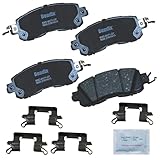
- OE REPLACEMENT: Designed and engineered to OE specifications for fit, form, and function
- ADVANCED FRICTION MATERIALS: These brake pads feature advanced friction materials that provide superior stopping power, even under high temperatures and heavy loads
- ENHANCED SAFETY: Bendix Priority 1 Brake Pads are designed to reduce brake fade and ensure consistent braking performance, enhancing safety on the road
- INDUSTRY-TESTED RELIABILITY: Rigorously tested to meet or exceed industry standards, these brake pads are a trusted choice for daily commute vehicles
- VEHICLE APPLICATION: Nissan Altima 2024-2013, LEAF 2012-2011, LEAF 2017-2014
Read the rotor instructions before reaching for an aerosol cleaner. Akebono recommends removing applicable coatings and washing its rotors with warm soapy water, while advising against aerosol brake or petroleum-based cleaners for its products. That is not a universal instruction for every rotor brand.
Whatever procedure applies, keep the braking faces free of oil, grease, fingerprints, and assembly lubricant. Do not apply lubricant to the rotor’s friction surfaces. If the rotor contacts a rusty hub, clean the hub’s mating face so the rotor sits flat; rust trapped between the parts can create runout and pedal pulsation.
9. Guessing at torque values
There is no universal torque specification for caliper bolts, caliper-bracket bolts, wheel nuts, or guide-pin bolts. The correct value depends on the vehicle, fastener size, material, brake design, and whether the fastener is a one-time-use part.
Use the factory service manual or a reputable vehicle-specific repair database. Confirm whether the specification is for dry or lubricated threads, whether threadlocker is required, and whether a bolt or nut must be replaced. Tighten with a calibrated torque wrench, not by copying a number from a different vehicle.
Clean and inspect the threads, start fasteners by hand, and tighten wheel nuts in the specified sequence. After lowering the vehicle enough to prevent the wheel from turning, torque the wheel nuts in a star or crossing pattern. Recheck them only as the vehicle manufacturer directs; do not substitute a generic “tight enough” setting.
Quick wins for a faster PC:
Repair Windows errors before they cause bigger problemsFix Now →Scan for outdated or missing drivers - takes under a minuteDriver Scan →10. Skipping the pedal check, inspection, and bedding procedure
After the caliper is installed but before the vehicle moves, press the brake pedal repeatedly until it becomes firm. Retracting the piston creates clearance; the first pedal strokes move the piston back out and seat the pads against the rotor. If you drive away without doing this, the pedal may travel toward the floor and the vehicle may have little initial braking.
Best Value

- [THE BOSCH ADVANTAGE] - The Bosch QuietCast line draws on over 77 years of OE braking excellence; promising the highest quality performance, industry-leading strength and durability, and exclusive innovations including Molded Shim Technology (MST)
- [QUIETER STOPS] - The industry's best pre-attached OE style multilayer rubber core shims ensure the highest quality bond between rubber and steel, resulting in lower noise, increased strength, and corrosion resistance
- [EXCEPTIONAL FRICTION MATERIAL] - Rigorously formulated and tested by Bosch engineers, the Ceramic friction material in the QuietCast line is meticulously engineered for robust performance, exceptional stopping power, and quiet, low dust operation
- [BOSCH DURABILITY] - Powder-coated backing plate prevents rust and corrosion for increased product life of the brake pad; Slots and chamfers ensure premium quality, fit, and function
- [READY TO INSTALL] - Set includes pads for 1 axle (2 wheels), hardware kit (where available), and synthetic lubricant for reduced resistance on sliding contact points
Before the test drive:
- Verify that all caliper and bracket fasteners are installed and torqued.
- Confirm that the brake hose is correctly routed and not twisted.
- Check the fluid level and inspect for leaks.
- Make sure the wheel is correctly installed and torqued.
- Confirm that the pedal remains firm under steady pressure.
Perform the first test at low speed in a safe area, checking for pulling, grinding, abnormal noise, vibration, warning lights, and a soft or sinking pedal. Stop immediately if any of those symptoms appear.
New pads and rotors may need a bedding or burnishing procedure before they deliver their intended friction. The procedure is not universal. Brembo describes gradual medium stops for some products, while a Nissan service bulletin specifies a particular ten-cycle procedure at 30 mph for applicable vehicles. Follow the instructions supplied with the pads and rotors or published for the vehicle. A random internet bedding recipe may be too aggressive, too mild, or wrong for the components.
What you do not automatically need to replace
“New pads always require new rotors” is too broad. The rotor should be inspected and measured against the vehicle manufacturer’s specifications. Depending on its condition and the applicable instructions, it may be serviceable, eligible for resurfacing where permitted, or due for replacement.
The Tool Desk
Outbyte Driver Updater FREEScan for outdated or missing drivers - takes under a minuteDriver Scan →Outbyte PC Repair FREEClear out junk files and repair common Windows errorsFree Scan →The reverse mistake is just as serious: installing pads on a rotor that is cracked, undersize, badly scored, or contaminated. Make the decision from measurements and condition, not from a blanket rule.
Quick brake-pad replacement check
| Check | Correct question |
|---|---|
| Parts | Are these the correct pads, hardware, sensors, and axle application? |
| Support | Is the vehicle resting securely on correctly positioned jack stands? |
| Caliper | Is it supported, with no hose strain or twisting? |
| Piston | Does this vehicle require rotation, a scan-tool service mode, or a special retraction procedure? |
| Rotor and hardware | Are thickness, runout-related surfaces, clips, slides, boots, and leaks acceptable? |
| Lubrication | Are all friction surfaces completely free of grease and compound? |
| Assembly | Were vehicle-specific torque values and replacement-fastener requirements followed? |
| Final check | Is the pedal firm, the fluid level correct, and the low-speed test drive uneventful? |
FAQ
Do I have to replace brake rotors every time I replace the pads?
No. Measure the rotors and inspect them for cracks, severe scoring, heat damage, corrosion, and thickness below the manufacturer’s limit. Replace them when their condition or specifications require it; do not rely on an automatic rule either way.
Can I push a brake caliper piston back with a C-clamp?
Only if that caliper uses a straight-press piston and the vehicle procedure permits it. Some rear calipers must be rotated, and electronic parking-brake systems may require service mode. Forcing the wrong piston can damage the caliper or actuator.
Is it safe to let the brake caliper hang from its hose for a few minutes?
No. Support the caliper with a hook, wire, or stand. Suspending its weight from the flexible hose can damage or stretch the hose and contribute to leaks, restriction, pulling, or uneven pad wear.
How do I know when new brake pads are ready to drive normally?
First pump the pedal until firm, check for leaks and warning lights, and perform a cautious low-speed test. Then follow the pad and vehicle manufacturer’s bedding procedure. A short drive is not a universal substitute for proper burnishing.
The Bottom Line
The safest pad replacement is not just a parts swap. Replace both pads on the axle, support the vehicle and caliper correctly, use the proper piston and fluid procedures, inspect the rotor and hardware, follow vehicle-specific torque values, and restore pedal pressure before moving. If the pedal stays soft, the vehicle pulls, a brake drags, or fluid leaks, do not continue driving until the cause is found.
Quick Recap
Product prices and availability are accurate as of the date/time indicated and are subject to change. Any price and availability information displayed on Amazon at the time of purchase will apply.




