PC Slower Than It Used to Be?
A free scan shows the junk files, broken settings and background clutter dragging Windows down - then fixes them in one click.Free scan · Windows 10 & 11Crashes, No Sound, or Screen Glitches?
Random freezes, missing sound and display glitches usually trace back to one bad driver. Find and replace yours safely.Free scan · under a minuteHarley-Davidson’s most enduring engines are legendary for different reasons: some powered motorcycles or utility vehicles across long production runs, while others introduced designs that shaped later models. This is a historically grounded selection, not an official ranking or proof that any one engine is more reliable than another. Harley-Davidson’s own history supplies the dates and technical descriptions below; it does not establish a comparative failure-rate or mileage ranking.
What makes a Harley-Davidson engine “refuse to die”?
Here, the phrase describes staying power in the company’s lineup and influence on later engines—not a claim that every example lasted a particular number of miles. Harley-Davidson’s history page records some families in production for decades or in service across multiple applications, but it does not provide average lifespan, rebuild mileage, or failure-rate data. A well-maintained motorcycle and an abused one can have very different outcomes.

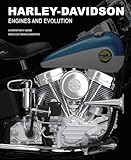


The ten engines below follow Harley-Davidson’s stated family periods. The selection intentionally includes Big Twin, Sportster, and V-Rod families; it is not exhaustive. The company’s history also highlights engines such as the Original Single, F-Head V-Twin, Sportster Evolution, and Revolution Max.
10 legendary Harley-Davidson engines
1. Atmospheric V-Twin (1909)
Harley-Davidson dates its first V-Twin offering to 1909. The 49.5-cubic-inch engine was rated at about 7 horsepower and placed its cylinders at the 45-degree angle that remains a defining feature of traditional Harley-Davidson V-Twins. Its historical importance should not be mistaken for a flawless start: the company says this one-year offering was sometimes unreliable.
#1 Best Overall
2. Flathead (1929–1973)
The Flathead’s side-valve layout made it a comparatively simple workhorse. Harley-Davidson’s history identifies a 45-cubic-inch D model in 1929 and a 74-cubic-inch V model in 1930. Flatheads powered military motorcycles through World War II, and the design remained in the Servi-Car utility trike through 1973. That long span shows the usefulness and adaptability of the family, not the expected service life of an individual engine.
3. Knucklehead (1936–1947)
The Knucklehead was Harley-Davidson’s first overhead-valve engine, offered first in 61-cubic-inch form and later at 74 cubic inches. The company says it introduced the basic architecture for future air-cooled Harley-Davidson V-Twins. Its name comes from the distinctive rocker covers over the valves.
4. Panhead (1948–1965)
The Panhead kept the overhead-valve V-Twin formula but brought substantial revisions. Harley-Davidson lists aluminum cylinder heads, hydraulic valve lifters, improved oiling, and crank-pin roller bearings among the changes. It came in 61- and 74-cubic-inch versions; the company history says it weighed eight pounds less than the Knucklehead. The nickname refers to the shape of its rocker covers.
5. Ironhead Sportster (1957–1985)
The Ironhead was the original Sportster engine family, introduced as a 55-cubic-inch V-Twin. Its overhead valves, aluminum pistons, hemispheric combustion chambers, and shared engine-and-transmission case helped distinguish the compact Sportster from the Big Twin line. The later Sportster Evolution is a separate engine family, so its production history should not be folded into the Ironhead’s.
Rank #3

6. Shovelhead (1966–1984)
Harley-Davidson’s Shovelhead history lists 74- and 80-cubic-inch versions. The design brought improved aluminum heads, stronger valves and pistons, and a 12-volt electrical system. As with the Knucklehead and Panhead, the name comes from the rocker-cover shape rather than a formal technical designation.
7. V2 Evolution (1984–1999)
The 80-cubic-inch V2 Evolution brought aluminum cylinders and heads, updated ignition, and a combustion chamber designed to make power on lower-quality unleaded fuel while improving fuel economy. Harley-Davidson says it was the company’s first engine created using computer-aided design. The manufacturer calls it “stout and reliable” and says design and manufacturing advances made it oil-tight; those are company characterizations, not independent long-term reliability measurements.
Rank #4
8. Twin Cam (1999–2017)
The Twin Cam began at 88 cubic inches and eventually reached 110, according to Harley-Davidson’s history. Its name refers to its dual-camshaft design; the company says it shared only 18 parts with the Evolution it replaced. B-series versions used a counter-balancer in rigid-mount Softail applications. The family’s long run and broad range of versions make it a major chapter in the modern Big Twin story, but neither fact establishes a universal reliability ranking.
9. Revolution V-Twin (2002–2017)
Developed for the V-Rod with Porsche assistance, the Revolution was a deliberate break from the traditional air-cooled Big Twin. It displaced 69 cubic inches (1,131 cc) and combined liquid cooling, a 60-degree cylinder angle, dual overhead cams, and four-valve heads. Its engineering shows that Harley-Davidson’s history is not limited to one V-Twin layout or cooling approach.
The Tool Desk
Outbyte PC Repair FREEClear out junk files and repair common Windows errorsFree Scan →Outbyte Driver Updater FREEFix the driver behind crashes, sound loss and screen glitchesFind Drivers →Best Value
10. Milwaukee-Eight (2017–present)
The Milwaukee-Eight name refers to four valves per cylinder and eight valves total. Harley-Davidson’s 2016 launch announcement described 107- and 114-cubic-inch versions for 2017 Touring and Trike models. The design returned to one camshaft while retaining the 45-degree V-Twin layout. The company’s history says the family later reached 121 cubic inches in regular production and added variable valve timing in 2023; those later specifications should not be projected back onto the 2017 launch models.
Harley-Davidson’s August 23, 2016 announcement reported that, in its launch-model comparisons, the 107 accelerated 11% quicker from 0–60 mph and 11% quicker from 60–80 mph in top gear than the Twin Cam High Output 103. It reported the 114 was 8% quicker from 0–60 mph and 12% quicker from 60–80 mph than the Twin Cam 110. These are manufacturer-reported comparisons for those launch configurations, not independent tests or claims about every version.
Independent reader supportYour contribution helps us test, update, and keep practical guides available for everyone.Knucklehead vs. Panhead vs. Shovelhead: what changed?
| Engine | Production period | Displacement in the cited history | What distinguishes it |
|---|---|---|---|
| Knucklehead | 1936–1947 | 61 cubic inches initially; later 74 | Harley-Davidson’s first overhead-valve engine; established basic architecture for later air-cooled V-Twins. |
| Panhead | 1948–1965 | 61 and 74 cubic inches | Added aluminum heads, hydraulic lifters, improved oiling, and crank-pin roller bearings; eight pounds lighter than the Knucklehead according to Harley-Davidson. |
| Shovelhead | 1966–1984 | 74 and 80 cubic inches | Featured improved aluminum heads, stronger valves and pistons, and a 12-volt electrical system. |
All three are overhead-valve Big Twin families, but their names are best understood as historical labels for successive designs, not interchangeable engine specifications. The differences in heads, valvetrain, oiling, and displacement explain why identifying the exact family matters when researching a motorcycle or its parts.
Which Harley engines are known for reliability?
Harley-Davidson explicitly describes the Evolution as “stout and reliable,” but the available company history does not provide a comparative reliability study. It gives no average mileage before rebuild, failure rate, or measured ranking across the ten families. Long production periods and continued historical interest are evidence of staying power and influence; by themselves, they do not show that one engine will outlast another in service.
For a specific motorcycle, condition, maintenance records, prior repairs, and intended use matter more than a family’s reputation alone. A buyer should evaluate the particular engine and model rather than treating “legendary” as a warranty of reliability.
Quick Recap
Sources and further reading
- Harley-Davidson: Your Guide to the History of Harley-Davidson Engine Types — dates, displacements, and company descriptions of the engine families.
- Harley-Davidson Media Site, August 23, 2016: Milwaukee-Eight launch announcement — launch-model specifications and manufacturer-reported performance comparisons.
- Motorbooks/Quarto Group, Autumn 2021 catalog: The Harley-Davidson Source Book: All the Production Models Since 1903 — an illustrated historical reference listing several of these families.
Product prices and availability are accurate as of the date/time indicated and are subject to change. Any price and availability information displayed on Amazon at the time of purchase will apply.




