These ten motorcycles capture different ways the 1970s changed road-bike design: a Japanese performance contest sparked by Honda’s CB750, European sport and touring machines, and a sharply styled American café racer. This is a curated selection, not a definitive ranking. The CB750 debuted in 1969, so its place here is as the bike that helped set the decade’s contest in motion.
How these motorcycles were selected
The selection weighs documented influence, engineering or design distinction, market or racing significance, and the range of manufacturers and intended uses represented. It includes standard roadsters, sport bikes, touring designs and a café racer; the order is not a ranking. Historical specifications below are attributed to the manufacturers or institutions that report them, rather than presented as results from a shared modern test.
Japanese bikes that raised the performance stakes
1. Honda Dream CB750 FOUR
Launched in 1969, the CB750 FOUR belongs at the beginning of a story about the 1970s rather than as a bike that debuted in the decade. Honda’s historical account credits it with a front hydraulic disc brake and reports 67 PS, a 0–400 m time of 12.4 seconds, and a top speed of 200 km/h. These are Honda’s reported figures, not independent comparative test results. Honda also says the CB750 spurred competing manufacturers and places Kawasaki’s early-1970s 900 Super Four in the resulting big-bike contest. Honda’s CB750 history
2. Kawasaki 900 Super Four (Z1)
The Z1 was Kawasaki’s answer in the emerging large-capacity performance contest. Honda identifies the early-1970s 900 Super Four as a competitor to the CB750, while Kawasaki’s heritage account highlights the model’s role in building the company’s reputation. Together, these accounts make the Z1 a defining counterpart to Honda’s machine, not merely another large motorcycle of the period. Honda’s account of the contest and Kawasaki’s heritage history
What’s actually slowing this PC down?
Pick the symptom - the matching free tool is one click away.
#1 Best Overall

- Revell Model Kit #17326, Skill Level 5, Contains 107-Parts, Recommended for ages 13 and up
- Classic California “chopper” styling. Rigid-style frame with a raked neck.
- Period-perfect details include stretched-out “springer” forks, wild chrome dual exhausts with custom “fishtail” tips, and a high-back contour seat backed by a chrome sissy bar.
- Molded in white and clear, with chrome plated parts and black vinyl tires.
- Illustrated assembly instructions. Requires paint and glue. (not included)
3. Kawasaki Z650
The Z650 shows that the decade’s Japanese performance story was not limited to the biggest engines. Kawasaki describes it as a 64-horsepower motorcycle with a notably capable chassis and suspension. That combination makes it a useful counterpoint to the Z1: Kawasaki’s account emphasizes balanced handling as well as output. The power figure and assessment are Kawasaki’s, and its heritage page does not state a publication date. Kawasaki heritage
European sport and touring designs
4. BMW R90S
BMW Motorrad calls the R90S a 1970s design classic and identifies it as the company’s first model above 750 cc. BMW also says it was the first BMW to reach a top speed of 200 km/h and notes its twin front disc brakes. Those details place the R90S at the intersection of speed, braking equipment and the sport-oriented image that BMW cultivated during the decade. The claims are BMW’s historical account; the page does not state a publication date. BMW Motorrad’s 1970s history
Rank #2

- Collectible quality True-to-scale detailed vehicle
- Die-cast metal body with plastic parts
- Officially licensed Harley Davidson product by Maisto International
- Highly-detailed die-cast precision model for collectible or play
- Detailed die-cast precision model
5. BMW R100 RS
The R100 RS represents a different priority: covering distance with greater protection and comfort. BMW identifies it as its first 1-litre motorcycle and describes the 1970s as a period when cockpit-style instruments and full fairings became more prominent. Its significance in this selection is therefore not simply engine size; it reflects the growing role of integrated touring design in a decade often remembered for superbikes. BMW Motorrad’s 1970s history
6. Ducati 750 GT
Ducati’s 750 GT marks the Italian L-twin branch of the sport-bike story. Audrain Auto Museum says Fabio Taglioni engineered it around a 90-degree L-twin as the company faced rising competition from multi-cylinder motorcycles. That account frames the model as a distinct engineering response rather than another entry in the Japanese four-cylinder contest. Audrain Auto Museum’s account of 1970s superbikes and road bikes
Outdated Drivers Are Slowing You Down
One free scan finds every outdated or missing driver and matches the right update for your exact hardware.Free scan · exact hardware matchPC Slower Than It Used to Be?
A free scan shows the junk files, broken settings and background clutter dragging Windows down - then fixes them in one click.Free scan · Windows 10 & 11Rank #3
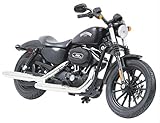
- 2014 Harley Davidson Sportster Iron 883 Motorcycle Model 1/12 by Maisto 32326
7. Ducati 750 Super Sport
The 750 Super Sport belongs in the same broad European sport-bike conversation as the 750 GT, but it is a separate model. Audrain’s road-bike comparison names the Super Sport as a competing European sport model; it does not establish that the two Ducatis are interchangeable or provide the same account of their design. Keeping them distinct shows the range within Ducati’s contribution to the era. Audrain Auto Museum’s comparison
A distinctive American café racer
8. Harley-Davidson XLCR
Introduced in 1977, the XLCR turned a Sportster base into a focused café-racer statement. The National Motorcycle Museum describes its low bars, rear-set foot pegs, blacked-out engine and exhaust, and triple-disc brakes. Its design set it apart from both conventional Harley-Davidsons and the Japanese performance bikes competing for attention. The details here are the museum’s description, not a claim of universal critical consensus. National Motorcycle Museum: 1977 Harley-Davidson XLCR
Rank #4

- Prototype & Authenticity:This 1:12 scale motorcycle toy is inspired by the legendary compatible for Harley davidson motorcycle model. With its sharp contours and aggressive stance, this mini motorcycle model captures the spirit of the real moto superbike toy. A great gift choice for collectors and kids who love high-performance machines.
- Craftsmanship & Materials:Built with durable diecast metal motorcycle and precision-molded plastic parts, this compatible for Harley davidson motorcycle model boasts detailed toy craftsmanship. From the frame to the handlebar and wheels, every part echoes the engineering spirit of the original motorcycle model. Tough, solid, and safe for display or play.
- Scale & Dimensions:This mini motorcycle toy is made in 1:12 scale motorcycle, replicating every detail of the real compatible for Harley davidson motorcycle model.The 1:12 scale motorcycle toy dimensions are 7.95×3.07×4.33 inch inches, and its net weight is 0.34 lb., perfect for tabletop display. Lightweight yet substantial, it's an ideal collectible for motorcycle model fans of all ages.
- Features & Scenes:The compatible for Harley davidson motorcycle model is suitable for 5-7 inch dolls.Whether used as a shelf display, kid’s play toy, or a collector’s gift, this compatible for Harley davidson moto model adds excitement anywhere. Its rolling wheels and realistic bodywork make it a versatile toy motorcycle suitable for bedroom décor, desk collections, or racing-themed setups.
- Wory-Free Purchash:We maintain strict production standards to ensure the highest quality compatible for Harley davidson motor models. Our products are delivered in sturdy packaging to ensure safe shipping, so you can buy with confidence. Your satisfaction is our top priority and we back our motorcycle model with a one-year warranty. If any purchasing issues arise, our dedicated customer support team will quickly resolve the issue within 24 hours to ensure a worry-free experience.
What this selection says about the decade
The 1970s motorcycle story cannot be reduced to a single “best” formula. The Honda and Kawasaki examples show how large-capacity Japanese road bikes intensified competition; BMW’s R90S and R100 RS illustrate sport and touring priorities; Ducati’s two 750s represent a distinct Italian approach; and the XLCR demonstrates how strongly styling could define a motorcycle’s identity. Those differences—along with the CB750’s 1969 launch—are why “iconic” is best treated as an editorial judgment grounded in influence and design, not a settled universal ranking.
Quick Recap
Best Value

- Officially Licensed Replica – Authentic styling and branding from the original manufacturer
- Die-Cast Metal Construction – Durable metal body with detailed plastic components
- Highly Detailed Design – Realistic exterior styling and interior details
- Free-Rolling Wheels – Smooth movement for display or play
- Perfect for Collectors & Kids – Great gift for automotive fans
Product prices and availability are accurate as of the date/time indicated and are subject to change. Any price and availability information displayed on Amazon at the time of purchase will apply.




