Do these 3 things before closing this tab:
1Clear out junk files and repair common Windows errors2Scan for outdated or missing drivers - takes under a minute3Repair Windows errors before they cause bigger problemsNo Harley-Davidson is guaranteed to last forever, and the available evidence does not establish a reliable top-ten ranking. But several long-running Harley families have histories that make them sensible candidates for long-term ownership—provided the individual motorcycle has been maintained, stored, and inspected well. Here are 10 examples to consider, with the model years and generations that give each its context.
What “last practically forever” means for a Harley
Think of longevity as a result of the specific motorcycle’s design, use, maintenance, storage, and present condition—not as a promise attached to a model name. Harley-Davidson says mileage alone is not an accurate measure of mechanical condition. Its guidance says a touring motorcycle may be considered high-mileage around 50,000 to 60,000 miles, but that is neither a service limit nor a lifespan guarantee, and it does not apply as a universal threshold to every Harley. Harley-Davidson’s mileage guidance also reports a J.D. Power estimate of 3,000 miles ridden per year; that is an estimate, not a Harley-specific average.
The manufacturer’s histories document family origins and engineering milestones, not comparative survival rates. The ten motorcycles below are therefore longevity candidates, not a ranked reliability list. A long-running name can help you find examples and parts information, but it cannot substitute for checking the engine generation and condition of the bike in front of you.
10 Harley-Davidson models and generations to consider
These examples are drawn from manufacturer-documented model histories. The year or generation matters: bikes sold under a familiar family name can differ substantially across decades.
What’s actually slowing this PC down?
Pick the symptom - the matching free tool is one click away.
#1 Best Overall

- Collectible quality True-to-scale detailed vehicle
- Die-cast metal body with plastic parts
- Officially licensed Harley Davidson product by Maisto International
- Highly-detailed die-cast precision model for collectible or play
- Detailed die-cast precision model
1. Evolution Sportster (1986–2022)
The Sportster family dates to 1957, while Harley-Davidson introduced its Sportster Evolution engine in 1986. That makes an Evolution Sportster an established family to investigate, not a guarantee that every example is trouble-free. The manufacturer records later Sportster updates including a five-speed transmission and belt drive in 1991. When comparing bikes, identify the specific year and inspect its service history rather than treating “Sportster” as one unchanging design. Harley-Davidson’s Sportster history covers these milestones.
2. Evolution Big Twin models (1984 onward)
Harley-Davidson introduced the Evolution engine in 1984 and describes it as a step forward in reliability and performance. That is the manufacturer’s historical assessment, not an independent failure-rate comparison. “Evolution” also refers to different applications; identify the model and engine in the actual motorcycle, and do not assume a Big Twin and Sportster have identical service needs. The company’s Touring history describes the 1984 milestone.
3. Electra Glide (1965 and later generations)
The Electra Glide joined the lineup in 1965 and became part of Harley-Davidson’s long-distance touring story. The company documents a Touring-family frame redesign for model year 2009 and Project Rushmore changes in 2014. Those milestones are useful for narrowing a search to a particular generation; they do not establish that one generation lasts longer than another. The manufacturer’s Touring history provides the model timeline.
Rank #2
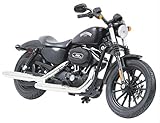
- 2014 Harley Davidson Sportster Iron 883 Motorcycle Model 1/12 by Maisto 32326
4. Road King (1994 and later generations)
Harley-Davidson added the Road King to the Touring line in 1994, blending earlier Electra Glide styling with touring equipment. It is a long-running touring candidate for a rider who wants a platform intended for road use. Check the exact year, engine, and service records: the continued Road King name does not mean all versions share the same architecture or condition. Harley-Davidson’s Touring history documents its introduction.
Crashes, No Sound, or Screen Glitches?
Random freezes, missing sound and display glitches usually trace back to one bad driver. Find and replace yours safely.Free scan · under a minutePC Slower Than It Used to Be?
A free scan shows the junk files, broken settings and background clutter dragging Windows down - then fixes them in one click.Free scan · Windows 10 & 115. Twin Cam 88 Dyna (model year 1999)
Harley-Davidson introduced the Twin Cam 88 on Dyna models for model year 1999, replacing the Evolution Big Twin. This gives a used-bike shopper a clear platform-history distinction to investigate. It does not show that all Twin Cam years have the same reliability or maintenance requirements, so verify the engine and year rather than relying on the family name. Harley-Davidson’s model history records the change.
6. Twin Cam 88 Touring models (model year 1999)
The Twin Cam 88 also arrived on Touring models for model year 1999. A Touring bike may be appealing if the intended use is extended road riding, but its mileage has to be judged in that context. Harley-Davidson says type of motorcycle, riding conditions, maintenance, storage, and overall condition all affect what an odometer reading means. The 1999 engine milestone identifies a generation to research; it is not a durability verdict.
Rank #3
- Officially Licensed Replica – Authentic styling and branding from the original manufacturer
- Die-Cast Metal Construction – Durable metal body with detailed plastic components
- Highly Detailed Design – Realistic exterior styling and interior details
- Free-Rolling Wheels – Smooth movement for display or play
- Perfect for Collectors & Kids – Great gift for automotive fans
7. Touring models after the 2009 frame redesign
Harley-Davidson redesigned the Touring frame for model year 2009. That makes post-redesign bikes a distinct comparison point for buyers weighing touring generations. The documented redesign is a model-history fact, not evidence of a longer service life. Compare the specific motorcycle’s records and condition, and avoid blending this generation with earlier Touring models when assessing a purchase.
8. Touring models with Project Rushmore changes (2014)
Project Rushmore brought changes to Touring models in 2014. Buyers considering these bikes should identify the model year and equipment rather than assume the changes make every example more durable. The manufacturer describes Touring motorcycles as designed for long-distance riding and comfort, but that intended use is not proof of superior longevity. The company’s Touring history outlines the milestone.
Quick wins for a faster PC:
Clear out junk files and repair common Windows errorsFree Scan →Scan for outdated or missing drivers - takes under a minuteDriver Scan →9. Later Sportsters with a five-speed transmission and belt drive (1991 onward)
Harley-Davidson’s Sportster history records the five-speed transmission and belt drive as 1991 updates. These later Evolution Sportsters offer a defined configuration to compare with earlier examples, while still requiring year-specific inspection and maintenance records. The update is not a claim that these bikes outlast other Sportsters.
Rank #4

- Officially Licensed Replica – Authentic styling and branding from the original manufacturer
- Die-Cast Metal Construction – Durable metal body with detailed plastic components
- Highly Detailed Design – Realistic exterior styling and interior details
- Free-Rolling Wheels – Smooth movement for display or play
- Perfect for Collectors & Kids – Great gift for automotive fans
10. A current Road King or other current family model, after confirming its generation
A current Road King or another current Harley family model can be considered for long-term ownership, but a familiar name does not mean it shares an engine architecture with older versions. Harley-Davidson’s model-code guide lists current families and codes, including Road King FLHR, and explains that model codes help identify motorcycles for parts and accessory fitment. Availability and model details can change, so verify the relevant year and code in the manufacturer’s model-code guide before comparing parts or service information.
Independent reader supportYour contribution helps us test, update, and keep practical guides available for everyone.How to evaluate a high-mileage Harley before buying
Use the odometer as a prompt for questions, not as a pass/fail score. Harley-Davidson says an extended period of inactivity may call for a thorough inspection and investment before a motorcycle is reliable again. A low-mileage bike that sat for years is not automatically a safer buy than a regularly ridden, well-documented example.
- Identify the exact model year and engine generation. Distinguish the relevant platform, such as Sportster Evolution, Evolution Big Twin, or Twin Cam, and note major redesign years.
- Ask how it was ridden. Find out whether the bike saw steady highway use, short trips, hard use, severe conditions, or heavy stop-and-go riding.
- Request service records. Receipts and a consistent history are more useful than a seller’s general claim that maintenance was done.
- Ask about storage. Establish how long it sat and what was done before it returned to regular use.
- Assess current mechanical condition. Arrange a qualified inspection if you lack the tools, service data, or experience to judge the motorcycle yourself. Harley-Davidson advises using an authorized dealer when the owner is not qualified to perform required maintenance.
- Verify parts and service fitment. Use the model code and exact year to confirm the correct parts and service information rather than assuming a component fits every bike with the same family name.
For a touring Harley, 50,000 miles is not automatically too much. Harley-Davidson’s 50,000–60,000-mile reference is a possible high-mileage range for touring motorcycles, not a mechanical cutoff. The maintenance and use history, storage, and inspection findings determine whether a particular motorcycle is worth buying.
Best Value

- Collectible quality True-to-scale detailed vehicle
- Die-cast metal body with plastic parts
- Officially licensed Harley Davidson product by Maisto International
- Highly-detailed die-cast precision model for collectible or play
- Detailed die-cast precision model
Maintenance that supports long service life
Harley-Davidson’s general maintenance guidance recommends changing the oil and filter at the first 1,000-mile service and then every 5,000 miles. Treat that as general guidance, not a replacement for the owner’s manual for the specific model year and engine. The manufacturer says its schedules assume average riding conditions; severe conditions call for more frequent service. Its 2026 Softail manual excerpt includes extreme temperatures, dusty or rough environments, long storage, short runs, heavy stop-and-go traffic, and poor fuel quality among those conditions. Harley-Davidson’s maintenance guidance and Motorcycle Service FAQ direct owners to the exact manual and schedule.
If you need an oil and filter kit or service information, match it to the motorcycle’s model year and engine before purchasing. A generic kit cannot be assumed to fit every Harley.
Quick Recap
Product prices and availability are accurate as of the date/time indicated and are subject to change. Any price and availability information displayed on Amazon at the time of purchase will apply.




