Free tools Windows power users keep installed
One-click scans. No signup required.
What are the greatest Jaguar sports cars? This ranking weighs lasting design influence, engineering, competition achievement, performance for each car’s era, and cultural recognition. It compares road cars with competition-derived machines, so a major racing record can outweigh everyday usability. The order is an editorial judgment, not an objective consensus; Jaguar’s own heritage and motorsport accounts document many of the milestones behind it.
How this ranking works
These ten cars qualify through their connection to Jaguar’s sports-car story, whether they were built for the road, developed for competition, or adapted from a racing platform. The criteria are design influence, technical contribution, major race results, performance in period, and cultural recognition. A car’s top speed in one era cannot be compared directly with another’s as a measure of overall greatness.
Jaguar’s heritage and motorsport pages are the main historical references here. Their promotional descriptions and record claims are attributed to the company; the ranking itself is the author’s judgment.
The 10 greatest Jaguar sports cars
1. Jaguar E-Type (1961)
The E-Type earns the top spot for the way it brought Jaguar’s sports-car design and performance into the public imagination. It made a sensation at its 1961 Geneva Motor Show introduction, and Jaguar describes it as one of the most beautiful cars of all time. Jaguar’s heritage page credits Enzo Ferrari with calling it “the most beautiful car ever made.” That attribution is Jaguar’s; it is not independently verified here.
Do these 3 things before closing this tab:
1Repair Windows errors before they cause bigger problems2Scan for outdated or missing drivers - takes under a minute3Clear out junk files and repair common Windows errors#1 Best Overall
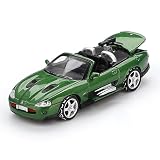
- Brand new box
- Real rubber tires.
- Detailed interior, exterior.
- Die-cast metal body and chassis,
- Dimensions approximately L-2.75 inches long.
Unlike the Le Mans cars below, the E-Type’s case rests principally on its road-car impact and lasting design reputation. Its launch made it a defining Jaguar sports car beyond the race circuit. Jaguar’s E-Type heritage page recounts its introduction and the Ferrari attribution.
2. Jaguar D-Type (1954 onward)
The D-Type turned racing purpose into a defining part of Jaguar’s sports-car identity. Jaguar credits it with three consecutive Le Mans victories, in 1955, 1956, and 1957; the heritage account also says it took five of the top six places in 1957. Its construction was part of the story: Jaguar describes the D-Type as among the first vehicles to use a unibody structure.
Jaguar’s racing page lists a 3,442 cc engine and 250 bhp. That combination of technical ambition and sustained endurance-racing success places the D-Type near the top, even though its competition focus makes it less relevant as an everyday road car. Jaguar’s D-Type heritage page and Jaguar’s racing history document its construction and record.
3. Jaguar C-Type (1951–1953)
Originally named XK120C, the C-Type brought lightweight design and technical innovation to Jaguar’s racing program. Jaguar says it was 25% lighter than the XK120 and won at Le Mans on its debut in 1951. The company’s motorsport account credits engineer Bob Knight with its multi-tube chassis and describes a 3.4-litre straight-six producing 200 bhp.
PC Slower Than It Used to Be?
A free scan shows the junk files, broken settings and background clutter dragging Windows down - then fixes them in one click.Free scan · Windows 10 & 11Outdated Drivers Are Slowing You Down
One free scan finds every outdated or missing driver and matches the right update for your exact hardware.Free scan · exact hardware matchRank #2
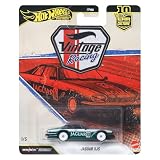
- Premium Collectible Model: Hot Wheels Jaguar XJS from the Car Culture Premium 2026 Vintage Racing Series featuring authentic die cast metal construction
- Authentic Scale Replica: 1:64 scale collectible die cast metal toy car model with precise detailing and craftsmanship
- Real Riders Rubber Tires: Equipped with premium rubber Real Riders wheels for enhanced realism and display quality
- Limited Series Edition: Part 1 of 5 in the exclusive Vintage Racing Series collection for dedicated Hot Wheels enthusiasts
- Classic Jaguar Design: Features the iconic Jaguar XJS sports car styling with accurate proportions and vintage racing livery
The C-Type’s 1953 Le Mans win reinforced its place in the marque’s history, while the use of disc brakes helped make the car a significant engineering chapter as well as a successful racer. It ranks just below the D-Type because its Le Mans record was shorter, not because its contribution was minor. See Jaguar’s C-Type heritage page and Jaguar’s racing history.
4. Jaguar XK120 (1948)
The XK120 helped establish Jaguar’s postwar sports-car identity and served as a test bed for the XK engine. Designed by William Lyons and introduced in 1948, it combined striking presence with remarkable speed for its period. Jaguar’s heritage page says it reached 133 mph and became the world’s fastest production car. Jaguar’s racing page separately lists a speed of 124.6 mph, along with 3,442 cc and 160 bhp. Those are two distinct figures reported on separate Jaguar pages; they should not be treated as one reconciled test result.
The XK120’s importance goes beyond its speed claims: it laid the groundwork for the C-Type and helped make Jaguar’s modern sports-car ambitions credible. Jaguar’s XK120 heritage page and Jaguar’s racing history give the company’s accounts and figures.
5. Jaguar XJ220 (1992)
The XJ220 represents a different kind of greatness: Jaguar’s bid for extreme production-car performance and supercar status. Jaguar reports that it launched as the world’s fastest car and records a certified 217.1 mph. The company also says 282 examples were built. These are Jaguar’s claims and figures; the speed record should not be read as proof that the XJ220 was the fastest car by every measure or at every date.
Rank #3

- Brand new box, Comes in a blister pack.
- Real rubber tires, Authentic detail.
- Detailed interior, Exterior.
- Authentic Paint & Graphics
- Die-cast metal body and chassis
Its place in the ranking comes from the scale of its performance ambition and cultural recognition, not from a direct contest with the racing cars. Jaguar’s XJ220 history gives the company’s record and production account.
6. Jaguar XKSS (1957)
The XKSS translated a competition-winning platform into a road-going car. Jaguar describes it as a conversion of the D-Type that won Le Mans in 1956, giving it a direct connection to one of the marque’s most successful racers. Jaguar says the XKSS is often called the first supercar; that is a historical characterization, not an uncontested technical category.
Its significance lies in the link it makes between track success and road-car desirability. It is less influential as a production model than the E-Type or XK120, but few Jaguar road cars make the competition-to-road connection so clearly. See Jaguar’s XKSS heritage page.
7. Jaguar XKR-S
The XKR-S belongs on a broad Jaguar sports-car list as a high-performance road-going member of the XK family. Its place here reflects the model’s role in carrying Jaguar’s sports-car tradition into a modern performance setting, rather than a Le Mans record or a foundational technical breakthrough. Jaguar’s available heritage material is less detailed on this model than on the cars ranked above, so this entry does not rely on an unsupported specification or performance claim.
Rank #4

- 1/18 Diecast Model Car, This is Collectible Diecast Model Car, not toy, intended for ages 15 years and older
- Officially licensed
- Steerable wheels and rubber tires
- Made of Diecast with some plastic parts
- Dimensions approximately L-9.5, W-5, H-4 inches.
8. Jaguar XK (2006–2014)
The later XK continued Jaguar’s grand-touring sports-car line in a period when the marque’s historic competition cars were already firmly established. It earns a place for sustaining the road-car tradition represented earlier by the XK120 and E-Type. Its significance in this ranking is continuity and cultural recognition rather than a documented competition achievement in the historical accounts cited above.
9. Jaguar F-Type
The F-Type is a contemporary expression of Jaguar’s two-seat sports-car identity. Its connection to the lineage is clearest as a road car rather than a competition-derived model: it carries the marque’s sports-car tradition forward for modern drivers. The ranking recognizes that role while placing it below cars whose documented racing records or historical influence reshaped Jaguar’s reputation.
10. Jaguar SS 100
The SS 100 is an early sports-car predecessor to Jaguar’s postwar icons. Its place at the edge of this list acknowledges the roots of the marque’s sports-car identity, even though the evidence cited here is much stronger for the later XK and Le Mans-era cars. It rounds out the lineage rather than matching the competition and technical milestones of the cars above.
Independent reader supportYour contribution helps us test, update, and keep practical guides available for everyone.What the ranking says about Jaguar sports cars
Jaguar’s sports-car story is not a single march toward higher speed. The XK120 established a postwar identity and helped develop the XK engine; the C-Type and D-Type made endurance-racing success central to the marque; the E-Type became a landmark road car; the XKSS connected a Le Mans-winning platform to road use; and the XJ220 pursued supercar performance. Their achievements are different, which is why a straight speed comparison would miss what makes each one significant.
Quick Recap
Product prices and availability are accurate as of the date/time indicated and are subject to change. Any price and availability information displayed on Amazon at the time of purchase will apply.




