The original Toyota Previa was the same first-generation people carrier Toyota sold in Japan as the Estima. Its defining feature was an unusual midship layout: a 2.4-litre engine tilted beneath the cabin floor. Toyota added a supercharged option in 1994, offered rear- or four-wheel drive, and expanded seating to eight in some versions. Details varied by market and year, so the UK sales span and U.S. model-year label should not be treated as one global production timeline.
1. Was the original Toyota Previa also called the Estima?
Yes. Toyota introduced the model in Japan as the Estima in May 1990 and marketed it in the United States and Europe as the Previa. The names refer to the same first-generation vehicle, not separate designs. Toyota’s global vehicle history records the launch and market naming.
2. Was the Toyota Previa mid-engine?
Its engine was mounted beneath the cabin, near the center of the floor, rather than in the conventional front-engine position. Toyota says the 2.4-litre engine was installed at a 75-degree angle. The company’s historical account presents this packaging as the reason the cabin could be spacious while also contributing to maneuverability and stability; those are Toyota’s stated design aims, not an independent assessment of real-world handling.
Toyota’s UK archive also highlights the flat cabin floor and low center of gravity associated with the layout. The UK archive’s first-generation entry describes those features.
#1 Best Overall

- Compatible Models : 1991-1997 Previa
- Glass Detail : Tempered Glass
- Glass Location : Left Side , Front Door (rolls up and down)
3. What engine did the first Previa have?
Toyota’s historical Estima account identifies the launch engine as a 2,438 cc 2TZ-FE twin-cam producing 135 PS. The figure is Toyota’s stated output for that engine in its global history; it should not be confused with ratings for later, market-specific versions.
4. Did Toyota make a supercharged Previa?
Yes. Toyota says it added a supercharged version in 1994, rated at 160 PS in its global Estima history. The 1997 U.S. catalog gives different figures for that market and model year: 161 bhp at 5,000 rpm and 201 lb-ft at 3,600 rpm for supercharged configurations. These figures use different units and refer to different scopes, so neither should be generalized to every Previa or Estima. The 1997 U.S. product catalog is specific to that model year.
Rank #2

- High-quality toy car: Package size: 8.6×3.7×2.9 in. package weight: 1.3 pounds. Suitable for playing.
- Exquisite design: Four doors can be opened. The hood and Tailgate can also be opened. Made of zinc alloy, plastic and electronics. Safe material. This model car has detailed interior and exterior. Wheels simulates shock absorption.
- Cool light and sound: Press the front of the car to trigger sounds and lights. Press steering wheel to trigger horn sound.
- Pull back model car: Place the toy car on the ground, hold down its body and pull it back, it will drive forward. Very interesting.
- Awesome Gift: It is an ideal gift toy model car for children, also great to use for collection and decoration.
5. Was the original Previa rear-wheel drive or all-wheel drive?
Toyota’s Estima history lists both rear-wheel drive and four-wheel drive. In the United States, the 1997 catalog calls its four-wheel-drive system All-Trac and describes a viscous-coupling center differential. That catalog identifies the 1997 U.S. system; it does not establish that every market or model year used the same specification.
6. How many seats did a first-generation Previa have?
Seating depended on version and year. Toyota describes a seven-passenger cabin at launch. In February 1993, an eight-passenger version was added with a three-seat second-row bench. Toyota’s UK archive describes the vehicle as seating up to eight across three rows. The eight-seat layout was an option/version, not a feature of every first-generation example.
Quick wins for a faster PC:
Fix the driver behind crashes, sound loss and screen glitchesFind Drivers →Repair Windows errors before they cause bigger problemsFix Now →Rank #3

- High-quality toy car: Package size: 8.6×3.7×2.9 in. package weight: 1.3 pounds. Suitable for playing.
- Exquisite design: Four doors can be opened. The hood and Tailgate can also be opened. Made of zinc alloy, plastic and electronics. Safe material. This model car has detailed interior and exterior. Wheels simulates shock absorption.
- Cool light and sound: Press the front of the car to trigger sounds and lights. Press steering wheel to trigger horn sound.
- Pull back model car: Place the toy car on the ground, hold down its body and pull it back, it will drive forward. Very interesting.
- Awesome Gift: It is an ideal gift toy model car for children, also great to use for collection and decoration.
7. Why did the Previa have an egg-shaped body?
The distinctive rounded exterior was deliberate. Toyota credits Calty Design Research, its North American design studio, with the design, and says Japanese advertising described the vehicle as “an ingenious egg.” The phrase reflects Toyota’s own historical account of the design’s reception and marketing.
8. Did the first-generation Previa change during its run?
Yes. Equipment was updated over time, but the details depended on market and model year. Toyota’s UK retrospective notes later additions including twin airbags and pre-tensioned front seat belts. For a separate market-specific example, the 1997 U.S. catalog lists driver- and passenger-side airbags, crumple zones, and optional four-wheel ABS. Neither source supports assuming identical equipment across all first-generation vehicles.
Rank #4

- [Vehicle Fitment]: Compatible with Toyota Previa 1991-1995 L4 2.4L---Naturally Aspirated; Automatic Transmission
- [Reference Number]: 1155, CU1155, 8011155, 1640076060, 1640076070, 1640076080
- [Specifications]: ① Transmission Oil Cooler Included: Yes; ② Engine Oil Cooler Included: No; ③ Core Height: 16-3/4 inch; ④ Core Thickness: 1-1/4 inch; ⑤ Core Width: 26-5/16 inch; ⑥ Inlet Diameter: 1-1/2 inch; ⑦ Outlet Diameter: 1-1/2 inch
- [Advantage]: A-Premium Radiator is manufactured and tested to the strictest standards for superior performance to restore the vehicle's cooling system performance to optimum operating condition.
- [Buy with Confidence]: A-Premium offers a one-year unlimited-mileage guarantee on our meticulously crafted engine coolant radiator assembly with transmission oil cooler. We offer a wide variety of automotive accessory categories, ensuring that you can hit the road with peace of mind.
For an individual vehicle, check its market, model year, trim and equipment rather than relying on a generic first-generation specification. Toyota’s 1997 Previa owner-information page is one place to identify documentation for that U.S. model year.
Independent reader supportYour contribution helps us test, update, and keep practical guides available for everyone.9. What changed after the original Previa?
The unusual underfloor midship-engine configuration did not continue into the successor. Toyota says the 2000 model moved to a front-engine, front-wheel-drive layout. The change ended the original generation’s defining packaging concept, even though the Previa name continued.
The Tool Desk
Outbyte PC Repair FREERepair Windows errors before they cause bigger problemsFix Now →Outbyte Driver Updater FREEScan for outdated or missing drivers - takes under a minuteDriver Scan →Best Value
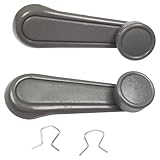
- Compatible With Toyota Tundra Yaris Matrix Tacoma Corolla Camry Sienna T100 Previa 4Runner MR2 Pickup Celica Land Cruiser Tercel Van Starlet 1973-2017 Window Crank Handle
- Direct OEM Replacement: 6926004020B0, 692608910403, 6926089104B0, 6926089104E2, 6926089104E3
- Durable construction: this window crank handle is made of durable material to withstand extended use
- Versatile design: this window crank handle is suitable for use in various locations in the vehicle
- Ideal replacement: this window crank handle matches the fit and function of the original equipment component
10. What years was the original Toyota Previa made?
The answer depends on the market and the archive’s convention. Toyota (GB) describes the first generation as sold in the UK from 1990 to 2000. Toyota USA’s historic-vehicle archive labels its first-generation Previa entry 1991–1997, a U.S. model-year/generation label. These are not competing universal production dates: one is a UK sales span and the other a U.S. archive listing. Toyota’s U.S. historic-vehicle entry is labeled by Toyota as 1991–1997.
Quick Recap
Product prices and availability are accurate as of the date/time indicated and are subject to change. Any price and availability information displayed on Amazon at the time of purchase will apply.




