Quick wins for a faster PC:
Repair Windows errors before they cause bigger problemsFix Now →Scan for outdated or missing drivers - takes under a minuteDriver Scan →Clear out junk files and repair common Windows errorsFree Scan →Concept cars can preview a production model, test new engineering, or simply propose a future that never arrives. The strongest candidates for “what should have been built?” are those that pushed a consequential idea—such as electric propulsion or radically lighter construction—while confronting real barriers to production. The examples below distinguish documented history from the counterfactual: influence is plausible, not provable.
What makes a concept car an industry-changing candidate?
There is no single production promise behind the term. General Motors distinguishes concepts that preview near-production vehicles, precede a specific future model, explore a possible brand segment, or have no specific production intent. That distinction matters: a striking show car is not automatically a car its maker planned to sell.
GM identifies the 1938 Buick Y-Job as the first concept car, built to test design features and technologies. The company says the practice of using concepts to present future designs and technologies spread among automakers worldwide. Andrew Smith, GM Executive Director of Design, Global Advanced Design, describes a concept car’s role this way: “A concept car needs to stimulate conversation about the brand.” (GM News, May 29, 2026)
That makes the title’s “would’ve changed” a judgment, not a historical fact. A concept can influence later design without ever being a realistic production candidate. The ten entries below are best read as ideas with plausible industry consequences, not as a verified ranking of cars that were all ready for the assembly line.
#1 Best Overall

- AMT 1963 Ford Mustang II Concept Car 1:25 Scale Model Kit
Ten concepts and the changes they might have accelerated
1. Buick Y-Job (1938): the concept car as an engineering and design tool
GM says the Y-Job was built on a 1937 Buick Century chassis to test design technologies and features. Its concealed headlights and integrated body design made it a conspicuous demonstration of how a car might look beyond the showroom’s current offerings. GM design executive Andrew Smith calls it “the first concept car ever.” (GM News, May 29, 2026)
What it could have changed: The Y-Job’s most consequential legacy is not a specific feature entering mass production; it is the institutional model it established. By treating a car as a testbed and a public expression of future design, it helped make concept vehicles a recurring part of the industry’s product and design process. Its influence is documented, so it is less an unrealized alternative than the foundational example for the question.
2. GM Le Sabre (1951): turning aerospace imagery into automotive design
GM describes Harley Earl’s Le Sabre as inspired by fighter jets and as setting a template for more than a decade of space-age concept cars. That is evidence of a design direction taking hold, not proof that the car itself was an unrealized production proposal. (GM News, May 29, 2026)
What it might have changed: Had its jet-age visual language been carried into ordinary cars more directly, it could have accelerated the shift toward dramatic, future-facing styling. But the documented significance is its role as a design template; claims about a specific production path or buyer appeal go beyond what the cited history establishes.
Rank #2

- Detailed replica
- Modeled in metalic color
- Detailed interior
- Authentic replica
- Easy to build
3. GM Impact (1990): making an electric two-seater visible
GM Heritage records that the two-seat electric Impact debuted at the 1990 Los Angeles Auto Show, drawing on technical and design experience from the SunRaycer. The archive lists 32 lead-acid rechargeable batteries and a weight of 3,086 pounds. It also says the Impact’s aerodynamic design reduced wind resistance by more than a third. GM describes it as a predecessor to the EV1 and places it within an industry-wide effort to explore alternatives to traditional propulsion. (GM Heritage, “1990 Impact Experimental”)
What it might have changed: A production Impact could have moved a modern electric two-seat car from demonstration toward consumer experience earlier. But the archive does not establish that the concept was production-ready or commercially viable. Its lead-acid battery specification and recorded weight are historical facts, not evidence of competitive range, price, or sales prospects.
4. GM Ultralite (1991): testing how far lightweight construction could go
GM showed a carbon-fiber-composite Ultralite in December 1991. A 1999 Rocky Mountain Institute report’s historical timeline characterizes the concept as halving weight and drag and doubling efficiency. Those are the report’s descriptions of the concept, not independently verified test results here. The report also documents period interest in lighter vehicles, composites, and hybrid-electric drivetrains. (Rocky Mountain Institute, 1999 report)
What it might have changed: If lightweight materials and their manufacturing costs had become workable at scale, the Ultralite could have strengthened the case for efficiency through mass reduction rather than relying only on more powertrain development. That is a plausible direction, not a claim that a carbon-fiber car of this kind could have been produced affordably in 1991. The report’s figures describe the period’s ambitions and should not be treated as present-day performance claims.
Free tools Windows power users keep installed
One-click scans. No signup required.
Rank #3

- Revell Model Kit #14531, Skill Level 5, Contains 77-Parts, Recommended for ages 13 and up
- Detailed 440+6 V-8 engine, hood scoop that can be positioned open or closed
- Detailed interior with separate side panels and a front bench seat
- Molded in white and clear with chrome plated parts and black vinyl tires
- Illustrated assembly instructions. Requires paint and glue. (not included)
5. Volvo ECC: a possible bridge between electric drive and familiar expectations
Autocar’s retrospective on influential concepts names the Volvo ECC among its examples. That source is a secondary selection, and the accessible material does not establish the ECC’s production intent, precise technical readiness, or why it did not become a production car. (Autocar, “The most important concept cars ever created”)
Why it belongs cautiously: The ECC is a useful candidate for considering how concept cars can explore new propulsion or design directions, but the evidence available here is insufficient to make a specific counterfactual about its production or likely market effect. Its inclusion is therefore an example of the limit of a list built from uneven historical records, rather than a firm claim that it would have changed the industry.
6. Renault DeZir: a design proposal, not a verified missed production opportunity
Autocar also includes Renault’s DeZir in its retrospective selection. The cited article does not, by itself, establish whether the car was intended for production, what technical obstacles it faced, or what industry outcome its production would have changed. (Autocar, “The most important concept cars ever created”)
Why the distinction matters: A design can influence a brand’s later work without being a viable proposed model. Without direct historical evidence for the DeZir’s production plan and engineering, it is not possible to responsibly claim that building it would have shifted the market.
Crashes, No Sound, or Screen Glitches?
Random freezes, missing sound and display glitches usually trace back to one bad driver. Find and replace yours safely.Free scan · under a minutePC Slower Than It Used to Be?
A free scan shows the junk files, broken settings and background clutter dragging Windows down - then fixes them in one click.Free scan · Windows 10 & 11Rank #4
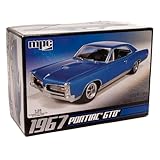
- V8 POWER: The model features a 400 cubic inch V8 engine, reflecting the muscle and power that defined the GTO's reputation.
- DETAILED SUSPENSION & EXHAUST: The kit incorporates separate rear suspension and exhaust detailing, adding to the realism of the model.
- BUCKET SEATS & CONSOLE: The model's interior features bucket seats and a floor shifter with a console, capturing the iconic look and feel of the GTO.
- OPTIONAL SUPERCHARGER: For those seeking more power, the kit offers an optional supercharger, allowing you to customize your model.
- CLEAR & COMPREHENSIVE INSTRUCTIONS: The included instructions are clear and user-friendly, making the kit accessible to modelers of different skill levels, from beginners to experienced hobbyists.
7–10. The remaining slots: why a definitive ten cannot be responsibly named here
A ten-car list implies that each vehicle meets the same test: it was not built, production was a credible possibility, and its arrival could plausibly have altered design, technology, or market direction. The available source material does not establish those conditions for ten distinct cars. GM’s own descriptions show why the category is difficult: some concepts are previews, some are precursors to later models, and some have no specific production intent at all.
Rather than fill four slots with unsupported claims, the useful takeaway is a test readers can apply to any proposed candidate:
- Was production intended? A show car with no production plan is different from a delayed or cancelled model.
- What was technically ready at the time? Separate demonstrated features from aspirational specifications.
- What blocked production? Cost, manufacturing, regulation, infrastructure, and buyer demand can all matter, but each requires evidence for that particular car.
- What would have changed beyond the car itself? Identify a plausible effect on a segment, production method, or technology path, and distinguish it from influence that actually occurred.
Why concept cars rarely make a simple “should have been built” list
Concept vehicles serve different purposes. Some test a feature or styling direction; others create a public image of the future or signal an area of exploration. GM’s account of the Y-Job notes that the company’s 1956 press release portrayed the “dream car” as a tool for advanced research and a symbol of public fascination with the future. That is a historical company statement reproduced in GM’s modern account, not an independent verdict on every concept’s purpose. (GM News, May 29, 2026)
Feasibility also depends on its era. The Ultralite’s lightweight composite approach and the Impact’s electric architecture should be understood in their historical settings. A technology that looks persuasive in hindsight may still have faced costly materials, manufacturing hurdles, or a market and infrastructure not ready to support it. The Rocky Mountain Institute’s 1999 discussion is useful for understanding period thinking about vehicle efficiency, but its timeline and projections are historical, not current forecasts. (Rocky Mountain Institute, 1999 report)
How to judge the counterfactual
The best answer to “what concept cars should have been built?” is not simply the boldest-looking show cars. Give the most weight to concepts with a documented technical or design proposition, a credible path to buyers, and a specific reason their arrival might have influenced more than one model. The Y-Job demonstrates how a concept-car practice itself can reshape design work; the Impact and Ultralite show how electric propulsion and lightweight construction were explored in earlier eras. Whether any particular concept would have changed the industry if produced remains a reasoned possibility, not a fact.
Quick Recap
Product prices and availability are accurate as of the date/time indicated and are subject to change. Any price and availability information displayed on Amazon at the time of purchase will apply.




