Recommended Free Tools
The Toyota V6 to look for is the naturally aspirated 3.5-liter 2GR-FE. It powered a wide range of Toyota and Lexus models, including the Camry, Avalon, Highlander, RAV4, Sienna, Venza, ES 350 and RX 350. Its combination of widespread use, chain-driven camshafts, strong performance and relatively straightforward design makes it one of the best Toyota V6 choices for a used-car buyer.
This is a North American used-car ranking of vehicle-and-engine combinations, not an official Toyota reliability rating or an engine-specific failure-rate study. A well-maintained Camry with a 2GR-FE can be a better purchase than a neglected Lexus with the same basic engine. The inspection history, rust condition, transmission, cooling system and recall status still matter.


Quick answer: The best overall choices are a well-documented Toyota Avalon or Camry with the 2GR-FE. Choose an ES 350 for quiet luxury, a Venza or RX 350 for crossover duty, a Sienna for family hauling and a RAV4 V6 for compact-SUV performance. The Lexus IS 350 and RC 350 also use the 2GR family, but their 2GR-FSE engines are more complex and their performance-oriented chassis can cost more to own.
How this list was ranked
There is no publicly available database that cleanly tracks failures of every Toyota V6 by engine code, year and application. Long-term studies such as iSeeCars’ longevity research evaluate complete vehicle models, not isolated engines. Repair databases likewise combine engine, transmission, suspension, electronics and other repairs.
Free tools Windows power users keep installed
One-click scans. No signup required.
Accordingly, this is an editorial ranking based on:
- Engine design and mechanical complexity
- Model-year maturity and known Toyota service documentation
- Parts availability and the number of technicians familiar with the vehicle
- Model-level evidence of long service life
- Vehicle ownership costs beyond the engine itself
- Exposure to rust, towing, off-road use, AWD wear and heavy-duty family use
The first eight choices primarily use the simpler 2GR-FE. The last two are enthusiast-oriented Lexus alternatives using the related 2GR-FSE. They belong on the list because they are compelling Toyota V6 applications, not because they are the cheapest or simplest vehicles to keep indefinitely.
Know the engine code before you buy
2GR-FE: the reliability-focused choice
The 2GR-FE is a naturally aspirated 3.5-liter V6 with Dual VVT-i and chain-driven camshafts. Toyota specifically described the 2012 Camry V6 as using chain-driven camshafts, which means there is no routine timing-belt replacement comparable to older Toyota V6 engines such as the 1MZ-FE and 3MZ-FE. Depending on the vehicle and calibration, output was generally about 266 to 275 horsepower. Toyota’s official 2012 Camry specifications document the engine and its chain-driven design.
Its biggest ownership advantage is scale. The engine appeared in several high-volume Toyota and Lexus vehicles, so replacement parts, used engines, repair information and technician experience are generally easier to find than for a low-volume engine. Naturally aspirated operation also avoids turbocharger hardware and turbo-related heat.
That does not make the 2GR-FE maintenance-free. Water pumps, seals, hoses, oil-cooler pipes, VVT components, radiators and transmissions can all need attention on older vehicles.
2GR-FSE: related, quicker and more complicated
The 2GR-FSE is the performance-oriented version used in vehicles such as the Lexus IS 350 and RC 350. It uses Lexus’ D-4S direct-and-port fuel-injection system and produces about 306 horsepower in those applications. Lexus documents the IS 350’s 2GR-FSE and D-4S system in its third-generation IS materials, while the RC 350 application is covered by Lexus’ RC 350 specifications.
The FSE is not a bad engine, but it should not be treated as mechanically identical to a port-injected 2GR-FE sedan. Direct-injection equipment, rear-wheel-drive packaging, sportier brakes and suspension, expensive tires and a greater likelihood of enthusiastic driving all raise the ownership-risk profile.
2GR-FKS: newer D-4S version
The 2GR-FKS is another related 3.5-liter V6 using D-4S direct-and-port injection. Lexus identifies the 2019 ES 350 as moving to the 2GR-FKS. It remains naturally aspirated, but its injection system and other revisions make it a different ownership proposition from the earlier 2GR-FE. Always verify the code by VIN, under-hood label or factory service information rather than assuming every 3.5-liter Toyota V6 is the same.
Quick wins for a faster PC:
Scan for outdated or missing drivers - takes under a minuteDriver Scan →Repair Windows errors before they cause bigger problemsFix Now →In the U.S., this is now mainly a used-car subject. The 2025 and 2026 Camry are hybrid-only and use a 2.5-liter four-cylinder, while the 2024 Venza was exclusively hybrid. Toyota’s 2025 Camry announcement confirms the change.
1GR-FE: the separate truck and SUV alternative
The 4.0-liter 1GR-FE is not a 2GR-FE. It is Toyota’s truck-oriented naturally aspirated V6, found in vehicles such as the 4Runner, Tacoma and FJ Cruiser. It is an excellent alternative for shoppers who need body-on-frame strength, ground clearance or towing ability, but the vehicles around it bring more rust, off-road abuse, fuel-economy and chassis-related risks.
The 10 best Toyota and Lexus V6 applications
-
Toyota Avalon: approximately 2011–2018 — 2GR-FE
Why it ranks first: The Avalon is the most appealing combination of the 2GR-FE’s durability, a relatively low-stress front-wheel-drive layout, a spacious cabin and straightforward sedan ownership. The 2011 Avalon used a 268-hp 3.5-liter V6, and Toyota’s 2013 Avalon specifications identify the engine as the 2GR-FE.
The six-speed automatic, generous interior and comfortable ride make it a strong high-mileage commuter or road-trip car. It is generally less exposed to hard towing, off-road use and complex AWD hardware than the SUVs and minivan on this list.
What’s actually slowing this PC down?
Pick the symptom - the matching free tool is one click away.
Special offer. See more information about Outbyte and uninstall instructions. Please review EULA and Privacy policy.Inspect: VVT-i oil-hose history on early examples, oil seepage around the timing-cover and valve-cover areas, water-pump leakage, suspension wear and transmission service records. Luxury-level equipment on upper trims can still make an old Avalon expensive when neglected.
Best for: Buyers who want the lowest-drama 2GR-FE ownership experience and do not need SUV ground clearance or a third row.
-
Toyota Camry V6: approximately 2010–2017 — 2GR-FE
Why it ranks second: The Camry V6 offers the widest parts supply, broad independent-shop knowledge and easy resale of the vehicles here. The 2012–2017 V6 produced 268 horsepower and used a six-speed automatic. Toyota’s 2012 Camry product information confirms the 3.5-liter V6 and chain-driven camshafts.
A Camry is also relatively inexpensive to inspect and repair compared with a Lexus, AWD crossover or minivan. That makes it a particularly rational choice when the goal is long-term ownership rather than prestige.
Special offer. See more information about Outbyte and uninstall instructions. Please review EULA and Privacy policy.Inspect: Early 2007–2009 examples deserve extra scrutiny because Toyota issued documentation concerning VVT-i oil hoses and VVT-i gear-related noise and codes. A 2010–2017 target with complete oil-change records is usually a safer starting point, but condition matters more than a cutoff year.
Best for: Affordable performance, easy servicing and the broadest used-parts ecosystem.
-
Lexus ES 350: approximately 2010–2018 — 2GR-FE
Why it ranks third: The ES 350 uses a mechanically familiar front-wheel-drive formula but adds a quieter cabin, better materials and more luxury equipment. Lexus’ 2015 ES 350 specifications list a 268-hp 3.5-liter V6, while the 2010 model used chain-driven camshafts.
It is a strong choice for a buyer who wants comfort without moving to the heavier AWD and power-equipment burden of an RX 350. The trade-off is repair cost: Lexus suspension components, electronic features, trim and interior parts can cost more than comparable Camry parts.
Special offer. See more information about Outbyte and uninstall instructions. Please review EULA and Privacy policy.Inspect: Power seats, climate controls, navigation and audio equipment, suspension noise, oil leaks, cooling-system residue and evidence of neglected transmission fluid service.
Important cutoff: Do not assume a 2019-or-newer ES 350 has a 2GR-FE. Lexus identifies the 2019 ES 350 as using the related 2GR-FKS, so verify the engine code.
Best for: Quiet, comfortable long-distance driving with Toyota-family mechanical support.
-
Lexus RX 350: approximately 2010–2015 — 2GR-FE
Why it ranks fourth: The RX 350 is one of the most mature applications of Toyota’s 3.5-liter V6. It was available with front- or all-wheel drive and delivered about 270 horsepower in this period. Lexus’ 2015 RX 350 information documents the V6.
Recommended: Update Every Outdated Driver on Your PC in One Scan - Free →Recommended: Fix Windows Errors and Clear Junk Files in Minutes - Free Scan →Recommended: Crashes or Glitches? A Free Driver Scan Usually Finds the Culprit →Special offer. See more information about Outbyte and uninstall instructions. Please review EULA and Privacy policy.The engine is well suited to the RX’s relaxed crossover mission. The concern is not usually the basic V6 design but the number of expensive systems surrounding it: AWD components, power liftgate hardware, air conditioning, suspension parts and luxury electronics.
Inspect: AWD operation and fluid history, driveshaft and axle noises, power liftgate function, air-conditioning performance, suspension wear, water-pump seepage and oil-cooler-pipe history where applicable.
Rank #2
Sale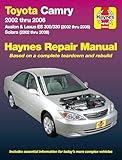 Toyota Camry Avalon Lexus ES 300/330 (2002-2006) & Toyota Solara (2002-2008) Haynes Repair Manual (Does Not Include Information Specific to the 2005 and Later 3.5L V6 Engine.)
- Step-by-step procedures written from a complete teardown and rebuild, giving you the confidence to tackle repairs at any skill level.
- Over 700+ clear photos and diagrams that simplify complex systems, helping you complete jobs faster and with fewer mistakes.
- Comprehensive troubleshooting and fault-finding guides to quickly diagnose problems and reduce costly downtime.
Best for: A comfortable family crossover when the buyer has a larger repair reserve than a Camry owner would typically need.
-
Toyota Venza V6: approximately 2009–2015 — 2GR-FE
Why it ranks fifth: The Venza combines a five-passenger crossover body with the 268-hp V6 and six-speed automatic. Toyota’s 2015 Venza specifications confirm the 3.5-liter engine. It is quicker and more substantial than many compact crossovers of its era without being a truck-based SUV.
Special offer. See more information about Outbyte and uninstall instructions. Please review EULA and Privacy policy.The Venza is less common than a Camry, so some body and trim parts may be less convenient to source. Available AWD adds another inspection category.
Inspect: AWD operation, wheel bearings, suspension, rust, air conditioning and the oil-cooler-pipe campaign applicability on certain 2009–2011 vehicles. A documented repair is preferable to an unexplained oil leak.
Best for: Buyers who want crossover practicality and V6 power but do not need a third row.
-
Toyota Highlander V6: approximately 2008–2016 — 2GR-FE
Why it ranks sixth: The Highlander makes excellent use of the 2GR-FE for family transport, highway travel and moderate towing. Toyota listed the second-generation Highlander’s 3.5-liter V6 at 270 horsepower; its 2013 Highlander materials document the V6 application.
The Tool Desk
Outbyte PC Repair FREEClear out junk files and repair common Windows errorsFree Scan →Outbyte Driver Updater FREEFix the driver behind crashes, sound loss and screen glitchesFind Drivers →Special offer. See more information about Outbyte and uninstall instructions. Please review EULA and Privacy policy.It ranks below the sedans because the Highlander is heavier and may have AWD, three-row equipment and a towing history. Those factors can wear brakes, suspension, cooling components and transmission hardware more quickly than ordinary sedan use.
Inspect: Towing-related wear, transmission engagement, AWD components, power accessories, cooling-system leaks and oil-cooler-pipe history. On 2008–2011 vehicles, check whether the relevant oil-cooler-pipe condition was repaired.
Best for: Families that need SUV space and occasional towing but still want a naturally aspirated Toyota V6.
-
Toyota Sienna V6: approximately 2007–2017 generation; verify the code — primarily 2GR-FE
Why it ranks seventh: The third-generation Sienna made the 3.5-liter V6 standard and paired it with a six-speed automatic in the core years. Toyota’s 2015 Sienna specifications document the standard V6. It has the power needed for a full load of passengers and luggage and is an excellent highway family vehicle.
Do these 3 things before closing this tab:
1Scan for outdated or missing drivers - takes under a minute2Repair Windows errors before they cause bigger problems3Fix the driver behind crashes, sound loss and screen glitchesSpecial offer. See more information about Outbyte and uninstall instructions. Please review EULA and Privacy policy.Its lower ranking reflects minivan duty rather than a fundamental engine weakness. Sliding doors, air conditioning, brakes, suspension, cooling components and interior hardware experience demanding use. Some 2007–2011 Siennas were also covered by an oil-cooler-pipe warranty enhancement.
Inspect: Both sliding doors, rear air conditioning, transmission behavior under load, brake and suspension wear, coolant residue, oil-cooler pipes and evidence of fleet or heavy family use. Some later examples use a related engine code, so verify a 2017 vehicle rather than assuming it is a 2GR-FE.
Best for: A buyer who needs maximum family utility and is prepared to maintain the vehicle’s systems beyond the engine.
-
Toyota RAV4 V6: 2006–2012 — 2GR-FE
Why it ranks eighth: The RAV4 V6 is an unusual and entertaining combination: compact-SUV dimensions with a 269-hp V6 and five-speed automatic. Toyota confirms that the V6 was available from 2006 through 2012 and lists the 2012 version at 269 horsepower in its RAV4 product information.
Outdated Drivers Are Slowing You Down
One free scan finds every outdated or missing driver and matches the right update for your exact hardware.Free scan · exact hardware matchWindows Errors? Fix Them Before They Spread
Repair common Windows errors and clear accumulated junk for a smoother, more stable PC - no reinstall needed.Free scan · no reinstallSpecial offer. See more information about Outbyte and uninstall instructions. Please review EULA and Privacy policy.It ranks lower because every example is now old. Age, corrosion, worn suspension, neglected AWD service and previous modification can matter more than the engine’s reputation. A clean, rust-free RAV4 V6 can be excellent; a rusty one is not rescued by a good engine.
Inspect: Subframe and underbody rust, AWD operation, wheel bearings, suspension bushings, oil leaks, cooling-system condition and accident or modification history.
Best for: Someone who wants compact dimensions and unexpectedly strong acceleration, and who can find a genuinely clean example.
-
Lexus IS 350: representative 2GR-FSE years — commonly 2006–2015 examples
Why it ranks ninth: The IS 350 is the performance choice. Its rear-wheel-drive layout, 306-hp 2GR-FSE and sportier chassis make it substantially more engaging than the front-wheel-drive 2GR-FE cars above.
Special offer. See more information about Outbyte and uninstall instructions. Please review EULA and Privacy policy.The qualification is important: the 2GR-FSE uses D-4S direct-and-port injection, and the car is more likely to have seen hard launches, aggressive driving, track use or expensive tire and brake wear. Lexus also documented a VVT actuator gear recall affecting certain 2006–2011 IS 350 and 2007–2011 GS 350 vehicles.
Inspect: Cold-start VVT noise, stored and pending codes, fuel-system operation, transmission shifts, differential and driveshaft noises, suspension modifications, tire wear, brake condition and recall completion. Confirm the exact engine code because IS 350 powertrains changed over time.
Best for: An enthusiast who values performance and accepts higher operating costs. It is not the pure reliability-value winner.
-
Lexus RC 350: early models from 2015 onward — 2GR-FSE
Why it ranks tenth: The RC 350 uses the 306-hp 2GR-FSE in an attractive grand-touring coupe. It offers naturally aspirated V6 response, rear-wheel-drive dynamics and Lexus refinement. The 2015 RC 350 specifications identify the 2GR-FSE application.
Outdated Drivers Are Slowing You Down
One free scan finds every outdated or missing driver and matches the right update for your exact hardware.Free scan · exact hardware matchPC Slower Than It Used to Be?
A free scan shows the junk files, broken settings and background clutter dragging Windows down - then fixes them in one click.Free scan · Windows 10 & 11Special offer. See more information about Outbyte and uninstall instructions. Please review EULA and Privacy policy.It is last because purchase and repair costs are higher, body and chassis parts are less economical than Camry parts, and many examples may have been driven more aggressively. It is a sensible enthusiast alternative, not the simplest Toyota V6 to own for 15 more years.
Inspect: Front-end and suspension damage, wheel and tire condition, brake wear, transmission behavior, differential noises, accident history, service records and all luxury electronics. Verify the engine code and recall status by VIN.
Best for: A buyer who wants Lexus style and a naturally aspirated performance coupe more than the lowest possible maintenance bill.
The major 2GR-FE problems to check before buying
1. VVT-i oil-supply hose leaks
Toyota’s Limited Service Campaign 90K covered certain 2005–2009 Avalon, 2007–2010 Camry, 2008 Highlander, 2006–2009 RAV4 and 2007–2010 Sienna vehicles. The rubber section of the VVT-i oil-supply hose could degrade, leak oil, produce abnormal engine noise and illuminate the oil-pressure warning light. The campaign extension expired on December 31, 2021, so a current buyer should not assume free coverage remains. The affected applications and repair information are described in Toyota’s campaign documentation.
Ask for a repair invoice. If there is no proof, inspect the hose and nearby components for fresh or baked-on oil residue. Make sure the oil-pressure warning light illuminates with the ignition on and goes out promptly after the engine starts.
2. VVT-i gear ticking and fault codes
Toyota service bulletin T-SB-0094-09 covered certain 2005–2009 2GR-FE applications, including Avalon, Camry, Highlander, RAV4, Sienna and Venza. It addressed ticking or clicking from the cylinder-head-cover area, sometimes accompanied by a check-engine light and VVT-related codes such as P0014, P0015, P0017, P0018, P0024 and P0025. The bulletin is reproduced in the Toyota service-information archive.
Listen to the engine from a true cold start, not only after the seller has warmed it up. Scan for stored, pending and history codes with a capable scan tool. A brief noise should not automatically end a deal, but it should never be dismissed as normal without diagnosis.
3. Oil-cooler-pipe seepage
Toyota documented oil-cooler-pipe leaks or seepage on certain vehicles, including 2008–2011 Highlander, 2007–2011 Sienna, 2009–2011 Venza and certain 2011 Highlander Hybrid models with relevant equipment. The warranty enhancement offered coverage for 10 years or 150,000 miles, whichever came first; that coverage is now expired for these older vehicles. See the Toyota condition documentation and warranty-enhancement details.
Look for oil residue around the cooler pipes and lower front section of the engine. A documented repair is not a reason to reject the vehicle; an active or unexplained leak should be treated as a repair cost and negotiation point.
4. Water pumps and external leaks
A water pump, timing-cover seal, valve-cover area, radiator or hose can leak as the vehicle ages. These are age- and mileage-related inspection points, not proof that the 2GR-FE is inherently defective.
- Look for pink or white dried coolant residue.
- Check coolant level and condition only when the engine is cold.
- Inspect for oil seepage underneath and around the timing-cover area.
- Pressure-test the cooling system if a leak is suspected.
- Price a labor-intensive timing-cover repair separately from routine maintenance.
5. Fuel-delivery-pipe recall
Certain 2014 Avalon, Camry, Highlander and Sienna vehicles equipped with the 2GR-FE had a potentially insufficiently welded fuel-delivery-pipe end cap. A fuel leak could increase fire risk. Certain 2015 Lexus RX 350 vehicles were also included. The original NHTSA recall notice and Lexus-related documentation identify the affected vehicles.
Use the vehicle identification number rather than relying on a generic model-year search. The NHTSA VIN lookup shows unrepaired safety recalls, but it does not show every manufacturer service campaign and does not display recalls more than 15 years old. Check Toyota or Lexus directly as well, and request paperwork from the seller.
The Tool Desk
Outbyte PC Repair FREERepair Windows errors before they cause bigger problemsFix Now →Outbyte Driver Updater FREEScan for outdated or missing drivers - takes under a minuteDriver Scan →Years to approach carefully
No single model year automatically makes every example bad. The point of these cautions is to identify vehicles that deserve better documentation and a more thorough inspection.
- Early 2GR-FE applications: Check VVT-i oil-supply-hose replacement on the affected 2005–2010 model-year applications and listen for VVT-related ticking or scan codes on certain 2005–2009 vehicles.
- 2008–2011 Highlander, 2007–2011 Sienna and 2009–2011 Venza: Inspect for the oil-cooler-pipe condition, especially where towing equipment or hard use is involved.
- Certain 2014 Toyota V6 vehicles and 2015 RX 350s: Check the fuel-delivery-pipe recall by VIN.
- Early Lexus IS 350 and GS 350: Check the intake VVT actuator gear recall and listen carefully during a cold start.
- Older RAV4, Tacoma, 4Runner and FJ Cruiser examples: Rust and previous use in salted-road regions may be more serious than the engine risk.
- Later 3.5-liter V6 models: Confirm whether the engine is 2GR-FE, 2GR-FKS, 2GR-FSE or another code. The badge and displacement are not enough.
Maintenance that matters
Use the maintenance guide for the exact vehicle instead of applying one universal Toyota V6 schedule. For example, the 2012 Camry maintenance guide lists spark-plug replacement at 120,000 miles and specifies Denso FK20HR11 or an equivalent plug for the 2GR-FE.
Oil intervals depend on oil specification and operating conditions. Toyota’s 2015 Sienna guide allows a 10,000-mile or 12-month interval under specified normal conditions when 0W-20 is used, but calls for 5,000 miles or six months when 0W-20 is unavailable or special operating conditions apply. Toyota identifies towing, extensive idling, low-speed operation, dirt roads and heavy loading as conditions requiring additional attention.
For a used vehicle, consistent records are more valuable than a seller’s claim that the engine is naturally aspirated and has a timing chain. Look for regular oil changes, correct fluids, cooling-system repairs performed before overheating and evidence that recalls or campaigns were addressed.
12-step pre-purchase inspection
- Run the VIN through NHTSA and Toyota or Lexus. Confirm open safety recalls and ask a dealer to check manufacturer campaigns and historical repairs.
- Confirm the engine code. Use the VIN, under-hood label or factory service information. Do not assume a 3.5-liter V6 is a 2GR-FE.
- Insist on a cold start. Ask the seller not to warm the vehicle before arrival.
- Listen for ticking or rattling. Pay particular attention to the cylinder-head-cover area and any noise that continues after startup.
- Watch the oil-pressure warning light. It should illuminate with the ignition on and go out promptly after the engine starts. A delayed or missing warning-light test deserves diagnosis.
- Scan for codes. Check current, pending, history and permanent codes, especially VVT-related codes.
- Inspect the VVT-i oil hose. This is especially important on the early affected Avalon, Camry, Highlander, RAV4 and Sienna applications.
- Inspect oil-cooler pipes. Give particular attention to relevant Highlander, Sienna and Venza vehicles.
- Check the cooling system. Look for coolant residue, low coolant, a damaged radiator, hose swelling and water-pump seepage. Pressure-test when appropriate.
- Look underneath for oil leaks. Distinguish a minor stain from an active leak or labor-intensive timing-cover repair.
- Test the transmission and driveline. Check for delayed engagement, harsh shifts, a flare between gears, whining and fluid leaks. On AWD or 4WD vehicles, test the system separately.
- Inspect rust and maintenance history. Check structural areas, subframes, brake lines and suspension mounts, then have an independent technician complete a pre-purchase inspection.
Model-by-model ownership trade-offs
| Model | Main advantage | Main non-engine risk |
|---|---|---|
| Avalon | Comfort-per-dollar and a relatively simple sedan layout | Age, suspension wear, oil leaks and neglected transmission service |
| Camry V6 | Parts availability, service knowledge and easy resale | Early-year VVT documentation, high-mileage transmission and interior wear |
| ES 350 | Quiet, comfortable and mechanically familiar | Luxury electronics, suspension and trim cost more |
| RX 350 | Comfortable, practical crossover | AWD, power equipment and luxury repairs |
| Venza | Practical five-passenger crossover with strong performance | AWD, oil-cooler-pipe history and less-common body parts |
| Highlander | Family space and towing capability | Weight, AWD complexity and towing-related wear |
| Sienna | Excellent family and highway-hauling ability | Sliding doors, air conditioning, suspension, brakes and heavy-use wear |
| RAV4 V6 | Compact dimensions with unusually strong acceleration | Age, rust, AWD wear and scarce clean examples |
| IS 350 | Fast, rear-wheel-drive performance | Direct injection, sport use, tires, brakes and Lexus repair costs |
| RC 350 | Stylish naturally aspirated grand-tourer | Higher purchase prices and expensive body and chassis parts |
If you want Toyota-badged vehicles only
The main ranking includes Lexus because the assignment is about Toyota’s V6 family rather than only Toyota badges. If you want a Toyota-only list, replace the Lexus entries with these alternatives:
Toyota 4Runner: 2010–2024 — 1GR-FE
The fifth-generation 4Runner used a 4.0-liter 1GR-FE V6 producing 270 horsepower. Toyota’s 2010 4Runner information confirms the application. It is the best rugged Toyota V6 choice for many buyers, but inspect frame and body rust, off-road damage, suspension wear, 4WD operation and towing history. Fuel economy and used prices are also considerably less favorable than a Camry or Avalon.
Toyota Tacoma: approximately 2005–2015 — 1GR-FE
The Tacoma used the 4.0-liter 1GR-FE V6, rated at 236 horsepower and 266 lb-ft of torque in 2015. Toyota’s 2015 Tacoma product information confirms those figures. Look beyond the engine for frame rust, aftermarket modifications, hard towing, off-road impacts and high used-market prices.
Toyota FJ Cruiser: 2007–2014 — 1GR-FE
The FJ Cruiser used a 4.0-liter V6, and Toyota added dual VVT-i and roller rocker arms for 2010. Its 2014 specifications confirm the V6. The major buying risks are age, rust, off-road abuse, accident damage and inflated collector-market pricing.
Do these 3 things before closing this tab:
1Clear out junk files and repair common Windows errors2Scan for outdated or missing drivers - takes under a minute3Repair Windows errors before they cause bigger problemsToyota Camry Solara: 2004–2008 — 3MZ-FE
The second-generation Camry Solara is a budget or classic alternative, but its older 3.3-liter 3MZ-FE is not a direct 2GR-FE competitor. Toyota confirms the 2004–2008 Solara range. It is older, uses a timing belt and brings more age-related risk, so buy it for condition and price rather than because it belongs to the modern 2GR family.
Newer alternatives are not V6 alternatives
If you want a newer Toyota and are willing to give up the V6, the current Camry hybrid is the obvious route. The 2025 and 2026 Camry use a hybrid four-cylinder powertrain, not a V6. The 2024 Venza is also hybrid-only. These vehicles may offer lower fuel consumption and newer safety technology, but they should not be represented as newer versions of the 2GR-FE.
What reliability claims should you believe?
Be skeptical of claims that the 2GR-FE is indestructible, never breaks or guarantees 300,000 miles. A model-level longevity estimate can show that Avalon and Sienna vehicles have strong long-life potential—iSeeCars has estimated roughly 245,710 miles for the Avalon and 239,607 miles for the Sienna in one study—but those figures are not V6-specific guarantees. They include the transmission, body, electronics and all other vehicle systems.
The defensible conclusion is narrower: the 2GR-FE has an unusually strong reputation because it is naturally aspirated, chain-driven, widely used and present in many high-mileage Toyota and Lexus vehicles. It still needs correct oil, functioning cooling equipment, timely leak repairs and a healthy transmission. A reliable engine cannot compensate for a rusted chassis, abused AWD system, failing air conditioner or neglected maintenance.
Final verdict
- Best overall: Toyota Avalon or Camry with a documented 2GR-FE.
- Best luxury choice: Lexus ES 350, preferably with clear service records and a repair budget for Lexus-specific equipment.
- Best crossover: Toyota Venza for value or Lexus RX 350 for comfort, provided AWD and luxury systems check out.
- Best family hauler: Toyota Sienna V6, after a careful inspection of the doors, air conditioning, suspension and cooling system.
- Best compact performance SUV: Toyota RAV4 V6, if you can find a rust-free, unmodified example.
- Best rugged Toyota V6: Toyota 4Runner or Tacoma with the 1GR-FE.
- Best enthusiast choice: Lexus IS 350 or RC 350, understanding that the 2GR-FSE and performance chassis are more complex and costly than a 2GR-FE sedan.
Frequently Asked Questions
Is the 2GR-FE Toyota’s most reliable V6?
It is one of Toyota’s strongest reliability-focused V6 choices, especially in the Camry, Avalon and ES 350. That is an editorial judgment rather than an official Toyota designation or an engine-specific failure-rate result. Condition and maintenance still determine whether a particular vehicle is a good buy.
Does every Toyota 3.5-liter V6 use the 2GR-FE?
No. Toyota and Lexus also used the related 2GR-FSE and 2GR-FKS, as well as hybrid-related versions and other engines. The FSE and FKS use D-4S direct-and-port injection and should not be treated as identical to the simpler 2GR-FE. Confirm the engine code by VIN or the vehicle label.
Which Toyota V6 is best for a truck or off-road SUV?
The 4.0-liter 1GR-FE is the relevant choice in the 4Runner, Tacoma and FJ Cruiser. It is separate from the 2GR-FE but well suited to truck applications. Inspect rust, frame condition, towing history, modifications and off-road damage before judging the engine.
Should I avoid early 2GR-FE vehicles?
Not automatically. Certain early applications require checks for the VVT-i oil-supply hose, VVT-related ticking and codes, and oil-cooler-pipe seepage. A documented repair can make an older vehicle a reasonable purchase; an active leak, unexplained cold-start rattle or poor maintenance history should be priced as a major risk.
Free tools Windows power users keep installed
One-click scans. No signup required.
How do I check whether a Toyota V6 recall was completed?
Run the vehicle identification number through the NHTSA recall lookup and ask a Toyota or Lexus dealer to check manufacturer records. NHTSA does not show every service campaign and does not display recalls more than 15 years old, so a VIN-specific dealer check and repair paperwork are valuable.
The Bottom Line
Buy the vehicle, not merely the engine code. A well-maintained Toyota Avalon, Camry or Lexus ES 350 with the 2GR-FE is the safest reliability-focused bet in this group. The Venza, RX 350, Highlander, Sienna and RAV4 V6 extend the same engine family into more useful body styles, but add AWD, towing, luxury or age-related risks. For trucks and true off-road use, move to the separate 1GR-FE in the 4Runner, Tacoma or FJ Cruiser. In every case, verify the engine code, run the VIN, demand a cold start and pay for an independent inspection.
Quick Recap
Product prices and availability are accurate as of the date/time indicated and are subject to change. Any price and availability information displayed on Amazon at the time of purchase will apply.