Free tools Windows power users keep installed
One-click scans. No signup required.
The Porsche 919 Hybrid Evo is the horsepower winner, producing 720 hp from its turbocharged V4 combustion engine. It was not a production road car, however: it was an unrestricted, competition-derived development of Porsche’s LMP1 prototype. If the comparison is narrowed to road-going cars, the special Lancia Fulvia 1.6 HF 1016 leads this researched set with 130 hp.
That distinction defines the ranking. It includes two Porsche endurance prototypes, Lancia sports cars, Ford- and Saab-powered road cars, a Matra mid-engine sports car and the first-generation Ford Transit van. Each figure belongs to the specific version named, and hybrid-system power is kept separate from combustion-engine output.
Quick list: the 10 most powerful V4-powered automobiles in this set
| Rank | Automobile | Category | V4 output |
|---|---|---|---|
| 1 | Porsche 919 Hybrid Evo | Competition-derived prototype | 720 hp |
| 2 | Porsche 919 Hybrid | Le Mans prototype | Just under 500 hp |
| 3 | Lancia Fulvia 1.6 HF 1016 | Special road-going version | 130 hp |
| 4 | Lancia Fulvia 1.6 HF | Production road car | 115 hp |
| 5 | Ford Transit Mk I 2.0 V4 | Commercial van | 95 bhp |
| 6 | Lancia Fulvia Coupé Montecarlo | Production road car | 90 hp |
| 7 | Matra M530 | Mid-engine sports car | About 73 bhp |
| 8= | Saab Sonett II V4 | Sports car | 65 hp |
| 8= | Saab 96 V4 | Production road car | 65 hp |
| 10 | Lancia Appia Coupé | Production road car | 53 CV |
The Saab Sonett II V4 and Saab 96 V4 are tied at the documented 65-hp figure. Their order in the table is editorial only, not a claim that one made more power than the other.
1. Porsche 919 Hybrid Evo — 720 hp
Category: Competition-derived endurance prototype
Engine: 2.0-liter turbocharged V4
Ranked output: 720 hp from the combustion engine
#1 Best Overall

- Accurately reproduced bodywork
- Complete interior detail
- Detailed suspension with rolling wheels-Vinyl tires with realistic tread
- 146 pieces
- Illustrated assembly instructions
The Porsche 919 Hybrid Evo is the clear horsepower winner here, although it is not a production car in the normal road-car sense. It was an unrestricted development of Porsche’s LMP1 endurance prototype, built to demonstrate what the 919 platform could do outside its racing restrictions.
Porsche specifies 720 hp for the turbocharged 2.0-liter V4. That number describes the internal-combustion engine only. The Evo also used an electric motor and energy-recovery systems, so its total propulsion capability was greater than the figure used in this ranking. Comparing its 720 hp V4 directly with the engine in a 1960s Saab is therefore a historical specification exercise, not an apples-to-apples performance test.
The Porsche technical overview identifies both the engine output and the Evo’s competition-derived status.
2. Porsche 919 Hybrid — just under 500 hp
Category: FIA World Endurance Championship LMP1 race car
Engine: 2.0-liter turbocharged V4
Ranked output: Just under 500 hp from the combustion engine
The race-going Porsche 919 Hybrid takes second place with a V4 that produced just under 500 hp in the cited regulation configuration. Its electric motor contributed more than 400 hp, but that electric assistance is deliberately excluded from the ranking.
That distinction matters. A headline describing the 919 simply as a “900-hp V4” would blur the difference between combustion-engine output and total hybrid-system output. The car’s V4 was already an extraordinary engine on its own; the electric motor and energy-recovery hardware made the complete race-car powertrain something different.
Porsche’s 919 Hybrid technology description separates the V4’s output from the electric motor’s contribution.
3. Lancia Fulvia 1.6 HF 1016 — 130 hp
Category: Special road-going Fulvia version
Engine: Lancia narrow-angle V4
Ranked output: 130 hp
What’s actually slowing this PC down?
Pick the symptom - the matching free tool is one click away.
The most powerful road-going Lancia Fulvia specification documented in the research is the special 1.6 HF 1016, rated at 130 hp. The important detail is the “1016” designation: this is not the output of every Fulvia 1.6 HF, nor should it be presented as the standard showroom specification.
The Fulvia’s narrow-angle V4 was one of Lancia’s defining engineering ideas. Its compact layout helped the company build a relatively small, sophisticated front-drive sports car, while HF versions gave the engine a stronger performance identity. The 1016 belongs at the top of the road-car portion of this list because its documented figure is higher than the standard 1.6 HF’s 115 hp.
Rank #2

- Accurately reproduced bodywork
- Complete interior detail
- Detailed suspension with rolling wheels-Vinyl tires with realistic tread
- 147 pieces
- Illustrated assembly instructions
Competition-prepared Fulvias could produce more than their road-going counterparts, but rally and special-tune figures are not substituted for the named road version here. Lancia’s HF history distinguishes the 1016 from the standard production 1.6 HF.
For readers moving from historical interest to ownership or restoration, a model-specific Lancia Fulvia workshop manual is the most useful kind of follow-up resource. It can help explain the V4’s mechanical details and the differences between ordinary road trim and more highly prepared HF cars; the exact edition and current availability should be checked before buying.
Recommended Free Tools
4. Lancia Fulvia 1.6 HF — 115 hp
Category: Production road car
Engine: Lancia narrow-angle V4
Ranked output: 115 hp
The standard production Lancia Fulvia 1.6 HF produced 115 hp. It was the road-focused counterpart to the more aggressively developed versions used as the basis for rally preparation, which makes it one of the most significant performance applications of a production V4.
The 1.6 HF is also a useful corrective to a common model-family problem: quoting the best-known 1016 figure as though it applied to every 1.6 HF. In this ranking, 115 hp belongs to the standard production 1.6 HF, while 130 hp is reserved for the specific 1016 variant.
5. Ford Transit Mk I 2.0 V4 — 95 bhp
Category: Commercial van
Engine: 2.0-liter Ford V4
Ranked output: 95 bhp
The first-generation Ford Transit is the list’s commercial-vehicle entry. Ford’s original press material rated the 2.0-liter V4 at 95 bhp for long-wheelbase vans. The same material listed a smaller 1.7-liter V4 at 73 bhp, so the engine size and version matter.
This was not a sports-car engine transplanted into a van. The V4 was part of Ford’s practical Taunus engine family, and the first-generation Transit used V4 gasoline engines as Ford developed the model’s early powertrain range. The layout gave Ford a reasonably compact engine for a vehicle in which packaging and usable load space were major concerns.
Ford’s historical material confirms the first-generation Transit’s V4 application, while the period 1965 Transit press release provides the 95-bhp 2.0-liter specification. It qualifies mechanically for a V4 ranking, but it should be called a van rather than casually grouped with the passenger cars.
6. Lancia Fulvia Coupé Montecarlo — 90 hp
Category: Production road car
Engine: Lancia narrow-angle V4
Ranked output: 90 hp
Do these 3 things before closing this tab:
1Repair Windows errors before they cause bigger problems2Scan for outdated or missing drivers - takes under a minute3Clear out junk files and repair common Windows errorsThe Lancia Fulvia Coupé Montecarlo used a narrow-angle V4 rated at 90 hp in the period brochure. It sits below the 1.6 HF cars because its documented output is lower, but the Montecarlo still belongs in the story of how Lancia connected its road cars with its competition identity.
Rank #3
The model-specific brochure is especially useful here because it avoids a broad family estimate. Fulvia badges covered several engine sizes and specifications, and the Montecarlo’s 90-hp figure should remain attached to that version rather than being generalized to every Fulvia Coupé.
The Fulvia Montecarlo brochure documents the narrow-angle V4 and its 90-horsepower rating.
7. Matra M530 — about 73 bhp
Category: Mid-engine sports car
Engine: 1,699 cc Ford Taunus V4
Ranked output: About 73 bhp
Quick wins for a faster PC:
Scan for outdated or missing drivers - takes under a minuteDriver Scan →Repair Windows errors before they cause bigger problemsFix Now →Fix the driver behind crashes, sound loss and screen glitchesFind Drivers →The Matra M530 used Ford’s 1,699 cc Taunus V4 and is documented at about 73 bhp. The engine’s modest output makes more sense when viewed alongside the M530’s unusual packaging: it was a mid-engine sports car with two occasional rear seats.
That combination made the M530 distinctive. The V4 was compact enough to suit the car’s layout, while the mid-engine arrangement gave Matra a way to create a lightweight sports car without relying on a large engine. The result was not a horsepower champion, but it was one of the most inventive uses of Ford’s V4 family.
The figure comes from specialist Matra historical reference material, rather than a current manufacturer archive. For that reason, “about 73 bhp” is more appropriate than implying laboratory-level precision.
8=. Saab Sonett II V4 — 65 hp
Category: Lightweight sports car
Engine: 1.5-liter Ford V4
Ranked output: 65 hp
The Tool Desk
Outbyte PC Repair FREEClear out junk files and repair common Windows errorsFree Scan →Outbyte Driver Updater FREEScan for outdated or missing drivers - takes under a minuteDriver Scan →The Saab Sonett II V4 used Ford’s 1.5-liter Taunus V4, rated at 65 hp in the cited material. The Sonett’s small, lightweight body allowed that relatively modest figure to serve a sporting purpose, even though the engine itself was not highly tuned by modern performance standards.
Saab adopted the Ford V4 as it moved away from the earlier two-stroke strategy used in its mainstream cars. The Sonett II provided a more specialized and low-volume setting for the engine. The later Sonett III retained the V4 concept; cited references commonly keep its output at approximately 65 hp, but the most precise heading for this entry is the Sonett II V4.
The V4 application is confirmed by museum material, including this history of the 1969 Saab Sonett II V4.
Rank #4

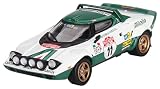
- This plastic model requires assembly and painting. Adhesives, tools, paints, etc., sold separately
- 1/24 scale unpainted plastic assembly kit
- Model Size: 6.4 x 2.9 inches (163 x 74 mm)
- Includes new decals
- Number of Pieces: 125
8=. Saab 96 V4 — 65 hp
Category: Production road car
Engine: 1,498 cc Ford Taunus V4
Ranked output: 65 hp at 4,700 rpm
The Saab 96 adopted Ford’s 1,498 cc Taunus V4 for the 1967 model year. The cited Saab history gives the engine 65 hp at 4,700 rpm, tying it with the Sonett II at the stated output.
The V4 replaced the 96’s earlier two-stroke engine during the model transition. That change helped Saab continue with a compact, unconventional powertrain while moving to a more conventional four-stroke configuration. It also made the 96 one of the best-known production applications of Ford’s V4 outside Ford’s own model range.
For anyone moving from the history of the car to practical ownership research, a model-specific Saab 95/96 V4 service manual is a more appropriate resource than a generic Saab manual. The exact manual must match the model year, engine and market because the same badge can cover different specifications. Saab’s documented history of the 96 V4 gives the 1967 application and output figure.
10. Lancia Appia Coupé — 53 CV
Category: Production road car
Engine: 1,089 cc Lancia narrow-angle V4 with double overhead camshafts
Ranked output: 53 CV at 5,200 rpm
Crashes, No Sound, or Screen Glitches?
Random freezes, missing sound and display glitches usually trace back to one bad driver. Find and replace yours safely.Free scan · under a minutePC Slower Than It Used to Be?
A free scan shows the junk files, broken settings and background clutter dragging Windows down - then fixes them in one click.Free scan · Windows 10 & 11The Pininfarina-bodied Lancia Appia Coupé used an 1,089 cc narrow-angle V4 with double overhead camshafts. Its official heritage brochure specifies 53 CV at 5,200 rpm, placing it tenth in this documented comparison.
The Appia is more important historically than its position suggests. It demonstrates that Lancia’s V4 story was already established before the Fulvia became the layout’s best-known performance showcase. The company used narrow-angle V4s to pursue compactness and sophistication, not simply peak horsepower.
The official Appia brochure specifies the engine architecture and 53-CV output.
Why were V4 engines so rare?
A V4 has four cylinders arranged in two banks, rather than in one straight row like an inline-four or in two opposing banks like a flat-four. Its attraction is packaging: a V4 can be shorter than an inline-four, while retaining four-cylinder capacity. The cost is added complexity, since the engine has two cylinder banks and the associated duplicated top-end and exhaust arrangements.
That trade-off made the V4 a niche solution. Manufacturers could often achieve acceptable packaging more cheaply with an inline-four, while larger cars could use a V6 or another configuration. The V4 therefore appeared when a particular engineering problem justified it: Lancia valued a compact, narrow-angle design; Ford developed the Taunus V4 for several practical applications; Saab used Ford’s engine when it needed to replace its two-stroke powertrain; and Porsche used a highly specialized turbocharged V4 within a hybrid endurance-racing system.
Independent reader supportYour contribution helps us test, update, and keep practical guides available for everyone.The two main V4 families behind the list
Lancia’s narrow-angle V4
Lancia’s V4 development is the older and more technically distinctive branch represented here. The company used narrow-angle V4 engines in models including the Aprilia and Appia before refining the concept for the Fulvia. The Appia Coupé’s 53-CV engine is therefore not an isolated curiosity; it is an early example of the architecture that later powered the more athletic Fulvia HF.
Best Value

- Easy-to-Use Can: Equipped with a comfortable grip handle and a spout, our oil can with spout makes lubricating engines and machinery effortless. The simple hand action allows for precise control over the flow of oil, keeping that just the right amount
- Not Easy to Drip Oil: The sealing of the oil squirt can is crucial for the use of lubricants. Our oil squirt cans avoid airborne moisture and dirt from entering the oil. Oil does not drip from the bottle edge during transportation
- Light and Portable Design: This oil can is small and lightweight, making it easy to carry around whether you're at home or in the workshop. Its compact design keeps that it fits comfortably in your tool kit or garage. Make it available to you anytime
- Wear-Resistant Cold-Rolled Steel: Made from cold-rolled steel for the body and iron for the rod, this motor oil dispenser is built to last. The red finish adds a touch of style and keeps that the oil can is easily identifiable in your toolbox
- Set Includes Two: Our oil can pump oiler set comes with two cans, giving you the flexibility to have one ready for different types of oil or to keep an extra on hand. This keeps that you always have a clean and efficient way to dispense oil
The earlier Lancia Aprilia is a useful honorable mention. Stellantis describes its first-series 1,352 cc engine as a compact narrow V4 producing 48 hp. It falls outside this top ten because the Appia Coupé has the stronger documented output, but the Aprilia helps establish how long Lancia had been developing the idea before the Fulvia arrived. Stellantis Heritage’s Aprilia history provides that earlier reference point.
Ford’s Taunus V4
Ford’s Taunus V4 is the other major thread. It powered Ford’s Taunus family and the first-generation Transit, then appeared in unrelated cars such as the Matra M530 and Saab’s V4 versions of the 95, 96 and Sonett. That shared lineage explains why a commercial van, a mid-engine sports car and several Swedish cars can occupy the same unusual engine-layout list.
The common engine family does not mean the vehicles had identical outputs. Displacement, tuning, installation, emissions requirements, market specification and model year all matter. The figures in this ranking remain attached to the exact named version wherever the evidence permits.
What the horsepower ranking does—and does not—tell us
- The Porsche 919 Hybrid Evo is the outright power leader: its 720 hp V4 combustion engine is in a different category from the road cars.
- The Porsche figures are not total hybrid outputs: the electric motor and energy-recovery systems are additional to the V4 figures used here.
- The Fulvia 1.6 HF 1016 is the strongest road-going entry in this research set: its 130 hp belongs to that special version, not to every 1.6 HF.
- The Transit is a van: its inclusion reflects the mechanical definition of the topic, not a claim that it is a passenger car.
- The Saab entries are tied: both are documented at 65 hp, so there is no meaningful horsepower basis for separating them.
- Historical ratings are not perfectly uniform: hp, bhp, PS and CV may reflect different national or publication conventions. Preserving the source units is more honest than manufacturing a false precision.
Resources for researching a rare V4
Model-specific documentation matters more than a generic engine guide when dealing with these cars. A Fulvia owner or restorer should look for a manual covering the exact engine and trim, particularly when distinguishing a standard 1.6 HF from a special 1016 or a competition-prepared car. Saab owners should likewise match a 95/96 V4 service manual to the model year and market rather than assuming that every Saab V4 uses identical procedures.
Parts and specialist restoration support are also likely to be model-specific for these largely obsolete vehicles. That is a practical consideration rather than a horsepower issue: the same Ford V4 lineage may connect the Transit, Matra and Saab historically, but their installations, ancillary systems and service requirements are not interchangeable.
Frequently Asked Questions
Which V4 car had the most horsepower?
The Porsche 919 Hybrid Evo is the most powerful automobile in this researched set, with 720 hp from its 2.0-liter turbocharged V4 combustion engine. Its electric motor and energy-recovery systems add power, but the ranking compares only the V4 engine output.
Quick wins for a faster PC:
Clear out junk files and repair common Windows errorsFree Scan →Scan for outdated or missing drivers - takes under a minuteDriver Scan →What was the most powerful production V4 car?
The Lancia Fulvia 1.6 HF 1016 is the highest-output road-going entry in this set at 130 hp. That figure applies specifically to the 1016 version; the standard production Fulvia 1.6 HF is documented at 115 hp.
Was the Porsche 919 Hybrid Evo a production road car?
No. The 919 Hybrid Evo was an unrestricted development of Porsche’s LMP1 endurance prototype. It was competition-derived and not a normal production road car.
What is the difference between a V4 and a flat-four engine?
A V4 has four cylinders arranged in two banks at an angle. A flat-four also has two banks of two cylinders, but those banks oppose each other rather than forming a V. The V4 was attractive mainly for compact packaging, but it was more complex than the common inline-four.
The Bottom Line
The Porsche 919 Hybrid Evo is the clear V4 horsepower champion at 720 hp, but it is a competition-derived hybrid prototype rather than a production car. Among the road-going automobiles in this set, the special Lancia Fulvia 1.6 HF 1016 leads with 130 hp, while the standard 1.6 HF follows at 115 hp. The rest of the ranking shows why the V4 is historically fascinating: one compact layout linked Lancia engineering, Ford commercial vehicles, Saab family cars, a Matra sports car and Porsche endurance racing.
The Tool Desk
Outbyte PC Repair FREEClear out junk files and repair common Windows errorsFree Scan →Outbyte Driver Updater FREEScan for outdated or missing drivers - takes under a minuteDriver Scan →Quick Recap
Product prices and availability are accurate as of the date/time indicated and are subject to change. Any price and availability information displayed on Amazon at the time of purchase will apply.




