The Tool Desk
Outbyte PC Repair FREERepair Windows errors before they cause bigger problemsFix Now →Outbyte Driver Updater FREEFix the driver behind crashes, sound loss and screen glitchesFind Drivers →The 1980s car story extends well beyond the era’s familiar sports cars and family sedans. These ten production models—from a Renault with an early remote-locking system to Japanese cars built around unusual body styles and market-specific names—show how varied the decade’s lineup could be. “Forgotten” is a matter of perspective, not a measurable ranking; the appeal here is what makes each car worth discovering.
1. Renault Fuego Turbo: an early remote-locking pioneer
Renault’s Fuego was a four-seat coupé that reused the Renault 18 platform and mechanical parts. The model launched in the United States in 1982 and in France in 1983. Renault’s The Originals Museum says the Fuego was the first car in the world to offer remote keyless central locking, in 1982. Its PLIP remote operated the system—an everyday convenience now, but a striking feature on a 1980s coupé.
The Fuego Turbo also gives the model a performance footnote: Renault lists 132 hp and a top speed of 200 kph for the version featured on its heritage page. Renault says the Turbo went on sale in the United States in 1982 and France in 1983, and describes it as the world’s fastest diesel-engined car when it came to market; that superlative is Renault’s historical claim.
Renault reports total Fuego production of 265,367 across all versions. Its heritage page gives production dates of 1979–1985 in Maubeuge, France, and 1982–1992 in Santa Isabel, Argentina.
#1 Best Overall

- ICONIC 1982 CAMARO BERLINETTA - Build a piece of 80s automotive history with this Chevy Camaro Berlinetta, recreated with its signature front and rear bumper styling.
- HIGHLY DETAILED 100-PIECE KIT - Includes 100 precision parts for an immersive and rewarding advanced-level building experience.
- CUSTOM STREET MACHINE FEATURES - Optional parts include headlight covers, pro-stock hood scoop, and aero-disc wheel covers for a personalized build.
- V8 PERFORMANCE UNDER THE HOOD - Features a detailed blown small-block Chevy V8 engine, capturing classic street machine power and style.
- POSEABLE FRONT WHEELS - Chassis allows front wheels to turn left or right, adding realism and dynamic display options.
2. Nissan Be-1: a March-based Pike car
The Be-1 belongs to Nissan’s Pike-car series, a group the company identifies as based on the March. Its compact retro design gave Nissan a distinctive alternative to the more conventional small cars of the decade. Nissan includes the Be-1 among its notable models of the 1980s, but the useful point here is its place in that broader design-minded series, not an unsupported claim about how rare or popular it was.
3. Nissan PAO: another take on the Pike-car idea
The PAO is the other March-based Pike car in this list. Nissan groups it with the Be-1 in its Pike-car history, making the pair a reminder that a single small-car platform could underpin more than one distinctive design concept. The available official history establishes that connection, but does not provide enough detail to make a reliable specification-by-specification comparison between the two.
Rank #2

- Revell Model Kit #14552, Skill Level 4, Contains 83-Parts, Recommended for ages 12 and up
- Detailed Chevy 350 V-8 engine with port fuel injection. Easy-to-mount chassis with lowered suspension.
- Special features such as ribbed front bucket, flag-style exterior mirrors, side exhaust and sunroof.
- Extensive decal sheet with "new wave" graphics from the 80s. Redesigned Champ 500 wheels with low-profile tires.
- Paint and glue required(not included).
4. Isuzu Piazza: a less expected name from a truckmaker
The Isuzu Piazza arrived in 1981, a launch year confirmed by Toyota’s official vehicle chronology. It earns a place here partly because it broadens the picture of Isuzu beyond the trucks many readers associate with the manufacturer. The year and model name are well established; further claims about its design origins or engineering need stronger sourcing than the chronology provides.
5. Mazda Etude: a three-door hatch with a variable intake
Mazda introduced the Etude in 1987 as a three-door hatchback. Mazda’s history highlights its large glazed area and 1.6-liter DOHC engine, which used the company’s VICS variable-air-intake system. The car also had four-wheel disc brakes. That combination of a distinctive glass-heavy shape and a named intake system makes the Etude more than just an unfamiliar badge in a decade full of compact hatchbacks.
Rank #3

- A COOL-CLASSIC 2 in 1 KIT: MPC’s 1/25 scale 1980 Monte Carlo is the perfect project for builders who are looking for a custom build. Add it to your collection today!
- LOADED WITH GOODIES: The 1980 Monte Carlo is fully paintable and features an ALL NEW, street-smart, water-slide decal sheet—full of colorful options. Build the Class Action one of two ways: stock or custom. Features include a BONUS chopper and trailer, stock and mag wire wheels, removable T-top panels, optional padded roof, V-8 engine, detailed interior, pad printed thin whitewall tires and more. Wrapped up nicely in NEW eye-popping packaging!
- QUICK SPECS: 1/25 Scale, 110 Parts, car assembles to 8 inches long (13 inches long with trailer added). Parts molded in white, clear and transparent red with black vinyl tires. Some parts are chrome plated. Plastic model kit paint and cement required (Testors or Tamiya brands recommended). Paint guide included in kit. Skill Level 2. For ages 14+
- THE PERFECT PRESENT: Don't know what to get dad for his birthday? Or maybe you have an avid hobbyist or collector in your life. This model kit makes an ideal gift for any occasion!
6. Mazda Familia Astina / 323F: a wedge shape with pop-up headlights
For the 1989 model, Mazda describes a wedge-shaped body and retractable headlights. The car is associated with the Familia Astina name and the 323/323F badges, depending on market. Mazda lists 1.5- and 1.6-liter engine options. The badge varied by region, so “Familia Astina” and “323F” are not interchangeable labels everywhere, even though they refer to the same model family.
7. Mazda Persona: a four-door hardtop without a center pillar
Introduced in October 1988, the Mazda Persona paired a four-door layout with a hardtop body that had no center pillar between the front and rear side windows. That pillarless arrangement gave the side opening a more open appearance than a conventional sedan with a central post. Mazda’s history lists a 2.0-liter DOHC engine and a 1.8-liter SOHC engine, with the latter later changed to DOHC. Mazda also positioned the Persona around a comfort-oriented cabin.
Rank #4

- A PERENNIAL CLASSIC FOR EXPERIENCED MODELERS: AMT’s 1/25 scale 1967 Shelby GT-350 is the perfect project for muscle car builders. Add it to your collection today!
- FEATURE PACKED: The 1967 Shelby GT-350 is a historical muscle car that stands alone! Fully paintable, it features authentically detailed water-slide decals. Build it up right with a Ford 289 V8 engine and all the Shelby touches—custom rear lower pan, chrome wheels, custom taillights and front grille, bucket seats, and more. Wrapped up nicely in retro-styled packaging!
- QUICK SPECS: 1/25 Scale, 123 Parts, 7 inches long once assembled. Parts molded in white, clear and transparent red, with black vinyl tires. Some parts are chrome plated. Plastic model kit paint and cement required (Testors or Tamiya brands recommended). Paint guide included in kit. Skill Level 2. For ages 10+
- THE PERFECT PRESENT: Don't know what to get dad for his birthday? Or maybe you have an avid hobbyist or collector in your life. This model kit makes an ideal gift for any occasion!
8. Daihatsu Leeza: a late-decade mini-vehicle
Daihatsu’s official chronology records the Leeza’s marketing launch in 1986. That makes it a useful reminder that the decade’s smaller Japanese-car story included models beyond the better-known export names. The chronology establishes the model and its timing, but not enough technical detail to support a fuller specification profile here.
Independent reader supportYour contribution helps us test, update, and keep practical guides available for everyone.9. Daihatsu Charade Social: the Charade name with a new suffix
The Charade Social began marketing in 1989, according to Daihatsu’s official chronology. The “Social” name is a memorable late-decade addition to the Charade story. The chronology confirms the name and date, but does not establish body style or trim details, so those should not be inferred from the badge alone.
Quick wins for a faster PC:
Clear out junk files and repair common Windows errorsFree Scan →Scan for outdated or missing drivers - takes under a minuteDriver Scan →Best Value
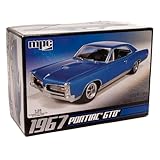
- V8 POWER: The model features a 400 cubic inch V8 engine, reflecting the muscle and power that defined the GTO's reputation.
- DETAILED SUSPENSION & EXHAUST: The kit incorporates separate rear suspension and exhaust detailing, adding to the realism of the model.
- BUCKET SEATS & CONSOLE: The model's interior features bucket seats and a floor shifter with a console, capturing the iconic look and feel of the GTO.
- OPTIONAL SUPERCHARGER: For those seeking more power, the kit offers an optional supercharger, allowing you to customize your model.
- CLEAR & COMPREHENSIVE INSTRUCTIONS: The included instructions are clear and user-friendly, making the kit accessible to modelers of different skill levels, from beginners to experienced hobbyists.
10. Daihatsu Applause: another 1989 arrival
Daihatsu’s chronology also dates the Applause’s market introduction to 1989. Its timing puts it among the decade’s final new nameplates, but the available official information here supports the launch date rather than a technical explanation of its body or boot design. It is an apt final entry in a list shaped as much by unusual names and market context as by headline performance.
What these cars reveal about the 1980s
These models do not form a ranking of the decade’s rarest or least remembered cars; no comparative awareness or production data establishes that. Instead, they illustrate how much variety sat outside the era’s best-known automotive canon: Nissan’s March-based Pike cars, Mazda’s unusual hatchback and pillarless hardtop, and the distinctively named Daihatsu models all make the period’s production-car landscape broader than a short list of familiar icons suggests.
Quick Recap
Product prices and availability are accurate as of the date/time indicated and are subject to change. Any price and availability information displayed on Amazon at the time of purchase will apply.




