Porsche’s sports-car story is much bigger than the 911. The ten cars below stand out for distinct reasons: they established the marque, brought racing ideas to the road, explored new layouts or helped define Porsche’s future. This is a curated selection, not an objective ranking. Porsche’s own histories supply the specifications and historical claims cited here.
How these Porsche sports cars stand apart
Layout and mission make the range easier to understand. The 356 and 550 Spyder helped establish Porsche’s identity; the 904 and 959 made competition central to their appeal. The 914 and Boxster put a compact mid-engine roadster formula in the spotlight, while the 928 and 944 explored front-engine and transaxle designs. The Carrera GT and 918 Spyder carried the super-sports-car idea into the 21st century.
| Model | Layout or format | Why it matters |
|---|---|---|
| 356 | Early Porsche sports car | The first sports car to bear the Porsche name |
| 550 Spyder | Mid-engine, racing-developed | Porsche’s first model specially developed for racing |
| 904 Carrera GTS | Plastic-bodied sports car | Competition success across circuit racing, rallying and Le Mans |
| 914 | Compact, lightweight, mid-engine | A more accessible-feeling alternative to Porsche’s exotic sports cars |
| 928 | Front-engine, V8-powered GT | A luxurious high-performance branch of Porsche’s sports-car range |
| 944 | Transaxle sports car | A successful model line during a difficult period for Porsche |
| 959 | Twin-turbo flat-six, all-wheel drive | A technology showcase with a major rally-raid result |
| Boxster | Mid-engine roadster | A new roadster line that helped redirect Porsche’s strategy |
| Carrera GT | Mid-engine, V10 super sports car | A limited-production road car with a strong motorsport connection |
| 918 Spyder | Plug-in hybrid, open mid-engine sports car | Combined combustion and electric power in a Porsche super sports car |
The early cars that established Porsche
1. Porsche 356: the starting point
The 356 was the first sports car to carry the Porsche name. Porsche dates its introduction to 1948 and says early production began in Stuttgart in 1950. Its significance is not just chronological: the 356 set the pattern for a small, focused sports car with nimble handling. It is the essential choice for understanding where Porsche’s road-car identity began. Porsche’s 356 history and Porsche’s account of the 356’s origins cover that early story.
2. Porsche 550 Spyder: a racer by design
The 550 Spyder was a mid-engine car and, in Porsche’s description, its first model specially developed for racing. Its competition record helped make that purpose clear: Porsche’s historical account records a class win and third place overall at the 1954 Carrera Panamericana. It belongs here because racing was built into its conception, not added as an afterthought. Porsche’s 550 Spyder history recounts the model and its results.
Quick wins for a faster PC:
Repair Windows errors before they cause bigger problemsFix Now →Scan for outdated or missing drivers - takes under a minuteDriver Scan →#1 Best Overall
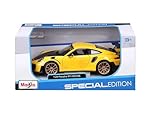
- Die-cast metal body with plastic parts
- Opening doors and engine compartment
- Detailed chassis
- Package Dimensions: 10.6 L x 23.5 H x 11.5 W (centimeters)
3. Porsche 904 Carrera GTS: a competition car with a lightweight body
Designed by Ferdinand Alexander Porsche, the 904 Carrera GTS used a plastic body and achieved success at the Targa Florio, Monte Carlo Rally and Le Mans, according to Porsche. The designation also matters: “GTS” has roots in the 904 Carrera GTS name. This car earns its place for bringing a distinctive lightweight construction approach together with results across very different kinds of competition. Porsche’s 904 Carrera GTS retrospective details its design and sporting history.
Compact and front-engine alternatives
4. Porsche 914: a compact mid-engine sports car
The 914 brought a smaller, lighter mid-engine option to Porsche’s range. That makes it a useful counterpoint to the marque’s more exotic machines: its appeal rests on a compact format and a balanced layout, rather than headline-grabbing output. Porsche’s model history places the 914 among its mid-engine sports cars. Porsche’s 914 history provides an overview of the model.
5. Porsche 928: a V8-powered grand-touring direction
The 928 took a different route with a front-mounted V8 and a more luxurious, high-performance character. Porsche describes it as a luxury sports car, making it the grand-touring choice in this group rather than a mid-engine, racing-focused machine. Its inclusion shows that Porsche’s non-911 history also includes a distinct front-engine branch. Porsche’s 928 retrospective discusses the model.
Rank #2

- REMOTE CONTROL PORSHCE 911 :1/24 scaled back on the real Porsche 911 GT3 RS,officially licensed by Porsche,the Porsche car has all the functions of a real car.For Porsche car fans, this is a realistic small scale replica of a Porsche model
- FULLY FUNCTIONAL PORSHCE RC CAR :The Porsche remote control car has functions such as forward, backward, left turn, right turn; and easy to control.The rc car simulates a very powerful engine just like a real Porsche. Let you experience the fun of remote control
- SAFE MATERIALS AND Scratch Resistance :Non-toxic ABS plastic and smooth exterior can withstand many bumps. The unique design of the wheels and the independent suspension system can reduce the friction between the tire and the floor and prolong the use time of the remote control car
- EXCELLENT PERFORMANCE :Operated by 2.4Ghz frequency, provides stability and a wider range of control for the race, provides up to 80 feet of range, lets you have fun at speeds up to 4 mph
- IDEAL REMOTE CONTROL PORSCHE CAR :The remote control porsche car works well on a smooth surface, suitable to play inside and outside. You not only play with it using the remote control but also place it as an exhibit on a display shelf. It is a good choice for you at various festivals
6. Porsche 944: transaxle balance in a difficult decade
The 944 was part of Porsche’s transaxle sports-car line. In its engineering retrospective, Porsche calls the 944 one of the successful sports cars of its time and says it helped the company through the economically difficult 1980s. Those are the manufacturer’s own assessments, but they convey why the 944 matters beyond its layout: it became an important part of Porsche’s business as well as its model range. Porsche’s 944 history covers its place in the transaxle era.
The Tool Desk
Outbyte Driver Updater FREEFix the driver behind crashes, sound loss and screen glitchesFind Drivers →Outbyte PC Repair FREEClear out junk files and repair common Windows errorsFree Scan →Technology showcases and modern mid-engine icons
7. Porsche 959: a technology benchmark
When Porsche presented the 959 in 1985, it was a technology showcase built around a twin-turbo flat-six, electronically controlled all-wheel drive and an active chassis, according to the company’s history. Porsche reports that 292 were produced. Its competition credentials extended beyond circuit racing: Porsche’s later Mission X retrospective says its 1986 Paris-Dakar entries finished first, second and sixth. The 959 stands out for bringing ambitious technology and rally-raid success together in one rare car. Porsche’s 959 history and the Mission X retrospective give the company’s figures and account.
8. Porsche Boxster: a roadster that changed direction
Porsche showed the Boxster concept in 1993 and began series production three years later. Its name blends “Boxer” and “roadster,” and the mid-engine layout gave Porsche a modern, open sports car with a character distinct from the 911. More broadly, Porsche says the model helped redirect its strategy during the difficult mid-1990s. It earns a place both as a roadster and as a consequential new line for the company. Porsche’s Boxster retrospective explains its launch and background.
Rank #3

- Scale: 1: 24.
- Length 179 mm.
9. Porsche Carrera GT: a V10 super sports car
The Leipzig-built Carrera GT was a limited-series, mid-engine super sports car with a carbon-fibre monocoque. Porsche’s published historical specifications give it 612 bhp (450 kW) from a V10 and a production run of 1,270 units. Porsche also cites a 7:33-minute Nürburgring Nordschleife road-car record from 2004. These are the manufacturer’s historical figures and record claim. The Carrera GT’s appeal comes from its rare combination of motorsport associations, a high-revving V10 and carbon-fibre construction. In Porsche Newsroom’s 2025 anniversary article, former test driver and engineer Roland Kussmaul said: “The Carrera GT is an essential element of our philosophy: Taking motorsport seriously, understanding origins – and translating these into motion.” Porsche’s Carrera GT history and its 2025 anniversary article provide those details.
10. Porsche 918 Spyder: plug-in hybrid performance
The 918 Spyder combined a combustion engine with electric motors in a plug-in hybrid super sports car. Porsche’s retrospective reports 887 hp of system output and a 6:57-minute Nürburgring Nordschleife lap. Those are manufacturer-published historical figures, rather than an independently assessed comparison with the other cars here. The name also signals the body style: Porsche’s naming guide uses “Spyder” for an open, mid-engine sports car. The 918 belongs on this list for pairing electrification with Porsche’s open-top, mid-engine format. Porsche’s 918 Spyder retrospective and Porsche’s account of the 918 Spyder explain the car and its figures.
Which non-911 Porsche should you look at?
Choose by the experience you want, rather than treating this selection as a performance ranking:
- For Porsche’s beginnings: the 356.
- For a racing-first classic: the 550 Spyder or 904 Carrera GTS.
- For a compact mid-engine road car: the 914 or Boxster.
- For front-engine grand touring: the 928; for a transaxle sports car, the 944.
- For technology-led, competition-linked engineering: the 959.
- For a modern super sports car: the V10 Carrera GT or hybrid 918 Spyder.
Together, these ten cars show why “Porsche sports car” cannot be reduced to one model or one layout. The marque’s history includes lightweight beginnings, racing-derived machines, front-engine grand tourers, transaxle sports cars and mid-engine roadsters and super sports cars.
Quick Recap
Product prices and availability are accurate as of the date/time indicated and are subject to change. Any price and availability information displayed on Amazon at the time of purchase will apply.




