Outdated Drivers Are Slowing You Down
One free scan finds every outdated or missing driver and matches the right update for your exact hardware.Free scan · exact hardware matchPC Slower Than It Used to Be?
A free scan shows the junk files, broken settings and background clutter dragging Windows down - then fixes them in one click.Free scan · Windows 10 & 11Trump’s final fuel-economy rule could mean higher gasoline costs for owners of some new vehicles—not because it raises the price posted at the pump, but because less-efficient vehicles use more fuel to cover the same distance. How much an owner spends depends on the vehicle, miles driven, fuel prices and years of ownership.
What the federal fuel-standard change does
The administration’s SAFE Vehicles Rule III is final. Announced by the U.S. Department of Transportation (USDOT) on September 28, 2026, and published September 30, it resets Corporate Average Fuel Economy (CAFE) standards for passenger cars and light trucks, with related provisions for heavy-duty pickup trucks and vans. CAFE standards apply to manufacturers’ fleets: they do not set the fuel economy of any individual vehicle. The final rule is the controlling source for its requirements and analysis.
NHTSA estimates that the final standards correspond to a combined industry fleetwide average of about 34.9 mpg in model year 2031. For comparison, the agency’s no-action alternative—which retains standards issued in 2024—comes to about 49.3 mpg. The Associated Press separately reported a 50.4-mpg projection under the Biden-era rules. These are projections for fleets, not promises about the real-world mileage of a particular model or driver, and the comparison figures use different baselines. AP’s report gives its own comparator.
Why lower fuel economy can raise your fuel bill
A vehicle with lower miles per gallon burns more fuel to travel the same distance, all else equal. NHTSA says resetting the standards can allow lower fuel economy for some new cars and light trucks, increasing fuel consumption and owners’ fuel costs. The agency estimates the cost of that additional fuel using retail fuel-price forecasts. Its final-rule analysis and CAFE modeling information describe the assumptions and methods behind those estimates.
#1 Best Overall

- DESIGNED TO EXCEED EXPECTATIONS: Red Line complete SI-1 fuel system cleaner is a premium fuel additive, providing an effective fuel treatment solution to clean and prevent corrosion in fuel systems.
- PERFORM AND PROTECT: Fuel additive cleans injectors, carburetors, valve and combustion chamber deposits with a powerful, concentrated blend of high-temp and low-temp detergents
- EFFICIENT FUEL BURN: A gas treatment that enhances gasoline stability, while reducing the build up of gum and varnish formation, leading to smoother operation and increased power output.
- EASY TO USE: Use one bottle of Redline Fuel System Cleaner per tank for most effective treatment, additive cleans nearly 100% efficiency in one treatment
- ENAHNCED ENGINE EFFCIENCY: Experience improved fuel economy and engine performance with Red Line 60103 SI-1 Complete Fuel System Cleaner, as it effectively removes deposits, for enhanced exhaust system function
This is a potential increase in how much fuel a vehicle uses—not a uniform increase in the price of gasoline at stations. Nor does the fleetwide mpg projection predict the mileage or fuel bill for every vehicle. Household costs depend on actual efficiency, distance driven, fuel prices and how long the vehicle is kept.
What the administration says drivers could save
USDOT says the rule will lower the average cost of a new vehicle by $1,300 and save Americans $138 billion over five years. Those are the agency’s projected benefits, not guaranteed savings for an individual buyer or household. Administrator Jonathan Morrison described the policy as “balancing vehicle affordability and energy conservation goals while improving safety on our roadways.” USDOT’s announcement presents the administration’s case.
Rank #2

- DESIGNED TO EXCEED EXPECTATIONS: Red Line complete SI-1 fuel system cleaner treatment for cleaning and preventing corrosion in fuel systems
- PERFORM AND PROTECT: Fuel additive cleans injectors, carburetors, valve and combustion chamber deposits with a powerful, concentrated blend of high-temp and low-temp detergents
- EFFICIENT FUEL BURN: Gas treatment that enhances gasoline stability, while reducing the build up of gum and varnish formation
- EASY TO USE: Use one bottle per tank for most effective treatment, additive cleans nearly 100% efficiency in one treatment
- 15 Ounce (2 Pack)
The household trade-off is between any lower purchase price and the fuel expense over the time the vehicle is owned. A lower upfront price does not by itself establish that an owner will spend less overall: the result changes with the vehicle chosen, miles driven, fuel prices and ownership duration. NHTSA’s modeling considers alternative fuel-price assumptions and sensitivity cases, so long-term estimates depend in part on uncertain future prices.
How to think about the impact on your own costs
There is no single dollar increase supported for every driver. For a specific vehicle, the relevant calculation is the added fuel used at your actual mileage multiplied by the fuel price you actually pay over your ownership period. A useful comparison includes both purchase cost and expected fuel spending:
Rank #3
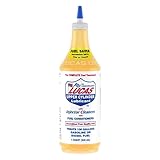
- The world’s #1 fuel additive for both gasoline and diesel engines
- A great tune-up in a bottle – treats gasoline, diesel fuel and increases MPG
- Cleans and lubricates the fuel system, including fuel injectors, carburetor and combustion chamber
- Improves fuel economy by burning excess exhaust emissions
- Increases power and acceleration by improving fuel flow and reducing deposit buildup
- Vehicle efficiency: Use the actual or estimated mpg for the models you are comparing, rather than the projected industry average.
- Annual distance: More miles driven generally means more fuel consumed, making an efficiency difference more consequential.
- Fuel price: Your costs change as gasoline prices change; long-term forecasts are uncertain.
- Time owned: The longer you keep a vehicle, the more years of fuel spending enter the comparison.
- Purchase price: Compare any real difference in the vehicle’s price with expected fuel costs rather than assuming a projected average reduction applies to your purchase.
The available estimates are policy-level modeling, not a personalized calculator result. They can show the direction of the fuel-use trade-off, but they cannot establish what a particular household will pay without vehicle-specific and driving information.
Independent reader supportYour contribution helps us test, update, and keep practical guides available for everyone.Why the rule is disputed
The administration frames the change as an affordability and safety initiative. Environmental groups sued after the final rule, and AP reported expert caution that weaker fuel-economy requirements do not necessarily lower vehicle prices or automatically lead to more new-vehicle sales. Those criticisms challenge the administration’s projected benefits; they do not change the basic fuel-use mechanism: a less-efficient vehicle can cost more to fuel when driven the same distance at the same gasoline price. AP’s October 2 report covers the lawsuit and reported criticism.
Quick Recap
Rank #4

- Specially formulated to remove carbon deposits from engines with over 75,000 miles
- Cleans fuel injectors, intake valves, and ports to restore performance and fuel economy
- Prevents future carbon build-up and reduces emissions
- Oxygen sensor safe and safe for use in turbocharged and supercharged vehicles
- Will not void OEM/manufacturer's warranty
Product prices and availability are accurate as of the date/time indicated and are subject to change. Any price and availability information displayed on Amazon at the time of purchase will apply.




