What’s actually slowing this PC down?
Pick the symptom - the matching free tool is one click away.
The Hyundai N Vision 74 looks like a sports car from an alternate 1970s future, but underneath its wedge-shaped body is a hydrogen fuel-cell and battery-electric performance experiment. That combination of memorable design and unusual engineering makes it a compelling future-sports-car concept—not a car Hyundai has confirmed for sale.
What makes the N Vision 74 stand out?
Most concept cars make their point through either styling or technology. The N Vision 74 makes both feel connected: its shape recalls an unrealized 1970s Hyundai sports-car prototype, while its powertrain explores how hydrogen and battery-electric hardware might work together in a high-performance car.
That is why it earns “favorite” as an editorial judgment, not as a measured ranking. Hyundai introduced it as a high-performance rolling lab for its N brand. The appeal is the idea it presents, rather than any claim that it is a showroom-ready sports car.
How does its design connect to Hyundai’s past?
Hyundai traces the N Vision 74’s design to the Pony Coupe concept unveiled in 1974, designed by Giorgetto Giugiaro. The Pony Coupe informed Hyundai’s first production sports-car prototype but never reached production. The N Vision 74 carries forward the earlier car’s wedge-like character and gives it a sharper, more technical appearance suited to a modern performance concept. Hyundai N’s model page and Hyundai Motor’s design background describe that connection.
Recommended Free Tools
#1 Best Overall

- 🎯【Applicable Car Models】Car charger pad for Hyundai Elantra N IONIQ 5 N N Vision 74. This in-car charging pad is designed specifically for phones that support charging and is compatible with non-metallic phone cases no thicker than 4 mm. We offer both Type-C and USB interfaces for your selection.
- 🚀【Premium Materials】: Constructed from durable materials, the sides can be trimmed to your desired dimensions, allowing you to customize it to fit your vehicle's storage compartment. Simply place your phone on the charging pad to begin charging—no need to constantly plug and unplug cables.
- 🧲【Step Design & Phone Compatibility】Step-style pad design accommodates phones with larger camera lenses while remaining suitable for standard models. Helps maintain proper placement and stable contact during charging, whether driving or using the pad on a flat surface at home
- ⚡ 【Fast 20W Charging】Provides up to 20W charging output to support efficient power replenishment during short drives, long trips, or daily desk use. Helps keep phones powered for navigation and everyday tasks without frequent charging interruptions
- 🔎【Easy Setup & Multi-Scene Use】Compact and lightweight pad fits naturally on dashboards, center consoles, or desks. Simple placement design supports commuting, road trips, travel, or home use without complicated setup or extra accessories
The body is not just a retro reference. Hyundai says its details also address cooling and aerodynamic needs associated with the fuel-cell system. The result makes the heritage feel like part of a plausible performance machine, rather than a styling exercise detached from the car’s engineering.
How does the hydrogen-electric powertrain work?
The N Vision 74 combines a hydrogen fuel-cell system with a rechargeable battery. The fuel cell generates electricity from hydrogen; the car’s propulsion is electric, not hydrogen combustion. Hyundai’s concept layout pairs the fuel-cell stack at the front axle with two hydrogen tanks at the rear and a 62.4 kWh battery. Two motors drive the rear wheels, with torque-vectoring control intended to distribute power between them. Hyundai Motor’s technical overview describes the arrangement.
Rank #2
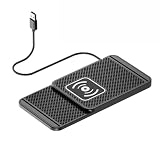
- 🎯【Applicable Car Models】Car charger pad for Hyundai Elantra N IONIQ 5 N N Vision 74. This in-car charging pad is designed specifically for phones that support charging and is compatible with non-metallic phone cases no thicker than 4 mm. We offer both Type-C and USB interfaces for your selection.
- 🚀【Premium Materials】: Constructed from durable materials, the sides can be trimmed to your desired dimensions, allowing you to customize it to fit your vehicle's storage compartment. Simply place your phone on the charging pad to begin charging—no need to constantly plug and unplug cables.
- 🧲【Step Design & Phone Compatibility】Step-style pad design accommodates phones with larger camera lenses while remaining suitable for standard models. Helps maintain proper placement and stable contact during charging, whether driving or using the pad on a flat surface at home
- ⚡ 【Fast 20W Charging】Provides up to 20W charging output to support efficient power replenishment during short drives, long trips, or daily desk use. Helps keep phones powered for navigation and everyday tasks without frequent charging interruptions
- 🔎【Easy Setup & Multi-Scene Use】Compact and lightweight pad fits naturally on dashboards, center consoles, or desks. Simple placement design supports commuting, road trips, travel, or home use without complicated setup or extra accessories
The battery and fuel cell give the concept a different architecture from a battery-only electric sports car. Hyundai lists 800-volt fast-charging capability for the battery, while hydrogen is stored in two 2.1 kg tanks. The paired rear motors are the performance centerpiece: independent control of power delivery across the rear wheels is intended to support torque vectoring.
What are Hyundai’s published specifications?
The figures below come from Hyundai’s official N Vision 74 specification page, accessed in 2026. They are manufacturer-published concept specifications, not independent measurements or road-test results. Hyundai N Vision 74 specifications
Do these 3 things before closing this tab:
1Fix the driver behind crashes, sound loss and screen glitches2Clear out junk files and repair common Windows errors3Scan for outdated or missing drivers - takes under a minuteRank #3

- 【Applicable Car Models】: Car wireless charger pad for Hyundai Elantra N/IONIQ 5 N/N Vision 74. Supports charging through phone cases up to 4mm thick (non-metal, non-magnetic). Built-in smart chip provides over-current, over-voltage, and temperature protection for safe in-car wireless charging.
- 【20W Fast Charging】: Upgraded wireless charging pad for car delivers up to 20W fast charging for enabled phones. Built-in metal heat dissipation plate transfers charging heat away from your device, reducing overheating risk and maintaining stable power output during long drives.
- 【Height-Enhanced Structure】: Special raised charging platform reserves space for Phone camera bump, ensuring full contact and efficient charging even with newer large-lens models. No camera interference, better alignment than flat wireless car charger pads.
- 【Non-Slip Silicone Surface】: Textured anti-slip surface keeps your phone secure during braking or sharp turns. Shock-resistant car wireless charging pad prevents sliding, making it ideal for daily commuting and road trips.
- 【Trim-to-Fit Design】: 158mm x 78mm size with cuttable edges allows custom fitting for car center console, dashboard storage tray, or armrest compartment. Perfect wireless charging mat for car interior, SUV, truck, and sedan hidden charging areas.
| Specification | Hyundai-published figure |
|---|---|
| Rear-motor maximum power | Over 500 kW |
| Rear-motor maximum torque | Over 900 Nm |
| Battery capacity | 62.4 kWh |
| Fuel-cell output | 85 kW net; 95 kW maximum |
| Hydrogen capacity | 4.2 kg |
| Refueling time | Five minutes |
| Maximum speed | Over 250 kph |
| Driving range | Over 600 km |
| Length × width × height | 4,952 × 1,995 × 1,331 mm |
| Wheelbase | 2,905 mm |
Hyundai does not establish in these specifications the test conditions behind the range, speed, or refueling figures. They should therefore be read as the company’s stated targets for the concept, not as independently verified real-world results.
Independent reader supportYour contribution helps us test, update, and keep practical guides available for everyone.Is the Hyundai N Vision 74 going into production?
Hyundai’s N Day 2022 announcement said the N Vision 74 and RN22e embodied the brand’s electrification vision, “though not confirmed for commercial production.” That is a statement made when the concepts were introduced in 2022, not proof that their status remains unchanged in 2026. Hyundai’s current model page continues to present the N Vision 74 as a rolling lab, and the official material cited here does not confirm retail production. Hyundai N Day 2022 announcement
Rank #4
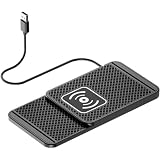
- 【Applicable Car Models】: Car wireless charger pad for Hyundai Elantra N/IONIQ 5 N/N Vision 74. Supports charging through phone cases up to 4mm thick (non-metal, non-magnetic). Built-in smart chip provides over-current, over-voltage, and temperature protection for safe in-car wireless charging.
- 【20W Fast Charging】: Upgraded wireless charging pad for car delivers up to 20W fast charging for enabled phones. Built-in metal heat dissipation plate transfers charging heat away from your device, reducing overheating risk and maintaining stable power output during long drives.
- 【Height-Enhanced Structure】: Special raised charging platform reserves space for Phone camera bump, ensuring full contact and efficient charging even with newer large-lens models. No camera interference, better alignment than flat wireless car charger pads.
- 【Non-Slip Silicone Surface】: Textured anti-slip surface keeps your phone secure during braking or sharp turns. Shock-resistant car wireless charging pad prevents sliding, making it ideal for daily commuting and road trips.
- 【Trim-to-Fit Design】: 158mm x 78mm size with cuttable edges allows custom fitting for car center console, dashboard storage tray, or armrest compartment. Perfect wireless charging mat for car interior, SUV, truck, and sedan hidden charging areas.
For now, the N Vision 74 is best understood as a vision of what a heritage-inspired, hydrogen-electric N performance car might be—not a model buyers can order.
Why it works as a future sports car
The N Vision 74 earns its place in the conversation because its design and engineering tell one coherent story. The Pony Coupe reference gives it a recognizable lineage; the fuel-cell-and-battery layout and rear torque-vectoring motors make it more than a retro shell. Hyundai’s figures are ambitious, but they remain concept specifications rather than tested performance evidence. The car is most convincing as an exploration of a possible future, not a promise of one.
Quick Recap
Product prices and availability are accurate as of the date/time indicated and are subject to change. Any price and availability information displayed on Amazon at the time of purchase will apply.




