A 1970 Dodge Charger is not one uniform market proposition: a base car or Charger 500 differs greatly from an R/T, a 440 Six Pack, or a Hemi car. The premium for a particular example depends on its configuration, condition, originality, history, and repair needs—not just its model year. Before paying an asking price, establish what the car is and compare it with examples of similar specification and condition.
Why some 1970 Chargers are so expensive
The range of engines and models helps explain the price spread. Hagerty reports total 1970 Charger production of 49,800, but says only 112 buyers chose the 426-cubic-inch Street Hemi and 116 chose the 440 Six Pack. The lineup also included ordinary six-cylinder and 318-powered cars, 383 options, and the R/T with its 375-horsepower 440. These configurations should not be treated as interchangeable when assessing value. [Hagerty model history]


Condition, originality, restoration quality, mileage, provenance, desirable options, color, and maintenance records may all affect valuation, according to Hagerty. They are considerations, not guarantees of a fixed premium. Modifications can appeal to some buyers and deter others depending on their quality and the car’s intended use.
Compare like with like
Use a valuation that matches the car’s model, engine, condition, and purpose. A guide figure for one configuration cannot establish what a different trim, drivetrain, modified car, or restoration project is worth.
#1 Best Overall
| Configuration and condition | Dated value context | What it does and does not tell you |
|---|---|---|
| 1970 Charger 500, 318-cubic-inch, 230-horsepower two-barrel V8, #3 Good | Hagerty’s July 2026 guide range: $35,767–$46,200; typical estimate about $39,900 | This is a guide estimate for that specific model, engine, and condition grade—not a price for every 1970 Charger. |
| R/T, Hemi, Six Pack, other configurations, or a different condition | No comparable range established by the cited figure | Seek a valuation based on matching configuration and condition; do not transfer the Charger 500 estimate to these cars. |
Hagerty’s figures and production details are from its 1970 Charger model history and July 2026 valuation information. Individual auction sales also vary, and are not comparable without checking specification and condition. [Hagerty valuation and model history]
What to check before buying
- Clarify the claimed model and equipment. Establish whether the car is represented as a base Charger, Charger 500, or R/T, and what engine and transmission it has. Ask what evidence supports those claims. If identity or originality materially affects the price, have an experienced Mopar specialist review it; the available research does not establish a complete VIN-decoding procedure.
- Review records and history. Request available provenance, restoration records, invoices, and documentation for the parts fitted. Compare the records with the seller’s description and the car itself. Treat unsupported claims about rare specifications cautiously.
- Inspect the body and underside. Look for corrosion, patch panels, filler, concealed repairs, panel fit, and the quality of previous restoration work. Give particular attention to the rear-window channel and sail-panel area, as well as the lower A-pillar. These are inspection priorities, not proof that every Charger has rust there.
- Get evidence and independent advice. Request clear photographs and access to inspect the underside. For significant corrosion or a fresh restoration, consider an independent pre-purchase inspection and a written body-shop estimate before deciding what the car is worth.
- Match condition and intended use. Compare cars assigned the same condition grade and decide whether you want a driver, show car, or restoration project. A car that suits one purpose may not make sense at the same price for another.
Auto Metal Direct says of the lower A-pillar on its 1968–1970 B-body restoration page: “The lower section is where moisture and debris collect, making it the most common area for rust.” That identifies a known area to examine; it is not a diagnosis of a specific car. [Auto Metal Direct restoration information]
Rank #2

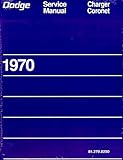
- Dodge Charger & Coronet Service Manual." The manual set is a page-for-page reproduction of the book that Dodge mechanics used to service cars. You will find detailed service procedures for front suspension, rear axle, body and sheet metal, brakes, clutch, cooling, electrical, engine, exhaust, frame, fuel system, lubrication, shock Charger, Coronet, Super Bee, R/T, Coronet Deluxe, Coronet 440, and Coronet 500 R/T series.
Restoration parts and repair planning
Mopar’s official restoration-parts page lists Auto Metal Direct as a licensed supplier and describes B-body sheet metal for the relevant 1966–1974 range, including floor pans, trunk pans, floor extensions, and related hardware. AMD also describes complete A-pillar components for 1968–1970 Dodge/Plymouth B-body applications including the Charger. Part availability does not make extensive rust repair inexpensive or straightforward. Verify fitment for the particular car and part with the supplier before ordering. [Mopar restoration parts] [Auto Metal Direct]
Independent reader supportYour contribution helps us test, update, and keep practical guides available for everyone.FAQ
Why is a 1970 Dodge Charger so expensive?
Prices vary because the model year includes ordinary cars as well as rarer high-performance configurations. Hagerty reports 49,800 total 1970 Chargers, including 112 Hemi and 116 Six Pack buyers. Configuration, condition, originality, history, and restoration quality all matter.
Quick wins for a faster PC:
Repair Windows errors before they cause bigger problemsFix Now →Scan for outdated or missing drivers - takes under a minuteDriver Scan →Clear out junk files and repair common Windows errorsFree Scan →How much is a 1970 Dodge Charger worth?
There is no single value for every 1970 Charger. Hagerty’s July 2026 guide gives a #3 Good range of $35,767–$46,200, with a typical estimate around $39,900, for a specific 318-powered Charger 500. That figure should not be applied to other trims, engines, or condition grades.
What should I look for when buying a 1970 Dodge Charger?
Verify the claimed model and equipment, review available records, and inspect the body and underside for corrosion and previous repairs. If authenticity affects the price, consult an experienced Mopar specialist. For substantial rust or recent restoration work, consider an independent inspection and written repair estimate.
Where should I check for rust on a 1970 Charger?
Inspect the underside and body carefully, including the rear-window channel, sail-panel area, and lower A-pillar. Auto Metal Direct identifies the lower A-pillar as a common rust area on its 1968–1970 B-body A-pillar restoration page. The condition of each car must be assessed individually.
Quick Recap
Product prices and availability are accurate as of the date/time indicated and are subject to change. Any price and availability information displayed on Amazon at the time of purchase will apply.
What’s actually slowing this PC down?
Pick the symptom - the matching free tool is one click away.




