Crashes, No Sound, or Screen Glitches?
Random freezes, missing sound and display glitches usually trace back to one bad driver. Find and replace yours safely.Free scan · under a minutePC Slower Than It Used to Be?
A free scan shows the junk files, broken settings and background clutter dragging Windows down - then fixes them in one click.Free scan · Windows 10 & 11Carbon fiber is expensive because it takes specialized precursor material, slow and carefully controlled processing, energy-intensive equipment, and extensive finishing and inspection to make. The cost also depends on the fiber’s grade and intended use. A historical estimate for industrial-grade fiber is not the price of a finished carbon-fiber part: composites and products involve additional materials and manufacturing.
What you are paying for
Most carbon fiber described in U.S. Department of Energy (DOE) manufacturing sources starts as polyacrylonitrile (PAN), a specialty acrylic precursor. Manufacturers convert the precursor through controlled heating and stretching into carbon fiber, then treat and finish the fiber for its intended use. The sequence requires specialized materials, equipment, energy, and production time.
Carbon fiber itself is not the same as carbon-fiber-reinforced polymer (CFRP). A composite combines fibers with a matrix, commonly a polymer resin; a finished part adds shaping, assembly, and other production steps. Consequently, an estimate for making raw fiber cannot be read as the retail price of fabric, a composite component, or a finished product.
Why manufacturing costs add up
Specialized precursor
PAN is a major cost contributor, according to the DOE. Carbon-fiber precursor is selected and optimized for the properties needed in the resulting fiber. Although commodity acrylic fiber may have similar chemistry, it should not be assumed to be an interchangeable, lower-cost substitute: changing the feedstock can involve process and performance trade-offs.
Do these 3 things before closing this tab:
1Fix the driver behind crashes, sound loss and screen glitches2Clear out junk files and repair common Windows errors3Scan for outdated or missing drivers - takes under a minute#1 Best Overall

- This premium automotive vinyl by VViViD Vinyls is specially engineered for DIY'ers. This durable film is ideal for long-term fleet and motorsport marketing applications, and provides a lightweight, economical alternative to paint!
- Adhesive has Top-Guard technology and won't eat through clear-coats, paints, finishes for the life of the vinyl, guaranteed. At 3.9mils in thickness, the film will stretch and conform to any shape and thick enough that discoloration, stretch marks and other visible defects when wrapping and driving are kept to a minimum.
- This product has built in VViViD Air Release, VViViD Resist, and VViViD Heat Fuse technologies to support the DIY'ers and the professional look of the completed quality. See the product description below for the details about these technologies.
- Comes with a 5 year manufacturer warranty. Application: Dry. Adhesive : Solvent-based, repositionable, permanent adhesive. Life: This vinyl is expected to easily last 5-7 years outdoors.
- This Vinyl can be installed using 3M 94 Primer and 3M Edge sealer, these are not mandatory, these products will promote adhesion and add life to your vinyl. The sealer or primer will not remove the glue, deform the vinyl or ruin the texture unlike cheaper quality films.
Slow stabilization and energy use
Before the precursor can be carbonized, it must be stabilized, or oxidized, so it can withstand later high-temperature processing. In the conventional PAN process described by the DOE, air-fed ovens take 80 to 120 minutes for this step. The DOE estimated stabilization at about 18% of total manufacturing cost in that process context. This is one substantial cost, not the whole explanation.
The DOE also reported a plasma-oxidation process that took 20 to 30 minutes and used 75% less energy than conventional oxidation ovens. Those figures describe the specific process comparison published around 2016; they are not specifications for every factory or evidence that the alternative is used throughout commercial production.
Rank #2
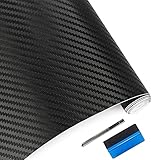
- High Quality - Automotive grade premium high quality vinyl designed for wrapping vehicles and many other uses.
- Air Channels - Built-in air channels on the adhesive side for bubble-free installation.
- Ease of Installation - Repositionable during installation. Conforms well to most contours andshapes. Grid pattern on paper backing allows precise measuring and cutting.
- Useful Life - 10 year indoor life, 5 year outdoor
- Will not harm painted surfaces - Does not leave adhesive residue behind when removed.
Specialized equipment and constrained throughput
Carbon-fiber conversion relies on large furnaces and production lines designed to control material properties. A DOE account identifies energy losses from massive conventional furnaces as one cost driver. It also notes that line speeds may be chosen to protect high-strength, aerospace-level properties. Slower or more conservative production can limit output from expensive equipment, so cheaper feedstock alone would not eliminate the other costs.
Finishing, inspection, and qualification
Manufacturing does not end when the fiber is formed. The DOE process-cost analysis includes surface treatment, sizing, winding, inspection, and shipping after precursor preparation and conversion. Products made to demanding specifications can also require qualification, certification, inspection, and documentation. These burdens matter particularly when comparing aerospace-grade fiber with a general-purpose industrial grade; they should not be treated as identical products with identical costs.
Recommended Free Tools
Rank #3

- [Real Carbon Fiber Look] This black carbon fiber vinyl wrap delivers a stunning, real carbon fiber appearance that upgrades any surface. This high gloss wrap transforms your car, motorcycle, or ebike without expensive paint jobs.
- [Durable Protection] The car film offers superior protection from scratches, stone chips, and UV damage. The waterproof layers also guards against rain, spills, and stains for long-lasting performance. It gives more than 7 years of life indoors and more than 5 years of life outdoors.
- [Easy DIY Installation] Lypumso auto wrap vinyl features advanced air release technology for a bubble-free and easy to apply process. The self adhesive air release channel allows for repositioning during installation and do not leave residue, making this car wrap a perfect DIY project for enthusiasts of all skill levels.
- [Versatile Use] The 6D black vinyl wrap is appropriate for car or motorcycle exteriors such as hood, mirror, door handles, bumpers, ABC Pillars and so on; Interior decorations like dashboard, steering wheel, car control panel, and much more. Home furnishing color changing like cell phones case, laptops, game pad and electronics. Over intricate curves, they can be sculpted and formed.
- [Installation Tips] 1. Make sure to clean and dry the surface to remove any dust and grease before applying the vinyl wrap. 2. Use a heat-gun or hair dryer at safe distance to heat the wrinkled and curled place of the car sticker. 3. Use the squeegee to flatten the film and remove air bubbles. 4. Do not get wet for 72 hours.
How to interpret published cost figures
| Published figure | What it refers to |
|---|---|
| About 18% of manufacturing cost | DOE estimate, published circa 2016, for conventional PAN oxidation or stabilization in the process account; not a universal share for every product or factory. |
| 80–120 minutes conventional; 20–30 minutes plasma | DOE process comparison, published circa 2016, for oxidation approaches described there; not a general production-line specification. |
| 75% less energy | DOE-reported comparison for the plasma oxidation process against conventional oxidation ovens; not a claim about all carbon-fiber manufacturing. |
| $10–$25 per kilogram | National Renewable Energy Laboratory (NREL) 2017 report-era manufacturing estimate for industrial-grade carbon fiber. The report says it varies largely with feedstock and fiber type; it is neither a current market quote nor a consumer price. |
The NREL report also presents cost structures for specified manufacturing scenarios, including precursor, equipment and facility depreciation, labor, natural gas, electricity, and nitrogen. Those shares depend on the report’s underlying data and assumptions; they should not be generalized as a standard cost breakdown.
Why the price varies by grade and application
“Carbon fiber” covers products made to different performance requirements and production assumptions. Industrial-grade fiber and high-strength or aerospace-qualified fiber are not automatically comparable. Precursor type, line speed, energy use, plant conditions, throughput, and quality requirements can all affect costs.
Rank #4

- DIY: Gloss Black carbon fiber car vinyl wrap is specially engineered for DIY'ers. This Carbon Fiber film is ideal for long-trip fleet and motor-sport marketing applications, for a hyper-realistic carbon fiber look!
- Application for: Interior or Exterior of Automobile parts such as: Dashboard, Steering wheel, interior door handles, Glove compartments, car control panel, Fenders, Door handles, tire rims, exhaust pipes, ect.
- Eco-friendly "paint": This durable film is ideal for long-term fleet and motorsport marketing applications, and provides a lightweight, economical alternative to paint!
- If you notice the sticker is curled and wrinkled, please be careful , the sticker can be recovery as the below step:1. Clean paste position; 2. Move away the bottom paper on the back; 3. Adjust the position and paste; 4. Use a hair dryer to heat the wrinkled and curled place of the car sticker, then use the scraper to flatten the sticker and remove air bubbles. 5. Move away the transfer film carefully; 6. Finish. Don't wash your car in 3 days.
- Any questions please feel free to contact us, we will help you solve it.
The application matters too. Carbon fiber can make sense where performance and weight savings justify a higher-cost input. Its expense limits broader use in vehicles, while DOE research has explored cost-competitive carbon-fiber composites for wind-energy blades. These examples show why the material can be valuable in some applications without establishing a universal cost comparison with steel, aluminum, or fiberglass.
Independent reader supportYour contribution helps us test, update, and keep practical guides available for everyone.What could make carbon fiber less expensive?
DOE sources describe several avenues under investigation: lower-cost textile-grade PAN, plasma oxidation, and composite work for wind applications using precursor material from the textile industry. These approaches target feedstock or processing costs, but reported research results do not establish a uniform price reduction across products or show that any one alternative has become the standard commercial process.
Best Value

- Experience the NEW XPO series Tech Art vinyl for a hyper-realistic carbon fiber look!
- May be used on interior parts ONLY; Area of Use: Interior of vehicles, trims, dash, cabinets, tables and more!
- Surface: Super High Gloss finish with scratch protection coating.
- Life: 10 years +
- Thickness: 6.5 mils
The practical distinction is between a promising way to reduce a particular cost and a lower price for every grade and application. Even if precursor or stabilization costs fall, conversion equipment, throughput, finishing, inspection, and any required qualification still affect the final cost.
Quick Recap
Sources
- U.S. Department of Energy: low-cost carbon-fiber manufacturing and precursor research
- U.S. Department of Energy: plasma oxidation process comparison
- U.S. Department of Energy: manufacturing cost drivers and process analysis
- National Renewable Energy Laboratory, 2017: carbon-fiber cost estimate and scenario analysis
- U.S. Department of Energy: cost-competitive carbon-fiber composites for wind-energy blades
Product prices and availability are accurate as of the date/time indicated and are subject to change. Any price and availability information displayed on Amazon at the time of purchase will apply.




