Recommended Free Tools
Ford merged the planned FNV4 electrical and software architecture into an evolution of its existing FNV3 system because a clean-sheet architecture would have reached too few vehicles, too slowly, at too high a cost. The resulting FNV3.X strategy gives Ford a common software and electrical foundation that can support gasoline, hybrid, and electric vehicles across much of its lineup while preserving a separate clean-sheet path for future EVs.
This was a capital-allocation decision rather than a rejection of software-defined vehicles or zonal electrical architecture. Ford decided that the near-term value of broadly deployable software, over-the-air updates, digital services, security improvements, and BlueCruise outweighed the benefits of introducing FNV4 as a standalone architecture across only a limited group of vehicles.
What Ford actually changed
Ford’s announcement in February 2025 was about converging its vehicle electrical and software strategy—not physically combining two vehicle platforms into one chassis or discontinuing all next-generation technology.
Ford chief EV, digital and design officer Doug Field said the company would merge its future-state FNV4 project with the evolving FNV3 architecture. Ford referred to the resulting approach as FNV3.X.
#1 Best Overall
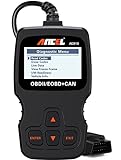
- CEL Doctor: The ANCEL AD310 is one of the best-selling OBD II scanners on the market and is recommended by Scotty Kilmer, a YouTuber and auto mechanic. It can easily determine the cause of the check engine light coming on. After repairing the vehicle's problems, it can quickly read and clear diagnostic trouble codes of emission system, read live data & hard memory data, view freeze frame, I/M monitor readiness and collect vehicle information
- Sturdy and Compact: Equipped with a 2.5 foot cable made of very thick, flexible insulation. It is important to have a sturdy scanner as it can easily fall to the ground when working in a car. The AD310 OBD2 scanner is a well-constructed mechanic tool with a sleek design. It weighs 12 ounces and measures 8.9 x 6.9 x 1.4 inches. Thanks to its compact design and light weight, transporting the device is not a problem. The buttons are clearly labelled and the screen is large and displays results clearly
- Accurate Fast and Easy to Use: The AD310 scanner can help you or your mechanic understand if your car is in good condition, provides exceptionally accurate and fast results, reads and clears engine trouble emission codes in seconds after you fixed the problem. This device will let you know immediately and fix the problem right away without any car knowledge. No need for batteries or a charger, get power directly from the OBDII Data Link Connector in your vehicle
- OBDII Protocols and Car Compatibility: Many cheap scan tools do not really support all OBD2 protocols. AD310 scanner as it can support all OBDII protocols such as KWP2000, J1850 VPW, ISO9141, J1850 PWM and CAN. This device also has extensive vehicle compatibility with 1996 US-based, 2000 EU-based and Asian cars, light trucks, SUVs, as well as newer OBD2 and CAN vehicles both domestic and foreign. Pls confirm with our customer service whether it is compatible with your vehicle before purchasing
- Home Necessity and Worthy to Own: This is an excellent code reader to travel or home with as it weighs less and it is compact in design. You can easily slide it in your backpack as you head to the garage, or put it on the dashboard, this will be a great fit for you. The AD310 is not only portable, but also accurate and fast in performance. Moreover, it covers various car brands and is suitable for people who just need a code reader to check their car
FNV3.X is intended to provide a more common foundation across a mixed portfolio that includes the Mustang, Bronco, Ranger, Transit vans, F-150, and electric vehicles. In practical terms, Ford wants more of its vehicles to share software services, digital experiences, update systems, security functions, and connected-vehicle tools—even when the vehicles use different powertrains and have different hardware requirements.
The decision can be summarized simply:
- FNV4 alone: a cleaner, more ambitious architecture that would require larger hardware changes and initially apply to fewer vehicles.
- FNV3.X: a more evolutionary architecture that can be deployed across more of Ford’s existing and near-term products.
- Universal Electric Vehicle platform: a separate clean-sheet program for future EVs that still gives Ford a path to fully zonal, highly integrated vehicle technology.
That distinction matters. Ford did not decide that centralized computing, zonal architecture, or software-defined vehicles were unimportant. It decided that one architecture should not be forced onto every vehicle immediately when the company’s product range and customer demand remained so diverse.
Why FNV4 was attractive in the first place
FNV4, short for “fully networked vehicle,” was envisioned as Ford’s more radical next-generation electrical and software architecture. Its design direction was associated with a zonal architecture, in which the vehicle is divided into electrical zones managed by a smaller number of powerful computers rather than relying on a large collection of separate electronic control units.
A conventional vehicle may contain dozens of electronic control units, each responsible for a particular function or group of functions. Those modules must communicate across several vehicle networks, and the vehicle can require extensive wiring to connect sensors, actuators, and computers throughout the body.
What’s actually slowing this PC down?
Pick the symptom - the matching free tool is one click away.
A modern zonal design generally attempts to:
- reduce the number of separate electronic control units;
- move more computing power into centralized or high-performance computers;
- shorten and simplify wiring by grouping local connections into zones;
- use faster communication networks, including Ethernet, for high-bandwidth data;
- give the manufacturer more direct control over the vehicle software stack;
- make software updates, diagnostics, and feature deployment easier to manage; and
- reduce long-term hardware and manufacturing complexity.
That architecture is especially useful when a vehicle is designed around it from the beginning. Engineers can choose the locations of computers, wiring, sensors, power electronics, and network connections together rather than trying to fit a new electronic backbone into a vehicle originally designed around older systems.
Ford’s broader technology strategy also involved moving more functions onto centralized, high-performance computers and increasing its control over important hardware and software modules. The potential benefits included lower cost, improved quality control, better supply-chain management, faster software development, and more consistent over-the-air updates.
Why a clean-sheet FNV4 was difficult to deploy across Ford’s lineup
The problem was not that FNV4 was technically misguided. The problem was the scale and diversity of Ford’s product portfolio.
Ford sells large body-on-frame trucks, off-road SUVs, commercial vans, hybrids, gasoline-powered vehicles, and battery-electric vehicles. These products have different packaging constraints, electrical loads, duty cycles, software requirements, production volumes, and customer expectations. A system optimized for a new electric vehicle cannot necessarily be installed in an existing truck or van without substantial redesign.
Quick wins for a faster PC:
Fix the driver behind crashes, sound loss and screen glitchesFind Drivers →Clear out junk files and repair common Windows errorsFree Scan →Scan for outdated or missing drivers - takes under a minuteDriver Scan →According to Field, FNV4 required significant changes to vehicle hardware. That limited the number of existing and near-term products that could adopt it. The company would have had to make extensive changes to vehicles that were already engineered around other electronic systems, wiring layouts, control modules, and production processes.
That creates a difficult economic choice. Ford could either:
- spend heavily to redesign a large number of vehicles around FNV4;
- use FNV4 only on a smaller number of new vehicles; or
- extend FNV3 so that newer software capabilities could reach more products with less hardware disruption.
Ford chose the third option for its broad portfolio while retaining a separate clean-sheet route for future EVs.
The four pressures behind the decision
1. EV adoption was slower than Ford expected
Ford said customers were taking longer to move from gasoline vehicles to fully electric vehicles. Many buyers were expected to move through hybrids first, rather than replacing a gasoline vehicle directly with a battery-electric model.
Rank #2
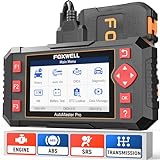
- [Easy to Use—Work Out of the Box] + [FOXWELL 2026 New Version] FOXWELL NT604 Elite scan tool is the 2026 new version from FOXWELL, designed for car owners who want to figure out the cause of issues before fixing car problems by scanning common systems like ABS, SRS, engine, and transmission. The NT604 Elite obd2 scanner diagnostic tool comes with the latest software—no need to waste time downloading software first. Plug the scanner into the OBDII port with OBDII cable to start the diagnosis.
- [Affordable] + [Reliable Car Health Monitor] Will you be confused what happens when the warning light of ABS/SRS/transmission/check engine flashes? Instead of taking your cars to dealership, this FOXWELL scanner will help you do a thorough scanning and detection for your cars and pinpoint the root cause. Note:The device is a diagnostic tool, not a repair tool. To turn off a warning light, you must first physically repair the issue causing it. Only then can the scanner be used to clear the corresponding fault code.
- [5 in 1 Car Diagnostic Scanner] Compared with obd scanners (50-100), NT604 Elite code scanner not only includes their OBDII diagnosis but also serves as ABS/SRS scanner, transmission and check engine code reader. When it’s an odb2 scanner, you can use it to check if your car is ready for annual test through I/M readiness menu. In addition, live data stream, built-in DTC library, data play back and print, all these features are a big plus for it. Note: doesn't support maintenance functions like reset or relearn. For the SRS system, NT604 Elite can read and clear common fault codes not caused by a crash, but crash/collision data cannot be cleared.
- [Fantastic AUTOVIN] + [No extra software fee] Through the AUTOVIN menu, this NT604 Elite car scanner allows you to get your V-IN and vehicle info rapidly, no need to take time to find your V-IN and input one by one. What's more, the NT604 Elite ABS SRS scanner supports 60+ car brands from worldwide (America/Asia/Europe). You don’t need to pay extra software fee. AUTOVIN may not work on some older vehicles or certain vehicle brands. If AUTOVIN fails, please input the vin code manually or go to the Diagnostic Menu to select your vehicle model.
- [Solid protective case KO plastic carrying bag] + [Lifetime update] Almost all same price-level car scanner diagnostic tool only offers plastic bag to hold the scanner.However, NT604 Elite automotive scanner is equipped with solid protective case, preventing your obd2 scanner from damage. Then you don’t need to pay extra money to buy a solid toolbox.
That changed the business case for an architecture designed primarily around a future EV lineup. If FNV4 were deployed mainly on electric vehicles, its software and electrical benefits would reach a relatively small part of Ford’s total customer base for years. Meanwhile, the company would still need to maintain other architectures for gasoline vehicles, hybrids, trucks, and commercial products.
FNV3.X offered a way to put more of the desired digital experience into vehicles that customers were buying now, regardless of whether those vehicles used gasoline, hybrid, or electric propulsion.
2. Ford needed one software strategy for a mixed fleet
Ford’s lineup is not transitioning to a single powertrain at one time. The company needs to support multiple propulsion technologies simultaneously, including vehicles with very different electronic and functional requirements.
A common software and electrical foundation can help Ford share services across that range. The underlying propulsion controls may remain different, but customer-facing systems such as infotainment, navigation, connected services, security, diagnostics, and driver-assistance functions can be developed and tested more consistently.
Ford specifically identified the Mustang, Bronco, Ranger, Transit, F-150, and electric vehicles as targets for the FNV3.X strategy. That is a much broader deployment plan than an architecture limited to a small number of future EVs.
3. Maintaining multiple architectures would duplicate work
Running a clean-sheet architecture on some vehicles while continuing to develop and support older architectures on the rest of the lineup can create substantial duplication.
Ford would need separate engineering, software integration, validation, diagnostics, service procedures, supplier relationships, cybersecurity processes, and update pipelines. Even when two systems deliver similar customer features, differences in hardware and operating environments can require separate development and testing.
Converging around FNV3.X does not eliminate every difference between Ford’s vehicles. A Transit van and a Mustang will still have distinct control systems and hardware. The goal is to reduce unnecessary variation in the underlying digital foundation so Ford is not repeatedly solving the same software and electrical problems for each vehicle family.
4. Ford wanted benefits sooner and with less capital
Ford’s decision came during a period of intense financial pressure on its EV and software operations. Reuters reported that Ford ended the expensive standalone FNV4 effort after development delays and mounting expenses. Ford’s EV and software operations were projected to lose as much as $5.5 billion in 2025.
Ford CEO Jim Farley described the change as a significant capital-efficiency saving. The objective was not simply to spend less; it was to direct investment toward systems that could benefit a larger portion of the business and produce customer-facing results sooner.
Ford’s 2024 integrated report also showed the challenge facing its EV business. Ford Model e reported a $4.7 billion EBIT loss for 2023 while Ford continued investing in next-generation electric vehicles and reducing the cost of its first-generation EVs.
Those figures do not show that FNV4 alone caused Ford’s EV losses. They do show why Ford was reassessing projects that required major investment before their benefits could be spread across a profitable, high-volume lineup.
The Tool Desk
Outbyte Driver Updater FREEFix the driver behind crashes, sound loss and screen glitchesFind Drivers →Outbyte PC Repair FREERepair Windows errors before they cause bigger problemsFix Now →Rank #3
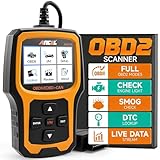
- Understand Your Check Engine Light – The ANCEL AD410 OBD2 scanner helps everyday drivers quickly read and clear engine-related fault codes, view code definitions, and understand why the check engine light is on before visiting a repair shop. With 42,000+ built-in DTC lookups, this car code reader helps reduce guesswork and makes basic vehicle diagnostics easier for beginners and DIY users
- Full OBD2 Diagnostics Made Simple – More than a basic engine code reader, this OBD2 scanner diagnostic tool supports key OBDII functions including reading/clearing codes, live data, freeze frame, I/M readiness, O2 sensor test, EVAP test, vehicle information, and MIL status. It helps you check your car’s condition, verify repairs after the issue is fixed, and communicate with mechanics more confidently
- Live Date & Real-time Vehicle Insights – View real-time engine data such as RPM, coolant temperature, fuel trim, oxygen sensor readings, and other available OBD2 parameters directly on the screen. These live data readings help you better understand how your vehicle is running, spot abnormal patterns, and make more informed repair decisions instead of relying only on a warning light
- Smog Check Readiness At A Glance – Use the I/M readiness function before a smog check or emissions inspection to see whether your vehicle’s monitors are ready. This OBD2 code scanner helps you confirm if recent repairs have brought the system back to a ready state, reducing the chance of failed inspections, retests, wasted trips, and unnecessary inspection fees
- Works With Most OBD2 Vehicles – Compatible with most 1996 and newer U.S.-based OBD2 cars, SUVs, and light trucks, as well as many 2000 and newer EU/Asian OBD2 vehicles. Supports major OBDII protocols including CAN, ISO9141, KWP2000, J1850 VPW, and J1850 PWM. This automotive diagnostic scanner is designed for wide vehicle coverage; please check compatibility with your vehicle before purchase
Why FNV3.X was a better near-term fit
FNV3.X is an evolutionary approach. Instead of replacing the electrical foundation across Ford’s lineup in one clean break, Ford can extend an architecture that is closer to the systems already used in its products.
That gives the company several practical advantages:
- More vehicle coverage: FNV3.X can be adapted to gasoline, hybrid, and electric products instead of being restricted mainly to clean-sheet EVs.
- Lower transition risk: Ford can avoid redesigning every vehicle’s hardware and production systems at the same time.
- Earlier software benefits: features and services developed for newer vehicles can be distributed more widely.
- Shared validation: software can be tested against a more consistent foundation across more models.
- Simpler service and monitoring: dealers and Ford’s connected-vehicle systems can work with more common diagnostic and update processes.
- Better capital efficiency: investment can support a larger number of vehicles rather than a small group of future products.
Ford described the approach as less elegant than a fully zonal architecture but more practical for its broad lineup. That is the central tradeoff: FNV3.X may not deliver the maximum theoretical simplification immediately, but it can deliver useful improvements to more customers.
What customers are supposed to notice
Most customers do not choose a vehicle because of its electronic topology. They care whether the navigation system works, whether the infotainment interface is responsive, whether security updates arrive reliably, whether connected services remain useful, and whether driver-assistance features perform consistently.
Ford therefore framed the decision around outcomes rather than architecture terminology. Field argued that the architecture should make software “soft”—in other words, easier to improve, test, distribute, and support—rather than merely minimize the number of processors or conform to the industry’s preferred definition of a zonal vehicle.
Ford identified the Ford Digital Experience and BlueCruise as examples of technology that could be distributed more broadly through FNV3.X. The company also pointed to improvements in:
- infotainment and connected services;
- over-the-air software updates;
- vehicle security;
- software testing and validation;
- production quality;
- dealer service; and
- connected-vehicle monitoring.
The exact features available to a particular vehicle will still depend on its model, hardware, software version, market, and subscription or service requirements where applicable. A shared architecture does not mean every Ford receives identical capabilities.
The financial logic: reach matters more than technical purity
FNV4 represented a cleaner break from legacy electronics. In the long term, a fully centralized or zonal system could reduce wiring, module count, and software complexity. But the benefits of a clean-sheet architecture arrive only after the company has redesigned vehicles, reworked factories and supply chains, validated the new system, and produced enough vehicles to spread the cost.
Free tools Windows power users keep installed
One-click scans. No signup required.
FNV3.X reverses the order of priorities. Ford can first expand common software and electronic capabilities across a larger group of products, then continue improving the architecture over time.
| Strategy | Primary benefit | Primary drawback |
|---|---|---|
| Standalone FNV4 | Cleaner next-generation foundation, stronger zonal architecture, and potentially lower long-term complexity | Higher development cost, delays, major hardware changes, and narrower near-term vehicle coverage |
| FNV3.X evolution | Faster and broader deployment across Ford’s mixed fleet with less transition disruption | Less technically pure and still dependent on some legacy vehicle electronics |
| Separate EV clean-sheet architecture | Preserves a path to highly efficient EVs designed around centralized or zonal technology from the start | Its benefits initially concentrate on future EV products rather than Ford’s entire existing fleet |
Ford did not abandon advanced EV architecture
The most important qualification is that Ford’s FNV3.X decision was not a retreat from advanced electric-vehicle technology.
Ford said its electric-vehicle skunkworks project would continue with a clean-sheet software and electrical architecture. That program later became associated with Ford’s Universal Electric Vehicle platform, or UEV platform.
The UEV program was designed around:
- high electrical efficiency;
- lower cost;
- centralized or zonal electrical technology;
- fewer parts;
- reduced wiring;
- a new assembly process; and
- software, battery, motor, and manufacturing innovations that could be reused elsewhere in Ford.
Ford said the platform would support a family of affordable EVs, beginning with a midsize electric pickup. The project is therefore more than a single vehicle program: it is also a laboratory for learning how to build lower-cost EVs profitably.
Crashes, No Sound, or Screen Glitches?
Random freezes, missing sound and display glitches usually trace back to one bad driver. Find and replace yours safely.Free scan · under a minutePC Slower Than It Used to Be?
A free scan shows the junk files, broken settings and background clutter dragging Windows down - then fixes them in one click.Free scan · Windows 10 & 11Rank #4

- Multi-Functions - Practical Multi-Functions OBD2 code reader features built-in OBD2 DTC lookup library, which help you to determine the cause of the engine light, read code, erase code, view freeze frame, I/M ready, vehicle information, data flow, real-time curve, get vehicle speed information, calculate load value, engine coolant temperature, get engine speed.
- Wide Capability - Supports 9 protocols compatible with most 1996 US-Based, 2000 EU-Based and Asian cars, and newer OBD II & CAN domestic or import vehicles. Supports 6 languages - English,German, Dutch, Spanish, French, Italian.
- 2.8" LCD Display - Designed with a clear display 2.8" Large LCD screen - white backlight and contrast adjustment. No need any battery or charger, OBD reader gets the power directly from your vehicle through the OBDII Data Link Connector.
- Compact Design - Car diagnostic scanner is equipped with a 2.5 feet long cable and made of a very thick flexible insulator.There are 6 buttons on OBD2 Scanner:scroll up/down,enter/exit and buttons that quick query VIN vehicle number& the DTC fault code.
- ABS / Airbag codes NOT Supported - It is able to read and clear check engine information which is part of OBDII system, but it cannot work with non-OBDII systems, including ABS / Airbag / Oil Service Light, etc.
By April 2026, Ford said the Universal Electric Vehicle platform included a fully zonal architecture, in-house software controls and advanced driver-assistance systems, and an ultra-efficient powertrain. Ford also said lessons from the program were being applied to broader product lines.
Ford’s stated goal was for 90% of its vehicle volume to feature updated electrical architectures, in-house-developed user experiences and hardware, and next-generation over-the-air capabilities by 2030. That target reinforces the idea that Ford is pursuing two related tracks rather than choosing between “old technology” and “new technology.”
Ford’s two-track architecture strategy
Ford’s approach can be understood as a division of labor:
FNV3.X for the broad existing portfolio
FNV3.X is the bridge architecture. It is intended to modernize the electrical and software foundation across vehicles that cannot all be redesigned around a fully zonal system at once.
Do these 3 things before closing this tab:
1Clear out junk files and repair common Windows errors2Scan for outdated or missing drivers - takes under a minute3Repair Windows errors before they cause bigger problemsIt is particularly useful for a company that must continue building gasoline vehicles, hybrids, trucks, SUVs, and commercial vans while also expanding its EV range. Its strength is deployment breadth and transition practicality.
UEV for clean-sheet EVs
The Universal Electric Vehicle platform is the clean-sheet path. Because future EVs can be engineered around the new architecture from the beginning, Ford has more freedom to integrate the battery, motors, wiring, computers, software, manufacturing process, and vehicle body around one another.
Its strength is technical integration and efficiency. Its initial limitation is reach: it applies first to future EVs rather than the complete installed base of Ford vehicles already on the road or in production.
Ford’s later organizational and product announcements support this two-track interpretation. The company said its unified Product Creation and Industrialization organization would help scale digital, electric, and manufacturing breakthroughs across Ford. It also said UEV technologies were informing future hybrids, batteries, software, and other vehicle programs.
The Tool Desk
Outbyte Driver Updater FREEScan for outdated or missing drivers - takes under a minuteDriver Scan →Outbyte PC Repair FREERepair Windows errors before they cause bigger problemsFix Now →What the decision means for Ford owners
For current Ford owners, the announcement does not mean that an existing vehicle will be physically converted from one electrical architecture to another. A vehicle’s underlying computers, wiring, sensors, and control modules are largely determined during engineering and production.
The more relevant effects are on future vehicle programs and the software ecosystem surrounding them. Depending on the model and hardware, future FNV3.X-based vehicles could receive:
- more consistent Ford Digital Experience features;
- broader availability of connected services;
- more capable over-the-air update systems;
- improved security and connected-vehicle monitoring;
- more consistent dealer diagnostic and service workflows; and
- expanded access to driver-assistance features such as BlueCruise where the required hardware and market support exist.
It would be inaccurate to assume that every FNV3.X vehicle will have identical software, that every current vehicle will gain new capabilities, or that an architecture change automatically makes BlueCruise or another feature available. Features remain dependent on hardware, software validation, regulatory approval, vehicle configuration, and availability by market.
Was FNV4 a failure?
Calling FNV4 simply a failure misses the business decision Ford was making.
What’s actually slowing this PC down?
Pick the symptom - the matching free tool is one click away.
Best Value

- 【Diagnose Check Engine Light in Seconds – No Mechanic Needed】The FOXWELL NT301 OBD2 scanner instantly reads & clears engine fault codes (DTCs) with one click. Simply plug into the 16-pin DLC port, turn ignition on, and get accurate results within seconds—No prior car knowledge required. Save hundreds on dealership fees by knowing exactly what’s wrong before you visit a shop. The #1 choice car scanner for DIYers and car owners who want to take control of their vehicle’s health
- 【Clear & Reset CEL with Confidence】Unlike cheap code readers that just erase codes temporarily, NT301 works like all professional vehicle code readers: It clears the check engine light only after you’ve fixed the underlying issue. If the problem isn’t fully repaired, the fault code will reappear. So you’ll never get a false pass. Use the foxwell scanner to verify your repair work and drive with peace of mind
- 【Sm-og Check Helper – Know Your Pass/Fail Status Before the Test】With dedicated one-click I/M readiness hotkeys and a simple Red-Yellow-Green LED indicator, you’ll instantly know if your vehicle is ready for annual testing. Built-in speaker provides clear audio feedback. No guesswork—just confidence before you head to the test center. One less thing to worry about when inspection day comes
- 【Advanced OBDII Modes – O- 2 Sensor & EVAP Testing】NT301 go beyond basic code reading with enhanced OBD2 modes. Run an EVAP system check to assess fuel tank condition, and use the O- 2 sensor test to optimize air-fuel ratio, boosting fuel economy, cutting em- issions, and saving you money at the pump. The code reader for cars and trucks is like having a mini em-issions lab in your glove box
- 【Live Data Graphing – Spot Engine Issues in Real Time】View and log live sensor data in easy-to-read graphs with this OBD2 scanner diagnostic tool. Monitor ox- ygen sensors, fuel trims, coolant temperature, RPM, and more to spot suspicious values instantly. This obd scanner gives you professional-grade insight without the pro price tag—a feature you won’t find on basic $20 car code readers
As a standalone architecture for a broad vehicle portfolio, FNV4 encountered development delays, rising expense, and hardware-integration challenges. Ford concluded that continuing on that path would not provide the best balance of timing, reach, and capital efficiency.
But many of the goals associated with FNV4—centralized computing, reduced wiring, software control, faster updates, and more capable digital systems—remain part of Ford’s technology direction. Those goals are being pursued through FNV3.X for the near-term portfolio and through the UEV platform for clean-sheet EVs.
In that sense, Ford abandoned a particular deployment plan, not the underlying technological objective.
The decision’s main tradeoff
Ford accepted a less technically pure architecture in the near term to gain broader deployment and lower transition risk.
A standalone FNV4 program promised the cleanest break from legacy electronics. It could eventually have reduced complexity more aggressively, but it would have required extensive vehicle changes and would have applied to fewer vehicles while the transition was underway.
FNV3.X is not the most radical architecture Ford could build. Its advantage is that it can serve the company Ford actually has: one with a mixed-powertrain lineup, high-volume trucks and vans, continuing hybrid demand, growing but not yet dominant EV sales, and pressure to improve profitability.
The strategic calculation is therefore:
- Do not wait years for a perfect architecture to reach a small number of vehicles.
- Give more vehicles a shared software foundation sooner.
- Use a clean-sheet architecture where the vehicle can be designed around it from day one.
- Apply lessons from that clean-sheet EV program to the wider portfolio.
Bottom line: Ford chose coverage over purity
Ford merged FNV4 into FNV3 because a standalone next-generation architecture demanded too much hardware change and investment for too little near-term coverage. Slower-than-expected EV adoption made that mismatch more serious: an architecture aimed mainly at future EVs would not help enough of Ford’s customers or products quickly enough.
FNV3.X gives Ford a practical middle path. It can spread software, security, over-the-air updates, digital experiences, and driver-assistance technology across gasoline, hybrid, and electric vehicles without redesigning the entire lineup around one new electrical system.
At the same time, Ford’s Universal Electric Vehicle platform keeps the clean-sheet future alive. Ford can pursue a fully zonal, highly efficient EV architecture where it makes the most sense—on vehicles designed around it from the beginning—while modernizing the rest of the business incrementally.
Frequently Asked Questions
Did Ford cancel FNV4 completely?
Ford ended FNV4 as the standalone next-generation architecture for its broad vehicle portfolio, but it did not abandon the technology goals associated with it. Centralized computing, zonal electrical systems, software control, and advanced over-the-air capabilities continue through the FNV3.X strategy and the Universal Electric Vehicle platform.
What is FNV3.X?
FNV3.X is Ford’s evolutionary electrical and software architecture based on FNV3. It is intended to provide a more common foundation across gasoline, hybrid, and electric vehicles, allowing Ford to share more digital services and software capabilities without requiring every vehicle to be redesigned around a clean-sheet system.
Will FNV3.X give every Ford the same features?
No. A shared architecture can make software development and deployment more consistent, but features still depend on a vehicle’s computers, sensors, cameras, communications hardware, software version, market, regulatory approvals, and equipment level. BlueCruise and other features are not automatically available on every vehicle using the same architecture.
Quick wins for a faster PC:
Scan for outdated or missing drivers - takes under a minuteDriver Scan →Clear out junk files and repair common Windows errorsFree Scan →What is the Universal Electric Vehicle platform?
The Universal Electric Vehicle platform is Ford’s separate clean-sheet EV program. It uses a fully zonal direction, in-house software controls and advanced driver-assistance systems, an efficient powertrain, fewer parts, reduced wiring, and a new assembly process. Ford intends it to support a family of affordable EVs, beginning with a midsize electric pickup.
Why did Ford keep a clean-sheet EV architecture while merging FNV4 into FNV3?
A future EV can be engineered around a new electrical architecture from the start, making it easier to integrate the computers, wiring, battery, motors, software, and manufacturing process. Existing trucks, SUVs, hybrids, gasoline vehicles, and commercial vans have more hardware and production constraints, so an evolutionary architecture is more practical for the broader lineup.
The Bottom Line
Ford chose FNV3.X because it could modernize more vehicles sooner and with less capital risk. The company is using FNV3.X as a broad mixed-powertrain bridge while reserving a fully zonal, clean-sheet architecture for future EVs through the Universal Electric Vehicle platform. The decision was a change in deployment strategy—not an abandonment of software-defined vehicles or advanced electrical architecture.
Quick Recap
Product prices and availability are accurate as of the date/time indicated and are subject to change. Any price and availability information displayed on Amazon at the time of purchase will apply.




