Free tools Windows power users keep installed
One-click scans. No signup required.
Battery-electric vehicles had lower modeled life-cycle greenhouse-gas emissions than gasoline vehicles in every county in the contiguous United States in a 2025 University of Michigan study. The size of the advantage varied with local electricity, vehicle class, battery size and driving pattern. The study does not rank every vehicle sold today, and it measures greenhouse gases—not every kind of pollution.
What the study found—and what “pollution” means here
The 2025 study, published in Environmental Science & Technology, compared modeled life-cycle greenhouse-gas emissions, expressed as carbon-dioxide equivalent (CO2e), for vehicles across the contiguous United States. Its central finding was that battery-electric vehicles (BEVs) had lower life-cycle greenhouse-gas emissions than gasoline vehicles in every county, although the advantage was larger in some places than others. The study’s geographic finding does not cover Alaska or Hawaii. The journal record and University of Michigan Electric Vehicle Center identify the study and its finding.
Here, “pollution” is shorthand for life-cycle greenhouse gases, not a full environmental score. The analysis does not establish which vehicle has the lowest local tailpipe pollutants, tire and road wear, water impacts or every other environmental effect. Nor does lower life-cycle emissions mean zero emissions: vehicle and battery production, electricity generation and use all contribute to the total.
Which vehicles and scenarios were compared?
The researchers used an Argonne National Laboratory life-cycle assessment model and EPA model-year-2025 vehicle data. They compared internal-combustion vehicles (ICEs), conventional hybrids, plug-in hybrids (PHEVs) with modeled 35- and 50-mile electric ranges, and BEVs with modeled 200-, 300- and 400-mile ranges. Vehicle classes included compact and midsize sedans, small and midsize SUVs, and pickup trucks. These are modeled categories and scenarios, not rankings of specific makes and models available for purchase.
#1 Best Overall

- Educational STEM tools: A great choice for who love architecture and science. Fun and fun, these tanker kits will make for an enjoyable learning experience and give them great satisfaction while assembling their own electric motor kit. Create a circuit and let the fun begin.
- Pros: Cultivate hands-on ability, and thinking ability, you will explore the fun of solar and wireless control through this kit. Learn about circuits, engineering, energy conversion, and more.
- Easy to assemble: Our science tools include all the tools and materials you need to assemble - laser-cut wooden components, clear and simple instructions in English. No electric soldering iron, no soldering, simple assembly.
- Simple design: delicate and small, simple atmosphere, beautiful workmanship, every detail is clearly visible.
- Package includes: 1 set of DIY power car accessories.
How large were the modeled emissions differences?
The following figures are modeled results reported by Ars Technica’s Jonathan M. Gitlin on Aug. 25, 2025—not independent road tests by Ars. Percentage reductions compare each option with an internal-combustion vehicle in the same vehicle class unless otherwise stated.
| Modeled option | Reported result | Scenario qualification |
|---|---|---|
| Conventional hybrid | 11–13% lower life-cycle emissions | Compared with an internal-combustion vehicle within the same class. |
| 35-mile PHEV | 53–56% lower | Assumes 58% of driving time in electric mode; compared within the same class. |
| 50-mile PHEV | 56–60% lower | Assumes 69% of driving time in electric mode; compared within the same class. |
| 200-mile BEV | 74–75% lower | Equivalent gas vehicle in the same class is the comparison; the BEV contributes about 25–26% as much CO2e. |
| 300-mile BEV | 81–83% lower | Compared with an internal-combustion vehicle in the same class. |
| 400-mile BEV | 67–69% lower | Compared with an internal-combustion vehicle in the same class. |
The reported percentages are ranges across modeled vehicle classes, not a guarantee for a particular car or driver. The 400-mile BEV’s smaller reduction than the 300-mile option illustrates that more battery capacity does not automatically mean lower life-cycle emissions: manufacturing the larger pack adds impacts.
Rank #2
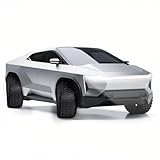
- 1:24 SCALE MODEL: This collectible toy truck measures 9.1" x 3.03" x 2.4" Inches and weighs 18 ounces. Immerse yourself in the toy truck experience with stunning detail in 1/24 scale. These photos capture its realism perfectly, making it a must-have for all toy truck enthusiasts.
- HIGH QUALITY & DURABILITY: Crafted from zinc alloy and ABS plastic, this toy pickup truck boasts exceptional durability. The zinc alloy body ensures authenticity, while ABS plastic components guarantee longevity. Equipped with lights and sounds, simply press the front wheels or open the front door to activate engine sounds and lights.
- COLLECTIBLE GIFTS: Packaged in a beautifully designed color box, it makes for an ideal gift. Whether for play, desk decoration, or collection, this meticulously crafted toy truck is sure to impress. Its high-quality build makes it perfect for kids and collectors alike.
- DIVERSE FUNCTIONS: Enjoy the pull-back function of the rear wheels, allowing the truck to run forward after a short pull. Additionally, trigger sound and light effects by pressing the car body or opening the front door, creating an immersive experience that lasts.
- SERVICES: Rest assured with our comprehensive warranty. Should you encounter any issues with our Toy Model Car Toy Trucks, simply reach out through Amazon's messaging system. We offer a hassle-free refund or replacement within 24 hours.
Why two headline per-mile figures are not a direct vehicle ranking
Gitlin also reported 486 g CO2e per mile for a modeled gasoline pickup and 81 g CO2e per mile for a modeled compact electric sedan with a 200-mile battery. The pickup scenario assumed 43% city driving and the rest highway driving, with no cargo. The sedan and pickup are different vehicle classes, so these figures illustrate the scale of the modeled results but are not an apples-to-apples comparison.
Why the result changes by county
Electricity generation affects the size of a BEV’s life-cycle advantage because charging emissions depend on the local power mix. The study’s reported overall result remained in favor of BEVs versus gasoline vehicles across the contiguous-U.S. counties, but parts of the Midwest and Appalachian regions tended to show less benefit from electrification, while the Northeast and Pacific Northwest tended to show more. Ars Technica cited Seattle and Cincinnati as contrasting examples because their electricity sources differ.
Do these 3 things before closing this tab:
1Fix the driver behind crashes, sound loss and screen glitches2Clear out junk files and repair common Windows errors3Scan for outdated or missing drivers - takes under a minuteRank #3

- Powered by a high-performance brushed RC 380 motor with an efficient drivetrain, this 4WD RC truck reaches speeds of up to 36 KPH, delivering thrilling enjoyment.
- All is fulfilled in hobby class design with classic ball bearings, solid gear diff, independent suspension. This rc monster truck is robust, speedy, funny and yet affordable, which is advisable to be toys gifts for boys and adults.
- 2.4GHz full-function proportional radio control system suffices a stable control range within 280 feet. Reliable transmission forward, brake and reverse would quick response(ensure the correct method to pair the vehicle with the transmitter). Splash waterproof electronic components make a all-terrain vehicle out of this truck. No worries to run this remote control cars on short grass, gravel roads, and concrete ground.
- Flexible and solid PVC truck body, high grip knobby off-road tires, and equipped with two 7.4V Li-Po battery packs among which the one is pre-installed in the vehicle, and one qualified USB charger ensure that you use a compatible charger with an output of 5V 2A for proper charging, our remote control truck comes in 99% Ready-To-Run version. Take it out, and get it moved immediately (40mins Runtime).
- Please read the battery usage and charging precautions page in the product manual to ensure that you use the Li-Po battery included with the product correctly. All parts in service are available on Amazon. What are you waiting for? Just get it and make it.
The modeled use phase accounted for 92% of life-cycle emissions for internal-combustion vehicles and 89% for conventional hybrids. For BEVs, it accounted for 48–60%, varying with battery size. That leaves manufacturing and other life-cycle stages relatively more consequential for BEVs, especially when comparing battery sizes.
Independent reader supportYour contribution helps us test, update, and keep practical guides available for everyone.How driving, charging and work use affect the comparison
PHEVs depend on electric-mode driving
The PHEV reductions above rely on assumptions about how much driving occurs in electric mode. A PHEV that is not regularly charged may not match those modeled assumptions. For a real-world choice, consider whether your routine and access to charging make the assumed electric use plausible.
Rank #4

- Miniature Collectible: Authentic 1:64 scale die-cast model of the Tesla Model Y, a compact electric SUV.
- Detailed Design: Intricately crafted with opening doors and a removable chassis, showcasing the vehicle's distinct features.
- Limited Edition: Part of the Matchbox series, numbered 3/100 in the collection.
- Vibrant Color: Striking blue finish that captures the eye and adds a touch of vibrancy.
- Compact Size: Measuring approximately 3 inches long, perfect for display or playtime.
Battery range should match the routine, not an abstract maximum
Among the BEV options modeled, the report says the smallest battery pack had the lowest environmental impact. That is a result for the study’s scenarios, not a recommendation to choose a particular vehicle. Range needs, charging access and the driving you actually do still matter; a vehicle category’s modeled result does not tell you whether its range suits your use.
Cargo was modeled; towing was not
The researchers included commuting and errands, occasional road trips, and work driving with cargo. With 2,500 pounds of cargo, the modeled 200-mile BEV pickup’s per-mile emissions rose 13%, while those of the internal-combustion pickup rose 22%; the starting ICE pickup emissions were reported as about four times higher. This cargo scenario does not establish how towing affects emissions, because towing was not examined.
Best Value

- 【AC Input /Output 】Input : 100V -240VAC 50/60Hz. /Output:24V DC 1000mA / 5 Ft Power Cable / 2.1mm * 5.5mm Center Positive Barrel Plug
- 【LED DISPLAY】Red Charging /Green Fully Charged
- 【Compatible Models】Compatible with the majority of 24V Children Ride On Car ( for Ferrari Lamborghini Mercedes BMX X6 Kid TRAX Disney GMC JEEP Hello Kitty SUV RC Car and so on )
- 【Safety certification】Our products have passed Safety certified. Fast charging and provide overcharge protection system/short circuit/overload protection/overheat protection/ Exceed 10 years Lifespan
- 【Notice】A:that wether the charger's charging hole is compatible. B:the input voltage is 100-240V for this charger. Please confirm insert correctly. C:Please do not overcharge. When the ligth is green, please remove the charge. Please contact us with any questions or concerns.
How to apply the findings to your vehicle choice
The study supports a comparison based on several factors rather than a single universal winner:
- Powertrain: gas, conventional hybrid, PHEV or BEV.
- Vehicle class: compare vehicles of similar size and use, rather than using a sedan-versus-pickup figure as a direct ranking.
- Battery range: consider the range your regular driving requires; larger modeled packs had higher manufacturing impacts.
- Local electricity mix: county conditions affect how large the BEV advantage is.
- Driving and charging habits: particularly important for whether a PHEV can achieve the modeled electric-mode share.
- Cargo and work use: the report includes cargo scenarios, but not towing.
Ars Technica reported that the study included an interactive county-level emissions calculator, but the District of Columbia was missing from its menu at the time of that Aug. 25, 2025 report. The calculator’s current availability and geographic coverage have not been established here, so do not assume it includes every U.S. location.
Quick Recap
Product prices and availability are accurate as of the date/time indicated and are subject to change. Any price and availability information displayed on Amazon at the time of purchase will apply.