Windows Errors? Fix Them Before They Spread
Repair common Windows errors and clear accumulated junk for a smoother, more stable PC - no reinstall needed.Free scan · no reinstallCrashes, No Sound, or Screen Glitches?
Random freezes, missing sound and display glitches usually trace back to one bad driver. Find and replace yours safely.Free scan · under a minuteNissan e-POWER is a series hybrid, not a conventional hybrid and not a battery-electric vehicle. Its gasoline engine does not drive the wheels. Instead, the engine generates electricity, while electric motors alone propel the vehicle. The battery stores and supplies that electricity, and regenerative braking can recover some energy.
The reason Americans have not been able to buy one has mostly been Nissan’s product strategy, certification workload, and the need to adapt the system to a larger North American vehicle—not a U.S. ban on the technology. That answer is also becoming outdated: Nissan says the 2027 Rogue Hybrid e-POWER will be its first U.S.-market e-POWER vehicle, scheduled to arrive in late 2026. As of August 12, 2026, it is announced but not yet a normal, broadly available retail purchase.
As an Amazon Associate I earn from qualifying purchases.
In one sentence: e-POWER gives a gasoline-powered vehicle an electric-drive feel without requiring the driver to plug in, but the gasoline engine still runs when the battery needs energy.
What is Nissan e-POWER?
Nissan e-POWER is an electric-drive hybrid built around a series-hybrid layout. The engine and the wheels are mechanically separated. The engine’s job is to produce electricity; electric motors use that electricity to turn the wheels.
#1 Best Overall

- Flex Level 1 EV Charger - The EVDANCE Level 1 electric car charger is compatible with J1772 electric vehicles and plug-in hybrid vehicles (North American Standard). *Tesla requires a SAE J1772 adapter.
- Convenient to Use - This charger has both NEMA 6-20 plug for 16A 240V charging (3.68kW, 10-12 mi/h) and a NEMA 6-20 to 5-15 plug adapter for 12A 120V charging (1.44kW, 2-5 mi/h). The included bag makes it easier to carry on the go. It also has a 25ft cable length, you can use it flexibly from anywhere in the garage or driveway.
- Check Your Outlet Type -This charger works with standard 120V NEMA 5-15/5-20 outlets (2-5 mph charging speed) and 240V NEMA 6-20 outlets (10-12 mph) . It's not compatible with NEMA 6-15/10-30/14-30/14-50/6-50 outlets – you'll need a NEMA 14-50/14-30/10-30/6-50 to 6-20 adapter (sold separately) to connect.
- Compatible EV Models -This EV charger works with most major electric vehicles, including Ford, Chevrolet, Hyundai, Audi, Nissan Ariya, Rivian R1S, Kia, and others. However, it's not compatible with Mini Cooper Electric Hardtop,Toyota Prus Prime/Z4X/RAV4Prime, Porsche Taycan Base/4S/Turbo/Turbo S or Tesla models (Tesla requires a J1772 to Tesla Adapter, sold separately). For a full list of compatible models, check out the Full Compatibility List on our product page.
- Indication Displays - LED display that can tell you the status as well as indicate errors while charging your electric vehicle.
A typical e-POWER system contains four main energy components:
- A gasoline engine that acts as an onboard generator.
- A generator and power electronics that convert the engine’s output into usable electrical power.
- A relatively small high-voltage battery that buffers energy and supplies electricity when demand changes quickly.
- One or more electric motors that provide the vehicle’s actual wheel drive.
During acceleration, the battery, generator, or both can supply power to the drive motors. During braking or deceleration, the motors can work as generators and send some recovered energy back into the battery. When the battery needs more energy, the gasoline engine starts and generates it.
That is the central distinction: the engine can be running without being directly connected to the wheels. It can therefore be managed around a narrower range of operating conditions than an engine that must respond directly to every change in vehicle speed and acceleration demand.
How e-POWER differs from other electrified powertrains
| Powertrain | What drives the wheels? | How is the battery replenished? | Does it need gasoline? |
|---|---|---|---|
| Nissan e-POWER | Electric motors only | Gasoline engine-generator and regenerative braking | Yes |
| Conventional parallel hybrid | Gasoline engine, electric motor, or both | Engine and regenerative braking | Yes |
| Plug-in hybrid | Gasoline engine, electric motor, or both | External charging, engine, and regenerative braking | Usually, after the usable electric range is depleted |
| Battery-electric vehicle | Electric motors only | External charging and regenerative braking | No |
A conventional hybrid, such as the general type used by many competing compact SUVs, can mechanically connect its engine to the wheels. At times, the engine may propel the vehicle directly; at other times, the motor may help it or drive the vehicle by itself.
e-POWER removes that mechanical path. The result is closer to an EV in how the vehicle responds to the accelerator, but it retains the refueling convenience of a gasoline vehicle. It is still a hybrid because gasoline remains the primary source of energy for longer trips.
What driving an e-POWER vehicle is supposed to feel like
The main reason to build a series hybrid is to make the vehicle behave like an electric-drive vehicle without giving the driver a charging requirement.
- Immediate motor response: electric motors can produce torque quickly, so acceleration can feel direct and smooth.
- Single-speed-like propulsion: the driver is primarily responding to electric-motor output rather than traditional gear changes from a gasoline engine and transmission.
- Regenerative braking: lifting off the accelerator or braking can send some kinetic energy back into the battery instead of losing all of it as heat through the friction brakes.
- No charging stop: the vehicle is refueled with gasoline rather than requiring a plug.
- Engine sound does not disappear: the engine is disconnected from the wheels, but it still has to run when the system needs more electricity. Its sound may not correspond perfectly to road speed or accelerator position.
That last characteristic is important. e-POWER is not silent in the way a battery EV is. The system can provide electric propulsion, but it cannot eliminate the noise, vibration, emissions, and maintenance associated with a gasoline engine.
Is e-POWER automatically more efficient than every other hybrid?
No. The series-hybrid layout has potential advantages, but it does not create energy from nowhere.
In an e-POWER vehicle, energy from gasoline is converted from chemical energy into engine output, then into electricity, then into motor output at the wheels. Each conversion introduces losses. A parallel hybrid can sometimes send engine power to the wheels through a more direct mechanical path, which may be advantageous under certain conditions.
Rank #2

- 【Delay Timer - Adjustable Current】Ev charger can adjust the current (8A/10A/12A/16A) through the physical button of level 1 ev charger. Charging power can reach up to 3.68KW (240V/16A). One-touch switch for ev charger operation. Built-in 2–8 hour delay timer for off-peak charging to save on electricity bills.
- 【NEMA 6-20 Plug & NEMA 5-15 Adapter】Nema 6-20 plug for 240V outlets and 5-15 adapter for standard 120V realize plug-and-charge (With 5-15 adapter, need to adjust the current to 12A or below, otherwise the charger may be demeged). Overall length of ev charger level 2 is 27FT, providing enough charging distance across garages at home or outdoor. Portable storage bag supports you take portable EV Charger during travel, business trip, electric vehicle charging stations anywhere.
- 【ETL/FCC and IP67 Safety】J1772 charger is equipped with advanced safety functions such as overvoltage, overheating, and short-circuit automatic shutdown. IP67 waterproof and dustproof, extreme temperature protection level for withstanding harsh weather conditions from -40°F to 131°F in sunny, rain, snow and sandstorm. Electric car charger has ETL certified, FCC listed, meets UL safety standards. Industrial-grade construction with high-strength TPU-coated cables and 99.95% oxygen-free copper cores.
- 【J1772 Connector】J1772 charger works for all J1772 standard electric vehicles, Ford, GM, Nissan, Audi, Kia, Honda, BMW, Hyundai, Gmc, Chevy, Mercedes, and all PHEV/BEV. [Not fits Tesla cars/Nacs connector]
- 【One-Touch Charging Operation】16A electric car charger supports plug-and-charge functionality and features one-touch scheduled charging and current adjustment. Its intuitive and user-friendly operation allows flexible customization of personalized charging plans. Level 1 ev charger automatically shuts off when your car is fully charged.
In practice, the result depends on the engine’s efficiency, the electric motors, the battery, the control software, vehicle weight, aerodynamics, speed, temperature, road conditions, and how often the system can operate its engine in an efficient range. A series hybrid may be especially appealing for stop-and-go driving and for drivers who prefer electric-motor response, but its architecture is not proof that it will beat every competing hybrid in every driving situation.
Nissan says its third-generation e-POWER is intended to improve efficiency, drivability, refinement, and cost competitiveness. Nissan also says the dedicated 1.5-liter three-cylinder turbocharged gasoline engine used by that generation achieves 42% thermal efficiency. That is Nissan’s engineering claim about the engine; it is not the same thing as an EPA fuel-economy rating or an independent road-test result.
Do these 3 things before closing this tab:
1Fix the driver behind crashes, sound loss and screen glitches2Clear out junk files and repair common Windows errors3Scan for outdated or missing drivers - takes under a minuteWhat is different about Nissan’s third-generation e-POWER?
Nissan’s third-generation system debuted in the European Qashqai in 2025. It uses a dedicated 1.5-liter three-cylinder turbocharged gasoline engine as a generator and a more integrated electric-powertrain layout.
The word dedicated matters here. Because the engine is used to generate electricity rather than directly track wheel speed, Nissan can design and calibrate it around its generator role. The company says the newer generation improves:
- Fuel economy
- Driving response and drivability
- Overall refinement
- System cost competitiveness
Those improvements help explain why Nissan is bringing the newer generation to America rather than simply transferring an older overseas application. They do not, however, establish the final EPA rating or prove that the future Rogue will outperform every rival. Those figures require a certified U.S.-market vehicle and independent testing.
Why wasn’t e-POWER sold in the United States?
1. Nissan chose other products for the U.S. first
The simplest explanation is that Nissan made a market and product-planning decision. The company developed and sold e-POWER in markets including Japan and Europe, where it could apply the system to compact cars, minivans, and crossovers. Nissan’s historical applications included vehicles such as the Note and Serena, while the third-generation system first reached Europe in the Qashqai.
In the United States, Nissan prioritized different electrified products. The company sold the LEAF, introduced the Ariya, and planned a 2026 Rogue Plug-in Hybrid before announcing the U.S. e-POWER Rogue.
That sequencing does not indicate that e-POWER was technically forbidden in America. It indicates that Nissan had not allocated a U.S.-market product, manufacturing plan, certification budget, and launch schedule to the technology.
2. A vehicle must be certified for the U.S. market
Nissan could not simply take a Japan- or Europe-market e-POWER vehicle, ship it across the Atlantic or Pacific, and sell it nationwide. Vehicles and engines sold in the United States must meet applicable emissions and fuel-economy requirements. EPA certification applies to the relevant vehicle and engine families, and certification includes manufacturer testing, EPA procedures, fuel-economy reporting, and potentially confirmatory or in-use testing.
Rank #3

- USB-A to USB-C Media Carplay, Android Auto, Navigation & Charger Cable Cord Wire for Samsung Galaxy/Note, Google Pixel, Motorola/Moto, LG, iPhone 17 16 15 & Other Android Phones with a USBC Port
- Car Carplay Charge Cable for iPhone Air, 17 16 15 Pro Max 17 16 15 Plus Cable, USB A to USB C for Carplay USB C Cord, iPad usb C Cable 10th Gen iPad Pro iPad Air 5th 4th Mini 6th Gen Car Charger Cable Cord. Also for Android phones with USB C port.
- Tangle-Free Carplay / Car Charger Cable for iPhone 17 15 16 / Pro Max 15 Plus, Also for Android Auto Compatible with Samsung Note/Galaxy, LG, Google Pixel & Other New Smartphones with USB-C Port
- Compatible with iPhone 17 16 15, Samsung, Google Pixel, LG, Moto & Other Android smartphones with a USB-C Port. This short USB 3.1 to USB-C for Carplay and Android Auto offers fast data transfer speeds with transmission rate up to 10Gbps for superior and more reliable connection.
- Improved connection stability. Tangle resistant. Great for music streaming and navigation. Data transmission rate up to 10Gbps. USB A to USB C Cable for iPhone 15, 16, 17 Pro Max, Air.
For an e-POWER vehicle, Nissan would need to certify the complete U.S.-specification system, including:
- The gasoline engine and generator
- Emissions-control and evaporative-emissions systems
- The battery and high-voltage components
- Electric motors and power electronics
- Onboard diagnostics
- Control software and calibration
- Durability and real-world emissions performance
The vehicle would also need to satisfy applicable safety, labeling, durability, and state requirements. None of that is unique to e-POWER; any new powertrain or model must pass the relevant U.S. process. But it adds engineering time, testing expense, compliance risk, and launch complexity.
3. The U.S. application needed to be much larger than the original e-POWER cars
Nissan’s early e-POWER success came in vehicles such as the Note and Serena. The first U.S. application will be fundamentally different in market role and physical requirements.
Nissan selected the Rogue, a high-volume North American crossover. The company says the U.S. vehicle will use third-generation e-POWER, dual electric motors, and standard Intelligent All-Wheel Drive.
A larger, heavier crossover places different demands on the system than a compact hatchback. Nissan has to make the powertrain work for American expectations around:
Quick wins for a faster PC:
Fix the driver behind crashes, sound loss and screen glitchesFind Drivers →Repair Windows errors before they cause bigger problemsFix Now →Scan for outdated or missing drivers - takes under a minuteDriver Scan →- Acceleration and highway merging
- Long-distance cruising
- Cold-weather operation
- Thermal management
- Passenger and cargo loads
- All-wheel-drive performance
- Potential towing use
- Noise, vibration, and harshness
Nissan has not published a complete engineering account of every North American adaptation. It would therefore be too strong to say that one specific U.S. regulation, component, or technical obstacle alone kept e-POWER out of the country. Certification, localization, packaging, performance targets, cost, and product timing likely all formed part of the decision.
4. Nissan may have preferred to wait for a more competitive system
There is also a product-positioning explanation. Nissan’s own analyst-session material describes the newer e-POWER system as improving fuel economy, drivability, the overall driving experience, and cost competitiveness. Nissan CEO Ivan Espinosa said the technology used in the European Qashqai would be introduced to the American-market Rogue the following year.
That timing suggests Nissan wanted the U.S. launch to use a more developed and competitive generation. Bringing an earlier system to America could have left it competing against well-established hybrids such as the Toyota RAV4 Hybrid and Honda CR-V Hybrid without the efficiency, refinement, or cost improvements Nissan wanted.
That is a reasonable inference from Nissan’s stated product timing and goals—not a documented admission that the earlier system could not compete.
The Tool Desk
Outbyte Driver Updater FREEScan for outdated or missing drivers - takes under a minuteDriver Scan →Outbyte PC Repair FREEClear out junk files and repair common Windows errorsFree Scan →Rank #4
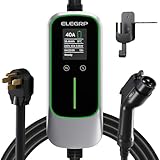
- Fast & Adjustable Charging: Up to 9.6 kW (37 mph), 7x faster than Level 1, with 5 current levels (16/20/24/32/40A) to match home capacity, plus 1–12H timing delay for off-peak charging, reducing costs and easing range anxiety
- Plug & Extended Reach: NEMA 14-50 plug fits 240V outlets for true plug-and-play use, while the 25FT cable offers flexible reach across garages and driveways, eliminating the need to reposition vehicles for easier daily charging
- ETL Certified & ELEGRP PBE Protection: Fully ETL certified, ELEGRP’s exclusive PBE technology combines full-link overheat protection with a triple-layer safety system, ensuring safer, more efficient charging. Includes a 2-year warranty
- All-Weather Indoor & Outdoor Use: IP67-rated for durability in rain, snow, and extreme temps (-21°F to 121°F), with a portable design that supports home, travel, and outdoor charging, delivering reliable performance anywhere
- Universal Compatibility: Works seamlessly with Mercedes, Chevy, Ford, Mustang Mach-E, Cadillac, Hyundai Ioniq, Kia EV6/EV9, Nissan Leaf, Chevy Bolt, Chrysler Pacifica Hybrid, and all PHEV/BEV. Tesla compatible with NACS adapter (sold separately)
Can Americans buy a Nissan e-POWER vehicle now?
Not as an established, broadly available U.S. retail vehicle as of August 12, 2026. Nissan’s U.S. site identifies the upcoming model as the 2027 Nissan Rogue Hybrid, labels it as using e-POWER, and says Coming Late 2026.
The announcement changes the answer from “Americans cannot have e-POWER” to “Americans are waiting for the first U.S. launch.” Nissan has committed to bringing the system to the country, but late-2026 timing is not the same as a published nationwide on-sale date with inventory at every dealer.
Availability watch
If you are shopping after the launch window, verify 2027 Nissan Rogue Hybrid availability with Nissan or a local dealer before relying on advertised pricing, delivery timing, or a promised trim. Final inventory may vary by region even after the model officially goes on sale.
Do not confuse the e-POWER Rogue with the 2026 Rogue Plug-in Hybrid
Nissan’s U.S. lineup creates an easy naming trap. The 2026 Rogue Plug-in Hybrid and the 2027 Rogue Hybrid e-POWER are different systems.
Recommended Free Tools
| Vehicle | External charging | Basic operating concept | Status described by Nissan |
|---|---|---|---|
| 2026 Rogue Plug-in Hybrid | Yes | Uses a chargeable battery plus a gasoline powertrain; Nissan lists up to 38 miles of EPA-estimated all-electric range | Available as the current U.S. Rogue electrified option in the cited materials |
| 2027 Rogue Hybrid e-POWER | No | The gasoline engine generates electricity, and electric motors drive the wheels | Coming late 2026; first U.S. e-POWER vehicle |
If you want to charge at home and make short trips primarily on electricity, the plug-in hybrid is the relevant vehicle to investigate. If you want electric-motor propulsion without planning charging or installing equipment, e-POWER is the relevant design.
The future e-POWER Rogue will still need gasoline. It is not a substitute for a battery EV when the goal is to eliminate gasoline use entirely.
What Nissan has announced—and what it has not
The broad outline is clear:
- The first U.S. e-POWER application will be the 2027 Nissan Rogue Hybrid.
- It will use Nissan’s third-generation e-POWER system.
- Nissan says the U.S. version will have dual electric motors.
- Nissan says Intelligent All-Wheel Drive will be standard.
- Nissan’s stated timing is late 2026.
- The vehicle will not need to be plugged in.
Several details remained unpublished in the authoritative material available for this article:
- Final MSRP and destination charges
- Trim levels and standard equipment
- EPA fuel-economy ratings
- Exact on-sale date
- Official towing rating
- Production location
- Dealer allocation and regional availability
- Warranty details specific to the e-POWER system
- Whether nationwide availability will begin immediately
That means shoppers should be cautious with early specifications, unofficial pricing, and efficiency predictions. Nissan’s claims about thermal efficiency, improved drivability, and cost competitiveness describe the company’s engineering objectives or test results; they are not a replacement for final EPA certification and independent road testing.
Free tools Windows power users keep installed
One-click scans. No signup required.
What are the advantages and disadvantages of e-POWER?
Potential advantages
- Electric-style response without a charging routine: the motors handle propulsion, but the driver can refuel at a gasoline station.
- Flexible battery size: the battery does not need to store enough energy for the entire trip, as it does in a battery EV.
- Regenerative braking: braking energy can be recovered and reused instead of being entirely dissipated through the friction brakes.
- Engine operating flexibility: because the engine generates electricity rather than directly controlling wheel speed, the system can manage its operating range more freely.
- Potentially smooth all-wheel drive: Nissan says the Rogue application will use dual electric motors and standard Intelligent All-Wheel Drive.
Potential disadvantages
- It still burns gasoline: there is no zero-tailpipe-emissions operation comparable to a battery EV.
- Energy conversions create losses: gasoline energy passes through the engine, generator, electrical system, battery management, and motor before reaching the wheels.
- The engine can sound unnatural: engine speed may be determined by electricity demand rather than directly by vehicle speed.
- More hardware than a simple gasoline vehicle: the system includes a high-voltage battery, generator, motors, inverters, and associated cooling and control systems.
- Final efficiency is unknown: the Rogue’s EPA ratings had not been published in the available material.
- Initial availability may be limited: the first U.S. launch could have regional allocation or a gradual rollout, although Nissan had not published the final distribution plan.
Why Nissan’s approach is interesting in America
The U.S. market has often treated hybrids as a compromise between a gasoline car and an EV. A conventional hybrid saves fuel without requiring a plug, while a plug-in hybrid adds electric range if the owner charges regularly. e-POWER offers a different compromise: it makes the gasoline engine a generator and puts electric motors in charge of the driving experience.
Best Value

- 240W Fastest Charging Speed Ever: The 240W samsung s25 car charger cable usb c to c cable fast charging sets a new fast-charging record, becoming the world's fastest charger to date. Experience lightning-fast charging for all your devices—reach 88% on MacBook Pro, 91% on iPad Pro, 84% on Samsung S25, 80% on iPhone 17, and 65% on SteamDeck in just 30 minutes. Say goodbye to charging wait times. (Note: Requires a power-matched USB-C fast wall charger adapter).
- Compatible with All USB-C Devices: The 240W usb c to usb c cable is perfectly compatible with all existing USB-C devices (requiring 240/200/170/140/100/60/18W power) — laptops, smartphones, tablets, STEAM DECK, and Switch. Efficient charging is achieved for any device(Note: Requires a power-matched USB-C fast wall charger). Compatible with Samsung Galaxy S26 S26+ S26 Ultra,S25 Ultra Edge FE S25+ S25 A17 A16 5G A36 A56 A26 S24 S23 A15 A35 A14, iPhone 17 Air, 17 Pro/Pro Max 16 16e 15 series, ect.
- Next-Generation Cable Chip Technology: This 240W type c charger fast charging samsung s25 charger cable employs PD3.1 Extended Power Range (EPR) technology to deliver groundbreaking 48V/5A charging—the only solution supporting next-generation 240W devices like the MacBook M4, while maintaining backward compatibility with 60W/100W/140W electronics. iPhone 17 charger cord incorporates advanced voltage stabilization technology and dual protection mechanisms (overheating + surge protection).
- 3FT Short USBC to USBC Cable: The 240w fast charging cord type c samsung galaxy s25 charging cable braided with strong nylon material, can beat 40000+ bending test. 3 feet google pixel 10 charging cable length is convenient for on-the-go use then iphone 17 charging cord keeps your space tidy and makes storage easier. The samsung a17 car charger cord is perfectly used in car, office and outdoor.
- What You Get: 1 Pack 3 FT USB C to USB C Samsung Charger Android Phone Charger Cables. If you have any questions about our long samsung charger usb-c to usb-c charger cable, please feel free to contact us, we will resolve your issue within 24 hours.
That could appeal to buyers who like the instant response and smoothness of an EV but do not want to depend on public charging, lack access to home charging, or regularly drive beyond practical battery range. It could also appeal to drivers who want an electrified crossover without changing their refueling habits.
But the architecture will have to prove itself against established alternatives. The Rogue e-POWER’s real-world value will depend on its certified fuel economy, price, cargo and passenger packaging, highway behavior, cold-weather performance, towing capability, refinement, warranty, and dealer support. Until Nissan publishes those details and independent testers drive production vehicles, it is too early to declare the system better than conventional hybrids, plug-in hybrids, or EVs across the board.
The most accurate answer to the title
For years, the answer to “Why can’t Americans have Nissan e-POWER?” was that Nissan had not chosen to sell and certify it here. The technology itself was not barred. Nissan instead focused on other products and markets while developing a version it considered appropriate for a U.S.-market crossover.
What’s actually slowing this PC down?
Pick the symptom - the matching free tool is one click away.
The current answer is more precise: Americans are about to have e-POWER, but not quite yet. Nissan has officially announced the 2027 Rogue Hybrid e-POWER for the United States, with a planned late-2026 arrival. The remaining questions concern final certification, pricing, specifications, dealer supply, and launch timing—not whether Nissan intends to bring the system to America.
Frequently Asked Questions
Is Nissan e-POWER an electric vehicle?
No. e-POWER uses electric motors to drive the wheels, but it also has a gasoline engine that generates electricity. It is a series hybrid, not a battery-electric vehicle.
Does a Nissan e-POWER vehicle need to be plugged in?
No. Nissan says the upcoming Rogue e-POWER will not need external charging. Its battery is replenished by the gasoline engine-generator and regenerative braking.
Is the Nissan Rogue Plug-in Hybrid the same as the Rogue e-POWER?
No. The 2026 Rogue Plug-in Hybrid has a battery that can be charged from an external power source and Nissan lists up to 38 miles of EPA-estimated all-electric range. The 2027 Rogue Hybrid e-POWER is a non-plug-in series hybrid in which the engine generates electricity for electric motors.
Quick wins for a faster PC:
Fix the driver behind crashes, sound loss and screen glitchesFind Drivers →Repair Windows errors before they cause bigger problemsFix Now →Scan for outdated or missing drivers - takes under a minuteDriver Scan →When can Americans buy a Nissan e-POWER vehicle?
Nissan’s U.S. materials identify the 2027 Rogue Hybrid e-POWER as coming in late 2026. As of August 12, 2026, final pricing, EPA ratings, the exact on-sale date, and nationwide dealer availability had not been published in the reviewed material.
Will e-POWER be more fuel-efficient than a Toyota RAV4 Hybrid or Honda CR-V Hybrid?
That cannot be established yet. Nissan says the third-generation system improves efficiency and cost competitiveness, but the U.S. Rogue’s final EPA fuel-economy rating and independent road-test results were not available in the researched material.
The Bottom Line
Bottom line
Nissan e-POWER is a gasoline-supported electric-drive system: the engine generates electricity, the battery buffers it, and electric motors drive the wheels. Nissan did not sell it in America because it prioritized other products and would have needed to certify and adapt the system for a larger, more demanding U.S.-market crossover. That is changing with the 2027 Rogue Hybrid e-POWER, Nissan’s first U.S. e-POWER vehicle, planned for late 2026. Until final EPA numbers, pricing, and inventory appear, treat it as an announced upcoming model—not a vehicle you can reliably buy nationwide today.
Quick Recap
Product prices and availability are accurate as of the date/time indicated and are subject to change. Any price and availability information displayed on Amazon at the time of purchase will apply.




