Windows Errors? Fix Them Before They Spread
Repair common Windows errors and clear accumulated junk for a smoother, more stable PC - no reinstall needed.Free scan · no reinstallCrashes, No Sound, or Screen Glitches?
Random freezes, missing sound and display glitches usually trace back to one bad driver. Find and replace yours safely.Free scan · under a minuteA car differential is the gear mechanism that lets two driven wheels rotate at different speeds while still receiving power. That matters every time a car turns: the outside wheel travels a longer distance than the inside wheel, so it must rotate faster.
Without a differential, the tires would have to scrub across the road in corners. With a basic open differential, however, one tire can spin on ice, mud, or a raised wheel while the other receives too little usable torque to move the car. Understanding that trade-off explains why vehicles use open differentials, limited-slip units, lockers, and electronic torque-vectoring systems.
As an Amazon Associate I earn from qualifying purchases.
What does a differential do?
In a conventional drivetrain, a differential performs three related jobs:
- It changes the direction of power flow through the final drive.
- It provides the final gear reduction between the transmission and the wheels.
- It allows the two driven wheels to rotate at different speeds.
The differential is usually part of the rear axle assembly in a rear-wheel-drive car. In a front-wheel-drive vehicle, it is normally built into the transaxle. An all-wheel-drive vehicle can have front and rear differentials plus a center differential or coupling, depending on its design. A center differential allows the front and rear axles to turn at different speeds as the vehicle corners.
#1 Best Overall
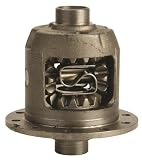
- Package Dimensions: 12.96 L x3.97 H x6.74 W (inches)
- Package Weight: 28 pounds
- Country of Origin : China
- Part Number: M4204F318C
Why do the wheels need different speeds?
Imagine a car turning left. The left-side tires follow a smaller radius, while the right-side tires follow a larger radius. During the same turn, the outside tires therefore travel farther and need to rotate faster.
If the two driven wheels were permanently locked together, they would be forced to turn at the same speed. One or both tires would have to slip or scrub across the road. The result could include:
- Heavy tire wear and squealing during tight turns.
- More difficult steering, especially with a locked front differential.
- Stress in axle shafts, gears, driveshafts, and transfer-case components.
- Binding or “driveline wind-up” on high-grip surfaces.
A differential permits the speed difference that normal cornering requires. A locked differential is useful when traction is poor, but it is not intended to remain locked during ordinary high-grip road driving unless the vehicle manufacturer specifically allows that operation.
How an open differential works
A conventional open differential typically contains a pinion gear, ring gear, carrier, spider gears, and two side gears connected to the axle shafts or half-shafts.
- The transmission or driveshaft turns the pinion gear.
- The pinion drives the larger ring gear, providing final-drive reduction and changing the direction of rotation.
- The ring gear turns the differential carrier.
- The carrier houses the spider gears, which mesh with the two side gears.
- The side gears drive the left and right axle shafts.
When the car travels straight and both tires have similar rolling conditions, the spider gears generally do not rotate relative to the carrier. Both side gears and axle shafts turn at the same speed.
During a turn, the spider gears rotate around the side gears. This allows one side gear to speed up while the other slows down. The carrier’s speed remains the average of the two axle-output speeds.
Rank #2

- According to the original factory specifications, the replacement reference OE number of the rear differential axle carrier is 23156305, 84110753, 2993015, 22927263. Gear Oil Type: GL-5,75W-90
- Replacement for The Rear side Differential Axle Carrier (3.27 Ratio). Replacement for Cadillac ATS 2013-2019 6AT. Please ask professional engineers for help to install this auto part for you. Heavy product and hard installation need extra caution!
- The axle carrier can be either removable or designed and cast into the axle housing. When working with a removable carrier, the gear set can be accessed by sliding the drive axles out of the differential and removing the carrier. When working with a non-removable carrier, the rear cover is removed from the differential to access the gear set.
- The pinion gear, ring gear and spider gears are all housed within the axle carrier. Commonly made from heavy cast iron, some performance carrier designs are made from aluminum to reduce unsprung weight from the axle.
- A broken differential should be replaced immediately to prevent other parts of the vehicle, such as the engine, from getting damaged. Promptly changing a damaged differential could also prevent potentially fatal accidents.
For a simple differential, the relationship is:
ωleft + ωright = 2ωcarrier
For example, if the carrier is turning at 1,000 rpm and the outside wheel turns at 1,200 rpm, the inside wheel turns at approximately 800 rpm. The average remains 1,000 rpm.
Recommended Free Tools
The open-differential traction problem
An open differential is excellent at allowing smooth cornering, but it has a serious traction limitation. It normally applies approximately equal torque to both outputs. The usable torque available to the pair is constrained by the wheel with the least traction.
Suppose one tire is on ice and can accept only a small amount of torque before it spins. The other tire may be on dry pavement, but the open differential cannot simply send a large, useful torque increase to that tire while maintaining its normal operating relationship. The icy tire spins, and the tire with grip may receive too little torque to propel the vehicle.
This is why the popular statement that “an open differential sends all the power to the wheel with the least traction” is misleading. The spinning wheel may appear to receive all the action, but both outputs receive torque. The low-traction side limits how much torque the system can usefully apply.
Traction control can sometimes improve the situation by applying the brake to the spinning wheel. That creates resistance at that output and can allow the differential to transfer more usable torque to the wheel with grip. This is a vehicle-control strategy, not the same thing as installing a mechanical locking differential.
The Tool Desk
Outbyte PC Repair FREERepair Windows errors before they cause bigger problemsFix Now →Outbyte Driver Updater FREEScan for outdated or missing drivers - takes under a minuteDriver Scan →Main types of car differentials
| Type | How it controls wheel speed | Main advantage | Main limitation |
|---|---|---|---|
| Open | Allows unrestricted speed difference | Simple, smooth, and inexpensive | Low-traction wheel can limit drive |
| Limited-slip | Resists excessive speed difference and biases torque | Improves traction without always locking the axle | Effect depends on its design, preload, and available traction |
| Locking | Mechanically couples both outputs | Allows the wheel with grip to use available driveline torque | Can cause binding and tire scrub when locked during turns |
| Torque-vectoring | Actively changes torque distribution or wheel speed | Can improve cornering, stability, and traction | More complex and often electronically controlled |
Open differential
This is the standard arrangement in many passenger vehicles. It offers predictable, smooth behavior and requires relatively little maintenance beyond correct lubricant and seal condition. Its weakness is exposed when one driven wheel is on a very slippery surface or unloaded.
Rank #3

- Attention: This differential assembly is shipped without oil. During installation, add 75W-90 gear oil and fill only to the specified level to ensure proper performance and avoid leaks. For any questions, please contact us
- Fitment: Compatible with Nissan Models, including 2015-2024 Murano 3.5L V6, 2017-2023 Qashqai 2.0L L4, 2014-2019 Rogue 2.0L/2.5L L4, 2017-2022 Rogue Sport 2.0L L4. Please refer to the images for detailed model before purchasing
- OEM & Replacement Number: 38300-4BF0A, 383004BF0A, 24027-7FV0A, 240277FV0A. Our differential assembly serves as a seamless replacement for original equipment, ensuring a precise fit in your vehicle for exceptional performance
- Optimized for Performance: Features the exact factory-specified gear ratio for smooth torque transfer, efficient AWD performance, and improved vehicle stability. Ideal for daily driving, highway cruising, and light off-road use
- Built for Durability & Longevity: Manufactured using high-strength steel and precision-machined internals to withstand demanding road conditions and maintain peak performance for years. Rigorously tested for noise, vibration
Limited-slip differential
A limited-slip differential, or LSD, still allows the wheels to turn at different speeds, but adds resistance to a large speed difference. That resistance can bias more torque toward the wheel with greater traction.
Common limited-slip designs include:
- Clutch-pack units: friction discs progressively resist speed differences. Their behavior depends on clutch condition, spring preload, lubricant, and friction modifier.
- Helical-gear or torque-sensing units: gear geometry creates a torque-biasing effect. They can be effective under load but may lose effectiveness if one wheel has essentially zero resistance or is completely off the ground.
- Viscous units: fluid resistance between rotating elements increases as the speed difference rises.
- Electronically controlled clutch units: a computer commands clutch pressure according to throttle position, wheel speed, steering angle, and other inputs.
An LSD is not automatically a locker. It limits or manages the speed difference; it usually does not mechanically couple both outputs at all times.
Locking differential
A locking differential can force both axle outputs to rotate together. If one wheel is on a slippery surface and the other has grip, the wheel with grip can use the available driveline torque instead of being limited by the spinning side.
Do these 3 things before closing this tab:
1Scan for outdated or missing drivers - takes under a minute2Repair Windows errors before they cause bigger problems3Fix the driver behind crashes, sound loss and screen glitchesSelectable lockers are normally left open for ordinary driving and engaged only when traction is needed. Automatic lockers can lock under acceleration and release or permit differentiation during turns, depending on their design.
“100% lock” means that the two outputs are mechanically coupled. It does not create unlimited traction. If both tires are on ice, locking the differential cannot manufacture tire grip. It also does not mean a locker should be used on any surface or at any speed; follow the vehicle or differential manufacturer’s instructions.
Torque vectoring
Torque vectoring is a broader term for deliberately changing torque distribution to influence traction, stability, or cornering behavior. It may use a controlled differential, clutch packs, individual electric motors, or the brakes.
Rank #4

- 【Vehicle Fitment】Fit for Cadillac CTS 2014, 2015, 2016, 2017, 2018, 2019 with 2.0L Turbocharged L4 engine; Fit for Cadillac CTS 2014, 2015, 2016, 2017, 2018, 2019 with 3.6L Naturally Aspirated V6 engine---3.27 Ratio AWD, Location: Rear.
- 【OEM Specifications】84110751, 23156300, 20762246. Differential Case Kit Assembly meets OEM specifications and can be directly replaced.
- 【Strict Testing】Every Differential Axle Carrier Assembly must go through a process before leaving the factory Torque test、Fatigue test、Temperature test、Noise test、Sealing test、Installation testing Ensure product quality and longer lifetime.
- 【Material】The Differential Assembly Kit is made of High strength alloy steel , which not only meets OEM standards but also has better strength, corrosion resistance, Wear resistant and thermal conductivity.
- 【Customer Support】1 Year Quality Guarantee. This Differential Kit is the ideal replacement. Please get in touch with us at any time if the product has any quality issues, such as damage or isn't appropriate for your automobile.
For example, a vehicle may apply the brake to an inside spinning wheel, or an electronically controlled axle unit may send more torque to an outside wheel during a corner. Brake-based torque vectoring is a vehicle-control function and should not automatically be described as a mechanical torque-vectoring differential.
Differential fluid and maintenance
Differential lubricant cools and protects the ring-and-pinion gears, bearings, and—where fitted—clutch packs. The correct fluid is specific to the vehicle and axle. A clutch-type limited-slip differential may also require a friction modifier to prevent chatter and allow the clutch plates to operate correctly.
There is no universal fluid-change interval. Check the owner’s manual or the manufacturer’s service information rather than relying on a generic mileage figure. Service may be needed sooner after:
- Heavy towing or sustained high-load driving.
- Off-road use or overheating.
- Deep-water exposure.
- A seal, cover, or housing leak.
- Inspection showing contaminated, incorrect, or low lubricant.
Do not assume that transmission fluid, engine oil, or a general-purpose gear oil is suitable. Using the wrong lubricant or omitting the required limited-slip additive can cause gear wear, bearing damage, or clutch chatter.
Independent reader supportYour contribution helps us test, update, and keep practical guides available for everyone.Symptoms of a differential problem
Differential faults can sound similar to problems elsewhere in the drivetrain, so the operating conditions matter. Note whether the noise changes with vehicle speed or engine speed, and whether it occurs during acceleration, deceleration, steady cruising, turning, or reversing.
| Symptom | Possible causes |
|---|---|
| Whine or howl that changes with road speed | Low lubricant, worn bearings, incorrect gear setup, or damaged ring-and-pinion gears |
| Clunk when changing from acceleration to coast | Excessive backlash, worn gears, worn driveline joints, or other drivetrain slack |
| Chatter or jerking during tight turns | Limited-slip clutch wear, incorrect lubricant, or missing friction modifier |
| Grinding, rumbling, or severe vibration | Damaged gears or bearings, axle problems, wheel bearings, tires, or another driveline fault |
| Oil around the axle or differential housing | Failed axle seal, pinion seal, cover gasket, or housing damage |
| Loss of drive or sudden severe noise | Broken axle shaft, internal gear failure, or major driveline damage |
A rear whine is not proof that the differential has failed. Wheel bearings, tires, CV joints, driveshaft components, and the transmission can produce similar sounds. A technician should inspect the lubricant level and condition, identify the precise operating condition, and check backlash, bearings, seals, and gear contact where appropriate.
Best Value
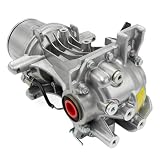
- 【Fitment】for 2017-2021 Mazda CX-5 (Rear Axle), (AWD) for 2018-2021 Mazda CX-9 (Rear Axle), (AWD)
- 【Reference Part Numbers】KAT227020 KA03-27-020 KA0327020 KAT2-27-020 KE012797XC KE01-27-97XB KE01-27-97XC KE012797XB
- 【Material】Durable Construction Crafted with high-quality materials, this replacement coupler offers superior durability and longevity. Engineered to withstand the demands of the road, this part provides reliability and endurance for long-term use
- 【Warranty】We offer comprehensive pre-sales and after-sales support to ensure your satisfaction.Warrant-y for 1 year, We are committed to providing you with the perfect solution within 24 hours
- 【NOTICE】Please be very careful to check our photos and part numbers, make sure the photos showed is the same as you wanted
Why matching tires matters on AWD vehicles
Many all-wheel-drive systems require tires with closely matched rolling circumferences. Differences caused by tire size, tread wear, inflation pressure, or tire construction can force differentials or electronically controlled couplings to compensate continuously.
That compensation can generate heat and accelerate drivetrain wear. There is no single tire-diameter difference that is safe for every AWD vehicle. Follow the limits in the owner’s manual, and replace or match tires according to the manufacturer’s instructions rather than assuming that similar-looking tires are close enough.
What a differential cannot do
- It does not automatically improve traction; a basic open differential primarily allows speed differences.
- It cannot overcome a tire-road surface with no usable grip.
- A limited-slip unit is not necessarily a full locker.
- A locked differential does not make it safe to turn on high-grip surfaces while locked.
- Torque vectoring does not always mean a special mechanical differential; it may be brake-, clutch-, software-, or motor-based.
FAQ
Can a car drive with a bad differential?
It may still move, but driving with a low-fluid, noisy, leaking, or damaged differential can turn a repairable problem into major gear, bearing, axle, or driveline damage. Stop driving if there is severe grinding, a sudden loss of drive, heavy leaking, or rapidly worsening noise, and have the vehicle inspected.
Is a limited-slip differential the same as a locker?
No. A limited-slip differential restricts excessive speed difference and can bias torque toward the wheel with more traction. A locker mechanically couples the outputs when engaged. Some limited-slip designs can provide strong locking action, but the terms are not interchangeable.
How often should differential fluid be changed?
There is no universal interval. Use the vehicle manufacturer’s schedule and fluid specification. Towing, off-road driving, water exposure, overheating, or a leak may justify earlier service.
Why does my differential make a whining noise?
A speed-related whine or howl can be caused by low or incorrect lubricant, worn bearings, damaged gears, or incorrect ring-and-pinion setup. Tires, wheel bearings, the transmission, and other driveline components can sound similar, so the noise must be diagnosed by when it occurs and what changes it.
The Bottom Line
A differential lets a vehicle’s driven wheels rotate at different speeds so it can corner without tire scrub. An open differential is smooth and simple but can be limited by the wheel with the least traction. Limited-slip units resist that limitation, lockers couple the outputs when traction demands it, and torque-vectoring systems actively manage wheel forces. Correct fluid, matched AWD tires, and early attention to leaks or speed-related noises are central to keeping the system working properly.
Free tools Windows power users keep installed
One-click scans. No signup required.
Quick Recap
Product prices and availability are accurate as of the date/time indicated and are subject to change. Any price and availability information displayed on Amazon at the time of purchase will apply.




