Putting in gasoline with a lower octane rating than your engine specifies usually causes knock, a rattling or pinging sound that comes from fuel igniting too early in the cylinder. A single brief mismatch does not have one fixed outcome. It depends on the vehicle, how hard the engine is working, and what the manufacturer’s instructions say. Persistent, heavy knocking can damage an engine, so the practical response is to use the grade your manual specifies from the next fill-up onward and to have the car inspected if knocking continues.
What octane rating actually measures
An octane rating measures how well a gasoline resists engine knock. The Federal Trade Commission’s consumer guide The Low-Down on High Octane Gasoline (2003) describes knock as a rattling or pinging sound caused by premature ignition of the compressed fuel-air mixture in one or more cylinders. Octane is therefore a knock-resistance rating. It is not a general measure of gasoline quality or energy content, and a higher number is not an upgrade for every engine.
What happens when the octane is lower than your engine specifies
When the fuel resists knock less than the engine was designed for, the mixture can ignite before the spark plug fires. The sources agree on the mechanism but not on a single outcome for every case. Two factors decide how much a mismatch matters: whether knock actually occurs and whether it persists.
A brief mismatch
The effect of a short-lived octane mismatch depends on the vehicle, the load on the engine, and the manufacturer’s instructions. The sources do not establish that one tank of lower-octane fuel will harm every engine, so judge the situation by what the engine does afterward, not by the fact of the mismatch alone.
What’s actually slowing this PC down?
Pick the symptom - the matching free tool is one click away.
#1 Best Overall

- Suitable for use in fuel injected and carbureted engines
- Provides more boost than most other brands
- Promotes clean fuel burn for fewer emissions
- Designed for engines and vehicles not equipped with emissions aftertreatment systems
- Available for Motorcycles in 2 ounce bottle
Persistent or heavy knock
Honda’s refueling information for the 2021 Insight (published 2020) is the clearest warning in the sources. It states that “use of a lower octane gasoline can cause a persistent, heavy metallic knocking noise that can lead to engine damage.” That guidance applies to that model. It shows the risk pattern, not a universal threshold for all engines.
Heavy load
Load changes the picture. An engine towing, climbing a long grade, or accelerating hard is under more cylinder pressure than one cruising on a flat road, which is the condition in which knock is most likely to appear. A mismatch that causes no audible symptom on a light commute may produce knock under those conditions.
Rank #2

- Restores lost horsepower and performance. Antiknock formulation stops engine knock and pings caused by low quality fuel.
- Typical results boost octane over 20 points or 2 rating numbers. Contains the highest concentrate of real MMT allowed for street use.
- Works with all unleaded gasoline, ethanol E10, E15, E85 and racing fuel. One bottle treats up to 20 gallons of gasoline
- Will not harm catalytic converters or oxygen sensors. Use with all fuel injected, direct injected, GTDI & carbureted street, racing, supercharged and turbo engines.
- Bottle is designed to work in ALL gas tanks including standard, obstructed and capless (no gas cap) systems.
Required versus recommended: the manual’s wording decides it
Two different phrases appear in owner’s manuals, and they carry different meanings. The American Automobile Association (AAA) says vehicles that require premium should use it. Its Premium Fuel Phase II Research Report (2018) found that vehicles labeled premium recommended can run on regular 87 octane in the cases it studied. The table below shows how to read each case.
| Manual wording | What it means | If you used a lower grade | Source |
|---|---|---|---|
| Premium required | The manufacturer specifies premium. AAA’s recommendation is to use it. | Knock is the risk to watch for. The sources do not give a separate outcome for premium-required engines, so persistent knock calls for inspection. | AAA Premium Fuel Phase II recommendations (2018) |
| Premium recommended | Regular 87 is acceptable according to the studied category. | AAA reports “no adverse effects” for 87 octane in the cases studied. Performance or economy may be lower, depending on the vehicle’s manual. | AAA Premium Fuel Phase II Research Report (2018) |
| Minimum grade stated (for example, 87 or higher) | The stated grade is a floor, not a preference. | Going below the floor risks persistent, heavy knock and possible engine damage. | American Honda Motor Co., 2021 Insight refueling information (2020 publication) |
Check the exact manual for your car rather than applying the AAA findings to every engine. The AAA result describes one studied category, not a blanket rule.
Rank #3
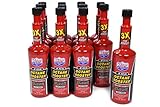
- Suitable for use in fuel injected and carbureted engines
- Provides more boost than most other brands
- Promotes clean fuel burn for fewer emissions
- Designed for engines and vehicles not equipped with emissions aftertreatment systems
If you already put in the wrong grade
- Check the owner’s manual and the fuel label near the fuel filler to confirm the required or recommended grade.
- Use the specified grade from the next fill-up onward.
- Drive normally and listen for knock. Avoid sustained heavy load, such as towing or hard acceleration, while you monitor the engine.
- If knocking continues or the engine runs abnormally, stop driving it under load and have a qualified technician inspect it.
Draining the tank is not a general remedy that the sources support for an octane-only mismatch. Neither are octane additives or diagnostic tools. If knock persists, the cause needs to be diagnosed rather than guessed at.
Higher octane is not a safety margin
Buying a higher grade than the manual recommends does not add protection. The FTC’s guide states: “in fact, in most cases, using a higher octane gasoline than your owner’s manual recommends offers absolutely no benefit.” Premium is also not automatically required. Pay for it when the manual calls for it, and not otherwise.
Rank #4
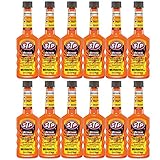
- OCTANE BOOSTER FOR GASOLINE: One 5.25 bottle of STP Octane Booster, a 2-in-1 fuel additive featuring MMT + Synthetic Technology to boost octane and clean the fuel intake system, restoring lost power and acceleration
- COMPATIBLE WITH CAP-LESS SYSTEMS: This fuel treatment is compatible with all gasoline engines, including cap-less gas systems
- RAISES OCTANE LEVELS: MMT, a powerful gas additive, raises octane levels to reduce knocking and pinging caused by combustion chamber deposits that increase your engine’s need for higher-octane fuel
- CLEANS THE FUEL INTAKE SYSTEM: The Synthetic Technology in this gas treatment helps clean the fuel intake system, improving fuel flow and combustion efficiency for smoother acceleration and increased horsepower
- HELPS IMPROVE MPG: Made with jet fuel, a high-quality carrier of active ingredients, STP Octane Booster helps improve MPG by optimizing fuel use and reducing engine strain
How common premium requirements are
The U.S. Department of Energy reported on June 20, 2022 that 22 percent of model-year 2022 light-duty vehicle models required premium fuel. That is a statistic about one model year’s lineup, not a current share of cars on the road, and it does not tell you which grade your car needs.
Independent reader supportYour contribution helps us test, update, and keep practical guides available for everyone.Octane grade is not the same as the wrong fuel type
Putting the wrong octane grade in a gasoline engine is a different problem from putting the wrong fuel type in a vehicle, such as gasoline in a diesel. Wrong-fuel-type advice is separate and should be followed on its own terms. Fuel detergent quality is also a separate question from octane.
Quick wins for a faster PC:
Clear out junk files and repair common Windows errorsFree Scan →Fix the driver behind crashes, sound loss and screen glitchesFind Drivers →Repair Windows errors before they cause bigger problemsFix Now →Best Value

- Restores Performance & Treats Fuel System: This STP gas treatment works as an effective gas treatment poured directly into your gas tank to help restore lost power and acceleration during regular fill-ups
- For Gasoline Engine Compatibility:This advanced fuel additive for gasoline engines is suitable for use in cars & trucks, helping support reliable engine performance
- Cleans and Protects Fuel System: This fuel treatment includes high-performance detergents that help keep the fuel system clean while supporting efficient combustion
- Boosts Octane and Reduces Knock: Formulated to deliver an octane boost, this additive helps reduce engine knock and ping when added to your fuel tank, promoting smoother operation
- Versatile Gas Additive Solution: This gas additive helps improve MPG and restore engine performance by enhancing fuel quality and combustion efficiency
What no general answer can cover
A specific recommendation for your car depends on details that a general article cannot know:
- The make, model, and model year
- The engine and the market the car was sold in
- Any modifications or tuning changes
Use the owner’s manual for your exact vehicle as the final authority.
Quick Recap
Product prices and availability are accurate as of the date/time indicated and are subject to change. Any price and availability information displayed on Amazon at the time of purchase will apply.




