Free tools Windows power users keep installed
One-click scans. No signup required.
Factory emissions controls can substantially reduce specific pollutants in exhaust streams, but no single device removes every pollutant or guarantees that all emissions from a facility are captured. The result depends on what the process emits, how much exhaust reaches the equipment, how well the equipment operates, and what pollutants it is designed to treat.
What factory emissions controls are designed to reduce
A control technique is equipment or a method used to reduce pollutants in an emission stream. The right choice depends on the pollutant and the characteristics of the exhaust; controls are not interchangeable all-purpose filters. The U.S. Environmental Protection Agency (EPA) lists approaches including fabric filters, electrostatic precipitators, wet scrubbers, activated-carbon adsorbers, condensers, cyclones, and thermal or catalytic oxidizers. Each is used for particular pollutants or process conditions, and typical reductions vary with operating conditions.
In broad terms, fabric filters and electrostatic precipitators are used to control particles. Wet scrubbers can target particles or certain gaseous pollutants. Adsorbers, condensers, and thermal or catalytic oxidizers are options for selected pollutants and streams. These examples do not establish that a given device is suitable for a particular factory or that it controls pollutants outside its intended scope. EPA’s overview of monitoring by control technique describes the range of methods and their pollutant-specific roles.
Capture and removal are different steps
For a control system to reduce emissions, exhaust must first be captured and routed to it. The device then removes or transforms some of the target pollutant in the stream it receives. EPA technical guidance treats overall control effectiveness as dependent on both capture efficiency and control-device efficiency. A device’s removal performance for treated exhaust therefore does not, by itself, show how much of the facility’s total emissions are reduced: emissions that escape capture are not treated by that device. EPA’s technical document on control efficiency explains this distinction.
#1 Best Overall

- 【Very Cost-Effective】This smoke tester automotive is a professional diagnostic machine.The built-in air pump compressor generates 20–25 PSI of air pressure, allowing smoke to be easily introduced into the automotive system under test.It can produce a large volume of smoke within 10 seconds,fast and large smoke output, enabling you to quickly and accurately locate leaks.By rapidly identifying and repairing automotive leaks, it saves you both time and money.You can proactively detect and resolve potential issues before they turn into costly problems
- 【Include all necessary accessories】Infinite smoke for easy leak testing. Instant warmup. Built-in air compressor motor .Our automotive smoke machine includes: built-in air pump, power cord clamp, bottles (oil not included), multiple vehicle cone adapters, smoke delivery hose, intake bladder, and full-size automotive cap plugs.This product also includes a spare Bladder!You can start testing right out of the box.
- 【Wide Testing Range】The smoke machine automotive can do smoke testing of multiple systems, such as EVAP systems, Intake Systems, Cooling / EGR /Exhaust Systems, Crankcase Systems, Engine Airtightness, Vacuum Leaks, Low Pressure Turbo leaks.Applicable cars, motorcycles, snowmobiles, off-road vehicles, various pipe fitting testing, fuel tank system testing,Cars, Motorcycles,ATVs, light trucks and speedboats boats.And the smoke machine has built-in overheat protection. It will automatically shut off when too hot to protect itself.This machine has a built-in air pump. No additional air supply is needed.
- 【Easy Operation】1.Fill 10ml-15ml baby oil ( Not Included) to the smoke machine. 2. Disconnect the intake pipe of the car. Connect the intake pipe of the car with the detector. 3. Connect the detector with the DC 12V battery, and it starts to work. 4.The pipe will be filled with smoke. Check the leak points. PLEASE NOTE:when the smoke from the equipment is not obvious,new oil should be added; When working for more than3 hours, the smoke oil should be replaced. The filling of new oil should be carried out when the equipment iscooling,10-15ml each time.,and please Please bring your own baby oil or paraffin oil.
- 【Smart Protection】Compact and portable with a sleek design, this smoke leak detector automotive can be easily stored in your vehicle’s trunk for convenient use anytime, anywhere.The smoke machine has overheat and freeze protection, it will be in self-protection state after a long working time to avoid the smoke maker overheated, the indicator light will be off. And the equipment will stop making smoke, until the temperature comes to safety level. Do not fill oil while working.
Why reductions differ from one factory to another
Control selection is a fit problem, not a contest to find one universally best device. EPA recommends considering environmental, engineering, and economic factors, including:
- Pollutant properties: the contaminant’s characteristics, such as reactivity or abrasiveness, affect which treatment approach may work.
- Exhaust-stream conditions: temperature, chemistry, flow, and other stream characteristics can determine whether equipment is suitable.
- Performance and utilities: expected control performance and available resources, such as water for a wet scrubber, matter to system design.
- Operation over time: capital and operating costs, maintenance needs, and equipment lifetime affect practical performance and feasibility.
- Other environmental effects: selection should account for ancillary pollution and what happens to captured material or secondary streams.
These factors mean that a technology’s typical reduction is not a promise of identical results at every site. Actual outcomes depend on operating conditions and how well the capture and treatment system fits the process. EPA’s control-strategy guidance also says pollution prevention—reducing, eliminating, or preventing pollution at its source—should be considered. Less toxic inputs, cleaner processes, or improved process efficiency can reduce pollution before exhaust treatment is needed.
Rank #2
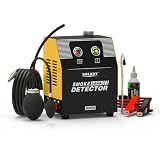
- Fast Leak Detection:This smoke machine automotive delivers 10s fast smoke with high-density visibility for precise leak tracing. With up to 0.1mm micro-leak detection, this smoke tester automotive supports EVAP, intake, and vacuum diagnostics in home garage use, helping DIY car owners quickly locate leaks and save up to $150 per inspection through accurate self-diagnosis.
- Compact and Portable Design: This automotive smoke machine features compact body size of 5.12 × 4.92 × 6.69 inch and lightweight build of 4.3lb, making it easy to carry, store, and operate in any home garage environment. The portable design allows DIY car owners to quickly deploy the smoke leak detector for EVAP, intake, and vacuum system diagnostics without bulky equipment or workshop limitations, improving convenience and home-use efficiency.
- Built-In Air Pump For Convenient Leak Testing: The integrated air pump eliminates the need for an external compressor or additional air supply equipment. Simply connect the unit and begin testing without complicated setup procedures. This design helps simplify leak detection and provides added convenience for DIY vehicle owners working in home garage.
- Stable 19–23 PSI Output Supports Consistent Testing: Reliable pressure helps smoke travel evenly through EVAP circuits, intake components, vacuum passages, valves, and hose connections. Stable smoke delivery improves observation during testing and makes small leaks easier to trace. It supports smoother evaluation process during routine maintenance and troubleshooting.
- Reduce maintenance costs:The evap smoke machine leak tester comes with 100ml smoke oil included, and only 10–20ml is required per use to start the system. The design allows DIY car owners to perform multiple EVAP, intake, and vacuum leak tests per refill, improving garage usability and reducing consumable waste and maintenance cost.
What published emissions figures do—and do not—show
EPA’s Clean Air Act overview gives a specific example for new coal-fired power plants: controls typically capture up to 98% of sulfur dioxide (SO2) and, in many cases, 90% of nitrogen oxides (NOx) relative to uncontrolled levels. Those figures describe that stated context; they are not a general reduction rate for factories or for every emissions-control installation. EPA’s Clean Air Act requirements and history overview provides the example.
EPA also reports that combined emissions of six common pollutants fell 78% between 1970 and 2020 across Clean Air Act programs. That is a broad, multi-program trend, not an estimate of the reduction caused by factory controls alone. EPA’s progress overview describes the 2020 endpoint and the wider context.
The Tool Desk
Outbyte PC Repair FREEClear out junk files and repair common Windows errorsFree Scan →Outbyte Driver Updater FREEScan for outdated or missing drivers - takes under a minuteDriver Scan →Rank #3
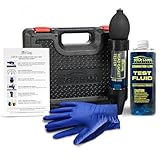
- The Gold Label Detailing Combustion Leak Tester and Head Gasket Leak Tester is a must-have tool for any professional auto mechanic looking for a reliable and efficient way to detect internal engine combustion leaks and blocks quickly and easily.
- This Block Test Kit is designed for professional auto mechanics and DIY'ers who require a high-quality detector test to identify potential problems in their engines.
- The heavy duty head gasket test is a smart addition to your toolbox, as it can help you speed up the identification of head gasket leaks and blocks, allowing you to make repairs sooner rather than later
- With its easy-to-use design and clear instructions, this leak tester is perfect for both novice and experienced auto mechanics and DIY'ers.
- Whether you're working on a car, truck, or other vehicle, the Gold Label Detailing Combustion Leak Tester and Head Gasket Leak Tester is a reliable tool that can help you save time and money on repairs.
What a control installation cannot establish by itself
- It does not prove that every pollutant is controlled. A technique targets one or more pollutants; other contaminants may remain untreated.
- It does not prove that all emissions reach the device. Capture and device performance both contribute to overall effectiveness.
- It does not guarantee a uniform reduction. Results vary with the pollutant, exhaust stream, system design, and operating conditions.
- It does not, on its own, establish facility-wide emissions reductions. That requires considering what the process emits, what is captured, and what the control system treats.
How to assess a control claim
For an operator, policymaker, or reader evaluating a reported reduction, the useful questions are: which pollutant is being measured; whether the number describes removal in treated exhaust or total emissions from the facility; how much of the stream is captured; what operating conditions and time period the result represents; and what pollutants or residual streams are not addressed. Without those details, a device efficiency figure should not be read as a complete account of a factory’s environmental performance.
In the United States, the Clean Air Act framework described by EPA includes requirements for new stationary sources such as factories and power plants, with provisions that vary for new or modified facilities and according to air-quality context. This overview is not a facility-specific compliance determination: applicable requirements depend on source category, location, and permits. It should not be treated as a worldwide regulatory rule.
Quick Recap
Best Value
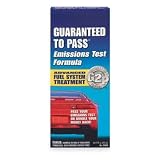
- for CRC 05063 Emissions Test Formula Additive, For Gasoline Engines, 12 oz.
- Emissions Test Formula, Container Type Bottle, Container Size 12 fl oz, Compatible Engine Type Gasoline Engines, Recommended Dilution Ready to Use, Boiling Point 320 Degrees F, Color Amber, Standards EPA Registered for use in all 50 states, Product Form Liquid, Additives Included None, Compatible Vehicle Type Cars, Flammability Flammable, Flash Point 187 Degrees F, Product Type Fuel Additive, Series Guaranteed To Pass, Specific Gravity 0.88, VOC Content Weight Percentage 47 Percent。
Rank #4

- 【2-IN-1 Engine Diagnostic & Battery Tester】: Upgraded from ANCEL’s best-selling AD310/AD410 series, the AD410 PRO obd2 scanner not only offers deeper, more accurate engine fault diagnosis but also covers battery health assessment, starter motor testing, and charging system evaluation. Skip buying separate tools—save money and space while eliminating the hassle of switching between different diagnostic scan tool
- 【Silence the Check Engine Light】: Panicked when the check engine light suddenly pops on? This car code reader decodes 42,000+ SAE DTCs in seconds (e.g. “P0300 – Multiple Cylinder Misfire”)—no confusing jargon. Read codes, understand the issue, then clear the light after fixing—so you avoid guesswork and unnecessary shop fees. NOTE: It DOESN'T support ABS, SRS, or Transmission systems
- 【Comprehensive Battery System Test】: Stop guessing why your car struggles to start—is it the battery, starter, or alternator? AD410 PRO goes beyond a voltage-only check by performing battery health, cranking, and charging system tests to pinpoint where the issue is coming from. Prevent unnecessary replacements and costly repeat repairs—know what's wrong and fix it right, without the guesswork
- 【Avoid a Smog Re-Test】: No more panic before emissions tests! The dedicated I/M Readiness mode of this professional obd2 scanner diagnostic tool instantly shows your vehicle’s compliance status (green = ready, yellow = incomplete). It covers core monitoring items (misfire, fuel system, catalyst, etc.) — fix potential issues in advance so you know you’re ready before you go, avoiding wasted time and extra inspection fees
- 【Live Data for Instant Vehicle Insights】: Don’t just read codes—see what your engine is doing in real time with this car scanner. Track 50+ key live readings with visual dashboards and waveform graphs to spot overheating, sensor issues, or fuel/air issues early. Freeze frame replays the exact moment a fault happened (speed/load/temp), so you know what triggered the check engine light—no more guessing
Product prices and availability are accurate as of the date/time indicated and are subject to change. Any price and availability information displayed on Amazon at the time of purchase will apply.




