Researchers at UNSW Sydney have demonstrated a retrofit system that allows a conventional diesel engine to operate with about 90% of its fuel energy supplied by hydrogen. The system does not remove the diesel injection system or run entirely on hydrogen. Instead, it adds a separately controlled, high-pressure hydrogen direct injector while retaining a small diesel pilot injection to ignite the hydrogen-air mixture.
In laboratory testing, UNSW reported substantial carbon-dioxide reductions and an efficiency improvement, but the results are test-specific. This is a promising industrial-engine technology—not yet a universal, plug-and-play conversion for ordinary cars and trucks.
What the UNSW hydrogen-diesel retrofit actually does
The UNSW system converts an existing diesel engine into a high-hydrogen, dual-fuel engine. It keeps the engine’s original diesel fuel system but adds a second fuel system for hydrogen. The two fuels are controlled independently:
The Tool Desk
Outbyte Driver Updater FREEFix the driver behind crashes, sound loss and screen glitchesFind Drivers →Outbyte PC Repair FREEClear out junk files and repair common Windows errorsFree Scan →#1 Best Overall

- Fitment: For high-performance automobiles and rat rods, and for gasoline engines that need to be retrofitted with a 6-71 blower.
- Functionality: This Blower Conversion Rebuild Kit is designed to convert a 6-71 diesel to a gasoline supercharger.
- Package Includes: 1x Screen Gasket, 1x Gear Cover Gasket, 1x Snout Gasket, 1x Tri-plate Gasket, 1x Cover Gasket, 2x High Speed Double Row Bearings, 2x Single Row Sealed Bball Bearings, 4x Double Lip Reinforced Seals
- High-quality Materials: The kit is made of high-quality materials to ensure a longer service life for the converted blower. Reduced maintenance and replacement frequency reduces operating costs.
- Easy Installation: The FIT 671 blower retrofit rebuild kit is a direct replacement for the original parts, easy and convenient to install.
- Hydrogen: Injected directly into the cylinder at high pressure through a dedicated injector.
- Diesel: Injected as a relatively small pilot charge through the original diesel injector.
- Combustion: The diesel pilot ignites the hydrogen-air mixture, allowing the engine to retain compression-ignition operation instead of requiring a complete conversion to spark ignition.
That architecture is important. The system is not an intake-mounted hydrogen generator, an HHO device, or a small hydrogen-assistance system. It is a purpose-designed combustion retrofit with additional injectors, control software, fuel plumbing, sealing, and safety engineering.
UNSW says the hydrogen is injected and distributed in a way that helps create a stratified mixture inside the cylinder. This approach is intended to address the high nitrogen-oxide emissions that can occur when hydrogen is simply premixed with all of the intake air. The underlying patent describes separate diesel and hydrogen injector positions, independent control of injection timing, and sealing arrangements designed for high-pressure hydrogen service. See the US patent for the hydrogen-diesel direct-injection system for the documented system architecture.
What “90% hydrogen” means—and what it does not mean
The headline figure refers to fuel energy. In the reported test configuration, approximately 90% of the fuel energy came from hydrogen and 10% came from diesel. It does not mean that 90% of the fuel mixture by mass, volume, tank capacity, or injection quantity was hydrogen.
| Claim | Accurate interpretation |
|---|---|
| “Runs on 90% hydrogen” | About 90% hydrogen energy substitution in the cited test configuration. |
| “Runs entirely on hydrogen” | Not accurate for this system; a diesel pilot remains part of the combustion process. |
| “90% hydrogen by volume” | Not established by the UNSW material and should not be inferred from the energy figure. |
| “Zero-carbon engine” | Not accurate. Diesel is still burned, and the hydrogen’s lifecycle emissions depend on how it is produced and delivered. |
The distinction matters because hydrogen has very different physical properties from diesel. A system can obtain most of its combustion energy from hydrogen while still requiring a separate diesel supply, high-pressure hydrogen storage, specialized injectors, and a substantial amount of additional vehicle hardware.
Free tools Windows power users keep installed
One-click scans. No signup required.
How the dual-fuel combustion process works
- Air enters the cylinder during the normal intake process.
- Hydrogen is injected directly into the cylinder by the added high-pressure injector. Direct injection gives the controller more control over where and when hydrogen mixes with the air.
- The engine controller schedules the two fuels separately. Hydrogen injection timing and diesel pilot timing can be adjusted independently for the engine’s operating condition.
- A small diesel pilot charge is injected and ignited by compression, as in a diesel engine.
- The diesel flame ignites the hydrogen-air mixture. Hydrogen supplies most of the fuel energy in the reported high-substitution operating mode.
This is why the retrofit is more complicated than replacing diesel with a hydrogen injector. The engine must coordinate two fuels, two injection strategies, cylinder pressure, combustion temperature, emissions, and safety interlocks. The cylinder head may also need physical changes to accommodate the second injector and keep high-pressure hydrogen contained.
Reported performance
UNSW’s 2022 announcement reported successful operation with 90% of the fuel energy supplied by hydrogen and 10% by diesel. It reported an efficiency improvement of more than 26% and a carbon-dioxide result of approximately 90 g/kWh—described in that announcement as 85.9% below the diesel baseline. The announcement is available in UNSW’s report on the 90%-hydrogen diesel retrofit demonstration.
A later UNSW research page gives a more conservative or differently scoped result, describing up to 77% carbon-dioxide reduction at 90% hydrogen energy and 10% diesel. These figures should not be presented as a single guaranteed result. They may reflect different test conditions, operating points, baselines, or reporting methods. The defensible conclusion is that UNSW laboratory testing demonstrated approximately 90% hydrogen energy substitution and substantial carbon-dioxide reductions, with the cited UNSW sources reporting reductions ranging from up to 77% to more than 85%, depending on the test basis. The research team’s current technical overview is on UNSW’s page about converting diesel engines to run on hydrogen.
The efficiency result also needs context. “More than 26%” is a reported improvement for the cited test, not a universal improvement that every converted engine will achieve. Real-world results would depend on the base engine, load, speed, hydrogen purity and pressure, calibration, duty cycle, storage losses, and the way the baseline diesel operation is measured.
Recommended Free Tools
Does the retrofit eliminate emissions?
No. Hydrogen contains no carbon, so replacing most of the diesel energy with hydrogen can sharply reduce the carbon dioxide produced during combustion. However, the system still burns diesel pilot fuel, so it is not a diesel-free or zero-emission engine.
Rank #2

- Part Number: 121003
- Compatible with Ford Truck: 2011-2025 F250, F350, F450, F550 Super Duty
- Note: This is an aftermarket part, meaning it is not an original manufacturer part. It is designed to be compatible with your device and will function in the same way as your previous part.
- We stock a wide range of parts compatible with Ford equipment. Search by model or part number in our store to find what you need. Our support team is here to help with any questions.
There are also emissions and climate questions beyond tailpipe carbon dioxide:
- Diesel pilot emissions remain. The quantity is much smaller than in ordinary diesel operation in the reported configuration, but it is not zero.
- NOx control remains important. Hydrogen combustion can produce nitrogen oxides under high-temperature conditions. UNSW’s direct-injection and stratification strategy is intended to help address this issue, but emissions compliance still has to be demonstrated for each engine and application.
- Hydrogen production matters. Hydrogen made with low-carbon electricity has a different lifecycle footprint from hydrogen produced using fossil energy without equivalent carbon controls.
- Compression, transport, and storage consume energy. The complete fuel pathway—not only the combustion event—determines the climate benefit.
For those reasons, “up to 77%” and “more than 85%” carbon-dioxide reductions should not be turned into a claim of equivalent lifecycle greenhouse-gas reduction.
Where this technology makes the most sense
UNSW is targeting equipment that is difficult to electrify quickly and that must operate for long periods under heavy loads. The most plausible early applications include:
Windows Errors? Fix Them Before They Spread
Repair common Windows errors and clear accumulated junk for a smoother, more stable PC - no reinstall needed.Free scan · no reinstallOutdated Drivers Are Slowing You Down
One free scan finds every outdated or missing driver and matches the right update for your exact hardware.Free scan · exact hardware match- Mining machinery
- Construction equipment
- Agricultural machinery
- Port equipment
- Stationary generators
- Other industrial assets with high utilization and valuable existing diesel drivetrains
These machines may be difficult to replace with battery-electric equipment because of their duty cycle, charging time, weight, range, or power requirements. A fuel-cell replacement may also require replacing more of the existing machine than an engine retrofit would. A dual-fuel conversion could therefore offer an intermediate route: preserve much of the existing engine and drivetrain while reducing diesel consumption.
Stationary equipment and industrial sites may have an additional advantage. A mine, port, or generator installation can sometimes use centralized hydrogen production, delivery, storage, and safety infrastructure. A road vehicle must carry its hydrogen onboard and find a suitable refueling network, which makes the overall system more difficult.
Why this is not a simple car-owner conversion
The word “retrofit” can make the system sound like a replacement injector and a software update. That would be misleading. A genuine conversion assessment would need to examine at least:
- Engine geometry and available cylinder-head space for the hydrogen injector
- Compatibility of injector materials and seals with high-pressure hydrogen
- Hydrogen pressure regulation, plumbing, isolation valves, and storage
- Engine-control hardware and calibration
- Combustion stability across the full speed and load range
- NOx and other applicable emissions limits
- Hydrogen leak detection, ventilation, emergency shutdown, and crash protection
- Fuel-tank packaging, range, payload, and refueling time
- Durability under the vehicle’s real duty cycle
- Local vehicle, workplace, fire, fuel-system, and emissions approvals
The U.S. Department of Energy’s alternative-fuel conversion guidance says in-service conversions should be performed by qualified retrofitters and may require parallel fuel systems, certifications, and permissions. Requirements vary by country, state, vehicle class, and application. A private owner should not assume that a diesel engine can be modified legally or safely using general-purpose parts.
In practical terms, the technology is much more relevant today to an engineered fleet or industrial conversion program than to a passenger-car accessory market. A consumer diesel vehicle would still need a hydrogen tank, high-pressure fuel system, control integration, approved installation, and a reliable supply of hydrogen—not just the engine modification.
Hydrogen storage and fueling are separate engineering problems
The retrofit solves only the combustion part of the problem. It does not automatically provide a way to store or deliver hydrogen.
Rank #3
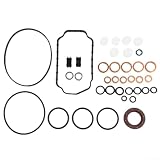
- [COMPLETE INJECTION PUMP KIT] This all-in-one repair kit is designed specifically for the 9 12V trucks (2500 & 3500), providing everything you need for effective repairs.
- [DESIGNED FOR SPECIFIC PART NUMBERS] Compatible with part numbers 1467010059, 14670-10059, and 1-467-010-059, perfect alignment with your vehicle's requirements.
- [ CONSTRUCTION] Crafted from high-strength materials that resist damage and provide long-lasting performance under various conditions.
- [EASY TO USE FOR ALL SKILL LEVELS] This kit simplifies the repair process, making it suitable for both experienced technicians and those new to automotive repairs.
For mobile equipment, the operator must integrate a hydrogen storage system with the engine and vehicle structure. That introduces questions about tank location, pressure, refueling equipment, crash protection, temperature, range, payload, and service access. UNSW has specifically identified mobile hydrogen storage and supply as practical challenges, especially for vehicles that cannot connect to permanent hydrogen infrastructure.
Before an industrial fleet considers a conversion, it should evaluate hydrogen storage, fueling, and safety engineering services as part of the complete deployment—not as an optional add-on after the engine work is finished. A conversion that works on a test stand may not be operationally useful if hydrogen delivery, storage, and refueling cannot support the equipment’s schedule.
Quick wins for a faster PC:
Repair Windows errors before they cause bigger problemsFix Now →Fix the driver behind crashes, sound loss and screen glitchesFind Drivers →Safety requirements are fundamental
Hydrogen safety is not simply a matter of adding a gas sensor. Hydrogen has a wide flammability range and a lower ignition energy than gasoline or natural gas. It can disperse quickly because it is very light, but it can also collect in high spaces if ventilation is poorly designed. Hydrogen flames can be difficult to see, and certain materials may become brittle during hydrogen service.
The U.S. Department of Energy’s hydrogen safety guidance highlights the importance of ventilation, leak detection, suitable materials, and engineered system design. A real installation may require:
- Hydrogen-compatible lines, fittings, valves, seals, and injector components
- Fixed leak detection in appropriate locations
- Ventilation designed for the equipment enclosure and hydrogen’s behavior
- Automatic isolation and emergency-shutdown functions
- Electrical equipment and ignition-source controls appropriate to the installation
- Clearly defined inspection, maintenance, and emergency procedures
- Training for operators, technicians, first responders, and service personnel
For preliminary inspection or supplemental checks, a hydrogen leak detector may be relevant. However, a handheld consumer detector is not a substitute for a code-compliant engineered detection and shutdown system. Buyers must verify sensor calibration, hydrogen concentration range, response time, hazardous-location rating, environmental rating, and local approval requirements before relying on any device.
Commercialization status
The technology has progressed beyond a purely conceptual proposal. The underlying U.S. patent, US 12,338,777 B2, titled “Hydrogen-diesel direct injection dual-fuel system for internal combustion engines,” was granted and published on June 24, 2025. The patent record identifies NewSouth Innovations Pty Limited as the assignee and describes direct hydrogen injection, diesel pilot ignition, independent timing control, and embodiments reaching a high hydrogen-energy fraction. A patent grant establishes intellectual-property protection; it does not establish field reliability, regulatory approval, commercial availability, or economic viability.
UNSW says the technology is being commercialized through DeCarice hydrogen-diesel retrofit, a UNSW spinout. UNSW’s investment-portfolio material describes DeCarice as retrofitting diesel engines to run on 95% hydrogen gas and claims a carbon benefit of up to 93% without compromising performance or durability. Those newer figures should be attributed to the commercialization material. They should not simply replace the earlier laboratory figures because the test basis, system configuration, or marketing definition may differ.
A UNSW clean-energy booklet published in 2024 said DeCarice was working toward in-field demonstrations from 2025 onward. As of August 12, 2026, the available official evidence confirms commercialization activity and demonstration planning, but it does not establish that a standardized, consumer-orderable kit is broadly available in the United States or worldwide. Prospective operators should request engine-specific documentation, demonstration data, certification details, installation requirements, warranty terms, hydrogen specifications, and service arrangements before treating the system as commercially deployable.
Independent reader supportYour contribution helps us test, update, and keep practical guides available for everyone.How it compares with other hydrogen-engine approaches
“Hydrogen retrofit” is a broad label. Different systems can use very different combustion architectures and hydrogen percentages.
- Hydrogen direct-injection dual fuel: The UNSW approach adds high-pressure cylinder injection and keeps a diesel pilot for ignition.
- Port-injected hydrogen: Hydrogen is introduced upstream of the intake valve. This can simplify some hardware but provides different control over mixture formation and may create different backfire, power, and emissions constraints.
- Spark-ignition hydrogen engines: The engine uses a spark plug rather than a diesel pilot. This may require more substantial changes to the base diesel engine.
- Low-rate hydrogen assistance: A system adds a relatively small amount of hydrogen or generated gas to the intake. Such systems should not be assumed to deliver the same hydrogen-energy share or combustion control as the UNSW architecture.
Commercial examples illustrate the range of claims but are not evidence that each company uses the UNSW patented design. Gastech Engine advertises a ControlR system for up to 70% hydrogen on certain engines, Smart-H2 describes a dual-fuel retrofit that retains more than 90% of the existing drivetrain, and HYGN advertises a bolt-on, on-demand hydrogen-assisted system with claimed fuel savings of up to 20%. These claims are application-specific and should be evaluated independently.
Rank #4

- Fitment: 1 1/2" Diesel Installation Kit Compatible for 1999-2022 F-250/F-350/F-450 Super Duty; 1999-2010 Ram 2500/3500; 2011-2012 Ram 2500/3500; 2011-2022 Silverado 2500 HD/3500 HD; 2011-2022 Sierra 2500 HD/3500 HD(Only for Diesel Engine)
- Reference OE Part Number:Fuel Tank Install Kit 1 1/2" 11025
- Function:This repair kit is designed to address loose or leaking fuel tank straps in many vehicle models. It corresponds to OE number 11025 and fits a range of factory fuel tank configurations. Whether you're working on a daily driver or an older vehicle, this kit provides the essential components to securely re-mount the tank, helping to resolve common fitment and safety concerns.
- Installation:The kit includes all necessary parts. Simply support the vehicle securely in a safe environment, remove the old straps, then position and route the new ones. Hand-tighten all new hardware, followed by a final, even torquing with tools. A final check completes the job.
- Note:If the products you receive do not meet your expectations, please inform us at any time, and we will give you the most satisfactory treatment
DOE material on hydrogen internal-combustion engines also covers port fuel injection, spark-ignition engines, marine dual-fuel engines, and locomotive research. One cited marine dual-fuel example reported up to 85% diesel substitution while noting power derating and other application-specific constraints. The comparison reinforces a basic rule: a hydrogen percentage is meaningful only when the fuel basis, engine architecture, operating point, power output, and test conditions are stated. See the DOE hydrogen internal-combustion-engine overview for examples of the different approaches.
What a fleet operator should ask before considering a retrofit
An operator evaluating this technology should treat it as a complete fuel-and-engine project. The following checklist can expose problems before money is spent on hardware:
- Define the duty cycle: Record engine speed, load, idle time, annual operating hours, transient operation, and required power. A result at one laboratory operating point may not represent the fleet’s full workload.
- Identify the hydrogen source: Determine production method, purity, delivery schedule, pressure, storage capacity, and delivered cost.
- Model the whole fuel system: Include hydrogen tanks, regulators, lines, injectors, valves, detection, ventilation, isolation, refueling, and emergency response.
- Verify emissions compliance: Require measured emissions data for the exact engine family and operating conditions, including NOx and any applicable local requirements.
- Check power and durability: Ask whether the system maintains rated power, how it behaves during transients, and what long-duration testing has been completed.
- Confirm approvals: Establish which vehicle, pressure-vessel, workplace, fire, environmental, and emissions certifications apply in the operating jurisdiction.
- Use qualified installers: The work should be performed and signed off by engineers and retrofitters with appropriate hydrogen and alternative-fuel experience.
- Calculate total cost: Compare conversion, storage, fueling infrastructure, hydrogen delivery, diesel pilot consumption, maintenance, downtime, insurance, and end-of-life costs against battery-electric, fuel-cell, new-engine, and continued-diesel alternatives.
For a U.S. fleet manager, the sensible first step is an engineering and regulatory feasibility assessment, followed by a controlled pilot on a defined asset. It is not ordering a generic kit and installing it on an unverified engine.
Bottom line for car owners
The UNSW system is an important demonstration of how existing diesel engines could use hydrogen for most of their fuel energy without abandoning compression ignition or the complete drivetrain. Its strongest near-term case is high-uptime industrial equipment—especially where replacing the machine is difficult and hydrogen infrastructure is available or can be built.
What’s actually slowing this PC down?
Pick the symptom - the matching free tool is one click away.
For ordinary passenger cars and privately owned diesel trucks, the technology is not yet established as a broadly available, plug-and-play conversion. The diesel pilot, high-pressure hydrogen storage, direct-injection hardware, control calibration, safety systems, emissions approvals, and fueling network are all essential parts of the project. The headline is real, but the practical product is a complete engineered system, not a simple bolt-on fuel accessory.
Frequently Asked Questions
Does the UNSW retrofit run entirely on hydrogen?
No. The demonstrated system uses hydrogen for about 90% of the fuel energy and retains diesel for roughly 10% as a pilot ignition fuel. It is a hydrogen-diesel dual-fuel engine, not a diesel-free hydrogen engine.
Is the 90% figure based on hydrogen volume or mass?
No. UNSW describes the figure as an energy share. It should not be interpreted as 90% hydrogen by volume, mass, tank capacity, or injection quantity.
Can any diesel engine be converted using this system?
Not on the evidence available. Engine geometry, injector packaging, control hardware, duty cycle, hydrogen pressure, storage, safety, emissions, and local approvals all require an engine-specific engineering review.
Do these 3 things before closing this tab:
1Repair Windows errors before they cause bigger problems2Fix the driver behind crashes, sound loss and screen glitches3Clear out junk files and repair common Windows errorsDoes the system produce zero emissions?
No. Diesel pilot fuel is still burned, so combustion emissions remain. Hydrogen can substantially reduce carbon dioxide from fuel combustion, but lifecycle climate impact also depends on hydrogen production, compression, transport, and storage. Nitrogen-oxide control remains important.
Is the UNSW hydrogen retrofit available for consumers?
The technology is being commercialized through DeCarice, but the available official material does not establish that a standardized, consumer-orderable retrofit kit is broadly available in the United States or globally. Industrial operators should request current, engine-specific availability and certification information directly from the developer or a qualified engineering partner.
The Bottom Line
The UNSW retrofit is best understood as a promising industrial hydrogen-combustion platform, not a universal car conversion. It demonstrated approximately 90% hydrogen energy substitution by using direct hydrogen injection plus a diesel pilot, with major reported carbon-dioxide reductions under specified test conditions. Whether it makes sense in the real world depends on hydrogen supply, storage, safety engineering, emissions certification, durability, and total operating cost.
Quick Recap
Product prices and availability are accurate as of the date/time indicated and are subject to change. Any price and availability information displayed on Amazon at the time of purchase will apply.




