The Trump administration has proposed another rollback of U.S. fuel-economy standards, but it has not finished the rollback. NHTSA’s SAFE Vehicle Rule III would slow the required pace of improvement for passenger cars and light trucks, change how some crossovers and small SUVs are classified, and end inter-manufacturer CAFE credit trading beginning in model year 2028. NHTSA projects an industrywide light-duty fleet average of about 34.5 mpg by model year 2031.
That is far below the roughly 50.4-mpg requirement projected under the Biden-era 2027–2031 standards. Neither figure is a window-sticker rating. And as of August 12, 2026, SAFE Vehicle Rule III was still described in official NHTSA materials as a proposed rule. EPA has finalized a separate repeal of federal vehicle greenhouse-gas standards, but that action does not eliminate NHTSA’s CAFE program.
What the proposed CAFE rollback would do
If finalized substantially as proposed, SAFE Vehicle Rule III would replace the Biden administration’s faster fuel-economy increases for passenger cars and light trucks with a much slower schedule. NHTSA projects that the industrywide light-duty fleet average would reach approximately 34.5 mpg in model year 2031, rather than the roughly 50.4-mpg requirement projected under the Biden-era 2027–2031 rule.
That comparison needs an important qualification: neither figure is the window-sticker rating of an average vehicle. They are regulatory CAFE values calculated under federal compliance rules. A vehicle’s EPA label mileage, the fuel economy of a particular model, and a manufacturer’s CAFE result are related but not interchangeable.
Do these 3 things before closing this tab:
1Repair Windows errors before they cause bigger problems2Fix the driver behind crashes, sound loss and screen glitches3Clear out junk files and repair common Windows errors#1 Best Overall

- Wide Vehicle Compatibility: Compatible with V6 / V8 General Motors active or dynamic fuel management vehicles, includes cars, trucks, and SUVs
- Simple Plug and Play Installation: No installation required, simply plug and play then it instantly begins working
- Non-Invasive Design: Will not reprogram your factory ECU, unplug it to return to factory settings
- Compatibility Notice: The OBDAFM device is NOT compatible with the 10-speed automatic transmissions and 2022+ Refresh models. Please confirm the compatibility before ordering it
- OBD-II Communication Module: The device is an OBD-II plug-in monitoring module designed for vehicle system communication
The other important qualification is legal status. The main CAFE reset was still a proposed rule in the official materials reviewed as of August 12, 2026. The Trump administration has proposed the rollback, but it has not abolished federal fuel-economy standards. Separately, EPA finalized a repeal of federal greenhouse-gas vehicle standards in February 2026. That action does not eliminate NHTSA’s separate authority to set CAFE standards.
Why this is another rollback
The first Trump administration finalized the 2020 SAFE Vehicles Rule, which reduced the pace of fuel-economy improvement for model years 2021 through 2026. The Biden administration later revised those requirements, setting annual increases of 8% for model years 2024 and 2025 and 10% for model year 2026. NHTSA projected that the revised schedule would produce an industrywide requirement of approximately 49 mpg for model year 2026. The agency’s 2024–2026 announcement describes that earlier rule.
The Biden administration also set the framework for model years 2027 through 2031, with a projected requirement of about 50.4 mpg by 2031. SAFE Vehicle Rule III would unwind much of that increase. The administration presents the change as a correction to standards it considers unlawful or infeasible and says the earlier approach pressured automakers toward electric vehicles. Critics argue that the proposal understates the fuel savings and other benefits of stronger standards.
| Rule or proposal | Relevant schedule | Projected or described result |
|---|---|---|
| 2020 SAFE Vehicles Rule | Slowed fuel-economy improvement for MY 2021–2026 | Established the earlier Trump-era rollback |
| Biden-era MY 2024–2026 standards | 8% annual increases in MY 2024 and 2025; 10% in MY 2026 | Approximately 49 mpg projected for MY 2026 |
| Biden-era MY 2027–2031 standards | Higher requirements continuing through MY 2031 | About 50.4 mpg projected for MY 2031 |
| SAFE Vehicle Rule III proposal | New MY 2022 baseline; 0.5% annual increases through MY 2026; MY 2027 bridge; 0.25% annual increases through MY 2031 | Approximately 34.5 mpg projected for MY 2031 |
The figures in this table are regulatory estimates and projections, not promises about a particular vehicle’s fuel economy. The Biden-era figures come from NHTSA’s final-rule materials, while the proposed 34.5-mpg result comes from the Trump administration’s NHTSA proposal and summary.
What’s actually slowing this PC down?
Pick the symptom - the matching free tool is one click away.
What SAFE Vehicle Rule III would change
A slower standard through model year 2031
NHTSA’s proposal covers passenger cars and light trucks for model years 2022 through 2031. It would establish new model-year 2022 baseline standards, increase stringency by 0.5% annually through model year 2026, use model year 2027 as a bridge, and then increase stringency by 0.25% annually through model year 2031. NHTSA’s official announcement and proposal summary describe the schedule.
Model year is not the same thing as calendar year. A model-year standard applies to vehicles assigned to that model year, which may be built or sold before or after January 1 of the corresponding calendar year. The proposal’s coverage of earlier model years also does not mean that the government would change the sticker mileage or mechanical specifications of vehicles already sold.
Different treatment for some crossovers and small SUVs
The proposal would change how qualifying crossovers and small SUVs are classified. Vehicles that have been treated as light trucks could move into the passenger-automobile category. NHTSA says the change is intended to correct what it views as a long-standing market distortion between vehicle categories.
Classification matters because NHTSA sets separate CAFE standards for passenger cars and light trucks. Moving a vehicle from one category to the other changes the compliance calculation and can affect how manufacturers plan products. It does not automatically mean that every affected crossover will have a particular fuel-economy requirement or that every model will become more expensive to certify. The effect depends on the precise definition, the vehicle’s attributes, and the final standards.
Recommended Free Tools
No inter-manufacturer credit trading beginning in 2028
Beginning in model year 2028, the proposal would eliminate inter-manufacturer CAFE credit trading. CAFE credits let manufacturers manage compliance over time and, under existing rules, can also be traded between manufacturers. Ending trading between companies would make compliance less dependent on buying credits from a manufacturer with a stronger fuel-economy position.
This is separate from the question of whether credits already earned can be used, banked, or otherwise handled under the final rule. Those details should be checked in the final regulatory text rather than inferred from the announcement.
Electric vehicles in the regulatory calculation
NHTSA says the proposal excludes electric vehicles from the baseline and is intended to correct considerations the agency believes Congress did not authorize under the Energy Policy and Conservation Act. The agency’s CAFE program materials explain the federal program and its statutory framework.
Rank #2

- REMAN - MASS AIR FLOW SENSOR
Opponents say that excluding EVs or treating their sales as irrelevant gives an incomplete picture of the real-world fleet. A manufacturer’s product mix, including gasoline vehicles, hybrids, plug-in hybrids, and EVs, affects how the rule influences engineering and compliance decisions. The dispute is therefore not just about a single mpg number; it is also about which vehicles and benefits NHTSA may lawfully count.
Free tools Windows power users keep installed
One-click scans. No signup required.
CAFE mpg is not your vehicle’s window-sticker mpg
CAFE stands for Corporate Average Fuel Economy. NHTSA uses it to regulate how far a manufacturer’s vehicles must travel on a gallon of fuel, with separate standards for passenger cars and light trucks. The result is a fleet-level compliance calculation rather than a simple average of the numbers printed on vehicle labels.
EPA window-sticker ratings are consumer information for a particular vehicle and use EPA testing and labeling procedures. CAFE calculations use different procedures, categories, credits, production volumes, and accounting conventions. Some technologies and alternative-fuel vehicles can also receive treatment under federal compliance rules that does not translate directly into the label on a showroom vehicle.
So the proposed 34.5-mpg figure does not mean:
- the average new vehicle would display 34.5 mpg on its EPA sticker;
- every new car or truck would achieve 34.5 mpg in real-world driving;
- existing vehicles would be retested or relabeled; or
- gasoline vehicles would be legally limited to a specific mileage rating.
It means NHTSA projects that the regulated light-duty fleet’s CAFE result would be approximately 34.5 mpg in model year 2031 under the proposed compliance framework. An independent Union of Concerned Scientists analysis of the proposal characterized that projected value as below the fleet’s reported 2024 CAFE performance, but that is an advocacy analysis and should not be substituted for NHTSA’s regulatory tables.
What has taken effect—and what has not
The CAFE reset remains a proposal
NHTSA announced SAFE Vehicle Rule III on December 3, 2025. The agency said a 45-day public-comment period would begin when the proposal was published in the Federal Register and that it would hold a public hearing. The Federal Register document was scheduled for publication on December 5, 2025.
Quick wins for a faster PC:
Clear out junk files and repair common Windows errorsFree Scan →Scan for outdated or missing drivers - takes under a minuteDriver Scan →Repair Windows errors before they cause bigger problemsFix Now →As of August 12, 2026, the NHTSA materials reviewed still described SAFE Vehicle Rule III as a notice of proposed rulemaking rather than a final CAFE rule. A proposal can be revised, delayed, withdrawn, challenged, or finalized with different provisions. Until a final rule is published and becomes effective, the proposal itself should not be reported as the operative replacement for the existing CAFE requirements.
EPA’s greenhouse-gas action is separate
On February 12, 2026, EPA finalized rescission of the 2009 Greenhouse Gas Endangerment Finding and repealed subsequent federal greenhouse-gas standards for highway vehicles and engines. EPA says the action concerns greenhouse-gas emissions and does not affect traditional air-pollutant regulations. The agency’s final-rule page explains the scope of that action.
That EPA decision and NHTSA’s CAFE proposal involve related vehicle-policy issues but different legal programs. EPA regulates emissions under the Clean Air Act. NHTSA sets fuel-economy standards under the Energy Policy and Conservation Act. The EPA action does not automatically repeal, suspend, or replace NHTSA’s CAFE standards.
CAFE penalties also changed
The administration points to a July 2025 law that set the civil penalty for CAFE violations at zero. The White House describes that provision as protecting automakers from significant fines. A zero civil penalty changes the financial consequences of noncompliance, but it is not the same legal action as rewriting the standards themselves.
The Tool Desk
Outbyte PC Repair FREEClear out junk files and repair common Windows errorsFree Scan →Outbyte Driver Updater FREEScan for outdated or missing drivers - takes under a minuteDriver Scan →For that reason, the practical effect of the administration’s policy is determined by several separate pieces: the currently operative CAFE rules, the proposed SAFE Vehicle Rule III standards, the treatment of credits, the vehicle-classification provisions, and the penalty law. They should not be collapsed into the claim that fuel-economy requirements have been abolished.
The administration’s case for the rollback
The administration says the Biden-era standards were too aggressive, legally defective, or infeasible and effectively pushed manufacturers toward electric vehicles. It argues that easing the requirements would lower vehicle prices, improve fleet turnover, and reduce crash deaths and serious injuries by making newer vehicles more affordable.
Rank #3

- Plug and Play: This automotive gauge is easy to install, requiring no complicated wiring or professional installation; it connects directly to the vehicle's system.
- Fuel Economy Monitoring: Designed to help track and optimize fuel consumption, allowing drivers to monitor vehicle efficiency and potentially reduce fuel costs.
- Portable Design: This compact and lightweight gauge can be easily moved between different vehicles or removed when not needed. This fuel economy monitor can easily fit into your armrest box.
- Universal Compatibility: Suitable for vehicles using gasoline, diesel, water, and lubricants, making it suitable for a wide range of automotive applications.
The White House projects that the reset would:
- reduce the average new-vehicle price by nearly $1,000 compared with leaving the Biden standards in place;
- save households $109 billion over five years; and
- prevent more than 1,500 deaths and nearly 250,000 serious injuries through 2050.
Those are administration projections, not independently established outcomes. They depend on assumptions about vehicle prices, consumer choices, fleet turnover, vehicle safety, fuel use, and future regulations. The figures should therefore be attributed to the White House fact sheet, not presented as measured results.
The central legal and policy dispute
NHTSA says it is resetting the standards to comply with the Energy Policy and Conservation Act and related statutory requirements. The agency’s position is that earlier regulators considered factors Congress did not authorize and improperly used the CAFE program to pressure the market toward EV adoption.
Opponents, including a coalition of 21 state attorneys general, four cities, and one county, argue that NHTSA’s analysis is legally and technically flawed. Their objections include claims that the proposal:
- improperly ignores the existence and sales of electric vehicles;
- undercounts fuel savings from stronger standards;
- discounts energy-security benefits;
- uses defective estimates of affordability, fleet turnover, and vehicle safety;
- does not properly account for climate damages; and
- unlawfully ends inter-manufacturer credit trading.
Those are the challengers’ advocacy and legal positions, not adjudicated findings. The Illinois attorney general’s announcement summarizes the coalition’s opposition. The eventual legal outcome will depend on the final agency action and the courts’ treatment of the statutory and analytical challenges.
California is part of the broader fight
The administration’s vehicle-policy litigation also targets California’s authority to set its own vehicle rules. On March 12, 2026, the Justice Department and the Transportation Department sued California in the Eastern District of California, arguing that the Energy Policy and Conservation Act preempts state fuel-economy regulation and makes NHTSA the exclusive federal regulator of fuel economy.
The case was identified in the Justice Department’s release as 26-at-00450. Its outcome remained unresolved in the sources reviewed. The DOJ announcement states the administration’s position; it is not a court ruling that has already settled the issue.
For automakers and consumers, this matters because federal standards are only one part of product planning. State requirements, including California’s rules and any rules adopted by other states, can affect which vehicles manufacturers sell and certify. Whether those state programs remain in place, change, or are preempted is a separate legal question from whether NHTSA finalizes SAFE Vehicle Rule III.
Independent reader supportYour contribution helps us test, update, and keep practical guides available for everyone.What it could mean for car buyers
Potentially lower technology costs, but no guaranteed price cut
Weaker fuel-economy requirements could reduce the regulatory pressure to add costly efficiency technology to some gasoline vehicles. That may lower manufacturers’ compliance costs or give them more flexibility in product design. It does not guarantee that the savings will appear as a lower sticker price. Vehicle prices also depend on labor, materials, tariffs, financing rates, supply, demand, dealer pricing, and automakers’ profit decisions.
It would be speculative to claim that the proposal alone will reduce every new-car price by a specific amount, bring back discontinued sedans, or force a particular automaker to change its lineup.
Possible higher lifetime fuel costs
A vehicle that uses more fuel can cost less to build or buy while costing more to operate. The size of that tradeoff depends on the vehicle, annual mileage, fuel prices, driving conditions, maintenance, and ownership period. Stronger fleet standards can produce fuel savings across millions of vehicles; weaker standards can reduce that regulatory pressure. Neither statement predicts the exact fuel bill for an individual buyer.
For a personal purchase decision, compare the EPA label’s combined, city, and highway estimates for the actual models under consideration. Do not use the proposed 34.5-mpg CAFE figure as a substitute for that comparison.
Rank #4
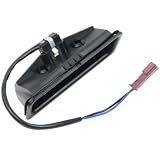
- Parts number# 51248168035
- Please check your parts number before placing the order.
- Please send VIN to us if you are not sure about the Part Suitability.
- YUNCHE-AUTO ALWAYS PROVIDE OUR CUSTOMER QUALITY SERVICE.
- Compatible with B-M
Existing cars will not change overnight
The proposal concerns manufacturers’ compliance with model-year standards. It does not make an existing car less efficient, change its title, or require an owner to modify it. Any effect on used-car availability, resale prices, or fuel costs would develop indirectly through future production, consumer demand, fuel prices, and the broader vehicle market.
Crossovers may receive different compliance treatment
Because the proposal would move qualifying crossovers and small SUVs between the light-truck and passenger-car categories, manufacturers could reconsider vehicle dimensions, powertrains, equipment, or certification strategies. But the classification change alone does not establish that a specific crossover will disappear, become cheaper, or be redesigned. Product decisions also depend on demand, supply chains, state rules, and normal model cycles.
Environmental and energy consequences
In general, lower fuel-economy requirements create less regulatory pressure to reduce gasoline consumption. The eventual effect of this proposal, if finalized, would depend on the final standards, the mix of gasoline vehicles, hybrids, plug-in hybrids, and EVs, vehicle miles traveled, fuel prices, and state-level policies.
The EPA’s separate greenhouse-gas repeal potentially has broader emissions consequences because it removes future federal greenhouse-gas measurement, control, and reporting obligations for covered highway vehicles and engines. But the EPA rule does not repeal traditional air-pollutant requirements, and it does not eliminate NHTSA’s CAFE authority.
Historical estimates should also be kept in context. In a 2018 analysis of the first Trump-era rollback, EPA and DOT projected a 2% to 3% increase in daily fuel consumption compared with the standards then in place. Those estimates applied to that earlier rule and should not be presented as a forecast for SAFE Vehicle Rule III. The 2018 analysis is useful historical context, not a direct estimate of this proposal’s effects.
What to watch next
- The Federal Register and NHTSA’s final action. The decisive question is whether NHTSA finalizes the proposal, changes it, delays it, or withdraws it. The final text will control the standards, category definitions, credit treatment, and effective dates.
- The administrative record. Comments, hearing materials, technical analyses, and responses to objections will show how NHTSA justifies excluding EVs, calculates affordability and safety effects, and estimates the 2031 fleet result.
- Credit rules and enforcement. The proposed end to inter-manufacturer trading and the separate zero-penalty provision could materially change how manufacturers manage compliance. They are distinct issues and need to be tracked separately.
- The California litigation. A ruling on federal preemption could affect automakers’ obligations independently of the CAFE rulemaking.
- Actual fleet data. Sales of EVs, hybrids, crossovers, and larger trucks will determine how much practical influence the formal standards have on product planning and fuel use.
How to report the change accurately
The most accurate short description is: The Trump administration proposed unwinding the Biden-era increase in federal fuel-economy requirements, but the main CAFE reset remained a proposal in the official materials reviewed. Separately, EPA finalized a repeal of federal greenhouse-gas vehicle standards.
Use proposed rollback, proposed reset, or NHTSA proposal unless a later, independently verified final rule has taken effect. Avoid saying that the administration has already abolished all fuel-economy requirements. Also avoid describing 34.5 mpg as the average vehicle’s window-sticker mileage or treating the White House’s affordability and safety estimates as settled facts.
Outdated Drivers Are Slowing You Down
One free scan finds every outdated or missing driver and matches the right update for your exact hardware.Free scan · exact hardware matchWindows Errors? Fix Them Before They Spread
Repair common Windows errors and clear accumulated junk for a smoother, more stable PC - no reinstall needed.Free scan · no reinstallFrequently Asked Questions
Did the Trump administration abolish federal fuel-economy standards?
No. SAFE Vehicle Rule III was announced as a proposed rule, not a final replacement for the existing CAFE standards. As of August 12, 2026, official NHTSA materials still identified it as a notice of proposed rulemaking. EPA’s separate repeal of federal vehicle greenhouse-gas standards does not eliminate NHTSA’s authority to set fuel-economy standards.
What does the proposed 34.5-mpg figure mean?
NHTSA projects an industrywide light-duty CAFE average of approximately 34.5 mpg for model year 2031 under the proposal. That is a regulatory fleet calculation, not the EPA window-sticker mileage of an average vehicle or a required rating for every individual car.
How much lower are the proposed standards than the Biden-era standards?
The Biden-era standards projected an industrywide requirement of about 50.4 mpg by model year 2031. SAFE Vehicle Rule III would use a much slower increase schedule and projects approximately 34.5 mpg for that same model year.
Would the rollback change the fuel economy of cars already on the road?
No. The proposal would affect manufacturers’ compliance with model-year standards. It would not change an existing vehicle’s fuel economy, retest its EPA label, or require owners to modify their cars.
Do these 3 things before closing this tab:
1Fix the driver behind crashes, sound loss and screen glitches2Clear out junk files and repair common Windows errors3Scan for outdated or missing drivers - takes under a minuteAre EPA’s greenhouse-gas standards and NHTSA’s CAFE standards the same thing?
EPA’s February 2026 action concerns greenhouse-gas emissions and repeals subsequent federal GHG standards for covered highway vehicles and engines. It does not affect traditional air-pollutant regulations and does not repeal NHTSA’s separate CAFE authority.
The Bottom Line
Bottom line: The Trump administration has proposed another major rollback of federal CAFE requirements, projecting an industrywide light-duty result of about 34.5 mpg in model year 2031 instead of roughly 50.4 mpg under the Biden-era plan. But the CAFE reset was still only a proposal as of August 12, 2026. EPA’s separate February 2026 repeal of federal vehicle greenhouse-gas standards is final, yet it does not erase NHTSA’s CAFE program.
Quick Recap
Product prices and availability are accurate as of the date/time indicated and are subject to change. Any price and availability information displayed on Amazon at the time of purchase will apply.




