Free tools Windows power users keep installed
One-click scans. No signup required.
Toyota’s 745-mile solid-state battery is a future development target, not a battery you can buy today or an EPA-rated production-car specification. The approximately 1,200-kilometer figure comes from Toyota’s broader all-solid-state battery program and related reporting. Toyota’s more specific public roadmap targets commercialization of a first all-solid-state battery for battery-electric vehicles in 2027–2028, with charging from 10% to 80% in 10 minutes or less and a range improvement of approximately 20% over its planned performance battery.
A higher-specification version is under development with a stated target of a 50% improvement. The final vehicle range, charging performance, price, production volume, and market availability remain unresolved.
As an Amazon Associate I earn from qualifying purchases.
1. The 745-mile figure means about 1,200 kilometers
The headline number is a conversion of approximately 1,200 kilometers, a range target associated with Toyota’s future solid-state battery development. At the exact conversion rate, 1,200 kilometers is about 746 statute miles, which is commonly rounded to 745 miles.
That number should not be read as an official EPA rating. Toyota has described future “cruising range” targets rather than publishing an EPA-certified 745-mile vehicle. The battery’s eventual range will depend on the vehicle, battery capacity, aerodynamics, weight, tires, software, temperature, and testing procedure.
#1 Best Overall

- IMPORTANT: RED 2-PIN CONNECTOR REQUIRED – This battery ONLY works with the red 2-pin connector shown in the product photos. Many ride-on toys use similar-looking connectors that are not compatible. Compare your connector carefully before purchasing.
- IMPORTANT: VERIFY BATTERY SIZE BEFORE PURCHASE – Battery dimensions are 5.9 x 2.5 x 3.9 inches (151 x 65 x 99 mm). Measure your existing battery and battery compartment before ordering. This battery may not fit all ride-on vehicles.
- HIGHER 9.5AH CAPACITY FOR LONGER PLAYTIME – Premium sealed lead acid battery provides extended runtime compared to many standard 7AH batteries while delivering reliable power for compatible ride-on vehicles.
- INCLUDES REPLACEABLE 40A FUSE HARNESS – Includes SafeAMP 12V 9.5AH SLA battery, red 2-pin connector harness, and replaceable 40-amp fuse for added protection and convenient installation.
- DESIGNED FOR COMPATIBLE 12V RIDE-ON VEHICLES – Intended as a replacement battery for ride-on toys using the red 2-pin connector and requiring a battery measuring approximately 151 x 65 x 99 mm.
In other words, “Toyota’s 745-mile battery” is a convenient description of an ambitious development goal—not the name or confirmed specification of a production battery pack.
2. It is not available in a Toyota you can buy today
Toyota describes the all-solid-state battery as being in product development and mass-production-method development. Toyota and Idemitsu Kosan have announced a target of commercializing the technology in 2027–2028, followed by full-scale mass production.
Toyota has not identified a current retail model equipped with this battery, and no production Toyota vehicle has been announced with an EPA-certified 745-mile range. There is also no verified Toyota solid-state replacement battery or consumer retrofit pack that owners can purchase.
What’s actually slowing this PC down?
Pick the symptom - the matching free tool is one click away.
The practical implication is simple: a buyer shopping for a Toyota EV now cannot order this battery as an option, install it in an existing Toyota, or assume that every Toyota EV launched around 2027 or 2028 will use it.
3. Toyota’s official roadmap is more measured than the headline
Toyota’s public battery roadmap separates several technologies and performance levels. Treating them as one single “745-mile battery” obscures what the company has actually said.
| Roadmap item | Target or timing | What it means |
|---|---|---|
| Next-generation performance battery | Targeted for 2026; approximately 1,000 km of cruising range | A planned battery and vehicle package whose range target includes contributions from improved aerodynamics and reduced weight. |
| First all-solid-state BEV battery | Commercialization targeted for 2027–2028 | Approximately 20% more cruising range than the planned performance-version square battery, according to Toyota’s roadmap. |
| Higher-specification all-solid-state battery | Under research and development | A target of approximately 50% more range than the performance battery; this is a development goal, not a confirmed production specification. |
| Frequently reported 1,200-km figure | Future target associated with Toyota’s broader program | Roughly 745 miles, but without an identified EPA test result, final vehicle configuration, or independent road test. |
The arithmetic explains why the figures are sometimes blended together: a 20% improvement over a 1,000-kilometer baseline would be approximately 1,200 kilometers. But that does not prove that every 1,200-kilometer reference describes the same battery version, vehicle, test cycle, or production configuration.
4. The 1,000-kilometer and 1,200-kilometer batteries should not automatically be treated as identical
Toyota’s roadmap identifies a 2026 performance battery with a target of 1,000 kilometers of cruising range. That figure includes more than cell chemistry. Toyota specifically discusses vehicle improvements such as better aerodynamics and lower weight, both of which can increase driving range without increasing battery capacity.
PC Slower Than It Used to Be?
A free scan shows the junk files, broken settings and background clutter dragging Windows down - then fixes them in one click.Free scan · Windows 10 & 11Outdated Drivers Are Slowing You Down
One free scan finds every outdated or missing driver and matches the right update for your exact hardware.Free scan · exact hardware matchThe all-solid-state battery is presented as a later technology. Toyota gives a target of approximately 20% more range than the performance-version square battery, while a higher-level specification is aimed at approximately 50% more. Those comparisons are useful for understanding Toyota’s strategy, but they do not establish a single fixed pack size or a final range for a named production vehicle.
For readers comparing future EVs, the important question will be the complete vehicle specification: usable battery capacity, EPA or other certified range, curb weight, charging curve, battery warranty, and price. A percentage improvement over an internal Toyota baseline is not a substitute for those figures.
5. The 10-minute charging claim covers 10% to 80%, not a full charge
Toyota’s published all-solid-state roadmap targets charging from 10% to 80% state of charge in 10 minutes or less. That is an extremely ambitious target, but it is not a claim that the battery can be charged from 0% to 100% in 10 minutes.
Rank #2

- Universal Compatibility: Works with alarm systems, security devices, UPS, kids ride-on cars. 12V7Ah/20HR rechargeable battery replaces 1270 batteries, UB1270, RT1270, CA1270, 12FM7 and more.
- Long-Lasting Performance: 12V 7Ah rechargeable battery provides reliable power with maintenance-free & spill-proof design. Delivers consistent 12 volt output as deer feeder battery, ride on replacement battery, and house alarm battery.
- Easy Installation: Simple replacement for your existing 12V 7Ah 20HR battery. Compatible with standard F1 terminals, no special tools required. Ideal 12V battery pack for home alarm. Dimensions: 5.94" x 2.56" x 3.70" (height with terminals: 3.94")
- Versatile Applications: Ideal 12V SLA battery for alarm systems, emergency lighting, exit signs, deer feeders, 12V UPS battery systems, power wheels, and other devices requiring a dependable 12V 7Ah sealed battery.
- Premium Construction: Rugged ABS case protects our lead acid batteries from damage. Leak-proof design prevents acid spills, engineered with high-density plates for extended battery life. Resists vibration and environmental conditions.
The stated window covers 70 percentage points of the battery’s usable state of charge. Charging from 80% to 100% commonly takes longer in EVs because the vehicle reduces charging power to protect the cells and manage heat near full charge. Toyota has not specified a complete 0%–100% charging time for this future battery.
Actual charging performance would also depend on:
- the battery pack’s usable capacity;
- the charger’s maximum output and the vehicle’s charging limit;
- the battery temperature and preconditioning strategy;
- the shape of the charging curve, rather than only its peak power;
- software limits and battery-protection controls; and
- the specific vehicle in which the battery is installed.
No independent consumer test has established that a production Toyota can achieve the 10%–80% target. Until Toyota publishes a final vehicle specification and charging test details, the number should be treated as an engineering target.
6. Toyota is focusing on sulfide solid electrolytes
A conventional lithium-ion battery uses a liquid electrolyte to allow lithium ions to move between the cathode and anode. An all-solid-state battery replaces that liquid ion-conducting material with a solid electrolyte.
Toyota and Idemitsu Kosan’s cooperation focuses on sulfide solid electrolytes. The companies describe these materials as soft and adhesive to other battery materials, properties they consider useful for creating reliable interfaces inside a cell.
Solid-state designs are attractive because they may enable higher energy density, faster ion movement, and higher power output. Eliminating a flammable liquid electrolyte may also change the battery’s safety profile. However, “solid-state” does not automatically mean that every part of an EV is nonflammable or that every safety problem has been solved. The finished pack will still include electrical connections, structural materials, thermal-management components, and vehicle systems that require their own safety engineering.
Recommended Free Tools
For anyone who wants more background after the chemistry explanation, a solid-state battery technology book or an EV battery engineering reference can help clarify the difference between laboratory cell results, prototype packs, and certified automotive performance. A useful reference should explain energy density, interfaces, charging limits, degradation, and manufacturing—not just repeat range claims.
7. Durability is one of the central technical obstacles
The promise of a solid electrolyte comes with a difficult materials problem. Toyota has said that repeated charging and discharging can create cracks between the cathode, anode, and solid electrolyte. Those cracks can interrupt contact and cause performance to degrade.
Toyota’s reported development approach involves a flexible, adhesive, crack-resistant solid electrolyte intended to preserve those interfaces over repeated cycles. That is an important engineering claim because a battery for a car must survive years of vibration, temperature changes, fast charging, deep cycling, and varying states of charge.
It is not the same as proof of long-term durability in production vehicles. Until final packs are tested over automotive lifetimes and the results are independently evaluated, Toyota’s durability solution remains a company-reported development result rather than a guaranteed ownership outcome.
Do these 3 things before closing this tab:
1Clear out junk files and repair common Windows errors2Fix the driver behind crashes, sound loss and screen glitches3Repair Windows errors before they cause bigger problemsBuyers should therefore avoid assuming that the future battery will automatically last longer than current lithium-ion packs, retain a specific percentage of capacity, or carry a particular warranty. Those details depend on the final design and Toyota’s production specifications.
8. Solid-state technology does not eliminate the manufacturing challenge
Replacing a liquid electrolyte with a solid one changes the manufacturing process as well as the chemistry. The electrodes and electrolyte must maintain consistent contact across a large number of cells. Materials must be stacked or layered with high precision, without damage, contamination, voids, or inconsistent pressure.
Rank #3
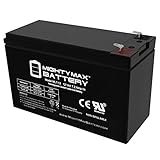
- Ml7-12 Sla Is A 12V 7 2Ah Sealed Lead Acid (Sla) Rechargeable Maintenance Free Battery
- Dimensions 5 94 Inches X 2 56 Inches X 3 94 Inches Terminal F1 Listing Is For The Battery Only No Wire Harness Or Mounting Accessories Included
- Package Quantity : 1
- Rechargeable Battery That Can Be Mounted In Any Position Resists Shocks And Vibration Long Lasting High Performance In High And Low Temperatures
Manufacturers also need to control production speed, yield, quality inspection, packaging, thermal behavior, and cost. A cell that performs well in a laboratory is not automatically economical or reliable when produced by the millions required for mainstream vehicles.
Toyota’s own announcements emphasize manufacturing as a major part of the program. The company has shown an all-solid-state battery development line and described work on high-speed, high-precision stacking intended to avoid damaging the battery materials.
That work is evidence that Toyota is addressing commercialization rather than discussing only a laboratory concept. It is not evidence that mass-market production has already started.
9. Toyota and Idemitsu are dividing the scale-up work
Toyota’s partnership with Idemitsu Kosan is intended to address both materials and vehicle production. Idemitsu brings experience in manufacturing and supplying electrolyte materials, while Toyota contributes battery processing, assembly, and vehicle-development expertise.
The partnership has described a progression that includes:
- developing a suitable sulfide solid electrolyte;
- establishing production and supply-chain methods for that material;
- building or developing a large pilot facility;
- verifying production processes and battery performance; and
- studying the path toward full-scale production.
This division of responsibilities matters because the electrolyte itself is only one part of a commercially viable battery. Toyota must also integrate the cells into packs, manage heat and electrical output, meet automotive durability requirements, and install the technology in vehicles that can be manufactured at an acceptable cost.
The Tool Desk
Outbyte Driver Updater FREEScan for outdated or missing drivers - takes under a minuteDriver Scan →Outbyte PC Repair FREERepair Windows errors before they cause bigger problemsFix Now →10. The 2027–2028 date is a target window, not a guaranteed mass-market launch
Toyota and Idemitsu consistently describe 2027–2028 as the intended commercialization period. Toyota’s wording concerns commercialization or market launch, while full-scale mass production is described as a later phase.
If the schedule is met, the first vehicles could be limited in volume, restricted to particular models or markets, or used to validate the technology before broader production. That is a reasonable interpretation of a staged launch, not a confirmation of Toyota’s exact product plan.
Several practical questions remain unanswered:
- Which Toyota or Lexus model will receive the first battery?
- Will the initial vehicle be sold globally or only in selected markets?
- What will the battery’s usable capacity and certified range be?
- How much will the vehicle cost compared with current EVs?
- What charging hardware and charging-network conditions will be required?
- How many vehicles will Toyota build in the first production phase?
- What warranty and replacement provisions will apply?
Until Toyota answers those questions, the date should be treated as a development objective rather than a firm delivery promise.
What the 745-mile claim gets right—and what it overstates
What it gets right
- Toyota is genuinely developing all-solid-state batteries for battery-electric vehicles.
- The company has publicly described a future range target around 1,200 kilometers.
- Toyota has published a target of 10%–80% charging in 10 minutes or less.
- The program has a named industrial partner, Idemitsu Kosan.
- Toyota has disclosed manufacturing-development work, not merely a laboratory concept.
What it overstates
- 745 miles is not an EPA-certified range.
- Toyota has not documented an independent 745-mile road test.
- The final vehicle configuration and test cycle are unspecified.
- The battery is not available in a current retail Toyota.
- The 10-minute target is not a full 0%–100% charge time.
- There is no guarantee that every Toyota EV launched in 2027 or 2028 will use it.
Why test-cycle language matters
Range numbers from different markets cannot be compared as if they were interchangeable. Toyota’s English-language roadmap uses the term “cruising range,” and some Toyota battery materials refer to CLTC-mode range for particular next-generation batteries. EPA, WLTP, and CLTC procedures use different assumptions and conditions.
Rank #4
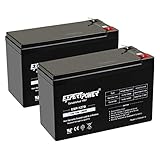
- Universal Compatibility: Works with alarm systems, security devices, UPS, kids ride-on cars. 12V7Ah/20HR rechargeable battery replaces 1270 batteries, UB1270, RT1270, CA1270, 12FM7 and more.
- Long-Lasting Performance: 12V 7Ah rechargeable battery provides reliable power with maintenance-free & spill-proof design. Delivers consistent 12 volt output as deer feeder battery, ride on replacement battery, and house alarm battery.
- Easy Installation: Simple replacement for your existing 12V 7Ah 20HR battery. Compatible with standard F1 terminals, no special tools required. Ideal 12V battery pack for home alarm. Dimensions: 5.94" x 2.56" x 3.70" (height with terminals: 3.94")
- Versatile Applications: Ideal 12V SLA battery for alarm systems, emergency lighting, exit signs, deer feeders, 12V UPS battery systems, power wheels, and other devices requiring a dependable 12V 7Ah sealed battery.
- Premium Construction: Rugged ABS case protects our lead acid batteries from damage. Leak-proof design prevents acid spills, engineered with high-density plates for extended battery life. Resists vibration and environmental conditions.
Vehicle efficiency improvements can also be included in a roadmap target. If a company improves aerodynamics or reduces weight, the resulting range gain is real for that vehicle, but it is not solely a measurement of the battery’s energy density.
For U.S. shoppers, the meaningful figure will be the final EPA rating for a specific production model. Until that exists, converting 1,200 kilometers into 745 miles is only a unit conversion—not a conversion into 745 EPA miles.
What to watch before treating the battery as production-ready
The strongest evidence will arrive in stages. Readers tracking Toyota’s progress should look for:
- A named production vehicle: Toyota should identify the model, market, and launch or delivery schedule.
- A final battery specification: Look for usable capacity, pack voltage, weight, warranty, and thermal-management details.
- A defined test cycle: Range should be labeled EPA, WLTP, CLTC, or another specific procedure.
- Charging-curve data: Peak charger power alone is less useful than the time spent at high power and the complete 10%–80% result.
- Production evidence: A development line or pilot facility is a step toward manufacturing, not the same as sustained high-volume production.
- Independent validation: Road tests and long-term fleet data can show whether laboratory and company targets translate into ownership.
- Pricing and availability: A technology can be commercially launched without being affordable or widely available.
Realistic takeaway
Toyota’s solid-state battery effort is serious and potentially important, but the 745-mile phrase needs context. The most defensible current description is that Toyota is targeting an all-solid-state BEV battery for commercialization in 2027–2028, with a 10%–80% charging target of 10 minutes or less and range improvements that depend on the final battery and vehicle.
Quick wins for a faster PC:
Scan for outdated or missing drivers - takes under a minuteDriver Scan →Clear out junk files and repair common Windows errorsFree Scan →Fix the driver behind crashes, sound loss and screen glitchesFind Drivers →The 1,200-kilometer figure is an ambitious future target linked to the program. It is not an EPA rating, an independently verified road-test result, or a specification for a battery that consumers can buy today.
Frequently Asked Questions
Is Toyota’s solid-state battery really rated for 745 miles?
Not as a published EPA-certified production-vehicle rating. The approximately 745-mile figure is a conversion of Toyota’s reported 1,200-kilometer future range target. The final vehicle, test cycle, battery configuration, and independent results have not been established.
When will Toyota’s solid-state battery be available?
Toyota and Idemitsu Kosan are targeting commercialization of a first all-solid-state BEV battery in 2027–2028. Full-scale mass production is described as a subsequent phase, so initial availability could be limited by model, market, or production volume.
How fast will Toyota’s solid-state battery charge?
Toyota’s roadmap targets charging from 10% to 80% state of charge in 10 minutes or less. That is not a confirmed 0%–100% charging time, and real results will depend on the vehicle, charger, battery temperature, charging curve, and software.
What type of solid electrolyte is Toyota developing?
Toyota and Idemitsu Kosan are focusing on sulfide solid electrolytes. Toyota says the materials-development effort is intended to address cracking and contact problems that can cause degradation during repeated charging and discharging.
Will every Toyota EV launched in 2027 or 2028 use a solid-state battery?
There is no evidence supporting that assumption. Toyota’s 2027–2028 wording is a commercialization target for the technology, and the first applications could be limited to particular models or markets before wider production.
The Bottom Line
Bottom line: Toyota’s 745-mile solid-state battery is a credible but unfulfilled development target. Toyota’s clearer commitments are a 2027–2028 commercialization goal, a 10%–80% charging target of 10 minutes or less, and range improvements of roughly 20% for the first version and 50% for a higher-specification version. Until Toyota publishes a production vehicle’s certified range, charging data, price, and availability, 745 miles should not be presented as a current Toyota specification.
Quick Recap
Product prices and availability are accurate as of the date/time indicated and are subject to change. Any price and availability information displayed on Amazon at the time of purchase will apply.
Quick wins for a faster PC:
Clear out junk files and repair common Windows errorsFree Scan →Scan for outdated or missing drivers - takes under a minuteDriver Scan →



