If your tires are wearing on the inside, the most likely causes are excessive negative camber or incorrect toe, although worn suspension parts, impact damage, pressure, and overloading can also contribute. Check the inner shoulder and cold pressure, then have alignment and suspension measurements performed; replace any tire whose worn area is unsafe.
Inside-edge wear is easy to miss because the vehicle-facing shoulder is difficult to see. A tire can look acceptable from the outside while the inner edge is bald or exposing cords. The safe approach is to diagnose the vehicle and the tire separately: correct the mechanical cause, then decide whether the tire still has safe tread.
Key takeaways
- Inside-edge wear is a symptom, not a diagnosis; excessive negative camber and incorrect toe are leading possibilities, but suspension damage, pressure, loading, imbalance, and impacts also matter.
- Negative camber tilts the tire inward, while incorrect toe scrubs the tread and often creates feathering or sawtooth wear.
- Underinflation usually wears both shoulders, overinflation usually wears the center, and a single bald inner shoulder points more strongly toward geometry than pressure alone.
- An alignment can prevent further abnormal wear, but an alignment cannot restore rubber that has already worn away.
- NHTSA identifies 2/32 inch of tread as the replacement threshold; measure the inner shoulder where the wear is occurring, not only the unworn center.
Why are my tires wearing on the inside?
Inside-edge wear usually means abnormal wheel geometry, especially excessive negative camber or incorrect toe, but pressure, overloading, worn suspension parts, wheel imbalance, and pothole or curb damage can also contribute. Inspect the complete tread, check cold pressure, and have the suspension and alignment measured before replacing tires or continuing to drive.
Inside tire wear is a warning sign rather than a complete diagnosis. The vehicle may have a correctable alignment angle, a bent component, a worn bushing, or a tire that has been damaged by driving conditions. Several problems can occur together: for example, a pothole can damage a steering component, alter toe, and then rapidly scrub the inside of a tire.
Quick wins for a faster PC:
Repair Windows errors before they cause bigger problemsFix Now →Fix the driver behind crashes, sound loss and screen glitchesFind Drivers →Clear out junk files and repair common Windows errorsFree Scan →#1 Best Overall

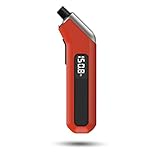
- Accurate, Dependable Readings: Factory‑calibrated to ±1 PSI, so you can confidently match your vehicle’s recommended PSI (check the door jamb sticker). Ideal for monthly checks and road trips — consistent results every time, cold or warm.
- Bright Backlit Display & Nozzle Light: The illuminated nozzle helps you find the valve stem in the dark, while the backlit LCD makes readings crystal clear in dim garages or at night. No more squinting or holding a flashlight.
- 4 Measurement Units, One Button: Quickly switch among PSI, Bar, Kgf/cm², and KPA with a single press. No complex settings — just press and cycle to your preferred unit. Perfect for drivers who need multiple scales.
- Broad Compatibility for Everyday Vehicles: 0–150 PSI covers cars, SUVs, motorcycles, and spare tires (often 60 PSI). Fits standard Schrader valves; just press on for a reading.
- Auto‑Off to Extend Battery Life: The gauge automatically powers down after 30 seconds of inactivity, so the included 2*AAA batteries last longer. Always ready for your monthly checks without surprise dead batteries.
Do not judge safety from the outside of the tire or from the center tread alone. The inner shoulder can be bald or exposing cords while the outward-facing tread still looks usable.
What do camber and toe have to do with inside tire wear?
Camber and toe describe different wheel angles, and either angle can produce abnormal wear in a different way.
| Alignment or wear factor | What it means | Typical clue | Usual diagnostic direction |
|---|---|---|---|
| Excessive negative camber | The top of the tire leans inward toward the vehicle when viewed from the front. | Smooth, concentrated wear on one inner shoulder; sometimes pulling or altered handling. | Measure camber against the vehicle specification and inspect for bent parts, worn mounts, ride-height problems, or impact damage if adjustment is unavailable. |
| Incorrect toe | The tires point inward or outward relative to each other when viewed from above. | Feathered, fuzzy, or sawtooth tread; wandering or a changed steering-wheel position. | Measure and adjust toe, then inspect tie rods and related components if toe cannot be set or will not remain in specification. |
| Worn or bent suspension | Loose, damaged, or displaced components allow wheel geometry to change while driving. | Clunks, looseness, vibration, uneven ride height, pulling, or recurring wear after alignment. | Perform a steering and suspension inspection before the final alignment. |
| Incorrect pressure or overload | Pressure changes the tire’s contact patch and loading. | Both shoulders commonly worn when underinflated or overloaded; center wear commonly associated with overinflation. | Check cold pressure against the door placard or owner’s manual, and account for the vehicle’s load. |
Excessive negative camber
Negative camber is not automatically a fault. Some vehicles are designed to operate with a modest amount of negative camber. The concern is camber outside the manufacturer’s intended range or a setting that produces unacceptable wear.
Excessive negative camber places more load on the inner shoulder, which can create smooth one-sided wear. Wear may be worse on one wheel, one axle, or one side of the vehicle. A proper alignment measurement shows whether the camber is within specification; a visual guess cannot establish the correct angle.
Incorrect toe
Toe describes whether the fronts of the tires point toward each other or away from each other when viewed from above. Toe-in points the fronts inward, while toe-out points them outward. Incorrect toe makes the tire scrub sideways slightly instead of rolling cleanly forward.
Toe-related wear often feels smooth when the tread is brushed in one direction and rough when brushed in the other. Feathering, fuzzy tread edges, wandering, an off-center steering wheel, or rapid wear after a curb or pothole impact strengthen the case for an alignment and steering-component inspection. As Les Schwab’s tire-wear guidance explains, a toe problem can cause excessive tire wear and stress other vehicle parts.
Rank #2
- PROCESS LEVEL ACCURACY: Each ETENWOLF’s digital tire pressure gauge is calibrated manually to ANSI B40.7 Grade 2A(plus-minus 1 PSI).Presta valve adapter not included, if used for bicycles, it must be purchased separately
- ACCURACY IN EXTREME PRESSURE RANGE: Whether tire pressure is below 12 PSI or above 140 PSI, ETENWOLF’s digital tire gauge is accurate as well
- ACCURACY IN EXTREME WEATHER: Built-in AI chip with thermal compensation inside, ETENWOLF’s tire gauge works normally even in extreme cold or hot weather(-4°F-130°F/-20°C-54°C)
- PRESSURE RANGE 3-200 PSI : ETENWOLF’s digital tire pressure gauge can measure pressure of all types of vehicles
- REPLACEABLE AAA BATTERIES: Batteries are easy to replace and helps to extend the tire pressure gauge’s life span, with LED light to illuminate dark areas for easy tire pressure reading
Can low tire pressure cause inner tire wear?
Low pressure can contribute to uneven wear, but low pressure alone more commonly wears both outer shoulders rather than creating one isolated bald inner edge. Overinflation more commonly concentrates wear in the center of the tread, so a single smooth inner shoulder should not automatically be blamed on pressure.
Pressure still matters because an incorrect contact patch can accelerate wear caused by camber, toe, suspension damage, loading, or road impacts. Check all four tires when cold using the vehicle manufacturer’s pressure on the driver-door placard or in the owner’s manual. The number molded on the tire sidewall is generally the tire’s maximum pressure, not the vehicle’s recommended operating pressure. NHTSA states: “The correct tire pressure for your tires is what the vehicle manufacturer has listed, NOT what is listed on the tire itself.” Read NHTSA’s TireWise tire-pressure guidance for the official distinction.
What’s actually slowing this PC down?
Pick the symptom - the matching free tool is one click away.
A digital tire pressure gauge makes it easy to check all four tires cold and compare the readings with the pressure on the driver-door placard. A gauge documents pressure; it does not repair an alignment or suspension fault.
Can a pothole or worn suspension part cause inside-edge wear?
Yes. A pothole or curb strike can bend or displace a steering or suspension component and change camber or toe. A vehicle can also develop changing geometry when a control-arm bushing, ball joint, tie rod, strut, spring, wheel bearing, or mounting point is worn.
Warning signs include clunks, looseness, vibration, uneven ride height, pulling, visible impact damage, cupping, or an alignment report that cannot bring an angle into specification. If the vehicle aligns correctly on the machine but the tire wear returns, repeated tire replacement is not the solution; the hardware needs further investigation.
Ask for a suspension inspection when inside wear is accompanied by play, impact history, noise, cupping, or recurring wear. A specific part should not be replaced solely from a photograph or one tread pattern; the component requires vehicle-specific diagnosis.
Do these 3 things before closing this tab:
1Clear out junk files and repair common Windows errors2Fix the driver behind crashes, sound loss and screen glitches3Repair Windows errors before they cause bigger problemsRank #3

- PRO ACCURACY - mechanic recommended, performance tested, & calibrated accurate to professional ANSI 2A standards - with dual pressure sensors certified to ±0.50% FS (0.50 PSI), offering reliable readings up to 100 PSI w/ precise readout resolution of 0.10 PSI - so you can now maintain your tires with a shop-grade mechanic trusted tool
- STRONG & RUGGED - feels solid in the hand & built to last from 100% solid brass & steel parts shielded by our shock-resistant gear-style protective guard to protect against drops & impact. Features ultra soft & strong 10" fully rotational, leak-proof HybridFlex air hose w/ 360 swivel angled air chuck that can be swapped out w/ any 1/4" NPT chuck
- ADVANCED ENGINEERING - all readings lock-on to the display until the "ON" button is pressed once to reset to zero. Features built-in air bleeder valve that bleeds pressure in real time without needing to reset the display - ideal for cars, trucks, motorcycles, bikes, RV & trailers, spare tires, and much more
- SMART DISPLAY - features high-resolution digital 2.5 inch LCD display screen w/ battery life indicator & bright LED backlight for high visibility in the dark. Gauge is programmed to auto shut-off after 150 seconds of inactivity to save battery (2x AAA batteries included)
- 100% Lifetime Warranty by JACO - serving the automotive industry for 35+ years. Enjoy longer-lasting tires, improved fuel economy, and superior vehicle performance & handling with properly inflated tires.
What does wheel imbalance or cupping look like?
Wheel imbalance more often causes vibration and patchy, scalloped, or cupped tread than a clean strip of inner-shoulder wear. Cupping can also result from worn suspension, alignment problems, incorrect pressure, or a tire-and-wheel assembly that needs balancing.
If the tread has alternating high and low spots, request a balance and suspension check in addition to an alignment. Continental’s tire-balancing guidance describes balancing as a separate service from correcting wheel alignment, so a balance should not be treated as a substitute for measuring camber and toe.
How can I tell what caused the uneven wear?
The pattern provides clues, but it does not prove which component has failed. Use the pattern to decide what to inspect next.
| Observed pattern | More likely contributors | What to do next |
|---|---|---|
| Smooth wear on one inner shoulder | Excessive negative camber or another geometry problem | Measure alignment angles and inspect suspension and mounting points. |
| Feathered or sawtooth tread | Incorrect toe, sometimes combined with camber or worn steering parts | Arrange an alignment measurement and steering inspection. |
| Both outer shoulders worn | Underinflation or overloading is a common contributor | Check cold pressure and the vehicle’s load requirements; inspect for other faults if wear persists. |
| Center of tread worn | Overinflation is a common contributor | Compare cold pressure with the door-placard specification. |
| Alternating high and low spots or scallops | Imbalance, worn suspension, alignment, or pressure problems | Request balancing plus a suspension and alignment evaluation. |
What should I do if the inside edge of my tire is bald?
Follow this sequence rather than simply installing another tire.
- Inspect the entire inner shoulder. Turn the steering wheel as needed for access, or have the vehicle raised safely. Look for exposed cords, bubbles, cuts, severe cracking, or a very thin tread edge.
- Stop driving on a visibly unsafe tire. Exposed cords, a damaged sidewall, or a severely worn shoulder can require prompt replacement and professional assessment. Do not assume the tire is safe because the center tread looks acceptable.
- Check all four tire pressures cold. Use the vehicle manufacturer’s specification, record the readings, and do not rely only on the TPMS warning light.
- Measure tread depth across each tire. Compare the inner shoulder, center, and outer shoulder. A tread-depth gauge can document the difference, especially when the outward-facing portion looks better than the vehicle-facing edge.
- Check for symptoms and recent events. Note pulling, an off-center steering wheel, vibration, wandering, clunks, uneven ride height, or a recent pothole or curb strike.
- Arrange a professional alignment and suspension inspection. Ask the shop for the measured alignment angles and whether each angle meets the vehicle manufacturer’s specifications. A wheel alignment service is appropriate after the shop confirms that the adjustable geometry can be set correctly.
- Repair the root cause before final alignment. Worn or bent parts must be corrected before an alignment can remain accurate.
- Replace tires when the worn area is unsafe. Alignment prevents additional abnormal wear but cannot put worn rubber back. If only one tire is replaced, ask about tread-depth matching, axle placement, and the vehicle manufacturer’s requirements.
- Rotate only when appropriate. Follow the owner’s manual and tire-size restrictions. Rotation can distribute future wear where permitted, but rotation cannot correct bad camber, incorrect toe, or damaged suspension.
How much tread is too little on the inside edge?
NHTSA’s current TireWise consumer guidance identifies 2/32 inch as the tread-replacement threshold, and federal treadwear indicators are set at that depth. The relevant measurement is the most-worn inner shoulder, not an unworn center section. Local inspection rules or the tire manufacturer may require replacement sooner.
According to the National Highway Traffic Safety Administration’s current TireWise guidance, proper tire maintenance matters to safety. NHTSA reports 511 deaths in tire-related crashes in 2024. NHTSA’s current guidance also says proper inflation can provide up to 11 cents per gallon in fuel savings and up to 4,700 additional miles of average tire life; those figures do not mean pressure correction can make an already bald inner shoulder safe.
Rank #4

- Enhanced Visibility in Low Light: Features a green backlit LCD screen and integrated flashlight, allowing for clear reading of tire pressure even in dark or dimly light conditions.
- Durable & Heavy-Duty Design: Constructed from robust stainless steel, specially engineered for RV and truck use. Helps maintain proper tire pressure to reduce wear and extend tire lifespan.
- Nozzle easily forms a seal with the valve stem giving quick and accurate readings in 0.1 increments; 4 settings with longer range: 0-230 PSI / 0-16 Bar / 0-16 Kg/cm² / 0-1585 Kpa
- Wide Pressure Range & Easy Operation: Covers 0-230 PSI / 0-16 Bar / 0-16 Kg/cm² / 0-1585 Kpa. Simply press the “ON/UNIT/OFF” button to turn on, select your unit, and it auto-shuts off after 30-40 seconds to conserve battery.
- User-Friendly & Versatile: Ergonomic non-slip texture ensures a firm grip. Includes batteries and comes with a 1-year warranty. Suitable for cars, trucks, motorcycles, bicycles, and more.
Will an alignment fix inside tire wear?
An alignment can correct adjustable camber, toe, or related geometry and prevent further abnormal wear, but an alignment cannot restore tread that has already disappeared. A tire with an unsafe inner shoulder may still need replacement after the vehicle is aligned.
Alignment also cannot compensate for every mechanical problem. If an angle cannot be adjusted into specification, or if the angle changes again after service, the shop should inspect for bent or worn suspension and steering parts, damaged mounts, incorrect ride height, or impact damage. NHTSA describes wheel alignment as a service that “maximizes the life of your tires” and helps prevent the vehicle from veering on a straight, level road; that benefit depends on correcting the underlying geometry and replacing unsafe tires.
Free tools Windows power users keep installed
One-click scans. No signup required.
DIY check or professional service?
A home inspection is useful for documenting pressure and tread symptoms, but a professional service is needed to measure wheel angles and find mechanical looseness or damage.
| Option | What it can identify | What it can fix | When it is appropriate |
|---|---|---|---|
| Cold-pressure check | Underinflation, overinflation, or pressure differences | Correct pressure only | Routine monitoring and the first check for any uneven wear. |
| Tread-depth measurement | How much wear exists at the inner, center, and outer tread | Nothing; it documents safety condition | Whenever the tire looks acceptable from one side but may be worn on the inner shoulder. |
| Rotation | Usually does not diagnose the root cause | May redistribute future wear if the vehicle and tire sizes permit | Only according to the owner’s manual; not a remedy for geometry problems. |
| Wheel alignment | Camber, toe, and other alignment angles | Adjustable geometry | One-sided wear, feathering, pulling, an off-center wheel, or post-impact symptoms. |
| Suspension and steering inspection | Looseness, wear, bent parts, damaged mounts, or ride-height issues | The mechanical cause when parts can be repaired or replaced | Clunks, play, vibration, impact history, recurring wear, or an alignment that will not hold. |
| Tire replacement | Whether the existing tire is beyond safe service | Removes the unsafe tire | Exposed cords, severe shoulder damage, or tread at or below the applicable replacement threshold. |
How do I stop my tires from wearing unevenly?
Maintain cold pressure at the vehicle manufacturer’s specification, inspect tread across the full width, rotate tires only as the owner’s manual permits, and respond promptly to pulling, vibration, feathering, clunks, and pothole damage. For one-sided inner wear, the durable solution is to measure alignment, repair worn or bent components, complete the required alignment, and replace any tire whose worn area is unsafe.
A TPMS warning light can alert you to a pressure problem, but TPMS is not a replacement for regular manual pressure checks or tread inspection. A tire can develop dangerous inner-edge wear without triggering a pressure warning.
Frequently Asked Questions
Why are my tires wearing on the inside?
Inside-edge wear is often associated with excessive negative camber or incorrect toe, but it can also result from worn or bent suspension parts, impact damage, pressure problems, overloading, or a combination of faults. The wear pattern is a clue, not a complete diagnosis.
Best Value

- Digital Tire Pressure Gauge 2 Pack, Industrial Tire Gauge 3-200 PSI, Calibrated to ANSI B40.7 Grade 2A(plus-minus 0.5%), Air Pressure Gauge with Replaceable AAA Batteries
- ACCURACY IN EXTREME PRESSURE RANGE: Whether tire pressure is below 12 PSI or above 140 PSI, ETENWOLF’s digital tire gauge is accurate as well
- ACCURACY IN EXTREME WEATHER: Built-in AI chip with thermal compensation inside, ETENWOLF’s tire gauge works normally even in extreme cold or hot weather(-4°F-130°F/-20°C-54°C)
- PRESSURE RANGE 3-200 PSI : ETENWOLF’s digital tire pressure gauge can measure pressure of all types of vehicles
- REPLACEABLE AAA BATTERIES: Batteries are easy to replace and helps to extend the tire pressure gauge’s life span, with LED light to illuminate dark areas for easy tire pressure reading
Will an alignment fix inside tire wear?
An alignment can correct adjustable wheel geometry and stop further abnormal wear, but an alignment cannot restore tread that has already worn away. A tire with an unsafe inner shoulder may still require replacement after the alignment.
Can low tire pressure cause inner tire wear?
Low pressure more commonly wears both outer shoulders, while overinflation more commonly wears the center. A single bald inner shoulder is more suggestive of camber, toe, or another geometry problem, although incorrect pressure can worsen the wear.
Is it safe to drive with the inside of my tire worn out?
Measure the inner shoulder, not just the center tread. NHTSA identifies 2/32 inch as a tread-replacement threshold, but exposed cords, severe shoulder damage, bubbles, or a severely worn edge require prompt professional assessment regardless of the center reading.
Do I need new tires or just an alignment?
You need new tires when the inner shoulder is unsafe or at the applicable tread limit, and you need alignment or suspension service to correct the cause. Replacing a tire without repairing abnormal geometry can lead to repeat wear.
Recommended Free Tools
The Bottom Line
Inside-edge tire wear most often involves negative camber, incorrect toe, or a suspension problem, but the wear pattern alone cannot prove the diagnosis. Check cold pressure and the entire inner shoulder, stop driving on exposed cords or a severely worn tire, then have the vehicle’s suspension and alignment measured. Repair the cause and replace unsafe rubber; an alignment prevents future wear but cannot restore a bald tire.
Quick Recap
Product prices and availability are accurate as of the date/time indicated and are subject to change. Any price and availability information displayed on Amazon at the time of purchase will apply.




