Seven small cars shaped the 1980s in different ways: the Toyota Corolla, Honda Civic, Honda City, Volkswagen Golf II, Ford Fiesta, Fiat Uno, and Peugeot 205. Each one stands for a different kind of influence, from sheer sales volume to packaging, fuel-saving intent, and the spread of performance variants. “Defined” here is an editorial judgment, not a measured ranking, and the sources behind this list are mostly manufacturer histories, so regional coverage is uneven.
How the seven were chosen
The list uses five lenses, and no single one decides the order:
- Production prominence. Did the model sell or build in large numbers in its home market?
- Layout and drivetrain change. Did the car move the small-car formula forward, for example by shifting the drive wheels?
- Economy intent. Was fuel saving the stated purpose of the design?
- Packaging. Did the car rethink how much room a small body could hold?
- Manufacturing and performance spread. Did the model introduce production methods or a performance variant that other makers followed?
Because these lenses pull in different directions, the sequence below is a reading order, not a leaderboard. Readers should also keep in mind that the seven are not the only small cars that mattered in the decade. Other models from the same makers, and cars from markets outside Japan and Europe, are absent here because the available material does not cover them evenly.
The seven cars at a glance
| Model | Dated generation or launch | Layout or drivetrain | Why it belongs on the list |
|---|---|---|---|
| Toyota Corolla | Fifth generation, 1983–1987 (Toyota) | Family sedan moved from front-engine/rear-wheel drive to front-engine/front-wheel drive; coupe kept rear-wheel drive (Toyota) | Highest domestic production of any model in 1980 (Toyota, 1981 report) |
| Honda Civic | 1980 Japanese-market sedan (Honda) | Not stated (Honda 1980 Japanese-market sheet) | CVCC-II 1,488 cc engine offered with manual or Honda-matic transmission |
| Honda City | Development began April 1978 (Honda) | Not stated (Honda City history) | Tall-boy packaging aimed at a large cabin in a light vehicle |
| Volkswagen Golf II | Second generation, 1983–1991 (Volkswagen) | Not stated (Volkswagen history) | Platform flexibility; 1987 electric-hybrid concept as an experiment |
| Ford Fiesta | Mk II from 1983; Mk III from 1989 (Ford) | Not stated (Ford chronology) | Longer, more aerodynamic Mk II with improved fuel efficiency and a range of engines |
| Fiat Uno | International press debut 19 January 1983 (Stellantis Heritage) | Not stated (Stellantis Heritage) | Functional design and production automation; Uno Turbo i.e. as a performance variant |
| Peugeot 205 | Launch 24 February 1983 (Peugeot) | Not stated (Peugeot) | Modernised the brand; three-door and 205 GTI 1.6 recorded in 1984 |
Toyota Corolla: the volume leader that changed its drive layout
Toyota places the fifth-generation Corolla between 1983 and 1987. In that generation the family sedan switched from a front-engine, rear-wheel-drive layout to front-engine, front-wheel drive, while the coupe kept rear-wheel drive. That split is the clearest drivetrain story on this list: the mainstream sedan followed the packaging logic of the small front-drive car, and a sporting body style stayed traditional.
#1 Best Overall

- Pullback Action: Experience realistic racing with the pullback action feature.
- Opening Doors: Explore the intricate interior details with the opening door feature.
- 1:38 Scale: Enjoy a detailed 1:38 scale die-cast model (approx. 5 inches long).
- Authentic Design: Modeled after the iconic 1967 Ford Shelby Mustang GT500.
- Display Piece: A must-have collectible for car enthusiasts and model collectors.
The strongest volume figure in the material is from Toyota’s 1981 report. It states that the Corolla had the highest domestic production total of any car model in 1980, at 771,720 units in Japan. That figure is Toyota Motor Sales Company statistics as reported by Toyota Motor Corporation in 1981. It describes domestic output in one year, not worldwide sales over the decade, and it should be read that way.
Toyota’s 1979 press release set the tone for the model’s public positioning, describing the aim as “a car with outstanding overall performance; a popular luxury car to lead the 1980s.” The phrase is company language from Toyota’s engineering side, not a quote from a named executive.
Honda Civic: the CVCC-II engine and two transmissions
Honda’s Japanese-market sheet for the 1980 Civic sedan lists a 1,488 cc CVCC-II engine, offered with either a manual gearbox or Honda-matic automatic. It also reports fuel consumption under Japanese 10-mode and 60 km/h test methods. Those are period figures measured under Japanese procedures. They are not comparable with present-day ratings, and they should not be set beside US EPA or European figures.
Rank #2

- 【4 Pcs Diecast Cars Set】Four different diecast car models have different types of bodies and colors, including sports cars/trucks/sedans/racing cars, all measuring 4.9 × 2 × 1.4 inches. The standard 1:36 ratio, open doors, and bright color combinations faithfully capture the eternal aesthetics while reflecting vibrant the vitality of racing sports!
- 【Race Real Experience】Our 1:36 alloy model car adopts a double door mode, allowing kids to better observe the internal structural details of the race car toys, and incorporates high-quality elastic tires,these diecast cars high-performance wheels provide enhanced traction, allowing smooth operation across multiple surfaces including hard floors and textured fabrics.
- 【Double Packaging Box Design】There are 4 independent mini boxes in the box for easy storage and sharing. All boxes are neatly placed in a decorative gift collection box, which is perfect for giving a complete set of gifts or dividing into smaller packages for multiple children.
- 【Pull Back Cars Toy】Push car without batteries!Our car models can withstand wear and tear during daily play, and the surface paint can last for a long time without fading or peeling off Featuring a classic sports car exterior design and die cast cars that have been tested for shock absorption and pressure resistance.It is very durable. Accompany kids for long time activities.
- 【Ideal Gift For Kids 3 4 5 6 7 Year】Our 4pack car toys perfectly combines the joyful interaction of multiplayer games with the immersive experience of single player games. Not only does it have a precise and beautiful gift box, but it is also a birthday gift and Christmas gifts for son and grandson.
The Civic earns its place less for a single number than for showing how an economy car could offer engine and gearbox choice in one body. Readers who want to compare fuel economy across these seven cars will not find a usable shared statistic in the sources, and this article does not offer one.
Recommended Free Tools
Honda City: packaging as the design brief
Honda’s account of the City says development began in April 1978 under a brief to “produce the ultimate fuel-economy car for the 1980s.” The phrase is Honda’s own development language, with no named speaker attached. The result was an unconventional light vehicle with a tall-boy shape, designed to give passengers a large cabin inside a small footprint.
That approach matters because it inverted the usual trade. Instead of shrinking the cabin to save weight and fuel, the City pushed height and room upward. It is the best example on this list of a car where packaging, not just engine size, carried the economy argument.
Rank #3
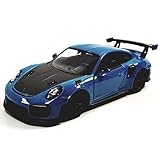
- Doors Open
- Pullback Action
- Die Cast Metal Body
- PULL BACK ACTION WITH FREE ROLLING WHEELS
Volkswagen Golf II: a flexible platform and a concept that never reached showrooms
Volkswagen dates the second-generation Golf to 1983–1991. Its history also records a 1987 electric-hybrid concept and documents how the Golf family expanded during the decade. The Golf matters for the platform: one compact hatchback architecture supported a growing family of body styles and engines.
The concept should be kept separate from the production cars. An experimental electric-hybrid vehicle shows the direction Volkswagen was exploring, but it is not one of the mass-market Golfs that drivers actually bought, and it should not be read as a proof of how common hybrids were in the decade.
Outdated Drivers Are Slowing You Down
One free scan finds every outdated or missing driver and matches the right update for your exact hardware.Free scan · exact hardware matchPC Slower Than It Used to Be?
A free scan shows the junk files, broken settings and background clutter dragging Windows down - then fixes them in one click.Free scan · Windows 10 & 11Ford Fiesta: a European small car that evolved mid-decade
Ford’s chronology describes the 1983 Mk II as longer and more aerodynamic than its predecessor, with improved fuel efficiency. The range included 1.0-litre and 1.1-litre versions, a 1.3-litre option with a fifth gear, and a 1.6-litre diesel. Ford dates the Mk III transition to 1989.
Rank #4
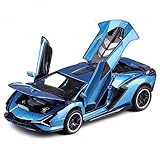
- Material:This model car is made of zinc alloy body,rubber tires and plastic parts.With Detailed interior and exterior trim, It is very sturdy.Car gets multiple processing, grinding sharp corners to prevent cuts child.
- Sound and light:Car doors,hood and trunk can be opened, accompanied with lights&sounds.Press the car body and open the doors can trigger the lights and real sounds.
- Pull back Cars:Place the car on the ground,just pull it back ,the model car will drive forward.Your kids can use it to play a chasing game with their friends.
- Size:Lamborghini Sian FKP37 is 1 /32 scale,Approx.6.3 * 2.7 * 1.6 inches.The size is similar with adult hands.It is very suitable for little boys and girls to grip.
- Gift:Fine workmanship,exquisite box with a display base,ideal birthday gift and holiday gift for kids boys and men who like collect model car.
These specifications describe the Fiesta as Ford presented it in its own chronology. Engine lists and equipment varied by market and year, so the figures above should not be assumed to apply to every country where the car was sold.
Independent reader supportYour contribution helps us test, update, and keep practical guides available for everyone.Fiat Uno: functional design meets production automation
Stellantis Heritage dates the Uno’s international press debut to 19 January 1983. Its heritage article links the car to functional design and to automation in production, and it describes a large development effort. The company’s account gives the investment figure in Italian lire. That is a pre-euro, historical amount, and it is best read as a company statement about scale rather than as a figure to convert or compare.
The Uno also shows the performance end of the class. The Uno Turbo i.e. was a sporting variant. It belongs to the story of the range, but it is not the base economy car, and the article treats it that way.
Best Value
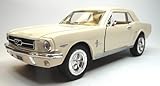
- Authentic 1:36 Scale: Meticulously crafted 1964 1/2 Ford Mustang model car with impressive 5-inch length.
- Realistic Details: Die-cast metal body with opening doors and eye-catching blue finish.
- Interactive Play: Engaging pull-back action for thrilling motion across smooth surfaces.
- Collectible Quality: Ideal for model car enthusiasts and collectors seeking miniature automotive replicas.
- Brand: KiNSMART, a trusted name in die-cast vehicle models and toys.
Peugeot 205: modernising the brand and the GTI
Peugeot dates the 205’s launch to 24 February 1983 and credits it with modernising the brand, linking it also to the company’s motorsport history. The company records the three-door body and the 205 GTI 1.6 arriving in 1984.
The 205 shows the breadth of a small-car line. Ordinary city-car versions sat alongside a sporting GTI, and the GTI’s reputation grew from that single model rather than from the mainstream versions. Readers should treat the GTI as a distinct performance model when they weigh the 205’s economy credentials.
What the seven add up to
Taken together, the list reads as a set of different routes through the same problem. The Corolla showed how volume and a drivetrain change could move a mainstream car. The Civic and City showed economy as an engineering and packaging brief. The Golf and Fiesta showed platform and engine range becoming a family. The Uno and 205 showed how a small car could carry production technology and a performance identity at the same time. None of the seven is the only answer, and the sources cannot establish a single global ranking. What they do support is a clear picture of what the small economy car was asked to do in the 1980s, and how seven manufacturers answered that question differently.
Where a reader wants to verify a launch date, generation range or production figure, the most reliable starting points are the manufacturers’ own heritage and press archives named above: Toyota’s 1979 press release and 1981 report, Honda’s 1980 Japanese-market sheet and City history, Volkswagen’s Golf history, Ford’s Fiesta chronology, Stellantis Heritage’s Uno article, and Peugeot’s company history for the 205.
What’s actually slowing this PC down?
Pick the symptom - the matching free tool is one click away.
Quick Recap
“
Product prices and availability are accurate as of the date/time indicated and are subject to change. Any price and availability information displayed on Amazon at the time of purchase will apply.




