Recommended Free Tools
Toyota’s 745-mile solid-state battery is not a production Toyota or a certified 745-mile range rating. The figure is a rounded conversion of a reported 1,200-kilometer development target linked to Toyota’s future all-solid-state BEV program, which Toyota said it was striving to commercialize in 2027–2028; final model, EPA range, price, and independent test results remain unknown.
The real story is more substantial—and more conditional—than the headline suggests. Toyota has built and tested an all-solid-state prototype, published range and charging targets, and formed production-focused partnerships with Idemitsu Kosan and Sumitomo Metal Mining. Toyota’s own disclosures also show that durability and manufacturing remain unsolved parts of the commercial challenge.
As an Amazon Associate I earn from qualifying purchases.
Key takeaways
- Toyota’s 745-mile solid-state battery is a development ambition, not a currently available Toyota or a certified 745-mile vehicle rating.
- The 745-mile headline comes from a reported 1,200-kilometer target, which converts to approximately 745.6 miles; Toyota has not published an EPA rating for a production vehicle using the battery.
- Toyota’s June 2023 roadmap targeted commercialization in 2027–2028, a 20% cruising-range improvement over its performance-version square battery, and a 10%-to-80% charge in 10 minutes or less.
- Toyota demonstrated an all-solid-state prototype in 2021, but the company identified short service life as a problem requiring further development.
- Durability, solid-electrolyte cracking, manufacturing yield, cost, supply-chain readiness, and final vehicle integration remain the critical tests between Toyota’s roadmap and a showroom car.
Is Toyota really making a 745-mile solid-state battery?
Yes, Toyota is developing an all-solid-state battery program, but “Toyota’s 745-mile solid-state battery” describes a projected target rather than a finished consumer product. The decisive distinction is between a company development target and a certified range figure earned by a production vehicle.
Free tools Windows power users keep installed
One-click scans. No signup required.
The headline traces back to a 1,200-kilometer range figure associated with Toyota’s solid-state battery work in 2023. According to Toyota’s 2023 battery roadmap and its contemporaneous technical-workshop coverage, 1,200 kilometers converts to approximately 745.6 miles, which is the basis for the commonly repeated 745-mile figure. Toyota did not identify the figure as an EPA rating, a final WLTP rating, or the result of an independent 1,200-kilometer road test.
#1 Best Overall

- High density negative paste, improves performance and increases battery life
- Enhanced life alloy or Silver Calcium stamped alloy increases cycle life and improves performance
- Calcium lead positive grid, maximizes conductivity and allows for low resistance
- Robust envelope separator with puncture resistant back, allows for increased acid circulation and prevents shorts. Improved acid circulation, helps the battery to remain cool, and extend battery life
- Vent cap design that resists acid leakage
Toyota’s official roadmap described the all-solid-state battery as a future battery track and said the company was “striving for commercialization in 2027-2028.” The roadmap therefore supports the existence of a serious engineering program and a stated performance ambition; it does not support describing a 745-mile Toyota as already sold, independently validated, or ready for purchase. Read Toyota’s June 13, 2023 battery roadmap for the company’s own wording and comparison baseline.
What did Toyota actually announce?
Toyota’s June 13, 2023 announcement laid out four battery development tracks, with the all-solid-state BEV battery presented as the fourth and most ambitious track. Toyota said it had found a technological breakthrough related to the long-standing durability challenge, was developing a mass-production method, and was aiming for commercialization in 2027–2028.
Toyota’s stated all-solid-state target was a 20% improvement in cruising range compared with the performance version of its square battery. The comparison included vehicle-efficiency improvements such as aerodynamics and weight reduction, so the 20% figure should not be read as a simple cell-level energy-density increase. Toyota also described a higher specification under research with a 50% range-improvement target against that same performance-version battery.
The same roadmap stated that Toyota was aiming for a charge time of 10 minutes or less from 10% to 80% state of charge. That is a charging-window target, not a promise that a driver can charge from 0% to 100% in ten minutes.
| Toyota figure or statement | What the statement means | What it does not establish |
|---|---|---|
| 1,200 kilometers, reported in 2023-era coverage | A projected or reported range figure associated with the future all-solid-state program; approximately 745.6 miles | A final EPA rating, a final WLTP rating, or an independently verified 1,200-kilometer drive |
| 20% range improvement, Toyota, June 2023 | Targeted cruising-range improvement versus Toyota’s performance-version square battery, including vehicle-efficiency improvements | A confirmed percentage improvement for a named production model |
| 50% range improvement, Toyota, June 2023 | Higher-level specification under research versus the performance-version battery | A committed launch specification or a confirmed 745-mile vehicle |
| 10 minutes or less, Toyota, June 2023 | Target for charging from 10% to 80% state of charge | A full 0%-to-100% charge time, specified charging power, or universal performance in every temperature |
| 2027–2028, Toyota, 2023 | Stated commercialization or production objective for BEVs using all-solid-state batteries | A guaranteed delivery date, U.S. launch date, or retail availability |
When is Toyota’s solid-state battery coming out?
Toyota’s stated target is to begin producing solid-state batteries for battery-electric vehicles between 2027 and 2028, but the target is not a guaranteed showroom launch date. Toyota and Idemitsu Kosan repeated that future-production objective in their October 12, 2023 cooperation announcement.
“First, between 2027 and 2028, we will start to produce solid-state batteries for use in battery electric vehicles.”
— Koji Sato, President and CEO, Toyota Motor Corporation, in the October 12, 2023 Toyota–Idemitsu announcement
Special offer. See more information about Outbyte and uninstall instructions. Please review EULA and Privacy policy.Rank #2
 Mighty Max Battery MM-H6 Start and Stop Car BCI Group Size 48 12V 70 AH, 120RC, 760 CCA Rechargeable AGM Car Battery
- Fast Starting Power: This 12V 70Ah 760 CCA delivers strong, steady starts is ready for any weather in any season.
- Made to Last: With its 120-minute Reserve Capacity supports longer run times and a longer overall battery lifespan.
- All Power, No Mess AGM Design: Sealed and spill-proof, the MM-H6 is built with high discharge output and deep discharge recovery to keep power steady when it counts.
- Strength That Starts on the Inside: The rugged construction resists shock, vibration, and harsh conditions, delivering reliable performance across a wide range of temperatures and tough environments.
- Tested Tough & Certified Safe: Mighty Max batteries are built in an ISO-certified facility and meet CE standards for quality, safety, and reliability
The wording matters. “Will start to produce” describes a future production objective, while the surrounding development work still includes pilot facilities, mass-production verification, materials quality, cost, lead times, supply-chain establishment, and manufacturing processes. The cited public evidence does not name the first production vehicle or establish when customers in the United States or another specific market will be able to order one.
| Date | What Toyota disclosed | What the disclosure proves |
|---|---|---|
| September 7, 2021 | Toyota built and tested a vehicle equipped with all-solid-state batteries, later obtained license-plate registration, and conducted test drives | Vehicle-level prototype activity, not a final range or retail product |
| June 13, 2023 | Toyota published its battery roadmap, including the 2027–2028 commercialization target, 20% range target, 50% research target, and 10%-to-80% charging target | A formal company roadmap and performance objectives |
| October 12, 2023 | Toyota and Idemitsu announced cooperation toward mass production of all-solid-state BEV batteries | A named industrial partnership focused on materials and production readiness |
| February 26, 2024 | Toyota described development-line work involving high-speed, high-precision battery-layer stacking | Manufacturing-process development, not proof of high-volume retail production |
| June 18, 2025 | Toyota filed its Form 20-F for the fiscal year ended March 31, 2025 | More current corporate disclosure context, but not a final model, EPA range, price, warranty, or U.S. release announcement |
Toyota’s fiscal 2025 Form 20-F should be treated as the more current corporate reference, but a current filing does not turn an earlier roadmap target into a certified consumer specification.
Has Toyota actually driven a solid-state vehicle?
Yes. Toyota’s September 7, 2021 battery briefing said the company had built an all-solid-state-battery vehicle, run it on a test course, collected driving data, improved the vehicle, obtained license-plate registration, and conducted test drives.
The prototype work is important because it shows that Toyota moved beyond laboratory cells and installed the technology in a drivable vehicle. Toyota also explicitly identified short service life as an issue requiring continued development. Prototype operation therefore supports Toyota’s claim that it has vehicle-integration experience, but it does not validate the later 1,200-kilometer target.
These evidence categories should not be collapsed into one headline:
| Evidence category | Toyota evidence | Safe conclusion |
|---|---|---|
| Laboratory or component result | Materials and cathode-development work with industrial partners | Specific battery components are being engineered; complete vehicle performance remains unproven |
| Company engineering target | 1,200 kilometers, 20% or 50% range improvement, and 10%-to-80% charging in 10 minutes or less | Toyota has published objectives; the objectives are not certification results |
| Prototype vehicle | Registered and test-driven all-solid-state vehicle disclosed in 2021 | Toyota has demonstrated vehicle-level testing; the prototype is not evidence of a retail specification |
| Certified production vehicle | No cited Toyota source provides a final model, EPA range, or independent 745-mile test | The 745-mile figure should not be presented as a certified showroom achievement |
The distinction is especially important for range claims. A cell result, a projected pack result, a company target, a prototype drive, a laboratory test, and an EPA-certified vehicle rating answer different questions. Toyota’s published evidence reaches the prototype and roadmap stages, not the final certified-production stage for a 745-mile car.
What is the problem with Toyota solid-state batteries?
The central problem is durability: repeated charging and discharging can cause cracks or loss of contact inside a solid-electrolyte cell, degrading performance over time. Toyota’s own technical coverage identifies repeated expansion and contraction of solid electrolytes, possible cracking, and loss of ionic contact as major challenges.
Rank #3

- ✅Batter dimensions: 12.4" L x 6.89" W x 7.48" H, Terminal: Tapered terminal (Left negative (-), Right positive (+)). ✅Please ensure to verify the dimensions and terminal position before making a purchase to guarantee compatibility with your vehicle to avoid any fitment issues.
- 140RC rating: Provides reliable performance and long service life, Up to 2 times the cycle life of conventional batteries. Nominal Voltage: 12V, Capacity: 80 Ah, CCA: 850A, Self Discharge: <8% after 90 days storage, Operating Temperature Range: -22°F~158°F, Acceptable Charging Current: 0~24 A, Charging Voltage: 14.4~15.0 V, Terminal:
- 80AH capacity: Delivers consistent power over time, Cycles more, and recharges faster than conventional batteries.
- 850 CCA: Ensures quick and reliable starting power.Delivers superior starting power in cold weather, and resists internal corrosion from heat.
- Advanced technology: Specially designed for vehicles with start-stop technology and accessories that demand greater power, Whether you drive a car, truck, or SUV, this 140RC 80AH 850CCA automotive start-stop battery is the perfect choice for reliability.
Solid-state batteries replace the liquid electrolyte used in conventional lithium-ion cells with a solid electrolyte. That architecture is attractive because it may support faster ion movement, higher power, greater energy density, shorter charging times, and potentially improved stability at high temperatures and voltages. Those benefits remain potential advantages until the cells can maintain them through the service life, charging conditions, and production tolerances expected in a real vehicle.
Windows Errors? Fix Them Before They Spread
Repair common Windows errors and clear accumulated junk for a smoother, more stable PC - no reinstall needed.Free scan · no reinstallCrashes, No Sound, or Screen Glitches?
Random freezes, missing sound and display glitches usually trace back to one bad driver. Find and replace yours safely.Free scan · under a minuteToyota and Idemitsu say they are working with sulfide solid electrolytes and have developed a flexible, adhesive, crack-resistant material. Their cooperation covers more than chemistry: the companies are also addressing pilot-facility production, quality, cost, lead times, and a stable supply chain. Toyota’s explanation of the technology and its durability challenge appears in Toyota Times’ 2023 technical-workshop coverage.
How close is Toyota to mass-producing solid-state batteries?
Toyota is beyond basic concept work but has not publicly demonstrated the complete, repeatable, high-volume production system required for a retail battery. The company’s disclosures show parallel work on electrolyte materials, cathodes, pilot-scale production, supply chains, layer stacking, cost, quality, and manufacturing yield.
Toyota’s manufacturing disclosures describe a development line focused on high-speed, high-precision stacking of battery layers without damaging the materials. Layer stacking is a production-engineering challenge because a cell can meet a laboratory specification yet fail to become commercially viable if the manufacturing process is too slow, inconsistent, expensive, or damaging to the materials.
Idemitsu’s role is the solid electrolyte. Toyota and Idemitsu describe a phased path involving material development, a large pilot facility, mass-production verification, and later consideration of full-scale production. Sumitomo Metal Mining is working with Toyota on cathode materials, including a highly durable cathode material intended to reduce degradation during repeated charging and discharging.
Quick wins for a faster PC:
Scan for outdated or missing drivers - takes under a minuteDriver Scan →Clear out junk files and repair common Windows errorsFree Scan →| Company | Area of work | Why it matters |
|---|---|---|
| Toyota Motor Corporation | Battery development, vehicle integration, manufacturing methods, and BEV commercialization | The battery must work as part of a complete vehicle and be produced consistently at automotive scale |
| Idemitsu Kosan | Sulfide solid-electrolyte materials, pilot-scale production, quality, cost, lead times, and supply chain | A durable electrolyte and dependable material supply are essential to production readiness |
| Sumitomo Metal Mining | Cathode materials intended to improve durability during repeated charge and discharge | Cathode degradation is part of the overall service-life problem, not a separate issue that the electrolyte alone solves |
Toyota’s 2024 manufacturing-technology disclosure explains the development-line work, while the Toyota–Sumitomo Metal Mining announcement describes the cathode-material collaboration. Together, those disclosures show industrialization in progress rather than a completed mass-production launch.
Will Toyota’s solid-state battery charge in 10 minutes?
Toyota is targeting a 10-minute-or-less charge from 10% to 80% state of charge, but the company has not established that a retail Toyota will universally achieve that result under every charging condition.
Rank #4

- ✅ Battery dimensions: 9.37" L x 5.08" W x 8.78" H, Terminal: Tapered terminal (Left negative (-), Right positive (+)). ✅ Please ensure to verify the dimensions and terminal position before making a purchase to guarantee compatibility with your vehicle to avoid any fitment issues.
- ✅ With a 45Ah capacity and 450 cold cranking amps (CCA). weize group 51R car battery provides reliable performance and long service life, Up to 2 times the cycle life of conventional batteries. If your car's original battery is an AGM type, you must continue using an AGM battery, as your car will not accept a "downgrade" to a flooded battery. Nominal Voltage: 12V. Charging Voltage: 14.5~15.0V. Acceptable Charging Current: 0~13A. Operating Temperature Range: -22°F~158°F
- ✅ Heat / Cold Resistance: The materials used in the construction of AGM batteries (such as glass fiber mats and specialized separators) have better heat resistance. This allows AGM batteries to maintain their performance and capacity even in the hottest climates, They are also more resistant to extreme temperatures, making them ideal for hot or cold regions.
- ✅ Low Self-Discharge: AGM car batteries have lower self-discharge rates compared to flooded batteries. Self-discharge refers to the loss of capacity that batteries experience over time when not in use. In hot climates, when the battery may need to be stored for extended periods or not frequently used, AGM batteries can better maintain charge, providing higher voltage output and easier engine start-up in any climate.
- ✅ Enhanced Safety: weize AGM batteries have a lower risk of acid leaks and spills compared to flooded batteries. This is because the acid is absorbed and held within the glass fiber mats, reducing the risk of corrosion or damage to surrounding components,this makes AGM batteries more durable and long-lasting, is also two to three times longer than flooded batteries. AGM batteries also have a lower risk of explosion and are safer to handle, making them ideal for high-performance vehicles.
“We are looking at a 20% improvement in cruising range compared to the performance version of the square battery shown in 1., while costs are under scrutiny, aiming for a quick charge time of 10 minutes or less (SOC=10-80%).”
— Toyota Motor Corporation, June 13, 2023, in the official battery-roadmap release
What’s actually slowing this PC down?
Pick the symptom - the matching free tool is one click away.
Special offer. See more information about Outbyte and uninstall instructions. Please review EULA and Privacy policy.
Three qualifiers are easy to lose in the headline:
- 10% to 80%: Toyota specified a partial charging window, not a 0%-to-100% session.
- Target: Toyota said it was aiming for the result; the statement was not a certification test.
- Missing conditions: The cited announcement does not provide a final charging-power figure, temperature range, battery size, or production-vehicle test protocol.
Fast charging also has to be compatible with long service life. Toyota’s durability work matters here because repeated charging and discharging is part of the cracking and contact-loss problem the company is trying to solve. A 10-minute target is commercially meaningful only if the battery can repeat the process without unacceptable degradation.
What car will get Toyota’s solid-state battery?
Toyota has not named a final production model for the all-solid-state battery in the cited evidence. Toyota has discussed BEV use and a 2027–2028 production objective, but the public materials do not establish the vehicle’s name, body style, battery capacity, price, warranty, final range, or U.S. availability.
That absence is not a minor specification gap. Vehicle efficiency, aerodynamics, weight, battery-pack design, software, tires, temperature, and certification conditions all affect the final range number. Toyota’s 20% roadmap comparison explicitly includes vehicle-efficiency improvements, which means the eventual vehicle specification will matter as much as the cell chemistry.
Readers should therefore be skeptical of claims that attach Toyota’s 745-mile figure to a particular upcoming sedan, SUV, or sports car unless Toyota publishes that model and its certification data. No cited source provides a retail Toyota replacement pack, consumer charging accessory, or confirmed launch-market detail for this battery.
The Tool Desk
Outbyte Driver Updater FREEFix the driver behind crashes, sound loss and screen glitchesFind Drivers →Outbyte PC Repair FREEClear out junk files and repair common Windows errorsFree Scan →Is Toyota’s 745-mile range EPA rated?
No. Toyota’s 745-mile solid-state battery range is not an EPA-certified production-vehicle rating in the cited evidence. The figure is a reported or projected conversion from 1,200 kilometers, and Toyota has not published an independent road-test result showing a Toyota vehicle traveling that distance on one charge.
Best Value
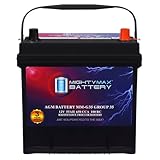
- Fast Starting Power: This 12V 55Ah 650 CCA delivers strong, steady starts is ready for any weather in any season.
- Made to Last: With its 100-minute Reserve Capacity supports longer run times and a longer overall battery lifespan.
- All Power, No Mess AGM Design: Sealed and spill-proof, the MM-G35 is built with high discharge output and deep discharge recovery to keep power steady when it counts.
- Strength That Starts on the Inside: The rugged construction resists shock, vibration, and harsh conditions, delivering reliable performance across a wide range of temperatures and tough environments.
- Tested Tough & Certified Safe: Mighty Max batteries are built in an ISO-certified facility and meet CE standards for quality, safety, and reliability
The most accurate labels are “reported 1,200-kilometer target,” “projected range,” or “Toyota development ambition.” The inaccurate labels are “745-mile EPA range,” “745-mile production Toyota,” and “Toyota has already driven 745 miles on a charge.” The cited materials provide no final EPA or WLTP figure, final pack size, retail price, warranty, or independent third-party validation.
| Headline wording | Accuracy | Better wording |
|---|---|---|
| “Toyota has a 745-mile EV” | Unsupported by the cited evidence | “Toyota is developing an all-solid-state BEV program linked to a reported 1,200-kilometer target” |
| “Toyota’s battery charges fully in 10 minutes” | Incorrectly expands the charging window | “Toyota targets 10%-to-80% charging in 10 minutes or less” |
| “Toyota will launch it in 2027” | Too precise for the stated window | “Toyota targets commercialization between 2027 and 2028” |
| “Toyota proved the range in testing” | Not supported by the cited prototype disclosure | “Toyota has test-driven an all-solid-state prototype, but the later range target is not independently verified” |
What is the difference between Toyota’s solid-state and other next-generation batteries?
Toyota’s all-solid-state battery is a separate program from the company’s next-generation lithium-ion and LFP battery tracks. Toyota’s roadmap distinguishes those programs rather than presenting every future battery as the same technology or as having the same launch timing.
| Toyota battery program | Technology described in the roadmap | Timing context in the cited evidence | What readers should not assume |
|---|---|---|---|
| Next-generation lithium-ion track | Lithium-ion battery development | Separate 2026–2028 next-generation track | It is not automatically Toyota’s all-solid-state battery or its 1,200-kilometer target |
| Next-generation LFP track | LFP battery development | Separate 2026–2028 next-generation track | It is not automatically the solid-state program or the 10-minute target |
| All-solid-state BEV track | All-solid-state battery using solid-electrolyte technology | Toyota’s stated commercialization window is 2027–2028 | The 2027–2028 window is not proof of a final model, price, EPA range, or market-specific launch |
The separation matters because a news report about Toyota’s broader future-battery strategy may combine several technologies. The 745-mile story belongs specifically to the all-solid-state BEV ambition, not to every Toyota battery expected between 2026 and 2028.
How should you evaluate future Toyota solid-state battery claims?
Ask what kind of evidence supports the claim before comparing Toyota’s future battery with a current electric vehicle or another solid-state program.
- Identify the rating: Determine whether the number is an EPA or WLTP certification, an independent test, a laboratory result, a prototype result, or a company target.
- Check the charging window: Confirm whether “10 minutes” means 10%-to-80%, 0%-to-80%, or 0%-to-100%, and look for the charging power and temperature conditions.
- Separate cell and vehicle performance: Cell-level energy density does not by itself establish the range of a complete vehicle. Pack design, weight, aerodynamics, and efficiency also matter.
- Look for durability evidence: A credible production claim should address cycle life, calendar life, degradation, repeated fast charging, and the cracking or contact-loss problem identified by Toyota.
- Check industrial readiness: Look for production yield, cost, supply-chain capacity, pilot-batch results, and evidence of repeatable high-volume manufacturing.
- Check the launch details: A real consumer launch should identify the model, geography, production timing, price, warranty, and final certified range.
For readers who want the chemistry and engineering background rather than another headline, a solid-state battery book can provide useful context. The relevant educational title identified for this topic is Solid State Batteries, a 2022 technology book published by the American Chemical Society; the book should not be treated as confirmation of Toyota’s range or launch claims.
What is still unknown about Toyota’s 745-mile battery?
The following details remain unresolved in the cited Toyota evidence:
- The final production vehicle and vehicle segment
- The final battery-pack capacity and pack-level energy density
- The certified EPA or WLTP range
- The conditions and charging power behind the 10%-to-80% target
- Cycle life, calendar life, and real-world degradation
- Retail price, warranty, and replacement cost
- Production volume and manufacturing yield
- U.S. release timing and availability in other markets
- Independent third-party validation of a 1,200-kilometer or 745-mile drive
Those missing facts are exactly why the 745-mile claim should remain qualified. Toyota has demonstrated prototypes, identified major industrial partners, described manufacturing work, and published a commercialization path. The final proof must come from a durable, affordable, mass-produced vehicle with a certified range and repeatable fast-charging performance.
Do these 3 things before closing this tab:
1Scan for outdated or missing drivers - takes under a minute2Clear out junk files and repair common Windows errors3Fix the driver behind crashes, sound loss and screen glitchesThe Bottom Line
Bottom line: Toyota’s 745-mile solid-state battery is real as a development ambition, not yet real as a showroom specification: Toyota has demonstrated prototypes, identified partners, and laid out a 2027–2028 commercialization path, but the decisive proof will be a durable, affordable, mass-produced vehicle with a certified range and repeatable fast-charging performance.
Quick Recap
Product prices and availability are accurate as of the date/time indicated and are subject to change. Any price and availability information displayed on Amazon at the time of purchase will apply.




