Do these 3 things before closing this tab:
1Scan for outdated or missing drivers - takes under a minute2Clear out junk files and repair common Windows errors3Fix the driver behind crashes, sound loss and screen glitchesFord v Ferrari tells a dramatized version of a real contest: Ford’s effort to beat Ferrari at the 24 Hours of Le Mans. Ford won in 1966, but not with the car at the center of the film’s emotional finish. The official winners were Bruce McLaren and Chris Amon; Ken Miles and Denny Hulme finished second.
How Ford and Ferrari became rivals at Le Mans
Ford’s history dates the end of its negotiations with Ferrari to May 22, 1963, when the company announced that talks had been “suspended by mutual agreement.” Ford then pursued a performance-motorsport program of its own, developing a GT racing effort intended to compete at Le Mans. The company’s account names Roy Lunn, Eric Broadley, John Wyer and Carroll Shelby among the people involved.
| # | Preview | Product | Price | |
|---|---|---|---|---|
| 1 |
|
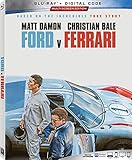
Ford V. Ferrari | $15.36 | Buy on Amazon |
| 2 |

|
Ford V. Ferrari | $21.99 | Buy on Amazon |
| 3 |
![Ford v Ferrari 4k Ultra Hd [Blu-ray]](https://m.media-amazon.com/images/I/51D8ALSylpL._SL160_.jpg)
|
Ford v Ferrari 4k Ultra Hd [Blu-ray] | $199.98 | Buy on Amazon |
| 4 |
![Ford v Ferrari (UHD + BD + Digital Code) [Blu-ray] [blu_ray]](https://m.media-amazon.com/images/I/51LqG0LDH7L._SL160_.jpg)
|
Ford v Ferrari (UHD + BD + Digital Code) [Blu-ray] [blu_ray] | $33.05 | Buy on Amazon |
| 5 |
![Ford v Ferrari [Blu-Ray] [Region Free] (IMPORT) (Keine deutsche Version)](https://m.media-amazon.com/images/I/51hvTub-khL._SL160_.jpg)
|
Ford v Ferrari [Blu-Ray] [Region Free] (IMPORT) (Keine deutsche Version) | $34.54 | Buy on Amazon |
The famous failed-purchase story is part of the film’s dramatic setup, but Ford’s public statement confirms only that negotiations stopped; it does not establish every private exchange or motive shown on screen. The distinction matters: the rivalry and Ford’s subsequent racing campaign are historical, while some of the film’s personal confrontations are recreated for drama. Ford’s GT40 history and its account of the negotiations provide the company’s version of that chronology.
The GT40 was a multi-year engineering effort
Early Le Mans setbacks
The first GT40s had speed, but endurance was a problem. Ford’s Le Mans entries retired before the 24-hour race was over in 1964. The film condenses this longer development story into a character-led arc; the real campaign involved engineers, suppliers, race teams and drivers as well as Shelby and Miles.
#1 Best Overall
- Item name: Ford v Ferrari Blu ray
- Product type: PHYSICAL MOVIE
- Brand: Sony Pictures Home Entertainment
Developing the 1966 Mark II
Ford’s history describes continued development in 1965, including a 427-cubic-inch development car known as the GT40X. Ken Miles tested it at Ford’s Romeo test track and offered feedback. For the 1966 campaign, Ford coordinated work with Shelby American and Holman & Moody. The effort addressed body shape, suspension, fuel delivery, engine durability, brakes and race preparation.
The resulting Mark II used a four-speed manual transmission. Ford says the team judged a five-speed unnecessary because of the engine’s torque. These details help explain why the victory was not simply the achievement of one driver or one team boss: the car emerged from a broad development and race operation. Ford’s corporate histories describe the GT40 program and the 1966 Mark II campaign.
Rank #2
What happened at the 1966 24 Hours of Le Mans?
Ford and Ferrari contested the lead, but mechanical trouble took the Ferrari cars out of contention. Ford cars were running first, second and third. Ford’s account says team leaders discussed arranging a close group finish, setting up the moment the film makes its emotional centerpiece.
Rain and poor visibility made the finish difficult to judge by eye. Fabrice Bourrigaud, the Automobile Club de l’Ouest’s Race Heritage and Museum Director, later said, “A photo finish was practically impossible.” The ACO’s retrospective says the #1 Ford of Miles and Hulme started second, while the #2 Ford of McLaren and Amon started fourth—14.28 metres farther back on the grid. As the two cars came together at the finish, the starting-position rule meant the #2 car had covered more distance and was classified first.
| Car | Drivers | Grid position | Official result |
|---|---|---|---|
| #2 Ford | Bruce McLaren and Chris Amon | Fourth | First |
| #1 Ford | Ken Miles and Denny Hulme | Second | Second |
The ACO also cites lap-by-lap data describing the finish-line gap as six metres. That figure is separate from the 14.28-metre difference between the cars’ starting positions; the two measurements describe different things. Its retrospective on the 1966 finish explains why McLaren and Amon, rather than Miles and Hulme, appear first in the official classification.
How true is Ford v Ferrari?
- Grounded in history: Ford’s GT40 campaign, the company’s contest with Ferrari, Shelby’s involvement, Miles’s role as a driver and development contributor, and Ford’s 1966 Le Mans victory are historical.
- Compressed for a film: The real effort unfolded over several years and across a large engineering and racing operation. The movie narrows that story around a small group of characters.
- Dramatized or not fully established by public accounts: Private conversations, personal motives and the details of individual scenes cannot all be confirmed from the broad corporate and event histories. Ford’s announcement establishes that negotiations ended, not every reason or exchange dramatized in the film.
The film captures the rivalry and the tension of the finish, but its emotional emphasis is not the same as the official result. Miles and Hulme did not win the 1966 race, and the classification was not a formally declared tie: McLaren and Amon were first, with Miles and Hulme second.
Independent reader supportYour contribution helps us test, update, and keep practical guides available for everyone.Why the finish still causes confusion
The cars crossed close together, and Ford’s plan to bring its cars home as a group made the scene appear to invite a shared result. But the classification was not decided by awarding a tie to the two crews. The ACO’s account explains that their different grid positions determined which car had covered more distance. That rule-based outcome is easy to lose when a retelling focuses on the image of Miles and McLaren reaching the line together.
Ford’s company history describes the decision as a team discussion with competing considerations; the ACO explains the official classification through starting positions and distance. Neither account supports reducing the outcome to one person’s animus alone. Ford’s institutional perspective and the ACO’s role as race organizer are useful context when weighing their accounts.
Recommended Free Tools
Further reading
For a longer narrative of the Ford–Ferrari contest, A. J. Baime’s Go Like Hell: Ford, Ferrari, and Their Battle for Speed and Glory at Le Mans is a relevant book-length account. TIME identifies it as a source for the film’s basic story; it is useful background, not a substitute for the official classification. TIME’s overview of the film and its source material offers that context.
Quick Recap
Product prices and availability are accurate as of the date/time indicated and are subject to change. Any price and availability information displayed on Amazon at the time of purchase will apply.




