The Quike was a custom four-wheeled, side-by-side recumbent bicycle developed for an Australian couple’s planned long-distance expedition. A 2009 account described its steering, gearing, brakes and off-road preparation—but recorded a planned journey, not proof that it was completed.
What was the Quike?
New Atlas described the Quike, also called “Quikey,” on April 15, 2009. Australians Roger Chao and Megan Kerr worked with Paul Sims of Greenspeed on the custom vehicle. Their design discussions began in 2007, followed by design work in January 2008. It combined four wheels with side-by-side recumbent seating, with adjustments intended to improve ground clearance and stability for rough terrain and expedition equipment. The vehicle was reportedly tested on and off road, in sand and in snow. New Atlas’s 2009 account is the source for these historical details.
How was it designed to steer and handle terrain?
Steering and rider technique
The Quike used Ackermann steering geometry: when turning, the inside wheel follows a tighter curve than the outside wheel. That geometry was part of this particular design, not evidence that four-wheel bicycles are automatically easier or safer to ride. Chao described a learning curve involving coordinated body movement and weight shifts to avoid tipping. He said, “Due to the nature of the quike, this took quite a while to get used to,” and added, “The techniques vary immensely according to the conditions, so it takes a lot of learning, coordination and getting used to.” Those are his comments as transcribed in the 2009 report, not general engineering guidance.
Traction, tires and braking
The design aimed to keep at least three wheels in contact with the ground and used strong downhill hubs. Tires were selected for the terrain. Magura hydraulic brakes were fitted to all four wheels, with large rotors; the article described the braking setup as important for stopping a heavily laden vehicle. The account does not provide measured stopping distances or a controlled comparison with other bicycle layouts.
Quick wins for a faster PC:
Clear out junk files and repair common Windows errorsFree Scan →Scan for outdated or missing drivers - takes under a minuteDriver Scan →#1 Best Overall

- Comfortable reclined seating position designed to enhance riding comfort and reduce fatigue
- Built-in electric assist support provides smoother acceleration and easier uphill riding
- Three-wheel stable design improves balance and confidence for riders of all levels
- Folding frame structure allows easy storage and convenient transportation in compact spaces
- Suitable for daily commuting, recreational riding, and extended outdoor travel sessions
What components and gearing did the 2009 build use?
The reported drivetrain paired a mid-drive Rohloff Speedhub internal gear hub with a Schlumpf Mountain Drive reduction gear. New Atlas stated that the gearing had a 1,300% range from the 2.5:1 reduction. These are descriptions of the Quike’s reported 2009 build, not a current parts recommendation or confirmation of present-day availability or compatibility.
How much could it carry?
New Atlas reported that the planned expedition might involve a total load of up to 450 kg, including the riders, equipment, water and food. This was an estimate of the expedition’s total load, not a manufacturer-rated payload or verified carrying-capacity test. During a separate preparation trip in the Mallee desert dunes, the pair reportedly carried 150 litres of water in addition to their gear.
Rank #2

- KIDS RECUMBENT BIKE - Enjoy the outdoors with this easy-to-ride 3-wheeler for kids. Designed for cruising and exercise on flat paved surfaces and gently sloping terrain
- NO BALANCE REQUIRED - Low-to-the-ground three-wheel bike frame provides maximum stability. Dual-joystick steering offers smooth maneuverability with simple hand movements
- LOW IMPACT EXERCISE - Get a cardiovascular workout with minimal impact. With its secure reclined seat, this exercise bike for kids is fun and easy to ride
- LARGE & SMALL RIDERS - Easily adjusts to fit kids and smaller adults from 3’8” to 5’2” and weighing up to 200 lbs. Seat height: 11 inches above the ground
- DURABLE - Hi-ten steel frame. No-maintenance chainless design. Wheels: 16” front, 12” rear. Free-wheel hub, caliper brakes, safety flag. Dimensions: 26.5 x 25 x 41 inches (51” extended). Weight 39 lbs. Recumbent trike for kids ages 7 - 12
What journey was planned?
The couple planned a roughly 12-month, approximately 12,000 km ride beginning in April 2009. Their proposed route ran from Astana through parts of Kyrgyzstan, Tajikistan, Uzbekistan, Mongolia and western China’s Xinjiang region, then into southern Russia’s Tuva region. They had deliberately left the detailed itinerary open so they could spend time with rural and nomadic communities.
The 2009 article presents those details as plans. It does not establish whether the expedition started, was completed, followed that route, or what happened to the Quike afterward.
The Tool Desk
Outbyte PC Repair FREEClear out junk files and repair common Windows errorsFree Scan →Outbyte Driver Updater FREEFix the driver behind crashes, sound loss and screen glitchesFind Drivers →Rank #3

- Where Downhill Meets Drift. Ages-14 and up. Maximum weight-198 pounds
- Steel trike style frame combined with Super Slider POM rear wheels
- Riders can power slide through corners, throw fish tails or fast 180s!
- Front free-wheel with BMX style platform pedals and alloy crank
- Features: moto-style handlebars, pro-style grips, triple crown fork, adjustable bucket style seat, and tow hook attachment, grip tape on rear axle
How did Chao and Kerr prepare?
Preparation included winter touring near Mount Stirling, a week riding among the Mallee desert dunes with the reported water load, and downhill mountain-bike trails in the You Yangs. Chao said the techniques needed to ride the Quike changed with conditions, and that learning to coordinate movement took time. The account documents their preparation and experience, but it does not offer a controlled test of the Quike against a conventional bicycle or recumbent trike.
Was the Quike fully enclosed?
A protective fairing was planned but abandoned after sponsor funding was withdrawn. New Atlas attributed the decision to budget constraints amid the global financial crisis. The published account therefore describes the fairing as an unrealized plan, not a fitted feature.
Rank #4
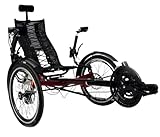
- Ergonomic recumbent seating design reduces strain and supports long, comfortable rides
- Electric assist system helps reduce effort and provides smooth riding support on various terrains
- Stable 3-wheel tadpole structure ensures better balance, safety, and riding control
- Durable frame construction designed for consistent daily use and long-term reliability
- Ideal for commuting, leisure riding, and light exercise with a relaxed riding posture
What can be concluded about the Quike?
The Quike was a purpose-built expedition vehicle with four wheels, side-by-side recumbent seating, Ackermann steering, four-wheel hydraulic braking and a wide-range reported drivetrain. Its design addressed rough terrain and heavy expedition loads, while its rider described a need to learn coordinated weight shifts. The historical account establishes the build and the intended journey, but not a rated payload, comparative safety advantage, commercial availability or expedition outcome.
Quick Recap
Best Value

- 7-12 Years Old
- 41" Length/ 51" Extended
- Hand Caliper Brake
- Cushioned Seat 11" Above the Ground
- 16" Front 12" Rear Inflatable Rubber Tires
Product prices and availability are accurate as of the date/time indicated and are subject to change. Any price and availability information displayed on Amazon at the time of purchase will apply.




