Yes, early Dodge Vipers reportedly had a fluid-filled bubble inside their headlights. But it was not “blinker fluid”: the bubble was a leveling aid for setting the headlights on the production line, not a reservoir that supplied the turn signals.
What was the liquid in the Viper headlight?
It was part of a small bubble level built into the headlight assembly. The level reportedly helped workers set the headlights during production. The fluid stayed sealed inside the bubble; it was not a service fluid for the indicators or a system the owner needed to fill.
That distinction is the joke’s twist: cars do not need blinker fluid, but the first-generation Viper reportedly did have fluid inside a headlight component. The feature was a leveling aid, not a turn-signal function.
Why did Dodge use a headlight with a bubble level?
According to The Drive’s account of an interview with Viper chief engineer Roy Sjoberg, General Electric had developed the projector headlight units for BMW’s Z1, but BMW did not use the design. When Chrysler needed headlights for the upcoming Viper, GE already had the developed units. The Viper team adapted the car’s bumper fascia around them, and the bubble came with the assembly.
Crashes, No Sound, or Screen Glitches?
Random freezes, missing sound and display glitches usually trace back to one bad driver. Find and replace yours safely.Free scan · under a minutePC Slower Than It Used to Be?
A free scan shows the junk files, broken settings and background clutter dragging Windows down - then fixes them in one click.Free scan · Windows 10 & 11#1 Best Overall

- Opening hood, doors, and trunk
- Exterior styling directly from the movie
- Detailed interior and real rubber tires
- Made of quality die-cast metal
- Collect them all
The reporting does not establish why BMW passed on the design, so the reason should not be inferred from the Viper’s later use of it.
Why wasn’t the bubble removed?
Sjoberg reportedly considered deleting it, but was told that removing the bubble would cost $1.50 per headlight. As quoted by SlashGear, Sjoberg recalled: “Manufacturing wanted $1.50 for each headlight to remove the bubble, and I said, ‘Screw that. Leave the bubble on.’” That is a reported production-cost figure from his account, not an independently verified accounting record.
Rank #2
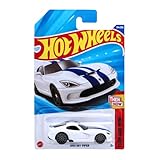
- Hot Wheels 2013 SRT Viper (JBB15) - Then and Now Series 6/10, Short Card Edition
- 1:64 Scale Dodge Viper
- White lacquer with striking blue stripes
- Officially Licensed Dodge Product
- Authentic proportions, sporty wheels and powerful design
The Drive also reports an estimate of more than $2.5 million, plus $1 million in development, to create Viper headlights from scratch. Those figures are estimates attributed through secondary coverage, not independently verified project accounts. The reported choice was to use the available developed design rather than pay to alter it.
Which Vipers reportedly had the feature?
Although the story is often told about the original Viper, BMWBLOG reports that the design appeared on first- and second-generation Vipers sold from 1991 to 2002. Sjoberg is quoted describing the reused system as a developed design that could fit both generations. The precise scope is reported in secondary coverage of his interview, rather than established here through factory service documentation.
Rank #3

- Metal model with plastic parts
- Movable elements: mask and door
- Officially licensed model
- Perfect detailing
- Ideal for model collectors
Was it really “blinker fluid”?
Only in the playful, literal sense that the headlight assembly reportedly contained a fluid-filled bubble. There is no evidence in these accounts that the fluid powered, lubricated, or colored the turn signals. Calling it blinker fluid as a maintenance item would be misleading: it was a built-in production-line leveling feature, not something to check or replace.
The accounts from The Drive, BMWBLOG, and SlashGear trace back to the same Four Eyes interview with Sjoberg, so their overlap is not three independent confirmations. No primary transcript or official Viper technical document is established in those reports.
Quick Recap
Best Value

- Original Viper in highly detailed plastic pieces molded in white, transparent red and clear
- The model brings detail to life with brakes, suspension, side exhaust and detailed V-10 engine
- Chrome plated parts and soft black tires
- Waterslide decals with authentic factory stock detailing decals
- Requires model glue and paint (not included)
Rank #4

- Material: The Dodge Viper supercar model car is made of a combination of zinc alloy, plastic parts and rubber tyres, making the body both lightweight and sturdy, with strong impact resistance and delicate details, making it easier to play with the car model;
- Pull Back Function: The rear wheels of the Dodge Viper Supercar toy car have a pull back function. Just gently press the body, pull the car back a certain distance, after releasing, the toy car will automatically drive forward. Product size: 6.1*2.6*1.7 inches;
- Sound and Light Function: Dodge die-cast toy model car just need to press the rear wheels or open the front door to trigger the lights and engine sound, the back of the alloy large tail shape more perfectly restore the real car real sense of simulation of the front wheels steering left and right for a more realistic sense;
- Open Door Design: The bonnet, left and right doors, boot of the Dodge Viper supercar model car can be opened, the interior and exterior decorations are very realistic, restoring the texture of the real car, very suitable for car model enthusiasts to collect;
- Perfect Decoration: Our die-cast car models are very sturdy and well made, perfect for gifting to car enthusiasts, children or anyone who likes to use car models as toys or collectibles;
Product prices and availability are accurate as of the date/time indicated and are subject to change. Any price and availability information displayed on Amazon at the time of purchase will apply.




