The Chevrolet Caprice became an enduring American full-size sedan, valued by Chevrolet for its size, ride, and appeal to buyers seeking a large car at an affordable price. Its story is also closely tied to police customers: as production of the original full-size line ended in 1996, Chevrolet said agencies still wanted a full-size vehicle. The available research does not establish that the Caprice literally dominated U.S. sales, so “took over America” is best read as a colorful description of its cultural presence.
How the Caprice fit Chevrolet’s lineup
The Caprice was Chevrolet’s full-size sedan for buyers who prioritized room, safety, and ride characteristics. In its 1996 product guide, Chevrolet described its intended audience as mature domestic buyers, including families and retirees, seeking the advantages of a large car at an affordable price. That language reflects Chevrolet’s own positioning, not an independent survey of Caprice owners.

The same guide named the Ford Crown Victoria, Mercury Grand Marquis, and Chrysler New Yorker as competitors. Chevrolet presented the Impala SS differently: as a V8 performance sedan aimed at driving enthusiasts. These distinctions show how Chevrolet described its own range near the end of the Caprice’s original North American production run; they do not prove that one model outsold another.
Why “took over America” needs context
The Caprice became familiar through its role as a large family sedan and its association with police and other fleet use. But the sources available for this history do not provide a complete Caprice sales series or comparable figures for its rivals. It would therefore be misleading to say that the model took over the U.S. market or consistently outsold competing full-size cars.
Recommended Free Tools
#1 Best Overall

- Official Licensed
- 1:24 scale measuring 8 x 3 x 2.75 inches
- Opening Doors & hood, with Lowrider wheels
- Blue Metallic Paint with Graphics. Made of die-cast metal with plastic parts, and rubber tires.
- Pre-assembled, not a building kit
A contemporary Washington Post report said GM’s 1995 allotment of 25,000 police Caprices had already been built. That figure concerned the police-car allotment only; it was not total Caprice production or sales. The report also said GM planned to end production of its large rear-wheel-drive cars in 1996 to make room for more truck production.
Police service and the end of the original line
Police work became an important part of the Caprice’s late-era identity, but Chevrolet’s police-car history began earlier. GM says its first factory-installed Chevrolet police packages appeared in 1955 on the One-Fifty sedan and Two-Ten station wagon. The Caprice was part of that longer tradition, not its starting point.
Rank #2

- Intricate Diecast Details: Experience the precision of diecast craftsmanship with this 1:64 scale model, featuring a full diecast metal body and chassis
- Classic Caprice Style: Admire the 1990 Chevrolet Caprice Classic with a continental kit, capturing the essence of classic lowrider culture
- Smooth Rolling Tires: Enjoy seamless movement with smooth rolling rubber tires, perfect for cruising across any surface
- Custom Colors & Graphics: Show off the cool custom colors and graphics, adding a touch of personal style to your collection
- Officially Licensed: Collect with confidence, as this model is officially licensed, ensuring authenticity and quality
In a March 29, 1996 announcement, Chevrolet said police agencies had contacted the company after it showed police Tahoe concepts. Some callers cited satisfaction with the Caprice and a continuing need for a full-size vehicle after Caprice production ended. Chevrolet said it would take orders later that year for a Vortec V8 Tahoe Police Package, with production planned for summer 1997. This documents Chevrolet’s planned transition; it does not establish that every department replaced its Caprice with a Tahoe or quantify the Caprice’s share of police fleets.
GM’s 1996 announcement and contemporary reporting place the end of the original North American full-size Caprice line in 1996. The available evidence supports a story about a valued full-size car and a police customer base seeking a successor, rather than a claim that the Caprice’s disappearance alone ended an entire market segment.
Rank #3

- Brand new box. Real rubber tires. Officially licensed product. Opening hood and front doors. Made of diecast with some plastic parts. Manufacturer's original unopened packaging. Detailed interior, exterior, engine compartment. Dimensions approximately L-8.625, W-3.25, H-2.25 inches.
- PLEASE NOTE: This is a Custom Builder's Kit and requires a drill to attach the included light bar and push bar.
What the Caprice’s legacy means
The Caprice’s history connects Chevrolet’s full-size-car offering with two lasting themes: buyers seeking the comfort and space of a large sedan, and police agencies needing a full-size vehicle. Chevrolet’s own product guide captures the first theme through its emphasis on safety, size, ride, and value. Its 1996 police announcement captures the second through agencies’ stated interest in a post-Caprice full-size option.
Those records help explain why the Caprice remains recognizable in American automotive history. They do not, on their own, support a lifetime production total, a complete account of every generation, or a sales-based claim that it outsold its competitors.
Rank #4
FAQ
What is the history of the Chevy Caprice?
The Caprice was Chevrolet’s full-size sedan, positioned around size, ride characteristics, safety, and value. Chevrolet’s 1996 guide named families and retirees among its intended buyers and listed several full-size competitors.
Why was the Chevrolet Caprice discontinued?
Contemporary reporting said GM planned to end production of its large rear-wheel-drive cars in 1996 to make room for more truck production. Chevrolet’s 1996 announcement confirmed that Caprice production was ending and described police agencies’ interest in a full-size successor.
Free tools Windows power users keep installed
One-click scans. No signup required.
Best Value
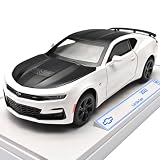
- Premium 1:24 Scale Diecast:High-quality zinc alloy body + ABS interior, true-to-original proportions, perfect for desktop display, collection, or gifting
- Perfect Size for Display & Play:Measured at 7.87 x 3.15 x 2.17 inches (20 x 8 x 5.5 cm), the 1:24 scale Camaro model is neither too big nor too small. It fits perfectly on desktops, shelves, or display cases, and is easy for adults to hold and play with, balancing display value and portability
- High-Quality & Durable Materials: Crafted with a heavy-weight alloy body and ABS plastic interior, the model is sturdy and wear-resistant. The alloy material ensures a solid weight and realistic texture, while the ABS interior adds delicate details, making it suitable for long-term collection and repeated play without easy damage
- Interactive Play Features:Doors, hood, and trunk openable; built-in light & sound effects; pull-back power for smooth rolling—blending collection value with fun play
- Ideal Gift for Collector: Suitable for collectors; sturdy construction, vibrant colors, perfect for birthdays & holidays
Was the Chevy Caprice a police car?
Police agencies used Caprices, and Chevrolet said some departments valued the car and still needed a full-size vehicle after its production ended. The Caprice was part of a longer Chevrolet police-car tradition: GM dates its first factory-installed Chevrolet police packages to 1955.
Did the Caprice dominate U.S. car sales?
The sources reviewed for this article do not provide a complete Caprice sales series or comparable totals for rivals. Chevrolet’s positioning guide and the reported 25,000-car 1995 police allotment do not establish that the Caprice dominated national sales.
Quick Recap
Product prices and availability are accurate as of the date/time indicated and are subject to change. Any price and availability information displayed on Amazon at the time of purchase will apply.




