There is no verified, apples-to-apples quarter-mile champion for every decade. The clearest way to compare the evidence is by elapsed time (ET), while identifying whether each figure came from a magazine test, a publication’s own test, or an automaker. On the available evidence, the 2023 Dodge Challenger SRT Demon 170 is the standout modern benchmark, with Dodge reporting an NHRA-certified 8.91-second quarter-mile. Earlier decades have credible candidates, but the records do not establish a complete decade-by-decade ranking.
What does “fastest” mean here?
This article uses quarter-mile elapsed time as its primary measure: the time a car takes to cover 1,320 feet from a standing start. A lower ET means a quicker run over that distance. Trap speed, recorded near the finish, is a separate measure; a car can have a higher trap speed yet a slower ET. Neither figure is a top-speed result, and neither is interchangeable with a 0–60 mph time.

The distinction matters because the figures below come from different eras and sources. Period magazine tests, MotorTrend tests, and Dodge’s NHRA-certified manufacturer figure are not one controlled comparison. MotorTrend describes its own list as gasoline coupes and sedans ranked by quarter-mile time, while Dodge identifies the Demon 170 figure as NHRA-certified. MotorTrend’s quarter-mile list and Dodge’s Demon 170 announcement therefore provide different kinds of evidence.
Quarter-mile candidates and benchmarks by decade
The table distinguishes an evidence-backed candidate from a proven decade winner. “Not established” means the available sources do not support a defensible champion for that decade; it is not a claim that no quicker car existed.
Quick wins for a faster PC:
Repair Windows errors before they cause bigger problemsFix Now →Fix the driver behind crashes, sound loss and screen glitchesFind Drivers →#1 Best Overall
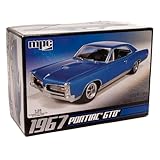
- V8 POWER: The model features a 400 cubic inch V8 engine, reflecting the muscle and power that defined the GTO's reputation.
- DETAILED SUSPENSION & EXHAUST: The kit incorporates separate rear suspension and exhaust detailing, adding to the realism of the model.
- BUCKET SEATS & CONSOLE: The model's interior features bucket seats and a floor shifter with a console, capturing the iconic look and feel of the GTO.
- OPTIONAL SUPERCHARGER: For those seeking more power, the kit offers an optional supercharger, allowing you to customize your model.
- CLEAR & COMPREHENSIVE INSTRUCTIONS: The included instructions are clear and user-friendly, making the kit accessible to modelers of different skill levels, from beginners to experienced hobbyists.
| Decade | Candidate or benchmark | Quarter-mile ET and trap speed | Evidence and qualification |
|---|---|---|---|
| 1960s | 1969 Plymouth Road Runner | 12.91 sec at 111.8 mph | Listed in a 2014 secondary compilation of period magazine tests; the table credits Super Stock, June 1969. Candidate, not a universal record. |
| 1970s | 1970 Plymouth Hemi Cuda | 13.10 sec at 107.12 mph | Listed in the same compilation, crediting Car Craft, November 1969. Its ET is slightly quicker than that compilation’s 1970 Chevelle SS 454 entry (13.12 sec), but test conditions differ. |
| 1980s | 1987 Buick GNX | 13.70 sec at 102 mph | A documented example in the compilation, which credits Hot Rod, April 1987; not established as the decade winner. |
| 1990s | 1997 Hurst/Firebird | 12.99 sec at 103.11 mph | Listed in the compilation, which credits Muscle Car Review, April/May 1997. Production-car eligibility and modifications would need verification before treating it as a production champion. |
| 2000s | No supported winner | Not established | The available evidence does not support a decade pick. |
| 2010s | 2015 Dodge Challenger Hellcat | 11.72 sec at 125.4 mph | MotorTrend’s 2022 test result; a useful benchmark, not proof that it was the decade’s quickest production muscle car. |
| 2020s | 2023 Dodge Challenger SRT Demon 170 | 8.91 sec at 151.17 mph | Dodge-reported, NHRA-certified result from 2023; a manufacturer-reported benchmark, not a cross-decade controlled test. |
The historical entries come from a Chevy Hardcore compilation published in 2014. It aggregates figures credited to different period publications, rather than results from a single standardized test. Its table also includes cars whose classification as muscle cars is not universally agreed upon.
What was the fastest muscle car of the 1960s?
The 1969 Plymouth Road Runner is a credible candidate in the cited period-test compilation, with a listed quarter-mile of 12.91 seconds at 111.8 mph. The entry credits Super Stock in June 1969. Because the figure is part of a secondary compilation of magazine results—not a controlled comparison of every eligible 1960s production car—it should be described as a documented candidate, not the definitive decade champion.
Rank #2

- A PERENNIAL CLASSIC FOR EXPERIENCED MODELERS: AMT’s 1/25 scale 1967 Shelby GT-350 is the perfect project for muscle car builders. Add it to your collection today!
- FEATURE PACKED: The 1967 Shelby GT-350 is a historical muscle car that stands alone! Fully paintable, it features authentically detailed water-slide decals. Build it up right with a Ford 289 V8 engine and all the Shelby touches—custom rear lower pan, chrome wheels, custom taillights and front grille, bucket seats, and more. Wrapped up nicely in retro-styled packaging!
- QUICK SPECS: 1/25 Scale, 123 Parts, 7 inches long once assembled. Parts molded in white, clear and transparent red, with black vinyl tires. Some parts are chrome plated. Plastic model kit paint and cement required (Testors or Tamiya brands recommended). Paint guide included in kit. Skill Level 2. For ages 10+
- THE PERFECT PRESENT: Don't know what to get dad for his birthday? Or maybe you have an avid hobbyist or collector in your life. This model kit makes an ideal gift for any occasion!
Why the fastest ET is not always the highest trap speed
Elapsed time and trap speed answer related but different questions. ET captures how quickly a car covers the quarter-mile; trap speed indicates how fast it is traveling near the end. MotorTrend’s reported results illustrate the distinction: its 2018 Chevrolet Camaro ZL1 1LE ran 11.68 seconds at 123.0 mph, while its 2019 Dodge Challenger Hellcat Redeye Widebody ran 11.77 seconds at 126.1 mph. The Camaro had the quicker ET, but the Dodge had the higher trap speed. MotorTrend’s test list is a publication-specific selection, not a complete registry of production muscle cars.
These figures also show why a ranking needs to name its metric. A top-speed comparison would require separate verified top-speed results, and 0–60 mph would measure a shorter acceleration interval; neither can be inferred from quarter-mile data.
Rank #3

- Adhering to a strict 1:24 scale, the CaDA C55034W accurately replicates the sleek lines and classic fastback styling of the Ford Shelby GT350H, perfectly showcasing the performance aesthetics of the American muscle car.
- Experience pure building fun with 285 high-precision pieces. This set includes 285 high-quality building blocks, optimized for a smooth assembly process. Experience the thrill of assembling a legendary muscle car from scratch, making it a perfect choice for building block enthusiasts with a keen eye for detail.
- The finished model measures 16 × 7.2 × 4.8 cm, making it perfect for desktop display. The assembled model measures 16 × 7.2 × 4.8 cm, compact yet packed with detail. The classic black and yellow color scheme creates a striking visual impact, making it an ideal display item for desktop displays.
- The iconic "SUPER SNAKE" logo highlights this limited edition model. Striking "SUPER SNAKE" decals adorn the sides and rear of the car, along with "G.T350H" door badges and a custom "6SHELBYH" license plate, faithfully embodying its unique limited edition identity.
- The classic black and yellow racing stripes create a striking visual impact. The deep black body is contrasted with a bright yellow center racing stripe that runs from the hood to the rear, creating a striking color contrast that perfectly embodies the Shelby brand's racing heritage.
Was the Dodge Demon 170 the fastest muscle car ever?
Dodge reported that the 2023 Challenger SRT Demon 170 achieved an NHRA-certified 8.91-second quarter-mile at 151.17 mph. The automaker also rated it at 1,025 horsepower on E85 and 900 horsepower on E10. These are manufacturer figures for the specified car and fuel configurations, not independent results from a common test against every earlier muscle car. Stellantis’ 2023 announcement is the primary source for those specifications.
Dodge’s Tim Kuniskis described the car as a “new benchmark of ‘factory-crazy’ production car performance.” That is the automaker’s characterization, not an independent assessment. Dodge also specified Demon 170-specific drag radials and driveline upgrades; those details are relevant to this model, not general advice for fitting tires or parts to other muscle cars. Dodge’s announcement identifies the vehicle’s configuration.
Rank #4

- 1:25 scale, skill level 2, paint & glue required
- 82 parts
- Molded in white, clear, transparent red, and some chrome-plated parts
- Black vinyl tires
- Metal axle
How do classic muscle cars compare with modern muscle cars?
The listed times make the performance gap striking: the 1969 Road Runner entry is 12.91 seconds, while Dodge’s reported 2023 Demon 170 figure is 8.91 seconds. But that four-second difference is a comparison of reported numbers, not the result of a controlled test across the two cars. The Road Runner number comes from a period magazine test reproduced in a later compilation; the Demon 170 number is an automaker-reported, NHRA-certified result.
Test date, tires, transmission, weather, vehicle condition, and stock status can all affect a quarter-mile result. Without matched conditions and verified eligibility, the figures provide historical context rather than a precise measurement of how much faster one car is than another.
What’s actually slowing this PC down?
Pick the symptom - the matching free tool is one click away.
Best Value
Why there is no complete winner for every decade
The evidence is uneven. The 1960s and 1970s entries are drawn from a compilation of historical tests; the 1980s and 1990s entries are examples in that compilation, not verified decade leaders. MotorTrend supplies useful 2010s test results but does not establish a census of every eligible production muscle car. The 2000s remain unresolved in the available evidence. The 2020s have a strong source-backed benchmark in Dodge’s Demon 170 figure, but it is still not a cross-decade controlled comparison.
Accordingly, “fastest muscle car from each decade” is best read as a set of documented candidates and benchmarks, not a definitive ranking. The source, model year, and type of result matter as much as the number.
Quick Recap
Product prices and availability are accurate as of the date/time indicated and are subject to change. Any price and availability information displayed on Amazon at the time of purchase will apply.




