McLaren began as a racing organization in 1963, not 1966. Bruce McLaren founded Bruce McLaren Motor Racing after establishing himself as a driver, engineer and car developer. The team entered Formula 1 at the 1966 Monaco Grand Prix, but its earlier sports-car work—and especially its Can-Am success—provided the money, experience and identity that made McLaren a lasting force.
From its first Formula 1 victory in 1968 and championship breakthrough with Emerson Fittipaldi in 1974, McLaren grew into one of motorsport’s most successful organizations. It dominated Can-Am, won the Indianapolis 500 and Le Mans, produced the legendary McLaren F1 road car, and built championship-winning partnerships with Honda and Mercedes. McLaren Automotive became a dedicated road-car business in 2010, translating racing ideas such as carbon-fiber construction and low mass into cars including the 12C, P1, Senna, 720S and W1.
As an Amazon Associate I earn from qualifying purchases.
There is one essential distinction throughout this story: McLaren Racing and McLaren Automotive are connected by heritage and ownership, but they are distinct businesses. That separation matters when discussing McLaren’s founders, victories, road cars and current corporate structure.
Do these 3 things before closing this tab:
1Fix the driver behind crashes, sound loss and screen glitches2Repair Windows errors before they cause bigger problems3Scan for outdated or missing drivers - takes under a minuteMcLaren history at a glance
| Milestone | Year | Why it matters |
|---|---|---|
| Bruce McLaren begins racing | 1952 | He races at age 15 in New Zealand, beginning the driver-engineer career that leads to McLaren. |
| Bruce McLaren Motor Racing founded | 1963 | The racing organization that becomes McLaren Racing is created. |
| Formula 1 debut | 1966 | McLaren enters the Monaco Grand Prix with the M2B. |
| First Can-Am championship | 1967 | Bruce McLaren wins the title, beginning five consecutive constructors’ championships. |
| First Formula 1 victory | 1968 | Bruce McLaren wins the Belgian Grand Prix in the M7A. |
| First Formula 1 championships | 1974 | Emerson Fittipaldi wins the Drivers’ title and McLaren wins its first Constructors’ Championship. |
| First full carbon-composite F1 chassis | 1981 | John Barnard’s MP4/1 helps make carbon fiber central to modern racing-car design. |
| McLaren F1 road car reaches production | 1992 | The three-seat carbon-fiber supercar establishes McLaren as a road-car manufacturer. |
| Le Mans victory | 1995 | The F1 GTR wins the 24 Hours of Le Mans on McLaren’s first attempt. |
| McLaren Automotive launched | 2010 | A dedicated road-car business begins with the 12C program. |
| Latest F1 championship milestone | 2025 | Lando Norris wins the Drivers’ Championship and McLaren wins the Constructors’ Championship. |
The result is a history with two different timelines: McLaren Racing dates from 1963, while McLaren Automotive dates from 2010. The road-car story is a later chapter built on the racing organization’s engineering culture, rather than a replacement for it.
#1 Best Overall
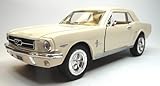
- Authentic 1:36 Scale: Meticulously crafted 1964 1/2 Ford Mustang model car with impressive 5-inch length.
- Realistic Details: Die-cast metal body with opening doors and eye-catching blue finish.
- Interactive Play: Engaging pull-back action for thrilling motion across smooth surfaces.
- Collectible Quality: Ideal for model car enthusiasts and collectors seeking miniature automotive replicas.
- Brand: KiNSMART, a trusted name in die-cast vehicle models and toys.
Bruce McLaren before the team existed
Bruce McLaren was born in Auckland, New Zealand. McLaren Automotive’s official history records that he entered his first race in 1952 at the age of 15 and won his first Grand Prix seven years later. Those early years were important because McLaren was never simply a talented driver waiting for a faster car. He was also curious about how cars worked, how they could be improved and how a small organization could compete against larger, better-funded rivals.
By the early 1960s, McLaren was an established international driver. He had achieved the kind of career many competitors would have considered complete, but he wanted to design, develop and race cars of his own. In 1963 he created Bruce McLaren Motor Racing.
This is the proper founding date for McLaren’s racing organization. The year 1966 is often mistakenly given as McLaren’s founding date because that was the year the team first appeared in Formula 1. In reality, the organization already had three years of racing experience before its Grand Prix debut.
The original company was not built solely around Formula 1. It developed sports cars, competed in North American sports-car racing and pursued the commercial opportunities available to a specialist racing constructor. That multi-category approach was not a later diversification strategy; it was part of McLaren’s identity from the beginning.
Can-Am built McLaren’s first empire
The Canadian-American Challenge Cup, usually called Can-Am, was the competition that transformed McLaren from a promising racing operation into a major force. McLaren entered the series in 1966 and returned in 1967 with the improved M6A.
Bruce McLaren and Denny Hulme immediately became front-runners. Hulme won at Elkhart Lake, while Bruce McLaren won the 1967 championship. McLaren then dominated the series from 1967 through 1971, taking five consecutive constructors’ championships and 43 race victories.
Can-Am’s importance cannot be measured only by its trophy count. Formula 1 was expensive and commercially uncertain, while North American sports-car racing offered McLaren visibility, customers and revenue. The series helped the team develop, sell and support competition cars, giving it a financial foundation for its wider programs.
Crashes, No Sound, or Screen Glitches?
Random freezes, missing sound and display glitches usually trace back to one bad driver. Find and replace yours safely.Free scan · under a minuteWindows Errors? Fix Them Before They Spread
Repair common Windows errors and clear accumulated junk for a smoother, more stable PC - no reinstall needed.Free scan · no reinstallThe papaya-orange color associated with McLaren also has its roots in this period. The bright shade helped McLaren’s cars stand out on television and became one of the most recognizable visual identities in racing. It later returned in different forms across McLaren’s racing and road-car activities.
Bruce McLaren’s death and the team’s survival
On June 2, 1970, Bruce McLaren was killed while testing the M8D Can-Am car at Goodwood. His death created both an emotional crisis and a serious organizational threat. McLaren had been built around its founder’s personality, technical judgment and driving ability.
The team continued under new leadership, with Teddy Mayer taking a central role. Only days after the accident, Dan Gurney won the Mosport Can-Am race for McLaren. That result could not lessen the loss, but it gave the grieving organization an immediate and important proof that it could continue without Bruce.
The response shaped McLaren’s future. The company’s survival demonstrated that it was more than one driver’s personal project. It had engineers, mechanics, managers, commercial relationships and a technical process capable of carrying the organization forward.
The Tool Desk
Outbyte PC Repair FREEClear out junk files and repair common Windows errorsFree Scan →Outbyte Driver Updater FREEScan for outdated or missing drivers - takes under a minuteDriver Scan →McLaren enters Formula 1
McLaren made its Formula 1 debut at the 1966 Monaco Grand Prix. Bruce McLaren drove the team’s M2B, a car whose construction drew on aerospace-influenced ideas. The debut ended after nine laps because of an oil leak, but the appearance established the McLaren name in the world championship.
The first years were a learning period. Formula 1 demanded an unusual combination of chassis design, aerodynamics, engine integration, reliability, logistics and race strategy. McLaren’s experience in Can-Am helped finance and stabilize the operation, while Formula 1 supplied a different level of technical and organizational pressure.
McLaren achieved its first Formula 1 victory at the 1968 Belgian Grand Prix. Bruce McLaren drove the M7A to victory at Spa-Francorchamps. The win made McLaren only the second team to win a Grand Prix with a car bearing the name of its founder-driver. More importantly, it proved that McLaren could win at the highest level rather than merely participate.
Through the early 1970s, McLaren became increasingly consistent. The team was developing the discipline and technical depth required for a championship campaign, while Can-Am success continued to provide a valuable commercial and competitive base.
The first Formula 1 championships: Fittipaldi and Hunt
McLaren’s first Formula 1 Drivers’ and Constructors’ Championships came in 1974. Emerson Fittipaldi won the Drivers’ Championship driving the McLaren M23, and McLaren won the Constructors’ title. This was the point at which the organization became a complete championship team rather than a constructor capable of occasional Grand Prix victories.
The M23 was an important McLaren design. Its competitive life extended across several seasons, and its adaptability helped McLaren remain effective through changing technical circumstances. Two years after Fittipaldi’s title, James Hunt won the 1976 Drivers’ Championship in the M23.
Hunt’s championship is remembered for his rivalry with Ferrari’s Niki Lauda and for the dramatic nature of the 1976 season. The story is often reduced to personalities and controversy, but it was also a demonstration of McLaren’s ability to manage a long championship campaign under intense pressure.
Rank #2

- Highly detailed 1:24 scale diecast model kit of 1929 Ford Model A
- Comes with everything needed for assembly including screwdriver
- Features opening parts, rolling wheels and pre-painted metal body
- Easy to assemble, creates fully functional rolling replica model car
- Fun and educational STEM activity for kids to build realistic miniature vehicle
By the end of 1976, McLaren had established two important foundations: it had won championships with different kinds of drivers, and it had shown that the organization could survive changes in personnel and competition. The next transformation would be structural and technological.
Recommended Free Tools
Ron Dennis, Project Four and the carbon-fiber revolution
In the late 1970s and early 1980s, Ron Dennis’s Project Four organization merged with McLaren. The merged team adopted the MP4 designation, commonly explained as McLaren Project Four. The change was more than a name. It marked the beginning of a more systematic, technology-led era in which design, materials, testing, aerodynamics and race operations became tightly integrated.
One of the defining products of this period was John Barnard’s MP4/1, introduced in 1981. McLaren describes it as the first Formula 1 car whose entire chassis used carbon-composite construction. The carbon-fiber monocoque combined low weight with exceptional structural strength and helped establish carbon fiber as a defining material in high-performance racing cars.
Carbon fiber was not valuable merely because it was exotic. A lighter and stronger survival cell could improve structural efficiency, weight distribution and aerodynamic packaging. It also offered a new design philosophy: instead of treating the chassis as a metal structure to which other parts were attached, engineers could make the monocoque an integrated, highly optimized component.
McLaren’s heritage materials connect the MP4/1’s technology to later road-car projects, especially the McLaren F1 and subsequent carbon-composite production cars. The exact materials and construction methods changed between racing and road applications, but the underlying priority remained similar: reduce mass, preserve strength and make the car respond precisely.
The turbo era: Lauda, Prost, Senna and Honda
McLaren’s most sustained Formula 1 dominance began in the turbo era. Between 1984 and 1991, McLaren won six Drivers’ Championships and six Constructors’ Championships.
| Season | McLaren Drivers’ Champion | Constructors’ result |
|---|---|---|
| 1984 | Niki Lauda | McLaren won the Constructors’ Championship |
| 1985 | Alain Prost | McLaren won the Constructors’ Championship |
| 1986 | Alain Prost | McLaren did not win the Constructors’ Championship |
| 1988 | Ayrton Senna | McLaren won the Constructors’ Championship |
| 1989 | Alain Prost | McLaren won the Constructors’ Championship |
| 1990 | Ayrton Senna | McLaren won the Constructors’ Championship |
| 1991 | Ayrton Senna | McLaren won the Constructors’ Championship |
McLaren’s technical partnership with Honda was central to the period’s success. The team combined Honda power with highly effective chassis design, aerodynamics and race execution. It also possessed two drivers capable of converting a competitive car into championships.
Why the 1988 season remains exceptional
The 1988 McLaren-Honda MP4/4 won 15 of the season’s 16 races with Ayrton Senna and Alain Prost. That record made the car and driver pairing one of the most successful combinations in Formula 1 history.
The season also created one of the sport’s defining teammate rivalries. Prost brought calculated racecraft and championship management, while Senna was renowned for extraordinary qualifying speed and uncompromising intensity. Their rivalry was not separate from McLaren’s success; it was one of the consequences of having two drivers capable of fighting for every available advantage in an exceptionally effective car.
Quick wins for a faster PC:
Scan for outdated or missing drivers - takes under a minuteDriver Scan →Clear out junk files and repair common Windows errorsFree Scan →Senna spent six seasons with McLaren, winning three World Championships and 35 of his 41 Formula 1 victories during that period, according to McLaren’s official heritage account. His years with the team became central to McLaren’s public identity and remain one of the strongest links between its technical history and its cultural legacy.
For readers who enjoy turning racing history into something tangible, a McLaren Formula 1 LEGO set is a buildable representation of the team’s Grand Prix identity. It is a collectible or display product—not a historical authority—and the exact set, season and availability should be checked before purchase.
McLaren after Senna: Häkkinen and Hamilton
McLaren remained a leading Formula 1 team after the Senna-Prost period. Its partnership with Mercedes became the foundation for a later championship era, with Mika Häkkinen winning consecutive Drivers’ Championships in 1998 and 1999. McLaren also won the 1998 Constructors’ Championship with the MP4-13.
The Häkkinen era showed that McLaren’s competitiveness was not dependent on one historic driver pairing. The team continued to combine strong chassis design, high-level engine integration and disciplined race operations with drivers capable of winning under pressure.
Free tools Windows power users keep installed
One-click scans. No signup required.
McLaren also invested in driver development. Lewis Hamilton came through the organization’s driver program and won the 2008 Drivers’ Championship in the MP4-23. McLaren’s official history identifies Hamilton as Formula 1’s first Black World Champion, an achievement that made his title significant well beyond the team’s own record book.
The same junior and test-driver pathway became part of McLaren’s longer-term operating model. Later drivers including Lando Norris and Oscar Piastri are associated with the organization’s modern driver-development approach, showing that McLaren’s history includes not only cars and championships but also a deliberate effort to develop talent.
The McLaren F1 road car: racing ideas for the road
The first McLaren F1 road-car project was conceived in 1988 and reached production in 1992. It was built around a lightweight carbon-fiber monocoque and produced in a limited run of 106 examples.
The McLaren F1 was unusual in several ways. It used a central driving position, distinctive dihedral doors and a high-performance naturally aspirated engine. Its central seat was not a styling gimmick: it placed the driver at the center of the car and gave the cockpit an unusually direct relationship with the vehicle’s controls and surroundings.
What’s actually slowing this PC down?
Pick the symptom - the matching free tool is one click away.
The F1 also showed how McLaren translated racing priorities into a road car without simply building a Formula 1 car with license plates. The car had to be usable as a road vehicle, but its design remained focused on low mass, structural efficiency, driver involvement and high-speed stability.
Although conceived as a road car, customer demand led to the F1 GTR racing version. That decision created one of the most important chapters in McLaren’s history.
Rank #3
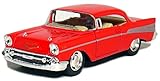
- AUTHENTIC REPLICA: Highly detailed 1:40 scale model of the iconic 1957 Chevrolet Bel Air Coupe, measuring 5 inches in length with classic finish
- WORKING FEATURES: Functioning doors that open and close, plus pull-back motor action for interactive play value
- QUALITY CONSTRUCTION: Die-cast metal body construction provides durability and authentic feel, enhanced with detailed plastic components
- REALISTIC DETAILS: Features rubber tires for enhanced realism and smooth rolling action on various surfaces
- DISPLAY WORTHY: Perfect size for collectors and enthusiasts, combining playability with showcase appeal
1995: the F1 GTR wins Le Mans
In 1995, the McLaren F1 GTR won the 24 Hours of Le Mans on McLaren’s first attempt. The winning car was driven by Yannick Dalmas, Masanori Sekiya and JJ Lehto. McLaren cars also filled four of the top five finishing positions.
The result was remarkable because the F1 GTR was a competition derivative of a road car, not a Formula 1 car. Its Le Mans victory should not be confused with a Formula 1 championship achievement. It was an endurance-racing triumph that demonstrated how effectively McLaren’s road-car engineering could be adapted to a demanding professional racing environment.
The victory completed McLaren’s celebrated motorsport Triple Crown narrative: the organization has won the Monaco Grand Prix, the Indianapolis 500 and the 24 Hours of Le Mans. The claim means McLaren has won all three events across its history; it does not mean the three victories occurred in one season.
Collectors interested in this part of the story may look for a McLaren F1 GTR model car or a McLaren F1 die-cast model. The historically relevant distinction is whether the model represents the road-going F1 or the Le Mans F1 GTR, and buyers should verify the scale, manufacturer, accuracy and licensing of a specific listing rather than assuming every marketplace product is officially authorized.
McLaren and the Indianapolis 500
McLaren made its IndyCar and Indianapolis 500 debut in 1970. Its first Indianapolis 500 victory came in 1972, when Mark Donohue won for Team Penske using a McLaren chassis.
The organization’s first factory-team Indianapolis 500 victory came in 1974 with Johnny Rutherford. Rutherford won again in 1976. McLaren therefore has three Indianapolis 500 victories in its official organizational record: 1972, 1974 and 1976.
The distinction between those wins is worth preserving. The 1972 victory involved a McLaren chassis and Team Penske, while the 1974 and 1976 wins were factory-team successes with Rutherford. Treating all three as identical would remove useful context from McLaren’s Indy history.
McLaren returned to the modern NTT IndyCar Series in 2017 through a joint Indianapolis 500 effort with Andretti Autosport. It later joined forces with Schmidt Peterson Motorsports and took majority ownership of the team in 2021. That move gave McLaren a more permanent modern IndyCar presence rather than limiting its involvement to a one-off Indianapolis entry.
At the 2026 research cutoff, McLaren Racing listed the Arrow McLaren lineup as Pato O’Ward, Nolan Siegel and Christian Lundgaard. This modern program reconnects McLaren with the North American racing environment that was so important to its original growth.
McLaren Automotive begins in 2010
McLaren Automotive was launched in 2010 as a dedicated road-car business. This was not the first McLaren road car—the McLaren F1 had already been conceived in the 1980s and produced in the 1990s—but it was the beginning of a modern, separately organized production-car operation.
The initial product program began with the 12C. McLaren then expanded its range with models and derivatives including the P1, 650S, 675LT, 570S and 720S. The company organized its products around families such as the Super Series and Ultimate Series, with each category serving a different balance of performance, usability, exclusivity and technology.
McLaren Automotive’s engineering philosophy drew heavily on McLaren Racing’s technical heritage. Its road cars emphasized carbon-fiber structures, aerodynamic efficiency and low mass. Other technologies associated with McLaren’s road-car development include brake steer, hybrid power and a driver-focused hydraulic steering system.
These technologies were not all invented by McLaren, and racing-derived does not mean identical to a competition component. McLaren’s distinctive contribution was the way it combined them in road cars with unusually strong emphasis on weight reduction, handling feedback and a direct relationship between driver inputs and vehicle response.
McLaren’s Ultimate Series
McLaren identifies the Ultimate Series as including the F1, P1, Senna, Speedtail, Elva, Senna GTR, Solus GT and W1. The list includes both road-legal halo cars and track-focused models, reflecting the company’s willingness to explore different interpretations of extreme performance.
The W1 is McLaren’s latest era-defining Ultimate model in the supplied research. McLaren describes it as its fastest-lapping and fastest-accelerating road-legal McLaren. Those are manufacturer claims and should be understood as such unless an independent test verifies the same metric under clearly stated conditions. Acceleration and lap-time comparisons can vary with tires, surface, weather, test method and the competing cars selected.
What links the Ultimate Series models is not a single engine layout or body style. It is McLaren’s continued effort to use racing knowledge—especially low mass, aerodynamic control and structural efficiency—to make a road car feel precise and purposeful.
Independent reader supportYour contribution helps us test, update, and keep practical guides available for everyone.McLaren Racing expands beyond Formula 1
McLaren Racing’s modern portfolio extends beyond Formula 1 and IndyCar. Its heritage and corporate material records participation or success in Formula E, Extreme E, F1 Sim Racing and other categories. The organization has also announced an entry into the World Endurance Championship from 2027 onward.
This expansion is best understood as a return to McLaren’s original identity. Bruce McLaren’s organization was never created solely as a Formula 1 team. It developed sports cars, raced in North America and used different categories to build technical knowledge, visibility and commercial strength.
Free tools Windows power users keep installed
One-click scans. No signup required.
The modern portfolio therefore represents continuity rather than a complete departure. Formula 1 remains the most visible program, but McLaren’s broader racing presence allows the company to apply its engineering and operational expertise to electric racing, off-road competition, digital racing and endurance racing.
Rank #4

- Doors Open
- Pullback Action
- Die Cast Metal Body
- PULL BACK ACTION WITH FREE ROLLING WHEELS
Ownership and the separation between Racing and Automotive
McLaren’s corporate structure changed significantly between 2024 and 2025. In March 2024, Bahrain Mumtalakat Holding Company took full ownership of McLaren Group following a capital reorganization.
In April 2025, CYVN Holdings completed its acquisition of McLaren Automotive and acquired a non-controlling stake in McLaren Racing. McLaren Racing stated that its operations would remain independent from McLaren Automotive, with Bahrain Mumtalakat remaining a major shareholder and CYVN holding a non-controlling Racing stake.
In September 2025, McLaren announced that it had purchased shares held by minority investors in McLaren Racing. The transaction enabled Mumtalakat and CYVN to increase their respective positions, while Mumtalakat remained the majority shareholder and CYVN retained a non-controlling stake.
Outdated Drivers Are Slowing You Down
One free scan finds every outdated or missing driver and matches the right update for your exact hardware.Free scan · exact hardware matchWindows Errors? Fix Them Before They Spread
Repair common Windows errors and clear accumulated junk for a smoother, more stable PC - no reinstall needed.Free scan · no reinstall| Business | Historical starting point | Relationship today |
|---|---|---|
| McLaren Racing | Bruce McLaren Motor Racing, founded in 1963 | Operates the racing programs, including Formula 1 and Arrow McLaren IndyCar; it remains majority-owned by Bahrain Mumtalakat, with CYVN holding a non-controlling stake. |
| McLaren Automotive | Dedicated road-car business launched in 2010; its modern program began with the 12C | Owned by CYVN Holdings since its 2025 acquisition; it shares McLaren heritage but is operationally distinct from McLaren Racing. |
This structure explains why it is inaccurate to describe McLaren as one uninterrupted legal entity doing both road cars and racing. The brand, technical culture and historical mythology are connected, but the businesses operate separately.
McLaren’s current position at the 2026 research cutoff
McLaren entered 2026 as the reigning Formula 1 Drivers’ and Constructors’ champion. Lando Norris won the 2025 Drivers’ Championship, while McLaren won the 2025 Constructors’ Championship. According to McLaren’s official records, those results brought the organization’s total to 13 Drivers’ Championships and 10 Constructors’ Championships.
The 2026 Formula 1 driver lineup is Lando Norris and Oscar Piastri. McLaren also continues its Arrow McLaren IndyCar program with Pato O’Ward, Nolan Siegel and Christian Lundgaard, while preparing for its announced World Endurance Championship entry in 2027.
These current facts should be dated because racing records and driver lineups change. They also illustrate the two sides of McLaren’s present identity: a championship-leading Formula 1 team under McLaren Racing and a separate high-performance road-car business under McLaren Automotive.
Recommended Free Tools
A chronological timeline of McLaren’s major milestones
- 1952: Bruce McLaren begins racing at age 15.
- 1963: Bruce McLaren creates Bruce McLaren Motor Racing.
- 1966: McLaren enters Formula 1 at Monaco with the M2B and also begins its Can-Am involvement.
- 1967: Bruce McLaren wins McLaren’s first Can-Am championship. The team begins a run of five consecutive constructors’ titles.
- 1968: Bruce McLaren wins McLaren’s first Formula 1 Grand Prix at Spa-Francorchamps in the M7A.
- 1970: Bruce McLaren dies while testing the M8D at Goodwood. The organization continues under new leadership, and Dan Gurney wins at Mosport shortly afterward.
- 1972: Mark Donohue wins the Indianapolis 500 for Team Penske using a McLaren chassis.
- 1974: Emerson Fittipaldi wins McLaren’s first Formula 1 Drivers’ Championship; McLaren wins its first Constructors’ Championship; Johnny Rutherford wins the Indianapolis 500 for the factory team.
- 1976: James Hunt wins the Formula 1 Drivers’ Championship, and Johnny Rutherford wins McLaren’s third Indianapolis 500.
- 1981: John Barnard’s MP4/1 introduces the full carbon-composite Formula 1 chassis described by McLaren as a first in the category.
- 1984–1991: McLaren wins six Drivers’ Championships and six Constructors’ Championships.
- 1988: Ayrton Senna and Alain Prost win 15 of 16 races in the McLaren-Honda MP4/4.
- 1992: The McLaren F1 road car reaches production, with 106 examples built.
- 1995: The F1 GTR wins the 24 Hours of Le Mans on McLaren’s first attempt, with McLaren cars taking four of the top five positions.
- 1998–1999: Mika Häkkinen wins consecutive Drivers’ Championships, and McLaren wins the 1998 Constructors’ title.
- 2008: Lewis Hamilton wins the Drivers’ Championship in the MP4-23.
- 2010: McLaren Automotive launches as a dedicated road-car business.
- 2017: McLaren returns to the modern IndyCar program through an Indianapolis 500 partnership with Andretti Autosport.
- 2021: McLaren takes majority ownership of its IndyCar team.
- 2024: Bahrain Mumtalakat takes full ownership of McLaren Group.
- 2025: McLaren wins the Formula 1 Drivers’ and Constructors’ Championships; CYVN completes its acquisition of McLaren Automotive and takes a non-controlling stake in McLaren Racing.
- 2026: McLaren continues in Formula 1 with Norris and Piastri, fields Arrow McLaren in IndyCar and prepares for its announced 2027 World Endurance Championship entry.
What defines McLaren’s history?
McLaren’s defining achievement is not one car, driver or championship. It is the repeated transfer of racing discipline across categories.
Can-Am gave the young organization money, customers and public recognition. Formula 1 converted that foundation into championship-level engineering and operations. The MP4/1 demonstrated how a racing team could change the construction of the entire car around carbon composites. The McLaren F1 carried those principles into a road car, and the F1 GTR showed that a road-derived machine could win at Le Mans.
The modern road-car division continues that translation through carbon structures, aerodynamic development, hybrid systems and low-mass engineering. Meanwhile, McLaren Racing has returned to a multi-discipline model that resembles Bruce McLaren’s original organization more closely than a Formula 1-only identity would.
That is why McLaren’s history should be told as two connected stories. McLaren Racing supplied the competition record and engineering culture; McLaren Automotive later built a dedicated road-car business around many of those priorities. The result is one brand with a shared technological mythology, but two distinguishable organizations with different roles.
The Tool Desk
Outbyte Driver Updater FREEFix the driver behind crashes, sound loss and screen glitchesFind Drivers →Outbyte PC Repair FREEClear out junk files and repair common Windows errorsFree Scan →Further reading and collecting
For readers who want a single-volume follow-up to this timeline, The Story of McLaren is presented as a history covering the organization from its 1963 founding through its modern position. It is useful as a supplementary reading choice, but this article’s historical claims should still be checked against official team, manufacturer and event records when precision matters.
A McLaren Formula 1 LEGO set, a McLaren F1 die-cast model or a McLaren F1 GTR model can also make the history more visual. These are display or building products, not evidence for racing results. Check the specific model’s scale, season, manufacturer, licensing status and availability before buying.
Frequently Asked Questions
Was McLaren founded in 1963 or 1966?
McLaren’s racing organization was founded by Bruce McLaren in 1963 as Bruce McLaren Motor Racing. The year 1966 marks the team’s Formula 1 debut at the Monaco Grand Prix, not the company’s founding.
Are McLaren Racing and McLaren Automotive the same company?
No. They share the McLaren name, heritage and ownership connections, but they are distinct businesses. McLaren Racing operates the racing programs, while McLaren Automotive is the dedicated road-car business launched in 2010. McLaren Racing stated in 2025 that its operations would remain independent from McLaren Automotive.
Quick wins for a faster PC:
Fix the driver behind crashes, sound loss and screen glitchesFind Drivers →Clear out junk files and repair common Windows errorsFree Scan →What is McLaren’s motorsport Triple Crown?
McLaren is recognized for winning the Monaco Grand Prix, the Indianapolis 500 and the 24 Hours of Le Mans. The three victories occurred across the organization’s history, not in a single season.
How many Formula 1 championships has McLaren won?
At the 2026 research cutoff, McLaren’s official records listed 13 Drivers’ Championships and 10 Constructors’ Championships. Lando Norris won the 2025 Drivers’ title, and McLaren won the 2025 Constructors’ Championship.
Did the McLaren F1 win Le Mans?
Yes. The McLaren F1 GTR, a racing derivative of the McLaren F1 road car, won the 24 Hours of Le Mans in 1995 on McLaren’s first attempt. It was an endurance-racing victory, not a Formula 1 championship result.
The Bottom Line
Bottom line: McLaren’s story began in 1963 with Bruce McLaren’s racing organization, not with its 1966 Formula 1 debut. Can-Am created the commercial foundation, Formula 1 delivered the championships, the MP4/1 helped redefine race-car construction, and the McLaren F1 connected that racing culture to road cars and Le Mans. Since 2010, McLaren Automotive has carried that philosophy into a separate road-car business, while McLaren Racing continues its own championship and multi-category programs.
What’s actually slowing this PC down?
Pick the symptom - the matching free tool is one click away.
Quick Recap
Product prices and availability are accurate as of the date/time indicated and are subject to change. Any price and availability information displayed on Amazon at the time of purchase will apply.




