Windows Errors? Fix Them Before They Spread
Repair common Windows errors and clear accumulated junk for a smoother, more stable PC - no reinstall needed.Free scan · no reinstallOutdated Drivers Are Slowing You Down
One free scan finds every outdated or missing driver and matches the right update for your exact hardware.Free scan · exact hardware matchThe chariot was not the first wheeled vehicle, but it was one of the earliest vehicles deliberately optimized for fast, personal movement. Its breakthrough was the combination of a light two-wheeled body, animal traction, improved harnessing, skilled horse management, and— in the best-attested Bronze Age examples—lightweight spoked wheels.
That makes the chariot a useful early mobility concept: closer to a specialized high-performance vehicle than to a general-purpose wagon. It carried one or two elite occupants quickly across suitable terrain, served as a weapons and command platform, and projected status. But it was never a mass-market private vehicle, and its origins cannot be assigned with certainty to one inventor or one civilization.
As an Amazon Associate I earn from qualifying purchases.
What made a chariot different from a cart?
Wheeled transport was already established before the mature horse chariot appeared. Heavy four-wheeled carts and wagons existed for hauling people, agricultural goods, and other loads. Sledges and riding animals offered different forms of transport. The chariot’s importance came from specialization, not chronological priority.
Free tools Windows power users keep installed
One-click scans. No signup required.
A conventional ancient chariot was usually a light, two-wheeled vehicle drawn by one or more horses. In military use it often carried a driver and a warrior, although the number of occupants and the vehicle’s role varied by period and region. A cart was generally a heavier utility platform; a chariot sacrificed carrying capacity for speed, maneuverability, visibility, and prestige.
#1 Best Overall

- 【4 Pcs Diecast Cars Set】Four different diecast car models have different types of bodies and colors, including sports cars/trucks/sedans/racing cars, all measuring 4.9 × 2 × 1.4 inches. The standard 1:36 ratio, open doors, and bright color combinations faithfully capture the eternal aesthetics while reflecting vibrant the vitality of racing sports!
- 【Race Real Experience】Our 1:36 alloy model car adopts a double door mode, allowing kids to better observe the internal structural details of the race car toys, and incorporates high-quality elastic tires,these diecast cars high-performance wheels provide enhanced traction, allowing smooth operation across multiple surfaces including hard floors and textured fabrics.
- 【Double Packaging Box Design】There are 4 independent mini boxes in the box for easy storage and sharing. All boxes are neatly placed in a decorative gift collection box, which is perfect for giving a complete set of gifts or dividing into smaller packages for multiple children.
- 【Pull Back Cars Toy】Push car without batteries!Our car models can withstand wear and tear during daily play, and the surface paint can last for a long time without fading or peeling off Featuring a classic sports car exterior design and die cast cars that have been tested for shock absorption and pressure resistance.It is very durable. Accompany kids for long time activities.
- 【Ideal Gift For Kids 3 4 5 6 7 Year】Our 4pack car toys perfectly combines the joyful interaction of multiplayer games with the immersive experience of single player games. Not only does it have a precise and beautiful gift box, but it is also a birthday gift and Christmas gifts for son and grandson.
| Feature | Cart or wagon | Chariot |
|---|---|---|
| Primary purpose | Transporting loads or people | Rapid movement of selected occupants |
| Typical construction | Heavier and more durable for cargo | Lightweight and carefully balanced |
| Wheels | Often solid and robust | In the mature Bronze Age form, commonly lightweight spoked wheels |
| Traction | Frequently associated with oxen or other draft animals | Usually associated with trained horses |
| Social meaning | Utility and economic work | Military power, elite identity, ceremony, hunting, and sport |
The boundary is functional rather than absolute. Archaeologists sometimes recover only fragments, wheel impressions, fittings, or burial evidence. A damaged ancient vehicle cannot always be classified confidently as a wagon, cart, or chariot. The word “chariot” should therefore describe a technological and social role, not be applied automatically to every early wheeled vehicle.
The chariot as an early personal-mobility system
Calling the chariot a “personal transport concept” is an interpretive comparison, not a literal claim that it was the ancient equivalent of a privately owned car. Most chariots were expensive specialist equipment controlled by rulers, aristocrats, warrior elites, temples, or states.
Its conceptual importance lies in the design decisions behind it. Builders and users were no longer asking only, “How can we move a heavy load?” They were asking, “How can a small crew and its equipment move quickly, safely, and visibly over open ground?” That problem required the vehicle, horses, harness, road or terrain, maintenance system, and crew to work together.
In that sense, the chariot resembles a complete mobility platform rather than an isolated invention. Its performance depended on:
- A lightweight body: reducing the mass that the horses had to pull.
- Two wheels and a carefully positioned axle: balancing the body while allowing rapid movement and turning.
- Spoked wheels: reducing rotating weight compared with a solid wheel and helping create a faster vehicle.
- Horse training: making it possible for a driver to control a fast-moving team.
- Specialized harnessing: transferring the horses’ pulling power to the vehicle.
- Skilled operation: coordinating the driver, warrior, horses, weapons, and terrain.
Remove any one of those elements and the result becomes less effective. A light body without reliable wheels is fragile. Fast horses without trained drivers are dangerous. A sophisticated vehicle without suitable ground has little tactical value.
Where was the chariot invented?
There is no universally accepted inventor or birthplace. The safest explanation is that the mature chariot emerged through a sequence of innovations: the wheel and axle, animal traction, lighter construction, improved wood joinery, spoked wheels, horse training, and specialized harnessing.
Those innovations may not all have originated in the same place. Some were developed earlier than others, and the archaeological category “chariot” is not applied consistently to every early vehicle. The history may involve both independent experimentation and the transmission or adaptation of ideas across regions.
Recommended Free Tools
The Sintashta-Petrovka evidence
Sintashta-Petrovka sites in the southern Ural region and northern Kazakhstan are central to modern discussions because they provide some of the earliest archaeological contexts associated with spoke-wheeled, horse-drawn vehicles. These contexts are generally placed around 2000 BCE or the early second millennium BCE.
The evidence does not always consist of a complete preserved chariot. Archaeologists may instead work from:
- wheel pits or impressions;
- vehicle-related burial arrangements;
- horse remains;
- horse equipment such as cheekpieces;
- fragments and patterns indicating a light, two-wheeled construction.
This combination supports the existence of an early chariot tradition, but it does not prove that every vehicle was designed for open-field battle. A burial containing vehicle parts and horses demonstrates technology and status more securely than it demonstrates a specific battlefield tactic.
Experimental archaeology has reconstructed Sintashta-period vehicles to test questions about balance, wheel design, harnessing, and maneuverability. Those experiments are valuable because they show what a proposed design might have been capable of. They remain tests of plausibility, however, rather than direct proof that ancient crews used reconstructed vehicles in precisely the same way.
Earlier Near Eastern experimentation
A competing or complementary line of interpretation emphasizes earlier wheeled vehicles and technological experimentation in Mesopotamia during the third millennium BCE. A traditional account summarized in Encyclopaedia Iranica describes chariot technology as developing in Mesopotamia before being refined by Indo-Iranian peoples.
That account should not be treated as settled history. Earlier Near Eastern vehicles are not always clearly identifiable as the lightweight, spoke-wheeled horse chariots associated with the later Bronze Age. The chronology of early horse-drawn transport overlaps with the earliest Near Eastern depictions of spoked wheels, and scholars continue to debate whether the evidence represents a single origin, several local developments, or the spread and modification of related ideas.
The most defensible conclusion is not “the chariot was invented by one people.” It is that several societies participated in the long technical transition from wheeled transport to a light, fast, horse-drawn vehicle.
Why spoked wheels mattered
The spoked wheel was one of the chariot’s most consequential design features. A solid wooden wheel can be strong, but it is heavy. On a fast vehicle, wheel mass matters because the horses must accelerate not only the vehicle body but also the rotating wheels.
Do these 3 things before closing this tab:
1Fix the driver behind crashes, sound loss and screen glitches2Clear out junk files and repair common Windows errors3Scan for outdated or missing drivers - takes under a minuteA well-built spoked wheel uses less material while retaining a strong outer rim and a firm connection to the hub. This can reduce weight and improve the vehicle’s response. It also creates demanding manufacturing problems: the wood must be accurately shaped, the joints must hold together under repeated shocks, and the wheel must remain sufficiently true at speed.
Spokes alone did not create a chariot. The vehicle also required a suitable axle, a stable body, reliable harnessing, and horses capable of maintaining coordinated movement. The chariot was a systems-engineering achievement in which several modest improvements reinforced one another.
Egypt and the Near East: the chariot becomes royal technology
During the second millennium BCE, horse-drawn chariots became especially prominent in Egypt and the ancient Near East. In Egypt they were associated with royal power, hunting, processions, and warfare. New Kingdom representations and surviving fittings show that the vehicle was part of a wider elite military culture rather than simply a battlefield machine.
Rank #2
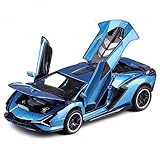
- Material:This model car is made of zinc alloy body,rubber tires and plastic parts.With Detailed interior and exterior trim, It is very sturdy.Car gets multiple processing, grinding sharp corners to prevent cuts child.
- Sound and light:Car doors,hood and trunk can be opened, accompanied with lights&sounds.Press the car body and open the doors can trigger the lights and real sounds.
- Pull back Cars:Place the car on the ground,just pull it back ,the model car will drive forward.Your kids can use it to play a chasing game with their friends.
- Size:Lamborghini Sian FKP37 is 1 /32 scale,Approx.6.3 * 2.7 * 1.6 inches.The size is similar with adult hands.It is very suitable for little boys and girls to grip.
- Gift:Fine workmanship,exquisite box with a display base,ideal birthday gift and holiday gift for kids boys and men who like collect model car.
Egyptian chariot warfare is often discussed in connection with the expulsion of the Hyksos and the military transformations of the New Kingdom. The broad association is important, but the details should not be simplified into a story in which the chariot suddenly appeared as an unstoppable weapon. Its effectiveness depended on trained crews, suitable terrain, horse management, repair, supply, and coordinated forces.
The vehicle’s symbolic role was as important as its tactical role. Royal images commonly connect the king’s ability to move rapidly with victory, control, and divine or political legitimacy. A ruler displayed not only the power to fight from a chariot but also the resources required to maintain horses, craftsmen, drivers, and military specialists.
Chariots were not restricted to combat. An Amarna-period relief recorded by the Metropolitan Museum shows court ladies in light chariots taking part in a royal procession. The image is a useful reminder that the chariot could be a vehicle of ceremony and court life as well as a weapons platform.
What’s actually slowing this PC down?
Pick the symptom - the matching free tool is one click away.
Hittite, Mitanni, and Iranian traditions
The eastern Mediterranean and Near East developed sophisticated chariot cultures. In the Hittite world, technical knowledge about horses and driving is unusually visible in the Kikkuli horse-training text. Preserved in Hittite, the text contains Indo-Aryan loanwords associated with chariot terminology and horse management.
This evidence demonstrates that chariot expertise circulated across cultural and linguistic boundaries. It does not, by itself, prove that the vehicle originated with the people whose language contributed the technical terms. Specialized knowledge can travel through alliances, migration, military service, and elite exchange without carrying a single, simple origin story with it.
In ancient Iran, chariots served military, ceremonial, sporting, and political purposes. Persepolis reliefs from the Achaemenid period provide detailed visual evidence for chariot construction, harnessing, and elite status. By this period, cavalry was becoming increasingly important, so the chariot could function as much as a symbol of rank and royal legitimacy as a decisive battlefield weapon.
The Iranian evidence also helps correct a common assumption: a vehicle can remain culturally important after its military advantage has begun to fade. A chariot’s appearance in a royal relief does not necessarily mean that chariot warfare remained the dominant military technology.
How chariots worked in battle
The most useful military description of a chariot is a mobile platform for specialist personnel, often including a driver and an archer or javelin user. The driver controlled the horses while the second occupant handled weapons. This division of labor allowed the crew to move, attack, and reposition more efficiently than a single person trying to manage a team and fight at the same time.
Its main advantages
- Mobility: a trained team could move a specialist crew quickly across open ground.
- Visibility: the occupants stood above foot soldiers, improving their view of formations and movement.
- Missile delivery: an archer or javelin user could approach, fire, and withdraw.
- Command movement: officers and rulers could move visibly around a battlefield or between units.
- Pursuit and intimidation: speed, noise, horses, and elevated occupants could exploit a disrupted formation and project authority.
These advantages made the chariot particularly valuable on open, relatively level terrain. It could act as a mobile missile platform or as a rapid transport system for elite fighters. Its precise role varied by army and period; there was no single universal “chariot tactic.”
Its limitations
- Terrain dependence: broken ground, steep slopes, narrow spaces, and obstacles restricted movement.
- Expense: a chariot required horses, specialist construction, storage, training, and maintenance.
- Vulnerability: a damaged wheel, fallen horse, or confused team could immobilize the entire vehicle.
- Crew dependence: a poorly trained driver or uncoordinated team could make the platform ineffective.
- Logistical burden: horses and vehicles needed food, water, transport, repair, and secure handling.
- Close-combat uncertainty: a light vehicle optimized for speed was not automatically strong in a melee.
The popular image of every warrior leaping from a chariot into hand-to-hand combat is too broad. In some artistic and literary traditions, a chariot appears to carry a fighter to and from the engagement. In others, it functions more clearly as a fighting platform. The evidence must be interpreted by culture and period rather than generalized across the entire ancient world.
Later scythed chariots illustrate the problem of over-specialization. Their blades and shock effect could be frightening, but they were not universally successful. Against disciplined troops and increasingly mobile cavalry, their need for room to maneuver could become a liability. A chariot’s effectiveness was always conditional on terrain, formation, training, and the opponent’s response.
China: chariots, command, and elite status
Chariots were used in Chinese warfare from approximately the second millennium BCE and were especially prominent during the Shang and Zhou periods. They served as elite status markers, command vehicles, archery platforms, and instruments of battlefield maneuver.
Chinese chariot warfare should not be treated as a simple copy of Near Eastern or steppe practice. Local societies adapted the vehicle to their own political systems, military organization, burial customs, and terrain. Archaeological work at Bronze Age Chinese burial sites combines chariot remains with horse remains and evidence for early horse transport. These discoveries help distinguish the social and technological role of chariots from later riding traditions.
As military systems changed, more mobile infantry and the growing importance of cavalry exposed the chariot’s limitations. A vehicle needed room to turn and a relatively predictable surface; a rider and horse could often operate across more varied ground. Chariots retained prestige even as their battlefield centrality diminished.
South Asia: the ratha as vehicle and symbol
In South Asian traditions, the ratha became a major military, political, ritual, and literary symbol. Ancient Indian warfare is often described through a fourfold army consisting of infantry, cavalry, elephants, and chariots. Chariots were particularly associated with elite warriors and with the Vedic and epic imagination.
Literary sources are indispensable for understanding the cultural meaning of the chariot, but they should not be treated as straightforward eyewitness reports of battlefield practice in every period. Epic descriptions can preserve older memories, idealized conventions, ritual language, or literary symbolism alongside historical information.
The Sinauli discoveries require similar care. They are culturally and politically prominent, but questions about classification, dating, the association of horses, and comparisons with Sintashta-type vehicles remain matters for specialist evaluation. The evidence supports the conclusion that South Asia possessed important and distinctive vehicle and chariot traditions. It does not justify the simplified claim that one modern nation independently invented all chariot technology, or that every early copper-framed vehicle was identical to a Sintashta-style spoke-wheeled war chariot.
Greece and Rome: from elite vehicle to spectacle
Chariots appear in Bronze Age Greece through art, tomb contexts, and terracotta models. A Late Helladic IIIA2 terracotta group in the British Museum depicts a man in a two-horse chariot and is dated approximately 1375–1300 BCE. A later Attic model with four-spoked wheels, dated approximately 750–700 BCE, shows that the vehicle continued to be represented even as its military role changed.
Rank #3

- Doors Open
- Pullback Action
- Die Cast Metal Body
- PULL BACK ACTION WITH FREE ROLLING WHEELS
By the classical Greek period, chariots were less central to battlefield tactics than heavily armed infantry and cavalry. They remained powerful in myth, ceremony, aristocratic identity, and sport. The vehicle’s cultural afterlife was not a minor footnote: it transformed chariot technology into a public language of status and competition.
The Tool Desk
Outbyte PC Repair FREEClear out junk files and repair common Windows errorsFree Scan →Outbyte Driver Updater FREEScan for outdated or missing drivers - takes under a minuteDriver Scan →Chariot racing became a major spectacle in the Greek and Roman worlds. In Rome, racing developed into a mass entertainment industry associated with venues such as the Circus Maximus, professional teams, factional loyalties, and enormous public audiences. A second-century CE pottery vessel from Roman Britain, decorated with a four-horse chariot race, demonstrates that the spectacle was familiar well beyond the city of Rome.
This transition from military equipment to sport is one of the chariot’s most important historical patterns. A technology can lose its original tactical advantage while gaining new value in ritual, ceremony, entertainment, art, and political display.
Independent reader supportYour contribution helps us test, update, and keep practical guides available for everyone.Why cavalry eventually replaced chariot warfare
The chariot did not become useless overnight. Its military decline was gradual and uneven. The balance shifted as mounted riders improved their skills, cavalry organizations became more effective, infantry learned to resist or absorb chariot attacks, and missile weapons and battlefield discipline developed.
Cavalry offered several structural advantages. A rider and horse could often cross more varied terrain, change direction without a vehicle, pursue an enemy through broken ground, and operate with less equipment than a chariot team. Cavalry also avoided the risk that a damaged axle or wheel would immobilize the fighting platform.
Crashes, No Sound, or Screen Glitches?
Random freezes, missing sound and display glitches usually trace back to one bad driver. Find and replace yours safely.Free scan · under a minutePC Slower Than It Used to Be?
A free scan shows the junk files, broken settings and background clutter dragging Windows down - then fixes them in one click.Free scan · Windows 10 & 11That did not make cavalry universally superior in every circumstance. Chariots could still provide a stable firing platform, command visibility, ceremonial presence, and psychological impact. Their decline means that they lost their relative military advantage in many settings, not that every chariot became useless or disappeared at the same time.
In some cultures, chariots survived as royal vehicles, hunting vehicles, ceremonial objects, racing machines, or symbols of rank. The end of chariot warfare was therefore not the end of chariot culture.
A short timeline of the chariot’s development
| Period | Development or use | Why it matters |
|---|---|---|
| Before the mature chariot | Wheeled carts and wagons, animal traction, and possibly horse riding | Established the underlying technologies without creating the specialized chariot. |
| Third millennium BCE | Near Eastern wheeled-vehicle experimentation | Shows that the path toward the chariot was already technologically active, though classifications remain debated. |
| About 2000 BCE and the early second millennium BCE | Sintashta-Petrovka contexts associated with spoke-wheeled horse-drawn vehicles | Provides some of the earliest archaeological evidence for a fully developed chariot tradition. |
| Second millennium BCE | Expansion of chariot traditions across Egypt and the Near East | Transforms the vehicle into a military, royal, and ceremonial technology. |
| Second millennium BCE onward | Chinese chariots become prominent in Shang and Zhou warfare | Demonstrates regional adaptation as a command, status, and military platform. |
| Bronze Age Greece | Chariots appear in art, burials, and models | Shows both practical and symbolic use in the Aegean world. |
| Classical and Roman periods | Reduced battlefield importance but continued ceremonial and racing use | Illustrates the vehicle’s transition from military technology to cultural spectacle. |
What the chariot really contributed to transport history
The chariot’s lasting contribution was not simply the invention of a vehicle with two wheels. Its importance was the deliberate optimization of a vehicle for speed, control, and elite personal movement.
It demonstrated several principles that would recur throughout transport history:
Quick wins for a faster PC:
Clear out junk files and repair common Windows errorsFree Scan →Fix the driver behind crashes, sound loss and screen glitchesFind Drivers →Repair Windows errors before they cause bigger problemsFix Now →- Lower weight can matter more than greater capacity when speed and maneuverability are the priority.
- Vehicle performance is a system property. Wheels, axle, body, animals, harness, crew, and terrain must be designed and managed together.
- Specialized transport creates specialized institutions. Chariots required training, craftsmen, horse care, logistics, and social organization.
- Technology can be political. A vehicle that only a small elite can afford becomes a visible sign of authority.
- Military technologies often acquire civilian and cultural afterlives. Chariots moved from warfare into hunting, procession, ritual, racing, art, and royal symbolism.
The useful comparison with the modern automobile is therefore about design philosophy, not direct ancestry. A chariot was not a car, and there is no simple uninterrupted line from Bronze Age chariot to modern road vehicle. But both can be understood as purpose-built mobility systems: machines that combine structure, propulsion, control, infrastructure, and social meaning to move people in a particular way.
How to read chariot evidence without overstating it
Chariots are unusually vulnerable to modern simplification because they appear in dramatic images and famous epics. A careful account should keep several distinctions in view:
- Artifact versus reconstruction: a surviving fitting or model is evidence of a feature, while a modern reconstruction tests how that feature might have worked.
- Representation versus routine practice: a royal relief may emphasize power and ceremony rather than record an ordinary scene.
- Literature versus battlefield report: epics and heroic traditions reveal cultural ideals but are not automatically eyewitness descriptions.
- Vehicle presence versus tactical use: a burial with a chariot demonstrates status and technology more securely than it demonstrates open-field combat.
- Regional tradition versus universal design: Egyptian, Iranian, Chinese, South Asian, Greek, and steppe chariots should not be treated as identical.
Those cautions do not make the history less impressive. They make the achievement more precise. The chariot was not one invention that appeared fully formed everywhere; it was a family of specialized solutions to the problem of moving people quickly with animal power.
Sources and object evidence
This account draws on the research cited in the dossier, including collection records from the British Museum and Metropolitan Museum, Encyclopaedia Iranica material on Iranian chariots, archaeological and experimental-archaeology research on Sintashta-Petrovka vehicles, studies of Bronze Age Chinese burials, and scholarship on South Asian chariot traditions. The evidence is strongest when physical remains, images, texts, and comparative engineering are considered together.
Frequently Asked Questions
Was the chariot the first wheeled vehicle?
No. Earlier four-wheeled carts and wagons existed, and horse riding may also have preceded the mature chariot in some regions. The chariot was one of the earliest specialized light vehicles designed for fast movement, not the first wheeled transport device.
Where was the chariot invented?
The origin remains debated. Sintashta-Petrovka sites in the southern Ural and northern Kazakhstan region provide some of the earliest archaeological contexts associated with fully developed spoke-wheeled horse chariots, around 2000 BCE or the early second millennium BCE. Earlier Near Eastern experimentation may also have contributed to the sequence of innovations.
Did ordinary people own chariots?
Usually not. Chariots required horses, specialist construction, trained crews, maintenance, and substantial resources. They were primarily elite, military, royal, ceremonial, hunting, or sporting vehicles rather than mass-market personal transportation.
Why did cavalry replace chariots?
Cavalry could often move across more varied terrain, turn and pursue without a vehicle, and operate with a lower logistical burden. Improvements in riding, cavalry organization, infantry tactics, missile weapons, and battlefield discipline gradually reduced the chariot’s relative military advantage.
Were all ancient chariots used for war?
No. Chariots also served in hunting, royal processions, ritual, ceremony, sport, and political display. Even where chariots were important in warfare, their precise tactical role varied by culture and period.
The Bottom Line
The chariot was not history’s first vehicle and not a universal ancient car. It was something more specific and, in its own way, more revealing: an early high-performance personal-mobility system built around light construction, horses, specialized wheels, trained crews, and elite resources. Its military use eventually declined as cavalry became more flexible, but its political and cultural power survived in royal imagery, ritual, racing, and the enduring idea that transport can be designed not merely to carry people, but to make movement itself a display of power.
Quick Recap
Product prices and availability are accurate as of the date/time indicated and are subject to change. Any price and availability information displayed on Amazon at the time of purchase will apply.




