Free tools Windows power users keep installed
One-click scans. No signup required.
Yes—but not as one fine or one lawsuit. Tesla has launched a limited Robotaxi service, yet the company still has to prove that Elon Musk’s much larger autonomy vision can become safe, legally authorized, scalable, profitable, and accurately represented. The bill is the accumulated accountability for years of aggressive deadlines and expansive claims.
The old promise and the new test
Elon Musk’s autonomy story has reached the point where another prediction is worth less than a verified operating result. Tesla now has a real Robotaxi service, but only in a limited and controlled form. That is meaningful progress. It is not proof that Tesla has delivered the older promise of millions of broadly capable, privately owned autonomous cars.




The bill coming due is therefore not one fine, one lawsuit, or one missed deadline. It is the accumulated cost of proving five things: that Tesla’s autonomous system is safe, that regulators will authorize it, that the network can expand beyond a small geofence, that the business can make money, and that the company’s public claims have been responsibly calibrated to what the technology could actually do.
Musk’s supporters can fairly say Tesla has crossed an important threshold. Critics can fairly say that a restricted Robotaxi service is a much smaller achievement than the expansive narrative that preceded it. Both statements can be true at the same time.
#1 Best Overall
What Musk promised
Tesla’s autonomy narrative has repeatedly moved faster than its demonstrated deployment.
- In 2016, Tesla publicized the idea that its vehicles already had the hardware required for full self-driving through a software update.
- In 2019, Musk predicted a Tesla robotaxi fleet and suggested that more than one million autonomous vehicles could be operating by the end of 2020.
- At the October 2024 Cybercab event, Tesla presented a vehicle without a steering wheel or pedals and revived the vision of unsupervised driving, large-scale production, and a Tesla-operated autonomous service.
Those statements belong in different categories. A forecast is not a capability demonstration. A staged demonstration is not a commercial service. A driver-assistance system that requires an attentive human is not the same product as a driverless vehicle operating within an approved service area.
That distinction matters because the public debate often compresses all of these stages into the phrase self-driving. Doing so makes Tesla look either further ahead or further behind than the evidence supports.
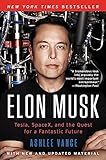
Readers seeking broader biographical context rather than a verdict on Tesla’s autonomy claims may find Walter Isaacson’s Elon Musk biography useful. It should be treated as background on Musk, not as evidence that Tesla’s Robotaxi strategy is technically or financially sound.
Recommended Free Tools
What Tesla actually delivered
Tesla’s 2025 annual filing says the company launched Robotaxi in June 2025 as an autonomous ride-hailing platform. The service initially used Model Y vehicles, with the Cybercab described as a future addition. That is a genuine product launch, not merely a concept reveal.
But the scope is crucial. Tesla’s January 2026 filing reported that driverless Robotaxi testing began in Austin in December 2025. It also said the company began removing the safety monitor from customer rides on a limited basis in January 2026. This describes a controlled transition toward unsupervised operation—not a nationwide fleet of autonomous Teslas available to anyone, anywhere.
The same filing described Austin as ramping unsupervised operation and listed expansion plans for Dallas, Houston, Phoenix, Miami, Orlando, Tampa, Las Vegas, and the Bay Area. Those locations are plans and targets, not evidence that a fully driverless commercial service had already launched in each market.
| Milestone | What it demonstrates | What it does not demonstrate |
|---|---|---|
| June 2025 Robotaxi launch | Tesla began operating a branded autonomous ride-hailing service. | A mature, nationwide, profitable network. |
| December 2025 Austin driverless testing | Tesla began testing without a safety driver in at least a limited Austin program. | General-purpose autonomy on every road or in every weather condition. |
| January 2026 limited safety-monitor removal | Some customer rides began moving toward a driverless model. | Unrestricted service or proof that the system is ready for private consumer ownership. |
| Planned expansion cities | Tesla intends to broaden its operating footprint. | Completed launches, permissions, fleet availability, or operating performance in those cities. |
FSD (Supervised) is not the same thing as Robotaxi
Tesla’s 2024 annual filing described Autopilot and FSD (Supervised) as advanced driver-assistance systems. The driver remains responsible and must stay fully engaged. That is a Level 2-style operating arrangement: the system can perform driving tasks, but the human is still the responsible fallback.
The National Highway Traffic Safety Administration has made the same practical distinction. The highest level of driving automation currently available for consumers still requires full driver engagement and undivided attention. NHTSA describes vehicles capable of driving without that human responsibility as a future automated-driving technology, not as something consumers can currently buy and use without supervision.
NHTSA’s Preliminary Evaluation PE25012, opened in October 2025, adds another reason to use careful language. The agency is examining whether Tesla’s FSD behavior could execute traffic-law violations and the safety consequences of those maneuvers. Its notice identifies FSD (Supervised) and FSD (Beta) as systems that require an attentive driver.
None of this prevents Tesla from operating a restricted Robotaxi service while selling FSD (Supervised). The two propositions are compatible. A company can run a limited driverless service inside a defined operating area while its consumer product remains a supervised driver-assistance system. What Tesla has not established is that ordinary Tesla owners can simply activate a general-purpose autonomous vehicle and transfer responsibility from themselves to the car.
Permits are part of the product
Autonomy is not only a software problem. A vehicle can perform well in testing and still be unable to provide paid rides in a particular state or city because the required approvals, insurance, reporting, vehicle rules, or operating permissions are not in place.
The Tool Desk
Outbyte Driver Updater FREEScan for outdated or missing drivers - takes under a minuteDriver Scan →Outbyte PC Repair FREERepair Windows errors before they cause bigger problemsFix Now →The California Department of Motor Vehicles’ permit list illustrates why regulatory language must be precise. In the permit snapshot dated May 8, 2026, Tesla Robotaxi LLC held an autonomous-vehicle testing permit with a driver. The DMV separately identifies companies authorized for driverless testing. A permit to test with a driver, authorization to test without one, permission to provide paid passenger service, and a fully commercial autonomous operation are different regulatory categories.
That California status does not by itself determine what Tesla may do in Austin, Texas. It does show why a single permit—or the existence of a service in one city—cannot be converted into a national claim about Tesla’s autonomous capability. Each expansion requires a combination of technical readiness and local authorization.
The five bills Tesla must now pay
1. The safety bill
The most important evidence will be operational data, not launch-event footage. Tesla needs to show how often Robotaxi vehicles require human intervention, how incidents compare with appropriate human-driving baselines, how often the vehicles violate traffic rules, and how severe the failures are when they occur.
Tesla itself identifies miles per intervention as a key Robotaxi metric in a 2026 hiring description. That is revealing, but it is not a performance result. It indicates that dependability remains an active engineering objective rather than a settled fact.
A useful safety disclosure would explain the denominator and the conditions: miles driven, rides completed, city and route limits, weather, time of day, intervention definitions, collisions, near misses, emergency stops, traffic citations, and whether a remote assistance team was involved. A single impressive mileage figure can conceal a highly restricted operating environment. A low intervention rate can also be misleading if interventions are defined narrowly or if difficult trips are excluded.
The key question is not whether a Robotaxi can complete a carefully selected ride. It is whether the service can do so repeatedly, predictably, and safely as the operating domain expands.
Rank #3
2. The regulatory bill
Every new city creates a new approval problem. Tesla must deal with testing permissions, passenger-service authorization, vehicle requirements, insurance, local transportation rules, and the reporting obligations attached to autonomous operation.
This is where Tesla’s strategy faces a potentially different challenge from its software-first image. A system that works technically may still take years to deploy broadly if regulators require more evidence or if rules differ from one jurisdiction to another. Regulatory delay is not necessarily proof that the technology failed; it is also not something investors can ignore when calculating the pace of expansion.
Do these 3 things before closing this tab:
1Scan for outdated or missing drivers - takes under a minute2Clear out junk files and repair common Windows errors3Fix the driver behind crashes, sound loss and screen glitches3. The scale bill
Austin is a beachhead, not a completed network. Tesla’s filings identify a long list of intended markets, but planned coverage is not the same as operating coverage.
Scaling also means more than adding city names to a presentation. Tesla would need sufficient vehicles, charging capacity, cleaning and maintenance operations, customer support, incident response, mapping or operating-domain controls, and a process for handling unusual situations. The system must become more reliable while the environment becomes less predictable.
The historical record makes this especially important. A missed target can be dismissed as an over-optimistic forecast. A repeated pattern of forecasts followed by limited deployment becomes a credibility problem that every new target must overcome.
4. The economics bill
The Robotaxi thesis depends on more than revenue per ride. It depends on utilization, vehicle ownership, insurance, charging, maintenance, depreciation, customer support, cleaning, fleet management, remote assistance, and the cost of handling failures.
What’s actually slowing this PC down?
Pick the symptom - the matching free tool is one click away.
Tesla’s filings describe a service-driven model in which autonomous vehicles could generate revenue while the company operates the platform. They do not, by themselves, prove that the model is profitable at scale. Nor do they establish how much of the economics would belong to Tesla, vehicle owners, fleet partners, or other participants.
The questions investors should ask are concrete:
- How many hours per day is each vehicle carrying passengers rather than charging, waiting, being serviced, or repositioning?
- What is the average fare and revenue per vehicle mile?
- What does a driverless ride cost after insurance, cleaning, maintenance, energy, support, and depreciation?
- How much human labor is required for remote assistance and customer service?
- Does adding a new city improve the economics, or does every market require a costly local operating structure?
- Can Tesla make money with ordinary customer-owned vehicles, or does the model require a centrally managed fleet?
Until those figures are disclosed, the Robotaxi remains a promising business thesis rather than a demonstrated profit engine.
5. The credibility bill
Musk’s deadlines helped create expectations among customers, investors, employees, and the broader technology industry. The 2019 prediction of more than one million autonomous vehicles by the end of 2020 is therefore not just an old quote. It is part of the context against which new promises are judged.
Tesla did not need to deliver every forecast exactly on schedule for autonomy to remain a credible long-term project. But the gap between a forecast of ubiquitous autonomous Teslas and a limited, geofenced service is too large to wave away with another product unveiling. Tesla now needs to show what changed, what remains difficult, and which milestones are forecasts rather than commitments.
Windows Errors? Fix Them Before They Spread
Repair common Windows errors and clear accumulated junk for a smoother, more stable PC - no reinstall needed.Free scan · no reinstallOutdated Drivers Are Slowing You Down
One free scan finds every outdated or missing driver and matches the right update for your exact hardware.Free scan · exact hardware matchTesla is not competing in a vacuum
The relevant comparison is not Tesla versus companies with no autonomous service. Waymo’s official materials describe fully autonomous ride service expanding across more than ten U.S. markets in 2026. Its February 2026 announcement covered Dallas, Houston, San Antonio, and Orlando.
Axios reported in August 2026 that Waymo had logged more than 220 million miles and approximately 500,000 trips per week across 11 cities. Those figures should be attributed to the company rather than treated as an independent audit, but they illustrate the difference between an expansion plan and a service operating across multiple markets.
Zoox also received federal regulatory approval in 2026 to deploy its purpose-built vehicle without a steering wheel or pedals. That highlights the breadth of Tesla’s competition. Tesla is not competing only on neural networks or camera hardware. It is competing on fleet design, operating domains, regulatory execution, service logistics, and the ability to build public confidence.
The approaches are materially different:
| Company approach | Strategic emphasis | Main accountability question |
|---|---|---|
| Tesla | Camera-based autonomy, large-scale vehicle data, ordinary Tesla vehicles, and eventual Cybercab deployment. | Can a broad vehicle fleet become reliably driverless without the narrow controls used by dedicated robotaxi operators? |
| Waymo | Fully autonomous ride service in defined markets with tightly controlled operating conditions. | Can a more controlled system expand economically across many cities? |
| Zoox | A purpose-built autonomous vehicle without conventional steering controls. | Can a new vehicle design receive approvals and achieve practical fleet scale? |
These are different cost structures and different failure modes. Tesla’s potential advantage is fleet scale and data from vehicles already on the road. Its burden is proving that a system intended for a much wider range of vehicles and roads can match the reliability of more tightly controlled fleets.
What Musk’s legal problems do—and do not—prove
The phrase the bill finally comes due can also refer to Musk’s personal legal and corporate-accountability exposure. That subject needs to be kept separate from the technical question.
On March 20, 2026, a jury in the Twitter-investor case found Musk liable on two statements under Section 10(b) and Rule 10b-5 while rejecting other claims. A partial judgment was entered on April 3, 2026. Tesla’s 2026 filing said post-trial motions remained pending.
Separately, the Securities and Exchange Commission announced on May 4, 2026, that Musk’s revocable trust consented, subject to court approval, to a $1.5 million civil penalty over alleged late beneficial-ownership reporting. The proposed resolution also called for Musk personally to be dismissed if the judgment was entered.
Those proceedings do not establish that Tesla’s autonomy claims were fraudulent. The Twitter-investor verdict concerns specific statements in a separate securities dispute. The SEC matter concerns beneficial-ownership reporting. Neither case answers whether Robotaxi is safe, whether FSD (Supervised) is capable within its stated limits, or whether Tesla can build a profitable autonomous network.
Best Value
They do establish something narrower but important: Musk’s public statements, securities conduct, and corporate influence are receiving formal scrutiny. That makes careful disclosure more important, not less. If a company’s valuation and public identity are closely tied to its founder’s predictions, the difference between an aspiration, a product claim, and a verified result becomes a governance issue.
What would settle the argument?
The next decisive evidence will not be another unveiling. It will be a transparent operating record. A serious accountability package would include:
- City-by-city authorization: the exact status of testing, driverless testing, paid passenger service, and commercial operation in each market.
- Independent safety analysis: intervention rates, collision and near-miss data, traffic-law compliance, operating conditions, and comparable human-driving exposure.
- Clear remote-assistance disclosure: how often remote personnel are contacted, what they can see, what they can recommend, and whether they can directly control a vehicle.
- Reliability under expansion: results as the service encounters more roads, weather, traffic patterns, construction zones, and unusual events.
- Unit economics: revenue, utilization, operating cost, insurance, maintenance, energy, support, depreciation, and the allocation of revenue among Tesla and other participants.
- Accurate product language: continued, prominent explanation that FSD (Supervised) requires an attentive driver and is not the same as a driverless Robotaxi.
- Milestone discipline: a clear separation between an aspiration, a planned launch, a regulatory approval, and an operating result.
If Tesla supplies that evidence, the company can earn credit for building a new transportation business even if Musk’s earlier deadlines were too aggressive. If it does not, the Robotaxi launch will look less like the fulfillment of the old promise and more like a smaller service being asked to carry the weight of a much larger story.
The bottom line
Tesla has not delivered nothing. It launched Robotaxi in Austin in June 2025, began driverless testing there in December, and started limited safety-monitor removal in January 2026. Those are real milestones.
Quick wins for a faster PC:
Scan for outdated or missing drivers - takes under a minuteDriver Scan →Repair Windows errors before they cause bigger problemsFix Now →But they validate only a restricted stage of the autonomy roadmap. They do not validate ubiquitous autonomous Teslas, a consumer-owned Level 4 or Level 5 fleet, or a profitable global robotaxi network. The bill now comes due in the form of evidence: safe miles, lawful operation, approved expansion, strong utilization, credible margins, and disciplined claims.
Whether Musk ultimately pays that bill will depend on what Tesla can document next—not on what it promises at the next unveiling.
Frequently Asked Questions
Is Tesla FSD actually autonomous?
No. Tesla’s FSD (Supervised) is described as an advanced driver-assistance system that requires the driver to remain responsible, fully engaged, and attentive. It should not be described as a driverless consumer vehicle.
Did Tesla actually launch a Robotaxi service?
Yes, but in a limited form. Tesla’s 2025 filing said Robotaxi launched in June 2025, initially using Model Y vehicles. Tesla later reported driverless testing in Austin beginning in December 2025 and limited removal of safety monitors from customer rides in January 2026.
Quick wins for a faster PC:
Clear out junk files and repair common Windows errorsFree Scan →Fix the driver behind crashes, sound loss and screen glitchesFind Drivers →Which cities have Tesla Robotaxi service?
No. The listed cities represent expansion plans. Tesla’s January 2026 filing described Austin as ramping unsupervised operation and identified Dallas, Houston, Phoenix, Miami, Orlando, Tampa, Las Vegas, and the Bay Area as planned coverage—not as a completed nationwide network.
Has Elon Musk been found legally responsible for false Tesla autonomy claims?
No. The March 2026 Twitter-investor verdict and the SEC’s May 2026 beneficial-ownership reporting matter are separate legal proceedings. They create scrutiny around Musk’s statements and securities conduct, but they do not by themselves establish that Tesla’s autonomy claims were fraudulent or that Robotaxi is unsafe.
The Bottom Line
Bottom line: Tesla’s Austin Robotaxi service is a meaningful first deployment, but it is not the broad autonomous future Musk once promised. The real test is now operational: safety, permits, scale, economics, and verifiable disclosure.
Quick Recap
Product prices and availability are accurate as of the date/time indicated and are subject to change. Any price and availability information displayed on Amazon at the time of purchase will apply.
Do these 3 things before closing this tab:
1Repair Windows errors before they cause bigger problems2Fix the driver behind crashes, sound loss and screen glitches3Clear out junk files and repair common Windows errors



