What’s actually slowing this PC down?
Pick the symptom - the matching free tool is one click away.
There is no single best electric car for every buyer in 2026. For most U.S. shoppers, the smartest shortlist starts with the 2026 Tesla Model 3 for sedan buyers, the 2026 Hyundai Ioniq 5 for crossover shoppers, the 2026 Chevrolet Equinox EV for value and practicality, the 2026 Nissan Leaf for the lowest entry price, and the 2026 Kia EV9 for three-row space.
Choose among them based first on whether you can charge at home, then on body style, budget, winter climate, road-trip frequency, passenger and cargo needs, and towing. Range alone is not enough: charging speed, charging-station reliability, service access, insurance, tires, and depreciation can matter just as much.
This guide covers new battery-electric vehicles available in the United States during calendar year 2026 and labels them by model year. Unless noted otherwise, prices are manufacturer-listed MSRP before taxes, registration, dealer charges, and often destination. The federal new-vehicle, used-vehicle, and commercial clean-vehicle credits are not available for vehicles acquired after September 30, 2025, so do not deduct the former $7,500 credit from a 2026 purchase price.
The best electric cars for 2026 at a glance
The category winners below are editorial recommendations, not a claim that one vehicle is objectively superior in every test. Independent publications reach different conclusions because they use different methods: Car and Driver emphasizes instrumented testing and driving enjoyment, Edmunds combines real-world testing with category ratings, Cars.com named the EV9 its 2026 overall EV, MotorTrend ranked the Chevrolet Blazer EV first, and Consumer Reports incorporates road tests, predicted reliability, owner satisfaction, and safety.
#1 Best Overall

- Flex Level 1 EV Charger - The EVDANCE Level 1 electric car charger is compatible with J1772 electric vehicles and plug-in hybrid vehicles (North American Standard). *Tesla requires a SAE J1772 adapter.
- Convenient to Use - This charger has both NEMA 6-20 plug for 16A 240V charging (3.68kW, 10-12 mi/h) and a NEMA 6-20 to 5-15 plug adapter for 12A 120V charging (1.44kW, 2-5 mi/h). The included bag makes it easier to carry on the go. It also has a 25ft cable length, you can use it flexibly from anywhere in the garage or driveway.
- Check Your Outlet Type -This charger works with standard 120V NEMA 5-15/5-20 outlets (2-5 mph charging speed) and 240V NEMA 6-20 outlets (10-12 mph) . It's not compatible with NEMA 6-15/10-30/14-30/14-50/6-50 outlets – you'll need a NEMA 14-50/14-30/10-30/6-50 to 6-20 adapter (sold separately) to connect.
- Compatible EV Models -This EV charger works with most major electric vehicles, including Ford, Chevrolet, Hyundai, Audi, Nissan Ariya, Rivian R1S, Kia, and others. However, it's not compatible with Mini Cooper Electric Hardtop,Toyota Prus Prime/Z4X/RAV4Prime, Porsche Taycan Base/4S/Turbo/Turbo S or Tesla models (Tesla requires a J1772 to Tesla Adapter, sold separately). For a full list of compatible models, check out the Full Compatibility List on our product page.
- Indication Displays - LED display that can tell you the status as well as indicate errors while charging your electric vehicle.
| Vehicle | Model year | Body style | Starting price | EPA-estimated range | Independent result | Best for | Main reason to skip it |
|---|---|---|---|---|---|---|---|
| Tesla Model 3 | MY2026 | Sedan | $36,990 listed price | 321–363 miles | 338 miles in an Edmunds Long Range test | Efficiency, software, sedan value, road trips | Minimalist controls, service concerns, brand and software-policy objections |
| Hyundai Ioniq 5 | MY2026 | Crossover | $35,000 MSRP before freight | 259–318 miles | 282 miles in an Edmunds test | Comfort, space, fast charging, broad trim choice | Earlier-year ICCU recall history and imperfect cargo/rear visibility |
| Nissan Leaf S+ | MY2026 | Hatchback | $29,990, plus $1,545 destination | 303 miles | 310 miles in a higher-trim Platinum+ | Lowest purchase price with long range | Front-wheel drive and slow DC fast charging |
| Chevrolet Equinox EV | MY2026 | Crossover | $34,995 MSRP | Up to 319 miles | 356 miles in an Edmunds FWD test | Practical SUV value and available Super Cruise | Trim equipment, charging details, and dealer/software support require verification |
| Kia EV9 | MY2026 | Three-row SUV | $54,900 MSRP before destination; $56,495 including destination in Cars.com pricing | 230–305 miles | Cars.com reports less than 25 minutes from 10–80% in optimal conditions | Usable third row and family road trips | Large, expensive, and shortest-range versions are not ideal for long trips |
| Hyundai Ioniq 9 | MY2026 | Three-row SUV | $58,955 MSRP | 311–335 miles | 366 miles in an Edmunds test | Maximum three-row range and a softer family interior | Higher price and less established long-term evidence |
| Mercedes-Benz CLA 250+ Electric | MY2026 | Compact sedan | $47,950 | 374 miles | No independent result cited here | Efficiency-focused luxury | New platform, compact packaging, and limited long-term reliability data |
| Lucid Air | MY2026 | Luxury sedan | From $72,400 according to Car and Driver | Up to 512 miles | Trim-specific result not cited here | Maximum range and efficiency | Price, limited service footprint, and sedan-only practicality |
| Porsche Taycan | MY2026 | Performance sedan/wagon | From $108,050 | 251–293 miles | Not ranked here by range | Handling, braking, driving position, and charging performance | Options, tires, insurance, and repairs can be exceptionally expensive |
How to read the numbers: EPA figures are standardized estimates, not promises. Independent results are not directly interchangeable because test route, speed, temperature, wheels, tires, battery state, and test procedure differ. Tesla pricing can include changing regional fees; Hyundai and Kia prices generally exclude freight and dealer charges.
First decide whether you can charge at home
Home charging is the most important buying decision, and it should come before comparing a 300-mile EV with a 500-mile EV. Ask four practical questions:
- Do you have a garage, driveway, or dedicated parking space?
- Can your electrical panel support a 240-volt Level 2 charger, and will installation require a panel upgrade?
- If you rent or live in a multifamily building, is charging available overnight rather than merely advertised?
- Is workplace charging dependable, or would public DC fast charging be your primary source of energy?
A homeowner who drives 40 miles most days can often replenish that use overnight with Level 2 charging. An apartment resident who relies on public DC chargers needs a different kind of EV: one with dependable route planning, strong DC charging, convenient access to several networks, and a charging corridor near home and work. A very large battery does not solve an inconvenient charging routine.
AC Level 1 charging from a household outlet is slow but can work for low-mileage drivers with long parking periods. AC Level 2 is usually the most useful home and workplace solution. DC fast charging is primarily for road trips and people who cannot charge at home. Before buying, use the DOE charging-network information and inspect the actual stations along your routes, not just the number of plugs shown in an app.
Best electric car for most sedan buyers: 2026 Tesla Model 3
The 2026 Tesla Model 3 is the best starting point for a buyer who wants a sedan, strong efficiency, competitive range, mature route-planning software, and broad access to Tesla’s fast-charging ecosystem. It is not the best answer for every driver, but it is the most complete sedan recommendation for most shoppers who are comfortable with Tesla’s ownership model.
What you get
Tesla lists the Standard at $36,990 with 321 EPA-estimated miles, the Premium RWD at $42,490 with 363 miles, the Premium AWD at $47,490 with 346 miles, and the Performance at $54,990 with 309 miles. Prices and displayed regional fees can change, so verify the vehicle-specific total before ordering. Tesla’s Model 3 page is the appropriate reference for current configurations.
Edmunds named the 2026 Model 3 its Top Rated Electric Car and recorded 338 miles with a Long Range test vehicle. That result supports the Model 3’s efficiency reputation, but it does not mean every trim or driving condition will deliver 338 miles. Car and Driver ranks the 2026 Model 3 first among electric sedans and lists a 309–363-mile EPA range span.
The rear cargo opening is more useful than a conventional sedan trunk, and even non-Performance versions have strong acceleration. The Premium RWD is the logical value-and-range choice. Premium AWD makes sense when traction and quicker acceleration matter more than maximum range. Performance is a choice for driving enjoyment, not efficiency or value.
Why choose something else
- The cabin is minimalist, with many functions concentrated on the central touchscreen. Buyers who want physical controls should drive it at night and in bad weather before committing.
- Service and collision-repair experiences vary by location, and Tesla does not operate a conventional dealer network. Check local repair capacity, loaner policies, and parts wait times.
- Consumer Reports has cited below-average Tesla brand reliability and build-quality concerns. That is brand-level evidence, not proof that every 2026 Model 3 will fail, but it belongs in the ownership decision.
- It is less useful than a crossover for tall cargo, bulky child equipment, and upright rear-seat access.
- Tesla driver assistance is not autonomous driving. Tesla says Full Self-Driving (Supervised) still requires an attentive driver who is prepared to take control.
Buy the Model 3 if: you want an efficient sedan, have reasonable access to Tesla charging, and accept touchscreen-heavy controls and Tesla’s service model. Skip it if: you need SUV cargo space, dislike the brand or software policies, or lack a satisfactory local repair option.
Best electric crossover for most buyers: 2026 Hyundai Ioniq 5
The 2026 Hyundai Ioniq 5 is the strongest all-around crossover recommendation because it combines a comfortable ride, a spacious flat-floor cabin, easy-to-use controls, useful vehicle-to-load capability, a broad range of trims, and unusually quick DC charging.
Hyundai lists a $35,000 starting MSRP before freight, taxes, title, license, and dealer pricing. Rear-wheel-drive SE, SEL, and Limited versions reach 318 EPA-estimated miles. SE and SEL AWD versions are rated at 290 miles, Limited AWD at 269, and the XRT AWD at 259. The rear-wheel-drive, smaller-wheel versions are the efficiency picks; AWD and XRT trade range for traction, power, or rough-road capability.
Why its charging matters
The Ioniq 5 uses an 800-volt architecture. Hyundai quotes approximately 20 minutes from 10–80% on a 350-kW charger with the included CCS adapter. For native NACS charging, Hyundai quotes approximately 24 minutes for the smaller battery and 30 minutes for the 84-kWh battery under specified conditions. These are manufacturer claims, and actual results depend on battery temperature, charger output, starting state of charge, and the charging curve.
Do these 3 things before closing this tab:
1Clear out junk files and repair common Windows errors2Scan for outdated or missing drivers - takes under a minute3Repair Windows errors before they cause bigger problemsEdmunds recorded 282 miles in its EV Range Test and rated the Ioniq 5 8.3 out of 10. The difference between 318 EPA miles and 282 tested miles is not a contradiction; it illustrates why route, speed, weather, tires, and testing procedures matter.
Reliability context and trade-offs
Earlier Ioniq 5 model years deserve specific recall checking. A National Highway Traffic Safety Administration recall involved the integrated charging control unit, or ICCU, in specified 2022–2024 vehicles produced through October 9, 2024. That is a reason to check the VIN on used, leftover, or pre-owned inventory—not evidence that the 2026 model has the same defect. Read the NHTSA recall documentation and ask the dealer to show completed recall work.
Rank #2
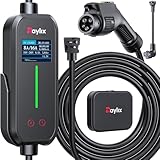
- [2026 INTELLIGENT CHARGING UPGRADE — PRECISION CONTROL MEETS SMART SCHEDULING] After surveying 100K+ U.S. EV owners, the Raylix R&D team found that nearly all drivers recognized the necessity of adjustable current and scheduled charging. Our upgraded J1772 charger features 4-level adjustable current (8A/10A/12A/16A) and a 1–12 hour smart delay timer. Whether you're charging overnight or during off-peak hours, enjoy smarter energy use, lower costs, and total convenience—on your schedule.
- [ONE CHARGER, ALL J1772 EVs/PHEVs READY!] Compatible with all SAE J1772 electric vehicles and plug-in hybrids—whether it’s Ford, GM, Nissan, Audi, BMW, Kia, Hyundai, Honda, Chevy, or more. Perfect for home or on-the-road charging, our 16A Level 1 & 2 charger ensures your EV is always powered and ready for any journey.
- [CHARGE 4× FASTER — NO MORE WAITING] In a rush? Our 16A Level 1 & 2 charger delivers charging speeds up to 4× faster than standard 8A Charger Level 1. Whether it's an early commute, a spontaneous trip, or last-minute errands, your EV will be ready when you are.
- [LEVEL 1 & 2 PORTABLE CHARGER — CHARGE ANYWHERE, ANYTIME] Designed for maximum flexibility, Raylix Level 1 & 2 EV charger features both 5-15 and 6-20 plug compatibility. Whether you're charging in your garage, at a friend's house, or at a roadside motel. NEMA 6-20 plug for Level 2 ev charging (240V, 16A, 3.68kW, 9-12 miles/hr) and a NEMA 5-15 adapter for Level 1 ev charging (120V, 12A, 1.44kW, 3-5 miles/hr) NOTE: In compliance with North American electrical safety standards, the charger automatically limits current to 12A when using a 5-15 outlet—protecting both your vehicle and your home’s electrical system.
- [AT-A-GLANCE CHARGING COMMAND: TOTAL CONTROL, INSTANTLY] While most ev chargers solutions confine vital data to in-car screens, the Raylix tesla charger breaks free with its enhanced TFT color display. This Raylix-exclusive feature delivers crystal-clear, real-time updates—voltage, current, power load, AND critical charging temperature—directly on the unit. Just one glance gives you complete charging insight. It’s not just information; it's the empowering peace of mind and satisfying control that transforms every charge into a masterfully managed experience.
Hyundai provides a 10-year/100,000-mile hybrid/electric battery warranty in the United States; consult the warranty booklet for exclusions, transferability, and the distinction between defects and capacity loss. The rear view and cargo shape are not as SUV-like as those of a boxier Equinox EV, and dealer pricing can vary significantly.
Buy the Ioniq 5 if: you value comfort, quick road-trip charging, a roomy cabin, and conventional controls. Skip it if: you need maximum cargo height, dislike checking recall and service history, or require the longer range of the RWD version but also insist on AWD or XRT styling.
The Tool Desk
Outbyte PC Repair FREEClear out junk files and repair common Windows errorsFree Scan →Outbyte Driver Updater FREEScan for outdated or missing drivers - takes under a minuteDriver Scan →Best affordable EV: 2026 Nissan Leaf S+
The 2026 Nissan Leaf S+ is the lowest-cost recommendation here for a new EV with more than 300 miles of EPA-estimated range. It starts at $29,990, while the SV+ starts at $34,230 and the Platinum+ at $38,990. Nissan lists a $1,545 destination charge on its specifications page, putting the effective pre-tax starting figure above the headline MSRP.
The S+ is rated at 303 EPA-estimated miles, and the long-range trims use a 75-kWh battery. The redesigned Leaf has a native NACS port, and Nissan says it can access more than 29,000 Tesla Superchargers, subject to station and vehicle compatibility. Standard driver-assistance equipment and Nissan’s dealer network strengthen its value proposition.
The crucial compromise is charging. Edmunds recorded 310 miles with a Platinum+ whose EPA rating was 259 miles, but criticized the Leaf’s ride, cabin noise, rear-seat space, and relatively slow fast-charging performance. Edmunds testing information says the Leaf can accept up to 150 kW, yet its overall charging performance is slower than that of newer 800-volt competitors. The S+ is front-wheel drive only.
That makes the Leaf a strong commuter and budget EV, not automatically a road-trip champion. The Platinum+ adds equipment but costs substantially more; compare its features and charging needs before assuming the loaded version is the best value.
Quick wins for a faster PC:
Scan for outdated or missing drivers - takes under a minuteDriver Scan →Clear out junk files and repair common Windows errorsFree Scan →Fix the driver behind crashes, sound loss and screen glitchesFind Drivers →Buy the Leaf if: purchase price, range per dollar, native NACS, and a familiar Nissan dealer matter most. Skip it if: you make frequent long highway trips, need AWD, regularly carry adults in the rear, or want the quietest and quickest-charging EV.
Best value electric crossover: 2026 Chevrolet Equinox EV
The 2026 Chevrolet Equinox EV is the practical-value choice for buyers who want an SUV shape without moving into luxury pricing. Chevrolet lists a $34,995 starting MSRP and up to 319 EPA-estimated miles in front-wheel-drive form. Edmunds recorded 356 miles with a tested FWD Equinox EV in its own EV Range Test, exceeding that vehicle’s EPA estimate.
Chevrolet lists up to 57.2 cubic feet of cargo volume and offers Super Cruise on eligible trims. Its conventional crossover layout, broad GM dealer footprint, and low entry price make it a compelling alternative to the Ioniq 5 and Model 3 for families who want easier cargo loading.
The trim warning
The least expensive Equinox EV and the longest-range Equinox EV are not necessarily the same configuration. Confirm the battery, drive system, wheel size, standard safety equipment, driver-assistance features, heat-pump or winter equipment where applicable, and DC fast-charging specifications on the window sticker. Do not rely on a claim such as miles added in 10 minutes without checking the charger power and state-of-charge conditions behind it.
Free tools Windows power users keep installed
One-click scans. No signup required.
Also evaluate the local GM dealer’s EV service capacity and software experience. The Equinox EV is a strong value on paper, but the ownership experience can depend heavily on the specific dealer and negotiated transaction price.
Buy the Equinox EV if: you want an affordable, useful crossover and a conventional dealer relationship. Skip it if: you prioritize the fastest charging, want the most polished cabin in the class, or find that the trim with the equipment you need has lost the price advantage.
Best three-row electric SUV: 2026 Kia EV9
The 2026 Kia EV9 is the best three-row EV for most families because its third row is genuinely usable, its cabin and cargo packaging are strong, and it combines family space with fast charging. Cars.com named it the Best Electric Vehicle of 2026.
Kia lists a $54,900 starting MSRP before destination, while Cars.com lists $56,495 including destination. EPA-estimated range spans 230–305 miles depending on configuration. In 2026, the EV9 gains a standard NACS port, slightly more range, and a GT trim. Cars.com reports less than 25 minutes from 10–80% in optimal conditions on a 350-kW charger.
Recommended Free Tools
Rank #3
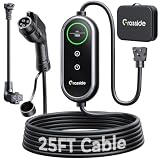
- Universal J1772 Compatibility: Designed with a standard J1772 connector, this J1772 charger works with most J1772 electric vehicles and PHEVs, including BMW, Mercedes-Benz, Hyundai, Kia, Nissan, Rivian, Ford, Chevy, Volkswagen, Toyota and more. Note: Tesla vehicles require a J1772 to Tesla adapter (not included)
- Flexible Outlet Compatibility: This portable EV charger comes with a NEMA 6-20 plug and a NEMA 5-15/5-20 to 6-20 adapter. Supports Level 1 (8–12A) and Level 2 (16A). Max 12A (1.44kW) on 120V NEMA 5-15/5-20 outlets, and full 16A (3.84kW) with a 240V NEMA 6-20 outlet. One charger is designed to cover home, garage, and travel charging needs with reliable performance
- Adjustable Smart Charging Control: Customize charging safely with adjustable current settings (8A/10A/12A/16A) to match different circuits. The 0–12 hour delay timer helps schedule overnight charging during lower electricity rates. Integrated LCD display shows real-time voltage, current, power, and charging status for clear monitoring without apps. Note: Press 'A' or 'T' for 3s to set and confirm.
- Home Charging & Travel Backup: For daily home use while remaining fully portable for travel. This level 1 ev charger includes a durable 25FT ev charging cord, providing flexible reach for garage or driveway charging. Charge overnight to take advantage of lower utility rates—potentially saving up to $500 annually on electricity costs. The included carrying case makes storage easy and keeps a dependable backup charger available in your trunk for road trips or visiting friends
- Engineered For Safety & Durability: Built for dependable daily use, this electric car charger features an IP65 waterproof rating for all weather operation. Equipped with a UL-listed cable, fully rubberized connector, and advanced protection against overcurrent, overheating, and electrical faults. Designed to ensure safe, stable, and long-term charging performance in demanding environments
The EV9’s 800-volt system is a meaningful advantage for family road trips, but only when a high-output charger is available and the battery is prepared. Large wheels and AWD can reduce efficiency. The shortest-range versions are not the best choices for buyers who regularly drive long distances between charging stops.
Kia provides 10-year/100,000-mile EV system and battery coverage. Kia states that its battery coverage addresses capacity below 70% of original capacity; review the Kia warranty terms for exclusions and transfer rules.
Buy the EV9 if: you need three rows, want fast charging, and can live with a large SUV. Skip it if: your family rarely uses the third row, your budget is closer to $40,000, or you want maximum range per charge rather than the EV9’s packaging and charging balance.
EV9 versus Hyundai Ioniq 9
The 2026 Hyundai Ioniq 9 is the most important EV9 alternative. It starts at $58,955 and Hyundai lists 335 EPA-estimated miles for the S, 320 for the SE and SEL, and 311 for Limited, Calligraphy, and Calligraphy Design trims. Edmunds recorded 366 miles in its EV Range Test and rated it 8.4 out of 10.
Choose the Ioniq 9 when maximum range, a softer premium family interior, seven-passenger usability, and Hyundai’s warranty and route-planning package matter most. Choose the EV9 when you prefer its available configurations, conventional SUV design, pricing structure, or the more established independent coverage. In either vehicle, install the family’s rear-facing seats, sit in the third row, and measure the cargo space behind it before buying.
Best luxury and long-range electric cars
2026 Mercedes-Benz CLA EV: best efficiency-focused luxury sedan
The 2026 Mercedes-Benz CLA 250+ Electric starts at $47,950 and has a 374-mile EPA-estimated range. The CLA 350 4MATIC Electric starts at $50,500, produces 349 combined horsepower, and has a 312-mile EPA-estimated range. Mercedes describes the new CLA as an 800-volt vehicle with both J1772 and NACS charging ports.
The rear-wheel-drive CLA 250+ is the range choice; AWD costs range. It is a compact sedan, not a crossover, and it is a new platform with limited long-term reliability and resale evidence. Treat the EPA numbers as official estimates and wait for independent results before making claims about real-world range or charging leadership.
Buy it if: you want an efficient entry-luxury sedan and can accept compact packaging. Skip it if: you need a high cargo opening, established reliability data, or a proven service history.
Outdated Drivers Are Slowing You Down
One free scan finds every outdated or missing driver and matches the right update for your exact hardware.Free scan · exact hardware matchPC Slower Than It Used to Be?
A free scan shows the junk files, broken settings and background clutter dragging Windows down - then fixes them in one click.Free scan · Windows 10 & 112026 Lucid Air: best maximum range and efficiency
The 2026 Lucid Air is the range specialist. Lucid’s 2026 materials list the Air Pure at up to 420 miles, the Touring at 431 miles, and the Grand Touring at up to 512 miles. Lucid also lists 5.0 miles per kWh for the Pure under EPA ratings. Car and Driver’s ranking page lists a $72,400 starting price and a 420–480-mile EPA range span, so buyers should verify the exact trim and current window sticker rather than treating one range span as universal.
The Air is a remarkable choice for buyers who need to minimize charging stops and can afford the price. It is not automatically the lowest-cost EV to own: insurance, tires, depreciation, financing, and service access can outweigh energy efficiency. Lucid’s service and repair footprint is smaller than those of Tesla, Hyundai, Kia, GM, or BMW, so local coverage should be a purchase prerequisite.
Buy it if: range and efficiency are worth paying for and Lucid service is practical near you. Skip it if: you need an SUV, want a broad dealer network, or are stretching your budget to buy the largest battery.
2026 Porsche Taycan: best performance EV
The 2026 Porsche Taycan is the performance choice. Car and Driver gives it a 10 out of 10 rating, lists a $108,050 starting price, and shows a 251–293-mile EPA-estimated range span. Porsche’s 800-volt system supports up to 320 kW under appropriate battery and charger conditions. Porsche also says its 2026 charging update adds Plug & Charge access at more than 27,500 Tesla Superchargers through Porsche Charging Service.
The Taycan’s strengths are handling, braking, driving position, high-speed stability, and charging performance—not range per dollar. Options can materially increase the price, while tires, brakes, insurance, and repairs deserve a larger budget than their MSRP suggests.
Buy it if: driving feel matters more than efficiency or cargo capacity. Skip it if: you want maximum range, low operating cost, or a family-friendly value proposition.
Rank #4

- Road-Trip Ready & Apartment-Friendly: Comes with a 20ft heavy-duty cable that easily spans a standard parking space, plus a NEMA 5-15 adapter for plug and play convenience. Whether you're charging at home or hitting the highway, this portable EV Charger is your ultimate travel companion for weekend getaways and camping trips
- Delay Timer & Adjustable Current: Use the built-in timer to delay your start by 1-12 hours and easily harvest off-peak energy savings. Then pick from 6/8/10/12/16A (Level 2) to match your garage grid. It automatically locks in your favorite setting and never forces you to re-adjust. No complicated apps or Wi-Fi needed, just straightforward, reliable control
- Tactile Buttons & LED Screen: No glitchy smartphone apps or finicky touchscreens that lag, freeze, and misfire in winter. Our EV charger is engineered with a high-definition LED display that tracks critical real-time data, including live voltage and current. Tactile buttons deliver direct, satisfying click feedback that remains highly responsive even when wearing heavy winter gloves or operating in torrential downpours—conditions where standard touchscreens completely fail
- ETL Certified Safety & IP65 All-Weather Shield: ETL certified to meet US safety standards for charging. Engineered with a certified IP65 dust-and-waterproof enclosure and a heavy-duty TPE cable that operates reliably across a wide -22°F to 130°F range. An intelligent multi-protection defense system (GFCI, over-voltage, over-current, surge, short-circuit, and over-temp) keeps a 24/7 watch for 100% safe, unattended overnight charging in any weather
- J1772 Compatible + Dual-Level Charging: Works with all J1772 EVs (Tesla requires a separate J1772 adapter). Level 2: built-in NEMA 6-20 plug. Level 1: included NEMA 5-15 adapter fits any standard outlet. Please confirm your outlet is NEMA 6-20 or 5-15 before purchase
Best electric pickups
2026 Rivian R1T: best lifestyle and off-road pickup
The 2026 Rivian R1T is the best electric pickup for daily driving, off-road recreation, clever storage, and buyers who want a more manageable truck than a full-size electric pickup. Edmunds selected it as its 2026 Top Rated Electric Truck and reported adding approximately 100 miles in about 18 minutes during its charging test, averaging 334 miles of range per charging hour.
The R1T is the better fit for a lifestyle buyer than for someone who spends every week towing a large trailer across states. Towing can sharply reduce range, and service-center availability may determine whether ownership is convenient. Verify the battery pack, motor configuration, tires, payload, tow rating, and local service coverage before signing.
2026 GMC Sierra EV: best full-size and towing-oriented pickup
The 2026 GMC Sierra EV is the more defensible recommendation when full-size dimensions and towing capability matter more than easy maneuverability or efficiency. MotorTrend lists a $64,995–$101,195 price range. GMC’s 2026 trailering chart lists configuration-specific maximum conventional towing figures from 8,500 to 12,500 pounds in the stated configurations, with a separate chart entry showing higher capacity under particular configurations.
Those figures are not interchangeable. The exact trim, battery, wheels, equipment, payload, and hitch configuration must be identified. A high tow rating and maximum range generally belong to different configurations, and an electric truck’s unladen EPA range does not predict its range with a tall, heavy trailer.
The 2026 Chevrolet Silverado EV is another full-size alternative. Chevrolet lists up to 478 miles of GM-estimated range and up to 12,500 pounds of available towing, but the same qualification applies: do not assume one configuration achieves both maximum figures. Read GMC’s configuration-specific trailering chart and plan routes around trailer-compatible charging.
Choose an electric truck for frequent towing only if: the trailer’s weight and aerodynamic profile are known, you have a realistic reserve, charging stations can accommodate the truck and trailer, and you are comfortable with substantially more frequent stops. For long-distance towing, a gasoline or diesel truck may remain the less compromised tool.
How to choose the right EV for your use case
- Need three rows? Start with the Kia EV9 and Hyundai Ioniq 9. Compare third-row access, car-seat installation, and cargo behind the third row. Cross-shop the Rivian R1S, Volkswagen ID. Buzz, and Tesla Model X only after confirming current availability, pricing, and specifications.
- Need a truck? Choose the Rivian R1T for lifestyle and off-road use. Choose the GMC Sierra EV or Chevrolet Silverado EV for full-size work and towing capability.
- Need the lowest purchase price? Start with the Nissan Leaf S+. The Equinox EV may be the better value if you need crossover practicality and its equipment is included at the price you can actually negotiate.
- Want the best sedan balance? Test the Tesla Model 3. Consider the Mercedes CLA 250+ Electric for newer entry-luxury efficiency, and the Lucid Air if maximum range justifies its cost.
- Want the best road-trip charging? Compare the Ioniq 5, EV9, Taycan, and Model 3 by complete charging sessions and route availability—not peak kilowatts alone.
- Live in a cold climate? Favor heat-pump availability, battery preconditioning, strong DC charging, and more range than the minimum daily requirement. Choose AWD for actual traction needs, not simply because it sounds better; the extra motor, weight, and tires usually reduce efficiency.
- Cannot charge at home? Prioritize native NACS or a dependable adapter, compatible stations near home and work, route planning, Plug & Charge where supported, and access to more than one charging network. Do not buy a long-range EV solely because its battery is large.
Range: how much is enough?
The useful range question is not which vehicle has the largest EPA number. It is whether the vehicle can complete your normal day while retaining a reserve, and whether it can cover the distance between reliable chargers on your longest regular route.
Actual energy use changes with highway speed, winter temperature, cabin heating, heat-pump availability, wheel and tire choice, passengers, cargo, elevation, headwinds, wet roads, roof boxes, and trailers. A displayed range estimate is not guaranteed usable mileage. Use EPA estimates to compare vehicles, then examine independent tests with their conditions clearly identified.
- Edmunds recorded 282 miles with a 2026 Ioniq 5 against a maximum EPA estimate of 318 miles.
- Edmunds recorded 310 miles with a Leaf Platinum+, although that trim’s EPA rating was 259 miles; the S+ is the 303-mile EPA-rated version.
- Edmunds recorded 356 miles with a front-wheel-drive Equinox EV against Chevrolet’s maximum 319-mile EPA estimate.
- Edmunds recorded 338 miles with a 2026 Tesla Model 3 Long Range.
- Edmunds recorded 366 miles with a Hyundai Ioniq 9 against Hyundai’s 311–335-mile trim range.
These results demonstrate why EPA and independent results should appear together, not why one testing organization’s result should replace the EPA label. Ask what route, speed, temperature, tires, battery condition, and trim were involved before comparing numbers.
Independent reader supportYour contribution helps us test, update, and keep practical guides available for everyone.Charging explained for 2026
AC versus DC
Level 1 AC uses a household outlet and is slow but adequate for some low-mileage drivers. Level 2 AC uses a 240-volt circuit and is the normal home or workplace solution. DC fast charging is designed mainly for road trips and drivers without home charging.
The Tool Desk
Outbyte Driver Updater FREEScan for outdated or missing drivers - takes under a minuteDriver Scan →Outbyte PC Repair FREERepair Windows errors before they cause bigger problemsFix Now →Peak charging power is only a maximum. The charging curve shows how long the vehicle sustains high power and how quickly it tapers as the battery fills. A 10–80% claim is more useful than peak kW, but even that number depends on starting state of charge, battery temperature, charger output, battery size, charger sharing, and software. Miles added per minute can be more useful than the headline kW figure.
What NACS does and does not guarantee
NACS is the SAE J3400 charging standard. The SAE standard covers physical, electrical, functional, safety, and performance requirements for the connector. A native NACS port is convenient, but it does not guarantee that every Tesla Supercharger is available to every vehicle immediately.
Before relying on a station, verify:
- Whether the vehicle has a native NACS port or needs an adapter.
- Whether the adapter is included and supports DC charging.
- Whether that specific Supercharger location is open to the vehicle.
- Whether the car’s route planner includes the station.
- Whether Plug & Charge works or a Tesla account and app are required.
- Whether the cable can reach the port and whether towing blocks adjacent stalls.
Tesla’s NACS information and Tesla’s terms make clear that non-Tesla access is location-dependent and may require the Tesla app, account, and payment method. NACS is therefore an access advantage, not a universal guarantee of easy charging.
Cold-weather charging
Cold temperatures can reduce range and battery power, increase cabin-heating consumption, slow charging until the battery warms, and make a planned stop longer. Kia’s charging guidance explicitly warns about both cold-weather range and charging-speed reductions.
PC Slower Than It Used to Be?
A free scan shows the junk files, broken settings and background clutter dragging Windows down - then fixes them in one click.Free scan · Windows 10 & 11Outdated Drivers Are Slowing You Down
One free scan finds every outdated or missing driver and matches the right update for your exact hardware.Free scan · exact hardware matchBest Value

- 【Delay Timer - Adjustable Current】Ev charger can adjust the current (8A/10A/12A/16A) through the physical button of level 1 ev charger. Charging power can reach up to 3.68KW (240V/16A). One-touch switch for ev charger operation. Built-in 2–8 hour delay timer for off-peak charging to save on electricity bills.
- 【NEMA 6-20 Plug & NEMA 5-15 Adapter】Nema 6-20 plug for 240V outlets and 5-15 adapter for standard 120V realize plug-and-charge (With 5-15 adapter, need to adjust the current to 12A or below, otherwise the charger may be demeged). Overall length of ev charger level 2 is 27FT, providing enough charging distance across garages at home or outdoor. Portable storage bag supports you take portable EV Charger during travel, business trip, electric vehicle charging stations anywhere.
- 【ETL/FCC and IP67 Safety】J1772 charger is equipped with advanced safety functions such as overvoltage, overheating, and short-circuit automatic shutdown. IP67 waterproof and dustproof, extreme temperature protection level for withstanding harsh weather conditions from -40°F to 131°F in sunny, rain, snow and sandstorm. Electric car charger has ETL certified, FCC listed, meets UL safety standards. Industrial-grade construction with high-strength TPU-coated cables and 99.95% oxygen-free copper cores.
- 【J1772 Connector】J1772 charger works for all J1772 standard electric vehicles, Ford, GM, Nissan, Audi, Kia, Honda, BMW, Hyundai, Gmc, Chevy, Mercedes, and all PHEV/BEV. [Not fits Tesla cars/Nacs connector]
- 【One-Touch Charging Operation】16A electric car charger supports plug-and-charge functionality and features one-touch scheduled charging and current adjustment. Its intuitive and user-friendly operation allows flexible customization of personalized charging plans. Level 1 ev charger automatically shuts off when your car is fully charged.
Look for battery preconditioning, a heat pump where available, and the ability to precondition while plugged in. Winter tires and wheels, wind, wet roads, snow, elevation, and passenger load also matter. There is no universal winter-range penalty that applies equally to every EV, so treat any exact percentage as a test result for a particular vehicle and condition, not a promise for your own commute.
2026 pricing, incentives, and ownership cost
Compare the complete transaction rather than the headline MSRP. Your worksheet should include:
- MSRP and destination charge.
- Dealer-installed accessories, markups, discounts, and documentation fees.
- Lease payment, money factor, mileage allowance, disposition fee, and end-of-lease terms.
- Financing rate and total interest.
- Insurance.
- Home-charger equipment and electrical installation.
- Electricity or public-charging fees.
- Tires, maintenance, repairs, and depreciation.
- State, utility, local, or manufacturer incentives.
The federal new-vehicle, used-vehicle, and commercial clean-vehicle credits are unavailable for vehicles acquired after September 30, 2025. Check the IRS clean-vehicle-credit guidance before treating any federal credit as part of a deal. State and utility programs are separate and should be checked by ZIP code through the DOE Alternative Fuels Data Center incentive database.
The federal home-charger credit was available only for eligible equipment placed in service by June 30, 2026, and required an eligible low-income or non-urban census tract. It should not be presented as a general credit for installations completed after that date. See the IRS Section 30C guidance and Form 8911 instructions. Lease incentives may be manufacturer-specific; do not describe a lease discount as a federal purchase credit without documentation.
Free tools Windows power users keep installed
One-click scans. No signup required.
Reliability, recalls, safety, and service
Reliability evidence needs context
A recall is not the same thing as predicted reliability, and a new model’s lack of long-term data is not proof that it is unreliable. Separate four questions:
- What is known about this exact model year?
- What is known about the platform or earlier generation?
- Are there recalls, technical service bulletins, or recurring software problems?
- Can a qualified service center repair the vehicle within a reasonable distance and time?
For used or leftover inventory, run the VIN through the manufacturer and NHTSA, check the manufacturing date, confirm recall completion, verify software updates, and determine when the battery warranty began. Confirm whether the car has NACS or CCS, whether an adapter is included, and whether dealer-installed accessories affect the price or warranty.
Battery warranties also require careful reading. A general battery defect warranty is not automatically a guaranteed capacity warranty. Hyundai lists 10 years/100,000 miles of hybrid/electric battery coverage for the Ioniq 5, while Kia lists 10 years/100,000 miles of EV system and battery coverage and states that battery-capacity coverage addresses capacity below 70% of original. Exact exclusions, eligibility, and transferability are controlled by the warranty booklet.
Safety is trim- and test-year-specific
For every finalist, verify the latest NHTSA five-star rating and IIHS rating, including the test year, trim, and headlight configuration. Then test child-seat fit, rear-seat access, visibility, door-handle operation, emergency-exit design, and driver-assistance behavior. Do not call a vehicle the safest based only on an automaker claim or an award using a different methodology.
Driver assistance remains assistance. Tesla explicitly says Full Self-Driving (Supervised) requires an attentive driver. The same basic rule applies to every lane-centering, hands-free, and automated-braking system: understand the operating limits, weather restrictions, mapped-road requirements, and the driver’s responsibility.
A practical scoring framework
If several EVs remain after a test drive, score them using weights that reflect how you actually drive. For a mainstream EV, a defensible framework is:
| Category | Weight | What to judge |
|---|---|---|
| Everyday usability | 20% | Seating, visibility, cargo, controls, ride, and cabin noise |
| Charging | 20% | Home setup, DC speed and curve, network access, adapters, and route planning |
| Range and efficiency | 15% | EPA estimate plus comparable independent testing |
| Price and value | 15% | Equipment, destination, incentives, financing, insurance, tires, and depreciation |
| Safety | 10% | NHTSA, IIHS, child-seat fit, and driver-assistance behavior |
| Reliability and service | 10% | Warranty, recalls, predicted reliability, software, and local support |
| Driving experience | 5% | Steering, braking, acceleration, stability, and comfort |
| Ownership fit | 5% | Winter use, towing, apartment living, and road-trip practicality |
For a luxury or performance EV, increase the weight for ride, handling, braking, interior quality, charging repeatability, high-speed stability, and service experience. Do not let horsepower or acceleration dominate a decision intended for ordinary commuting and family use.
Before you buy: a 2026 EV checklist
- Confirm that the vehicle is genuinely MY2026, not a discounted MY2025 carryover or an early MY2027 arrival.
- Get the complete out-the-door price, including destination, dealer fees, accessories, taxes, and registration.
- Check your home electrical panel and obtain an installation quote before choosing the vehicle.
- Drive your normal commute and highway route in the vehicle if possible.
- Test the exact trim and wheel package; range and ride can change substantially.
- Use the car’s route planner and verify at least two alternate charging stops.
- Confirm native NACS, adapter inclusion, Tesla-site eligibility, and Plug & Charge support.
- Test charging at a public station before purchase if you will not charge at home.
- Check VIN-specific recalls, software status, battery warranty start date, and service-center coverage.
- Install your own child seats and measure cargo with the seats in use.
- If towing, obtain the configuration-specific tow rating and plan a route with trailer-compatible chargers.
- Get an insurance quote and estimate tire replacement before comparing monthly payments.
Which electric car should you buy?
For most buyers, begin with two or three test drives rather than a single universal ranking:
Quick wins for a faster PC:
Fix the driver behind crashes, sound loss and screen glitchesFind Drivers →Clear out junk files and repair common Windows errorsFree Scan →Scan for outdated or missing drivers - takes under a minuteDriver Scan →- Most sedan buyers: 2026 Tesla Model 3, especially Premium RWD for range and value.
- Most crossover buyers: 2026 Hyundai Ioniq 5.
- Lowest new-EV entry price: 2026 Nissan Leaf S+.
- Best affordable SUV shape: 2026 Chevrolet Equinox EV.
- Three-row family choice: 2026 Kia EV9, with the Hyundai Ioniq 9 as the longer-range alternative.
- Maximum range: 2026 Lucid Air, if price and service coverage work.
- Performance driving: 2026 Porsche Taycan.
- Lifestyle pickup: 2026 Rivian R1T.
- Full-size towing-oriented pickup: 2026 GMC Sierra EV or Chevrolet Silverado EV, with exact configuration checks.
Frequently Asked Questions
What is the best EV for someone without home charging?
There is no universal answer, but prioritize a vehicle with native NACS or a dependable included adapter, strong DC-fast-charging performance, reliable route planning, and multiple compatible charging networks near home and work. The Ioniq 5, Model 3, EV9, CLA EV, and some other long-range models deserve comparison; the Nissan Leaf’s range is attractive, but its slower fast charging makes it less appealing for frequent public-charging road trips.
Should I buy a 2025 EV that is still on sale in 2026?
Possibly. A MY2025 carryover can be a good deal if the discount offsets older charging hardware, a different connector, lower resale value, or less current software. Verify the model year, battery warranty start date, recalls, NACS-versus-CCS configuration, included adapter, and whether the vehicle still meets your needs. Do not label a 2025 Hyundai Ioniq 6 or another carryover as a 2026 model simply because you buy it during calendar year 2026.
Does a native NACS port guarantee access to Tesla Superchargers?
No. Access depends on the vehicle, software, station location, account or payment setup, and whether the site is open to that vehicle. Confirm the specific route and station in the automaker and Tesla apps before relying on it.
How much winter range should I expect from an EV?
There is no single reliable percentage for every EV. Cold temperatures, cabin heating, battery temperature, wind, snow, tires, speed, and preconditioning all matter. Favor a heat pump where available, precondition while plugged in, allow a conservative reserve, and use tested cold-weather results for the exact vehicle whenever possible.
Recommended Free Tools
The Bottom Line
The best electric car for 2026 is the one that fits your charging routine. Start with the Tesla Model 3 for an efficient sedan, the Hyundai Ioniq 5 for a well-rounded crossover, the Chevrolet Equinox EV for SUV value, the Nissan Leaf for the lowest entry price, or the Kia EV9 for three rows. Then verify the exact trim, real transaction price, charging access, winter needs, service coverage, warranty, and VIN before buying.
Quick Recap
Product prices and availability are accurate as of the date/time indicated and are subject to change. Any price and availability information displayed on Amazon at the time of purchase will apply.




