The Toyota GR86 is the best all-around new drift car for most beginners, while the Subaru BRZ is its closest alternative. If you want the lightest and most communicative learning platform, choose a Mazda MX-5 Miata. For a used project, a healthy Nissan 350Z, Infiniti G35, BMW E36, BMW E46, Lexus IS300, or Nissan 240SX can work well—but condition, maintenance history, and remaining budget matter more than the badge.
A good first drift car does not need the most horsepower. It needs rear-wheel drive, predictable handling, a mechanically sound chassis, manageable running costs, accessible replacement parts, and enough money left over for tires, brakes, fluids, alignment, repairs, and closed-course practice. The rankings below are an editorial comparison based on those criteria, not the result of independent instrumented testing.
As an Amazon Associate I earn from qualifying purchases.
Safety first: Drifting should be practiced only at a sanctioned closed-course facility, skid pad, or approved driver-training event. Do not drift, perform burnouts, or intentionally slide the car on public roads. Event requirements vary by venue and may include helmets, technical inspections, noise limits, fire equipment, roll protection, seat and harness rules, and insurance requirements.
How to choose a first drift car
For a novice, the most useful characteristics are usually:
#1 Best Overall

- Designed specifically for a seamless sim racing experience
- Enhanced strength and durability for rigorous use with double recliners
- Ideal for prolonged racing sessions, focused on user comfort
- Open feel to suit a wide range of users, including GT racing, truck, and farming simulations
- High-quality finish for a premium touch and lasting durability
- Rear-wheel drive: The rear tires can be managed with throttle while the front tires remain responsible for steering. That makes the relationship between steering, weight transfer, throttle, and rear-tire slip easier to understand.
- Predictable power delivery: A car with enough power to rotate and maintain a slide is useful, but excessive power can make mistakes happen faster, consume tires quickly, and conceal poor technique.
- Low or moderate mass: A lighter car responds more clearly to weight transfer and is generally easier on tires, brakes, suspension components, and the tow vehicle.
- A suitable differential: A factory limited-slip differential can make the rear axle more consistent, but equipment varies by exact year and trim. Verify what is actually fitted to the car rather than relying on a model’s reputation.
- Mechanical simplicity and parts support: A popular platform has more used parts, technical knowledge, service information, and suspension options available.
- A realistic operating budget: The purchase price is only the beginning. Tires, brake fluid, pads, cooling-system repairs, alignment, fluids, trailer or transport costs, and event fees can quickly exceed the cost of a few extra horsepower.
The best first car is often the best example you can find—not the most famous model on the list. A straight, stock, documented car is usually a better starting point than a cheap, heavily modified car with unknown history.
The 10 best drift cars for beginners
| Rank | Car | Best for | Main reason to consider it | Biggest warning |
|---|---|---|---|---|
| 1 | Toyota GR86 | Most new-car buyers | Balanced RWD chassis, manual option, Torsen limited-slip differential | New-car and consumable costs |
| 2 | Subaru BRZ | Buyers who prefer the BRZ version of the same basic formula | Light, communicative, manual, rear-wheel drive | Purchase cost and limited practicality |
| 3 | Mazda MX-5 Miata | Learning momentum and smooth control | Very light, compact, modestly powered | Some versions need commitment or setup to sustain slides |
| 4 | Ford Mustang | American parts availability and usable space | Strong aftermarket and multiple power levels | Weight and running costs |
| 5 | Nissan 350Z | Used buyers wanting torque and aftermarket support | RWD V6 platform with useful power | Age, abuse, and neglected maintenance |
| 6 | Infiniti G35 | A practical four-seat alternative to the 350Z | Similar mechanical family with sedan and coupe options | Weight and heavily modified examples |
| 7 | BMW E36 3-Series | Mechanically inclined owners | Light, compact RWD chassis with a large enthusiast ecosystem | Age-related maintenance |
| 8 | BMW E46 3-Series | Drivers who want a more refined BMW chassis | Strong steering, suspension geometry, and parts support | More complexity and a larger repair reserve |
| 9 | Lexus IS300 | A durable, practical sedan-based project | RWD, six-cylinder power, four-door practicality | Drivetrain specifications vary |
| 10 | Nissan 240SX | Iconic lightweight project-car enthusiasts | Simple, light, RWD chassis with extensive aftermarket support | Scarcity, rust, modifications, and inflated prices |
1. Toyota GR86: best overall new-car starting point
The current Toyota GR86 is the easiest recommendation for a beginner who wants a new car. It combines rear-wheel drive, a six-speed manual option, a lightweight sports-car format, and a standard Torsen limited-slip differential. Toyota’s 2026 U.S. material also lists an automatic option and includes a complimentary one-year National Auto Sport Association membership with a High-Performance Driving Experience opportunity.
The GR86 has enough performance to develop throttle-control skills without starting with an inherently intimidating high-output platform. Its relatively compact dimensions and communicative chassis make it easier to understand what the tires are doing. Buying new also reduces the risk of inheriting years of abuse from a previous drift owner.
The trade-offs are significant but predictable: the car costs more up front than an older project, has limited rear-seat utility, and still consumes tires and brakes at a track. The manual transmission is the better choice if you are already comfortable with clutch control. An automatic GR86 can still be used for vehicle-control practice, but it gives the driver less direct involvement in initiating and sustaining a slide.
Choose it if: You want the most balanced, supported, relatively low-risk new platform and can afford the ongoing consumables.
2. Subaru BRZ: the best GR86 alternative
The 2026 Subaru BRZ follows the same successful formula: a front-engine, rear-wheel-drive layout, a standard six-speed manual transmission, and a Torsen limited-slip rear differential. Subaru lists 228 horsepower from its 2.4-liter boxer engine and a base manual curb weight of approximately 2,837 pounds in its U.S. specifications.
The BRZ and GR86 are mechanically close enough that the decision usually comes down to price, condition, local availability, dealer support, seating and equipment preferences, and which brand’s ownership experience suits you better. Neither requires a more expensive trim to become a useful beginner car.
The BRZ tS adds more track-oriented equipment, but that hardware is not essential for learning. Spending the difference on tires, brake fluid, alignment, instruction, and event fees may produce more progress than buying a higher trim before you have developed the fundamentals.
Choose it if: You want the GR86’s basic strengths but prefer Subaru’s trim structure, dealer network, or a particular BRZ example.
3. Mazda MX-5 Miata: the best lightweight learning platform
The MX-5 Miata teaches momentum better than almost any other affordable rear-wheel-drive car. Its low mass, compact dimensions, modest power, and roadster layout reward smooth steering, clean weight transfer, and precise throttle control. Mazda’s current U.S. material describes the 2026 model as retaining its lightweight roadster character and continuing to offer a manual transmission on applicable trims; Mazda specifications identify rear-wheel drive and a six-speed manual configuration.
There is a useful catch: a Miata’s modest output can make a sustained drift on a dry track more difficult than it is in a 350Z or Mustang. That is not a flaw for learning. It encourages the driver to carry appropriate momentum and avoid treating the throttle as a substitute for technique. Surface conditions, tire choice, differential equipment, and modest suspension setup changes can affect how easily a particular Miata rotates.
What’s actually slowing this PC down?
Pick the symptom - the matching free tool is one click away.
Rank #2

- 【Comfort Adjustment】: The back of the bucket seats for car can be adjusted between 65-180 degrees. By adjusting the handle, you can easily adjust to the angle you want
- 【Stury Material】: The fabric is comfortable, soft and breathable, suitable for sitting for a long time. The race seat is not easy to deform, protects your spine and helps you develop good driving habits
- 【Immersive Experience】The recaro car seat racing simulates a real game seat, providing a real racing/flying experience feeling, feel immersive driving
- 【Safe & Stable Design】The gaming seat is designed with dual-locking dual rails to simulate a real racing seat, providing players with an immersive racing experience
- 【Concerns and Services】Only the sim racing seat is included, the gaming stand and electronic devices are not included
Practicality is limited to two seats and a small amount of cargo space. On used cars, inspect the body for rust and accident damage, confirm the differential type, and check the cooling system, suspension, wheel bearings, fluids, and evidence of improvised track modifications.
Choose it if: You value low weight, simple feedback, and skill development more than effortless power or practicality.
4. Ford Mustang: the best readily available American platform
The Ford Mustang offers a long-wheelbase rear-wheel-drive chassis, broad U.S. parts availability, useful cabin space, and multiple power levels. Ford’s 2026 specifications identify rear-wheel drive across the lineup. The EcoBoost uses a 2.3-liter turbocharged four-cylinder, while GT models use a 5.0-liter V8 and offer a six-speed manual in applicable configurations.
A lower-powered or older Mustang can be more instructive and less expensive to consume than a high-output GT or Dark Horse. The chassis has enough space for tools and spares, and replacement parts are widely available in the United States. The downside is mass: compared with a Miata or GR86/BRZ, a Mustang can use more fuel and place greater demands on tires, brakes, cooling, and drivetrain components.
Free tools Windows power users keep installed
One-click scans. No signup required.
Do not assume every Mustang has the same differential or stability-control behavior. Verify the exact model year, engine, transmission, axle, and performance package. A pre-purchase inspection should also look for prior drag-racing, burnout, collision, and suspension-modification abuse.
Choose it if: You want an easy-to-support American car, more cabin space, and a range of power levels rather than the lowest possible curb weight.
5. Nissan 350Z: the best used-car balance of power and support
The Nissan 350Z remains one of the most practical used drift platforms because its rear-wheel-drive layout and V6 torque provide useful performance without requiring immediate engine modifications. Its large enthusiast community and aftermarket support also make it easier to find drift-oriented suspension, replacement components, and technical advice.
Its power is both an advantage and a warning. A 350Z can initiate a slide on dry pavement more readily than a lower-powered car, but a novice can also make mistakes happen faster. The car’s age makes condition decisive. Inspect the cooling system, oil-consumption behavior, differential bushings, wheel bearings, subframes, clutch hydraulics, suspension, and signs of accident repair.
The Tool Desk
Outbyte Driver Updater FREEScan for outdated or missing drivers - takes under a minuteDriver Scan →Outbyte PC Repair FREERepair Windows errors before they cause bigger problemsFix Now →Assume that any inexpensive example may have experienced repeated clutch dumps, limiter abuse, hard impacts, or poor-quality modifications. A stock or sensibly modified car with receipts is worth more than a car with an impressive parts list and no documentation.
Choose it if: You want a used platform with enough torque to learn on dry pavement and a deep supply of aftermarket and replacement parts.
6. Infiniti G35: the best four-seat 350Z alternative
The Infiniti G35 shares important mechanical ancestry with the Nissan Z platform and provides a more practical sedan or coupe body style. Its V6 power and rear-wheel-drive architecture make it a viable beginner platform, while the extra cabin space makes it easier to use as a dual-purpose car.
Rank #3
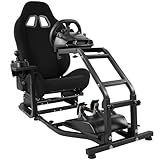
- 【More Freedom of Use】Minimize the impact of the racing simulator cockpit column on game play. Unique design makes it easy to both start and leave the game
- 【Easy Installation】Modular design makes the racing simulator cockpit assembly faster and easier. Even novices can install it quickly with the instructions
- 【With Professional Racing Seat】Adopts race car seat technology for improved load carrying capacity. Maximum weight capacity is 500lbs! Double-lock double-chute design locks the stand securely and is adjustable. The backrest adjusts 90-160°
- 【More Adjustable】You can adjust: racing simulator cockpit height and length; seat position and height; gear lever left/right position and height; steering wheel position
- 【Great Adaptability】The racing simulator cockpit fits most brands on the market. Fit for Logitech G27 G29 G920 G923, for Thrustmaster T128X T300RS GT, etc. Does not support direct drive steering wheels
The G35 is generally heavier and more likely to have been modified, crashed, or neglected than an untouched daily driver. Avoid assuming that a low price represents a bargain. Inspect the chassis, subframes, cooling system, suspension, differential, clutch or automatic transmission, and wiring. Be especially cautious of welded differentials, cut springs, excessive steering-angle modifications, undocumented engine swaps, and homemade wiring.
Recommended Free Tools
Choose it if: You need four seats or a sedan body but want the general power and rear-wheel-drive character of the 350Z family.
7. BMW E36 3-Series: the best low-power chassis for hands-on owners
A six-cylinder E36 provides rear-wheel drive, a compact wheelbase, a manual-transmission path, and a large grassroots enthusiast ecosystem. It can teach technique effectively because it is not overwhelming in standard form, but its age makes ownership a mechanical project as much as a driving project.
Prioritize shell integrity and cooling-system health over trim prestige. Common age-related concerns include cooling components, suspension bushings, engine and transmission mounts, seals, electrical faults, rust, and deferred service. Check the rear suspension mounting areas and the underside for previous impacts or corrosion.
An unmodified or sensibly maintained E36 is preferable to an inexpensive track shell with unknown history. The car can be an excellent learning tool for someone who enjoys repairing and maintaining older vehicles; it is a poor choice for someone who needs every weekend to be trouble-free.
Do these 3 things before closing this tab:
1Clear out junk files and repair common Windows errors2Fix the driver behind crashes, sound loss and screen glitches3Repair Windows errors before they cause bigger problemsChoose it if: You are mechanically inclined, want a compact low-power chassis, and have both repair skills and time.
8. BMW E46 3-Series: the best more refined BMW option
The E46 offers a mature rear-wheel-drive chassis, strong steering feel, useful suspension geometry, and broad parts support. Compared with the E36, it is generally more substantial and electronically complex, and clean examples can cost more. A non-M six-cylinder manual car is usually a more rational beginner starting point than an M3 because repair and replacement costs are lower.
Inspect the rear subframe mounting area, cooling system, suspension, rust, differential, clutch, engine mounts, and evidence of previous track use. The E46 deserves a larger maintenance reserve than its purchase price might suggest. Paying more for a straight, documented car can reduce the number of systems that must be repaired before the first event.
Choose it if: You want a composed, more refined BMW chassis and can budget for more complex maintenance than an older, simpler platform may require.
Quick wins for a faster PC:
Clear out junk files and repair common Windows errorsFree Scan →Fix the driver behind crashes, sound loss and screen glitchesFind Drivers →9. Lexus IS300: the best durable, practical sedan-based platform
The first-generation Lexus IS300 combines rear-wheel drive, a six-cylinder engine, a compact sedan body, and a strong enthusiast aftermarket. It offers more practicality than a two-seat Miata and can work well as a dual-purpose street-and-track car when the specific example is healthy.
Verify the exact transmission and differential specification. Not every IS300 has the same factory equipment, and an automatic car is not equivalent to a manual car for a traditional beginner drift build. Also inspect the body for rust, the suspension for wear, the differential and driveshaft for play, and the engine cooling system for age-related problems.
Rank #4
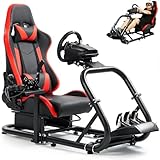
- Design & Material:Racing simulator cockpit is designed with 50*50mm large round tube, 4-hole flange structure connection, stable and sturdy
- Ergonomic Racing Seat:The driving simulator cockpit game chair is double-tracked and double-locked, equipped with neck and lumbar pillows, and can be tilted from 90 to 180 degrees, which puts the player in an immersive comfortable environment
- Diversified Adjustment:The sim racing rig adopts a two-stage steering wheel platform, supporting dual-level adjustment of height and angle, and customizedly adjustable pedal angle and shift lever settings
- High Compatibility:Universal driving simulator cockpit is almost fit for Logitech G29 G920 G Pro, for Fanatec DD, for Thrustmaster T300 T598 T818,for Moza R3 R5 series racing steering wheels, pedals and gears. Suitable for direct drive steering wheel and TV bracket mounting, support DIY drilling
- Note:The Racing simulator stand without steering wheel, pedals and gear shifter, divided into two kits with two brackets and seats
Toyota and Lexus durability is a useful starting reputation, not a substitute for a pre-purchase inspection. A neglected IS300 can still require substantial suspension, cooling, brake, and drivetrain work.
Choose it if: You want four-door practicality, a supported six-cylinder platform, and a car that can remain useful outside drift events.
10. Nissan 240SX: the best iconic lightweight project
The Nissan 240SX is historically important in grassroots drifting because of its rear-wheel-drive layout, relatively low weight, simple mechanical architecture, and extensive aftermarket. Its dimensions and basic chassis can make it a rewarding platform for learning.
It is also usually the hardest car on this list to find at a sensible price. Many examples have been modified, crashed, rusted, stripped, or priced according to cultural status rather than mechanical value. A beginner should not choose a 240SX merely because it is famous.
Look for a straight, complete, legally registered example with a healthy drivetrain and usable interior and safety equipment. A cheaper shell requiring extensive fabrication may be an interesting long-term project, but it is rarely the easiest first drift car.
Choose it if: You specifically want an iconic lightweight project and have the patience, budget, and fabrication support to deal with scarcity and condition.
PC Slower Than It Used to Be?
A free scan shows the junk files, broken settings and background clutter dragging Windows down - then fixes them in one click.Free scan · Windows 10 & 11Crashes, No Sound, or Screen Glitches?
Random freezes, missing sound and display glitches usually trace back to one bad driver. Find and replace yours safely.Free scan · under a minuteHonorable alternatives and cars that rank lower
Chevrolet Camaro
The Chevrolet Camaro remains a valid used-market option, particularly in V6 or SS forms, with rear-wheel drive, strong American parts support, and a broad performance community. In the United States, however, Chevrolet ended sixth-generation Camaro production after the 2024 model year, so it is now a used-only recommendation. Compare the exact engine, differential, transmission, and condition rather than treating every Camaro as the same platform.
Nissan Z
The current Nissan Z has the right basic layout and offers a six-speed manual transmission. Nissan’s 2026 specifications list rear-wheel drive, a manual option, and a 400-horsepower twin-turbo V6. It is capable, but its purchase price, power, tire costs, and replacement-cost exposure make it less forgiving for a first drift car than a GR86, BRZ, or older 350Z.
Why the GR Supra, M2, Corvette, and high-output Mustangs are not in the top 10
These cars can drift, but capability is not the same as beginner suitability. Their purchase prices, power, tire costs, repair exposure, and potential loss severity make learning more expensive. A first car should leave enough budget for practice and repairs, not just the payment or purchase check.
All-wheel-drive and front-wheel-drive cars are also outside the main list. They can be used for other forms of performance driving, but a conventional rear-wheel-drive learning path is more direct for a novice who wants to understand rear-tire slip and throttle-controlled rotation.
Quick wins for a faster PC:
Repair Windows errors before they cause bigger problemsFix Now →Fix the driver behind crashes, sound loss and screen glitchesFind Drivers →Clear out junk files and repair common Windows errorsFree Scan →What to inspect before buying any drift car
Have an independent technician inspect the car before purchase, especially if it is an older or modified platform. A clean title and service history are valuable, but neither proves that a car has not been abused.
Best Value
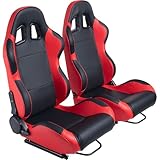
- 1.【Universal model】 Suitable for many car models, Size: 34.96"×20.66"×20.39" , (please compare with the original car seat size to see if it matches your model and body type!!!)
- 2.【165 Degree Adjustable Backrest】 Reclining design:comes with adjustment dual lock sliders to quick and easy adjust the position of the seat. These seats can fold forward and full adjustable backward between 45-165 degree
- 3. 【High-quality materials】 Made of high-quality PVC leather, perfectly combining comfort, performance, and durability, with a waterproof design. The core uses high-elasticity sponge and a single-cell foaming process to ensure extremely high structural integrity and safety.
- 4.【Easy To Install】Easy to assemble, and professional installation is highly recommended. The seat will need bracket and sliders to install, this package will come with 2 sliders but DOES NOT include mounting brackets(our seats can fit for most of manufacturers’ bracket, you need to purchase your car specified bracket in online store or some car modify shop)
- 5.【Customer Service】Suitable for 95% of vehicle models, but please check the dimensions carefully before placing your order to ensure that the seat fits your vehicle model. Installation requires a special car mounting bracket, which you will need to purchase separately as it is not included in the package. If you have any dissatisfaction you can contact us, we will be within 24 hours for you to solve the problem
- Check chassis integrity. Inspect frame rails, rocker panels, suspension mounting points, subframes, corrosion, welds, uneven panel gaps, and signs of hard curb or wall impacts. Look underneath for crushed rails, bent arms, fresh undercoating over repairs, and distorted jack points.
- Evaluate cooling and fluids. Drifting creates repeated heat cycles. Verify coolant condition, radiator and fan operation, oil level and pressure behavior, transmission fluid condition, differential fluid, and brake-fluid condition. Ask whether the car has overheated at events.
- Confirm the differential. Determine whether the exact car has an open differential, factory limited-slip unit, Torsen unit, clutch-type unit, or aftermarket replacement. Do not treat welding the differential as a universal beginner modification. Its legality, tire behavior, drivability, and safety consequences depend on the vehicle and event.
- Inspect steering and suspension. Check ball joints, tie rods, control arms, bushings, wheel bearings, shocks, springs, alignment, and steering stops. Be suspicious of cut springs, cracked welds, excessive play, and homemade steering-angle parts.
- Preserve safety systems. Confirm that seat belts, airbags, and manufacturer safety systems function properly. A sanctioned competition class may require additional equipment, but that equipment must meet the applicable rules and be installed correctly. Removing safety systems for a casual project is not an upgrade.
- Examine tires and brakes. Check tire age, tread, sidewalls, heat damage, uneven wear, wheel condition, brake-pad thickness, rotor condition, flexible lines, and caliper operation. NHTSA advises replacing tires at the tread-wear indicators or at 2/32-inch tread depth and using the vehicle manufacturer’s recommended tire size and inflation pressure.
- Review documentation. Service records, receipts, a clean title where appropriate, alignment reports, and a pre-purchase inspection are more valuable than a long list of aftermarket parts. Ask for the original parts if the car has been modified.
For an older project, a model-specific service manual can be more useful than generic tuning advice because torque values, fluid capacities, wiring, diagnostic procedures, and component differences vary by model year.
If you will inspect or repair an older car yourself, use rated jack stands for vehicle maintenance on a stable surface and follow their load-rating and placement instructions. Never rely on a hydraulic floor jack alone while working underneath a vehicle.
Independent reader supportYour contribution helps us test, update, and keep practical guides available for everyone.A sensible beginner setup
The first modifications should make the car reliable and predictable, not dramatically more powerful. Start with:
- Baseline maintenance and inspection
- Fresh engine, transmission, and differential fluids where appropriate
- Fresh brake fluid and reliable brake pads
- A conservative, documented alignment
- Healthy cooling-system components
- Good tires in the vehicle manufacturer’s correct size and load rating
- A tire-pressure gauge for checking pressures before and during an event
Use an automotive torque wrench when reinstalling wheels and carrying out maintenance that specifies a torque value. Follow the vehicle manufacturer’s wheel-lug and component specifications; there is no universal safe torque number for every car.
Do not begin by chasing maximum steering angle or horsepower. More power increases tire consumption and can hide poor technique. Excessive angle modifications can also introduce clearance, geometry, strength, and event-compliance problems. Learn the car’s standard behavior first, then make one documented change at a time.
Tires, pressure, and consumables
Tires are usually the largest recurring expense in beginner drifting. Budget for more than one set, and include mounting, balancing, transport, and the possibility of damaging a tire or wheel. A tire that is inexpensive per unit may not be economical if its size, load rating, heat tolerance, or availability is wrong for the car and venue.
Check pressure when the tires are cold and monitor changes during the event. NHTSA emphasizes proper inflation and regular inspection, but the correct starting pressure is the vehicle manufacturer’s recommendation—not a universal “drift setting.” Track surface, tire construction, weather, wheel width, car weight, alignment, and event rules all affect the appropriate setup. A digital tire pressure gauge is a simple way to make those checks consistently.
What’s actually slowing this PC down?
Pick the symptom - the matching free tool is one click away.
When buying replacement performance tires, select the size, load rating, speed rating, construction, and intended use for the exact car and event. Do not copy a tire size from a different generation or assume that a competition tire is appropriate for a beginner practice day.
Preparing for the first legal drift event
- Find a controlled venue. Use a sanctioned drift school, skid pad, or track day rather than a public road or industrial area.
- Read the event rules before buying equipment. Formal drifting competition has detailed sporting, judging, technical, and safety regulations. Practice days may use a different inspection checklist. Ask the facility directly about helmet standards, roll-cage and harness requirements, seats, fire extinguishers, noise limits, tires, fluid leaks, tow points, and insurance.
- Take instruction. A beginner drift school or closed-course drift clinic can teach car control in a controlled environment and may save tires and parts compared with learning through repeated uncontrolled mistakes.
- Prepare the car conservatively. Fix leaks, verify wheel torque, inspect wheel bearings and suspension, check fluid levels, and secure loose items inside the cabin and trunk.
- Bring consumables and recovery equipment. Bring a pressure gauge, tire-changing equipment, spare wheels and tires if permitted, fluids, tools, brake-temperature awareness, water, and a way to transport the car if it becomes disabled.
- Accept the venue’s limits. Follow the organizer’s flagging, speed, spacing, passing, and surface instructions. If the car overheats, develops vibration, loses fluid, or behaves differently, stop and investigate.
Rules and equipment requirements are venue- and geography-specific. Formula DRIFT’s current rulebooks demonstrate the level of detail used in formal competition, while SCCA event materials emphasize procedures, safety stewardship, and event-specific requirements. Neither should be treated as a universal substitute for reading the rules of the particular facility you plan to attend.
Which beginner drift car should you buy?
| Your priority | Best starting point | Why |
|---|---|---|
| Lowest-risk new purchase | Toyota GR86 or Subaru BRZ | Modern chassis, manual option, RWD, limited-slip differential, and manufacturer support |
| Lightest learning experience | Mazda MX-5 Miata | Low mass and modest power reward momentum and smooth inputs |
| American parts and practicality | Ford Mustang | Large support network, usable cabin, and multiple power levels |
| Used power and aftermarket depth | Nissan 350Z | V6 torque and a large grassroots ecosystem |
| Four-seat Z-family alternative | Infiniti G35 | Similar basic mechanical appeal with sedan or coupe practicality |
| Hands-on older-car project | BMW E36 | Compact, relatively low-power chassis with extensive enthusiast knowledge |
| More refined BMW project | BMW E46 | Capable chassis and mature parts support, with higher maintenance exposure |
| Practical Toyota/Lexus platform | Lexus IS300 | Four doors, six-cylinder power, and rear-wheel drive |
| Iconic project car | Nissan 240SX | Light and simple, but difficult to find in good condition at a fair price |
Frequently Asked Questions
Is a manual transmission necessary for a beginner drift car?
No, but it is generally the more direct choice for learning clutch control, gear selection, and throttle management. An automatic can still be used for vehicle-control practice, but it gives the driver less direct involvement in initiating and sustaining a slide.
Should I buy a cheap modified drift car or a stock car?
Usually choose the straightest, best-documented, mechanically healthiest car you can afford. A stock or sensibly modified example is easier to inspect and troubleshoot than a car with a welded differential, cut springs, homemade wiring, unknown engine work, or undocumented collision repairs.
Do these 3 things before closing this tab:
1Clear out junk files and repair common Windows errors2Fix the driver behind crashes, sound loss and screen glitches3Repair Windows errors before they cause bigger problemsIs a limited-slip differential required?
It is not the only factor, but a suitable limited-slip differential generally makes rear-wheel-drive behavior more consistent. Verify whether the exact car has an open, Torsen, clutch-type, factory limited-slip, or aftermarket differential. Do not treat welding a differential as a universal beginner modification.
How much horsepower does a beginner drift car need?
There is no universal horsepower requirement. A lighter, moderately powered car can teach momentum, steering, and throttle precision better than a high-output car. More power can make dry-surface initiation easier, but it also increases tire use, repair exposure, and the speed at which mistakes occur.
Can I drift a car on the street if I am careful?
No. Public-road drifting and burnouts endanger other road users and may be illegal. Practice only at a sanctioned closed-course facility, skid pad, or approved driver-training event, and follow that venue’s rules.
What should I budget for besides the car?
Plan for tires, mounting and balancing, brake pads and fluid, engine and differential fluids, cooling-system repairs, alignment, replacement suspension and drivetrain parts, event fees, transport, safety equipment, and a reserve for unexpected damage. The running budget can determine whether a lower-priced car is actually affordable.
Outdated Drivers Are Slowing You Down
One free scan finds every outdated or missing driver and matches the right update for your exact hardware.Free scan · exact hardware matchPC Slower Than It Used to Be?
A free scan shows the junk files, broken settings and background clutter dragging Windows down - then fixes them in one click.Free scan · Windows 10 & 11The Bottom Line
For most first-time buyers, the Toyota GR86 or Subaru BRZ is the best new-car answer. Choose the Mazda MX-5 Miata if low weight and skill development matter more than effortless power, or a Ford Mustang if American parts availability, cabin space, and usable power are priorities. Among used cars, a healthy 350Z, G35, E36, E46, IS300, or 240SX can work—but condition and maintenance reserve matter more than reputation.
Buy the healthiest platform you can afford, spend first on reliability and safety, and reserve money for tires and repairs. The best beginner drift car is the one that lets you practice legally, repeatedly, and predictably.
Quick Recap
Product prices and availability are accurate as of the date/time indicated and are subject to change. Any price and availability information displayed on Amazon at the time of purchase will apply.




