Tesla discontinued its basic Autopilot package for new vehicles in the United States and Canada in January 2026. Tesla’s configurator was reported to show Traffic-Aware Cruise Control as the standard driver-assistance feature instead of the former combination of Traffic-Aware Cruise Control and Autosteer. At the same time, Tesla moved Full Self-Driving (Supervised) to a subscription-only model, making it the company’s principal paid driver-assistance upgrade.
The change does not make Tesla vehicles autonomous, and there is no evidence that Tesla remotely removed Autosteer from every existing vehicle. Full Self-Driving (Supervised) remains a supervised SAE Level 2 system: the driver must remain attentive, monitor the road, and intervene when necessary.
What Tesla changed
Reporting published in January and February 2026 indicates that Tesla stopped offering the traditional Autopilot package as the standard feature on new vehicles sold in the U.S. and Canada.
Historically, the basic Autopilot package combined two principal functions:
Do these 3 things before closing this tab:
1Fix the driver behind crashes, sound loss and screen glitches2Repair Windows errors before they cause bigger problems3Scan for outdated or missing drivers - takes under a minute#1 Best Overall

- Not Supercharger Compatible & Not Charging Port: This NACS extension cord will not work with Superchargers. The button on the ev charging cable does NOT control the door on the NACS charging port
- Extended Cable: Extend your Tesla charger extension cable reach by 21 FT! Solve the problem of outlets being too far from your parked Model 3/Y/S/X/Cybertruck. This tesla extension cord gives you the freedom to charge in any corner of your garage, driveway, or at public Level 1/2 stations without ever needing to reposition your car
- High-Power Charging with Zero Speed Loss: Engineered with premium materials, this NACS extension cable fully supports up to 50A, 240V, and 12KW, delivering full power to your Tesla. It ensures seamless integration as a tesla charging cable extension for all Tesla Wall Connectors, Mobile Chargers, and Destination Chargers
- All-Weather Durability & Safety Built to Last: Built for all conditions with an IPX5 waterproof rating and an extreme temperature range (-30°C to +50°C). This robust tesla extension charging cable is your reliable charging partner outdoors in rain or snow, and indoors year-round, ensuring safety and durability with every use
- Universal Plug-and-Play Compatibility: Enjoy universal compatibility designed for the Tesla ecosystem. This tesla charger extension cord works seamlessly with all Model 3, Y, S, X, and Cybertruck. Simply connect your existing Tesla charger to this extension and plug into your car
- Traffic-Aware Cruise Control: Maintains a selected speed and a set following distance from traffic ahead.
- Autosteer: Provides lane-centering assistance on compatible roads and under appropriate conditions.
TechCrunch reported on January 23, 2026, that Tesla’s online configurator instead showed Traffic-Aware Cruise Control as the standard feature. That means the reported change is more specific than saying Tesla removed all driver assistance: adaptive cruise control remained standard, while the former standard combination with Autosteer was no longer presented as the basic package.
The reporting does not establish the exact treatment of Autosteer on every new model. It should not be assumed that every vehicle has identical software, hardware, or upgrade availability. Buyers should check the equipment and software configuration for the specific vehicle, market, and delivery date.
At a glance
| Question | What the available reporting supports |
|---|---|
| Where did the change apply? | New vehicles in the United States and Canada. |
| When did it happen? | January 2026; the change was reported publicly on January 23. |
| What remained standard? | Traffic-Aware Cruise Control was shown as the standard reported feature. |
| What happened to the former package? | The basic Autopilot label and package were discontinued for new-vehicle sales in those markets. |
| What is Tesla selling as the higher tier? | Full Self-Driving (Supervised), now offered through a monthly subscription according to Tesla’s support materials. |
| Were all existing owners affected? | That has not been established. The available reporting leaves the treatment of legacy vehicles and previously purchased entitlements unclear. |
Why Tesla ended the Autopilot package
There are two closely related explanations: regulatory pressure over the names Tesla used and a commercial shift toward recurring Full Self-Driving revenue.
California regulatory pressure
On February 17, 2026, the California Department of Motor Vehicles said Tesla had taken corrective action to avoid a 30-day suspension of its manufacturer and dealer licenses. The DMV said its December 16, 2025 decision found Tesla in violation of state law for misleadingly using the names “Autopilot” and “Full Self-Driving” in vehicle marketing.
The dispute concerned more than a product label in isolation. The DMV said Tesla’s marketing had described its systems as capable of conducting short and long-distance trips with no action required by the driver, even though the vehicles could not and still cannot operate as autonomous vehicles.
Tesla had already changed the name “Full Self-Driving Capability” to Full Self-Driving (Supervised), a change intended to make the continuing human-supervision requirement clearer. Tesla then stopped using “Autopilot” in its California marketing. The broader U.S. and Canadian discontinuation followed in the same general period.
This should be described accurately as a California administrative and licensing-compliance matter. It was not a nationwide court ruling declaring that every use of the word “Autopilot” was unlawful. The California action nevertheless gave Tesla a direct reason to remove or de-emphasize the term in one of its most important markets and to adopt more explicit supervision language.
A clearer path to paid FSD subscriptions
The regulatory change coincided with a significant change in Tesla’s pricing and packaging strategy. Tesla’s current support materials list Full Self-Driving (Supervised) at $99 per month and say that it is available only as a subscription rather than as an outright purchase.
Recommended Free Tools
TechCrunch also reported that Tesla planned to stop charging the former one-time $8,000 price for FSD beginning February 14, 2026. The result is a simpler upgrade funnel: a customer who wants more than the standard driver-assistance functionality is directed toward a recurring subscription rather than a large permanent software purchase.
That creates an obvious commercial incentive to make FSD more visible and more relevant to new buyers. Removing or de-emphasizing a no-cost basic package can make the paid tier the primary way to obtain Tesla’s broader assisted-driving functionality. It is reasonable to describe increased FSD adoption as Tesla’s reported or inferred objective.
It is not yet accurate to say the strategy has succeeded. The available sources establish the package and pricing changes, but they do not provide a verified post-change subscription-conversion rate, revenue result, or evidence showing how many buyers subscribed because Autopilot was no longer presented as standard.
Rank #2

- Dual Voltage Level 1 & 2: Charge at 120V/12A (1.44kW, 2-5 miles/hr) with the included NEMA 5-15 adapter or at 240V/16A (3.84kW, 9-12 miles/hr) with the NEMA 6-20 plug. One SEGUMA portable tesla charger gives you two charging options for everyday home charging, backup charging, and travel
- EV Charger for Tesla Vehicle-Seguma 16A mobile ev charger for tesla is specifically designed for Tesla vehicles, engineered with standardized North American Charging Standard (NACS) connector, works flawlessly with Tesla Model-Y/X/3/S/Cybe truck
- Wireless Charging Door Control-The portable mobile car charger for tesla has a button on the connector that wirelessly opens the charging port door, eliminating the need for physical keys or buttons and making charging more convenient
- Intelligent Charging-The Seguma level 1 charger offers protection against leaks, grounding, voltage issues, overcharging, and overheating. It automatically shuts off when your Tesla is fully charged. Tip: Install a home circuit breaker for extra safety
- Extended 25FT Cable-The 25-foot cable allows easy tesla charging at home or public stations. The included portable storage bag lets you take the tesla home charger anywhere, making it ideal for travel, road trips, or visits. Perfect accessory for Model Y
Autopilot and Full Self-Driving are not the same thing
Tesla’s branding can make the two products sound like stages on a path to driverless operation, but they should not be treated as interchangeable terms.
Autopilot historically referred to a more limited group of driver-assistance functions, most notably adaptive cruise control and lane-centering assistance. The January 2026 change concerns the standard packaging and use of that name for new vehicles in the U.S. and Canada.
Full Self-Driving (Supervised) is Tesla’s broader assisted-driving software suite. The word “Supervised” is essential. Tesla’s support language says the system operates under the driver’s supervision, and the driver remains responsible for the driving task.
FSD is therefore a product name, not proof that a Tesla can drive without a human. It should not be described as autonomous, driverless, or hands-off. A driver using it must continue to watch the roadway, remain ready to intervene, and comply with traffic laws and road conditions.
How regulators classify the system
NHTSA’s October 7, 2025 preliminary evaluation described the relevant Tesla systems as SAE Level 2 partial automation. At Level 2, the vehicle can assist with steering and speed control, but the human driver remains responsible for monitoring the system and handling the driving task.
Free tools Windows power users keep installed
One-click scans. No signup required.
That classification is important because a system can perform more functions than traditional cruise control without becoming autonomous. The vehicle may steer, accelerate, and brake under certain circumstances, but those capabilities do not transfer legal or safety responsibility away from the driver.
The safety and regulatory backdrop
California’s action reflected a long-running concern that names such as “Autopilot” and “Full Self-Driving” could cause some drivers to overestimate what Tesla’s systems can do. If drivers interpret a driver-assistance name as a promise of independent operation, the marketing language itself can become a safety issue.
NHTSA’s preliminary evaluation supplied a separate federal safety context. The agency examined complaints and crash reports involving alleged traffic-law violations while FSD was engaged. The reported allegations included vehicles entering intersections against red signals, moving into opposing traffic, and making turns or changing lanes inconsistently with roadway markings.
A preliminary evaluation is not a final determination that FSD caused every reported incident, nor is it a finding that the system is defective in every situation. It is also not a substitute for model-specific testing, owner experience, or a final regulatory conclusion. The appropriate takeaway is that the system remains under federal scrutiny and that drivers cannot treat its name as evidence of autonomous capability.
The Tool Desk
Outbyte PC Repair FREERepair Windows errors before they cause bigger problemsFix Now →Outbyte Driver Updater FREEScan for outdated or missing drivers - takes under a minuteDriver Scan →A separate NHTSA announcement in May 2026 said a later-release 2026 Tesla Model Y passed newly integrated advanced driver-assistance tests, including pedestrian automatic emergency braking, lane-keeping assistance, blind-spot warning, and blind-spot intervention. Those results concern the vehicle’s performance under NHTSA’s test program. They do not establish that FSD is autonomous, remove the supervision requirement, or resolve the issues examined in the preliminary evaluation.
What the change means for people buying a Tesla
1. The base vehicle may include less than buyers associate with “Autopilot”
For years, many Tesla shoppers understood Autopilot to mean more than ordinary cruise control because the package included lane-centering assistance. With Traffic-Aware Cruise Control shown as the new standard feature, buyers need to look beyond the word “Autopilot” and verify exactly what is included with the vehicle they are considering.
Rank #3
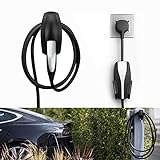
- COMPATIBLE WITH TESLA MODEL 3/MODEL Y/MODEL X/MODEL S CHARGER: Seven Sparta Charging Cable holder is a perfect holder to hang your charging cable from in the garage.
- KEEP YOUR CHARGING CABLE NEATLY AND SECURE: The cable organizer is much better than a normal hook. It does a good job of keeping the cable off of the ground, and protect your cable from falling down accidentally.
- SAFE ABS MATERIAL: The charger cable organizer is made from high quality ABS plastic, pass fireproofing grade testing. The bearing capacity can reach above 30KG at least. Prior to purchasing, we recommend confirming the product's size and material.
- EASY & SECURE INSTALLATION: The charging cable holder takes just minutes to install. The charger head fits snugly into the slot, with a notch to prevent it from sliding out.
The practical difference is significant for drivers who expected the car to assist with steering as part of the standard ownership experience. The change does not mean the vehicle has no safety or driver-assistance technology. It means the former package should no longer be assumed to be included simply because the car is a Tesla.
2. FSD becomes a recurring ownership expense
Tesla’s cited support page lists FSD (Supervised) at $99 per month and says it is subscription-only. At that listed price, twelve uninterrupted months would cost $1,188 before taxes or any market-specific variation. The price may change, and availability and terms can differ by country, vehicle, hardware, and software configuration.
Quick wins for a faster PC:
Clear out junk files and repair common Windows errorsFree Scan →Fix the driver behind crashes, sound loss and screen glitchesFind Drivers →Repair Windows errors before they cause bigger problemsFix Now →The subscription structure can be attractive to a driver who wants to use the software temporarily, evaluate it before committing, or avoid paying a large upfront amount. It can be less attractive to an owner who keeps a vehicle for many years and prefers to own software permanently. Since Tesla reportedly ended the former $8,000 purchase option, buyers should compare the expected ownership period and actual usage rather than treating the monthly price as a simple replacement for the old purchase price.
3. A subscription does not remove the driver’s responsibility
Paying for FSD does not change the driver’s legal or operational duties. The driver must remain attentive, supervise the system, be ready to take control, and avoid using the feature as a way to read, sleep, text, or disengage from driving.
That remains true even if the vehicle handles more of the steering, braking, navigation, or lane-management work than the former Autopilot package. More automation assistance is not the same as more time in which the driver can safely stop paying attention.
4. Insurance should be checked separately
Driver-assistance software can affect how an insurer evaluates a vehicle, its equipment, permitted use, claims history, and the driver’s responsibilities. Buyers should ask an insurer how it treats a Tesla equipped with or subscribed to FSD (Supervised), whether the insurer requires disclosure of the software, and whether a driver remains fully responsible for collisions or traffic violations while the system is engaged.
Do not assume that purchasing FSD automatically qualifies a driver for an insurance discount. Any benefit, eligibility rule, or pricing treatment should be confirmed directly with the insurer and checked again at renewal.
What existing Tesla owners should—and should not—assume
The January report raised an important question but did not answer it: whether current Tesla customers would be affected. The available information does not establish that Tesla remotely disabled Autosteer or other previously purchased functionality on every legacy vehicle.
Owners should distinguish among three separate situations:
- A new vehicle sold after the packaging change: The reported standard equipment is Traffic-Aware Cruise Control rather than the former Autopilot combination.
- An existing vehicle that already had a feature enabled: There is no established evidence in the supplied reporting that all such vehicles lost their entitlement.
- An existing vehicle receiving a software update or changing subscriptions: The applicable terms may depend on the vehicle, account, software version, purchase history, and market.
Before assuming a feature has been removed or preserved, owners should check the Tesla app, the vehicle’s software and Autopilot menus, purchase records, and Tesla support for the specific vehicle identification number. A general announcement about new-vehicle packaging is not enough to determine the rights or functionality of every older Tesla.
What this does not mean
- It does not mean Tesla disabled Autopilot on every car. The documented change concerns new-vehicle sales in the U.S. and Canada; the treatment of all legacy vehicles remains unresolved.
- It does not mean Tesla removed all driver assistance. Traffic-Aware Cruise Control was reported as the standard feature.
- It does not mean FSD is autonomous. Tesla’s own terminology includes “Supervised,” and NHTSA describes the relevant systems as Level 2 partial automation.
- It does not prove that Tesla’s subscription strategy increased adoption. The change creates a commercial path toward more subscriptions, but no verified conversion data was included in the available reporting.
- It does not prove that Tesla vehicles are safer or less safe overall. That conclusion would require model-specific testing, crash data, operating conditions, and a clear comparison with alternative systems.
The larger issue: branding versus capability
Tesla’s packaging change illustrates why the names of driver-assistance systems matter. Consumers often use a product name as a shortcut for capability. When a name suggests that a vehicle can operate on its own, a warning that the driver must supervise may not fully correct the first impression.
Rank #4

- 180° Rotation Adjustment -FOCSPROD for Tesla Charger Holder features a unique 180° rotating nozzle dock with 5 adjustable positions, allowing you to customize the angle for the ideal cable management solution
- Compatible with Tesla Model 3/S/X/Y -Our charger holder is specifically designed for Tesla charger and fits tightly around the Mobile Charging, holding it securely in place and keeping it from falling
- Extra Chassis Bracket -We provide an extra mobile connector holder for Tesla Mobile Charger, which can firmly mount the charger and minimize wear and collision. It ensures stability, protecting your mobile charger
- Built to Last Anywhere -This Nozzle Dock and mobile connector Holder are made of PC material, and the J-hook is made of stainless steel. This combination ensures reliable performance in garages, workshops, gardens, or job sites
- Organized Storage -The charger cable holder provides an efficient way to store your charging cable, keeping your space organized and tidy while making sure your charging setup looks clean. Say goodbye to tangled cables. Fit for both Indoor and Outdoor Use
The move to “Full Self-Driving (Supervised)” is more explicit than the former “Full Self-Driving Capability” name, but it still leaves Tesla marketing a product with a highly ambitious name. California’s licensing action shows that regulators may examine the overall impression created by the branding and advertising, not just the technical features available under the hood.
For shoppers, the safest approach is to evaluate the vehicle by function rather than label. Ask whether the car has adaptive cruise control, lane-centering assistance, automated lane changes, parking assistance, or other specific capabilities; then determine the conditions, limitations, driver-monitoring requirements, and payment terms for each one.
A practical checklist before ordering
- Confirm the market and model: Verify the exact equipment for the vehicle’s country, model, trim, hardware generation, and delivery date.
- Separate standard equipment from subscription software: Identify what is included with the car and what requires the FSD (Supervised) subscription.
- Ask specifically about Autosteer: Do not infer its availability from the word “Autopilot” or from an older Tesla advertisement.
- Check the current price: Tesla’s cited support materials list FSD at $99 per month, but pricing and terms can change.
- Calculate your likely use: Compare a subscription used occasionally with twelve months or more of recurring payments.
- Read the supervision requirements: Treat FSD as driver assistance, not as a substitute for an attentive driver.
- Ask your insurer: Confirm disclosure requirements, coverage questions, and any available treatment of advanced driver-assistance equipment.
- Keep documentation: Save the order configuration, software entitlement, subscription terms, and delivery records in case the feature package changes or a dispute arises.
How to describe the change accurately
The most precise short description is: Tesla discontinued Autopilot for new vehicles in the U.S. and Canada and made Traffic-Aware Cruise Control the reported standard feature, while shifting Full Self-Driving (Supervised) to a $99-per-month subscription.
Windows Errors? Fix Them Before They Spread
Repair common Windows errors and clear accumulated junk for a smoother, more stable PC - no reinstall needed.Free scan · no reinstallCrashes, No Sound, or Screen Glitches?
Random freezes, missing sound and display glitches usually trace back to one bad driver. Find and replace yours safely.Free scan · under a minuteIt is not precise to say that Tesla disabled Autopilot on all existing cars, removed every driver-assistance feature, or made its vehicles self-driving. Those claims go beyond what the available evidence establishes.
The immediate impact is a change in product packaging and payment model. The longer-term outcome—whether the strategy produces more FSD subscriptions, greater recurring revenue, or more customer dissatisfaction—remains to be demonstrated by Tesla’s results and future owner data.
Frequently Asked Questions
Did Tesla remove Autopilot from every existing Tesla?
The available reporting does not establish that. Tesla discontinued the basic Autopilot package for new vehicles in the United States and Canada, but it remains unclear how every legacy vehicle and previously purchased entitlement was treated.
What is included with new Tesla vehicles after the change?
Traffic-Aware Cruise Control was reported as the standard feature. The former standard combination also included Autosteer, so buyers should verify the exact configuration of the specific model rather than assume lane-centering assistance is included.
What’s actually slowing this PC down?
Pick the symptom - the matching free tool is one click away.
Is Tesla Full Self-Driving actually autonomous?
No. Tesla calls the current product Full Self-Driving (Supervised), and NHTSA describes the relevant systems as SAE Level 2 partial automation. The driver must remain attentive, supervise the system, and be ready to intervene.
How much does Full Self-Driving (Supervised) cost?
Tesla’s cited current support materials list it at $99 per month and say it is available only as a subscription. Pricing, taxes, availability, and terms may vary by market and vehicle and can change over time.
The Bottom Line
Bottom line: Tesla’s January 2026 Autopilot change is primarily a new-vehicle packaging and monetization decision, reinforced by California regulatory pressure. Traffic-Aware Cruise Control remains the reported standard feature, while Full Self-Driving (Supervised) becomes the main paid upgrade at a listed $99 monthly subscription. Neither the branding nor the subscription changes the central safety fact: FSD is supervised Level 2 driver assistance, not autonomous driving.
Quick Recap
Product prices and availability are accurate as of the date/time indicated and are subject to change. Any price and availability information displayed on Amazon at the time of purchase will apply.
Recommended Free Tools




