After smoking or otherwise inhaling cannabis, the main measurable driving-impairment window commonly lasts several hours—not a reliably fixed amount of time. A major 2021 systematic review estimated that, after inhaling roughly 20 mg of THC, most driving-related skills recovered within about five hours and nearly all recovered within about seven hours. That is a population-level estimate, not a personal guarantee that every driver is safe at the five- or seven-hour mark.
The safest decision is to wait longer when the dose was high, the product was unusually potent, the person is inexperienced, alcohol or another drug was involved, or any effects remain. If there is any doubt, do not drive.
What the study actually found
The headline comes from a 2021 systematic review and meta-analysis, rather than from one new driving experiment. Researchers combined 80 publications containing 1,534 outcomes to examine the acute effects of delta-9-tetrahydrocannabinol (THC) on driving performance and driving-related cognitive skills.
For an inhaled dose of approximately 20 mg of THC, the review estimated that:
Outdated Drivers Are Slowing You Down
One free scan finds every outdated or missing driver and matches the right update for your exact hardware.Free scan · exact hardware matchPC Slower Than It Used to Be?
A free scan shows the junk files, broken settings and background clutter dragging Windows down - then fixes them in one click.Free scan · Windows 10 & 11#1 Best Overall

- YOUR GO-TO INDOOR/OUTDOOR SAFETY GLASSES - Ever find yourself moving from sunshine to shade and struggling with the change? The G65 lenses have your back, filtering out the ambient light to ensure eagle vision, whether you’re working indoors or out!
- 5X GREATER ANTI-FOGGING POWER - Unlock crystal clear vision with the top-notch coating on this protective eyewear: 5x the anti-fogging power and 2x the scratch resistance of your typical glasses, paired with an anti-glare shield for color accuracy.
- ADJUSTABLE, CUSTOM FIT - With lightweight design, fully adjustable temples and soft nose pads, these safety sunglasses for men offer a great fit and all-day comfort. Whether you’re pulling a long shift or driving into the sunset, they’re your go-to!
- ANSI Z87.1 CERTIFIED EYE PROTECTION - Built tough with wrap-around lens and a durable frame, these anti-fog safety glasses tinted offer unparalleled impact resistance. Meeting the highest safety standards, these ANSI Z87.1 certified work glasses they guarantee top-notch protection in any scenario.
- BUILT TO LAST - Backed by a lifetime warranty, these safety glasses for women and men are designed to be your trusted sidekick for years to come. We are all about providing you with products that stand the test of time.
- Most relevant driving skills would recover within approximately five hours.
- Nearly all measured skills would recover within approximately seven hours.
The authors recommended waiting at least five hours after inhaling cannabis before performing safety-sensitive work. Driving is a safety-sensitive activity, but the recommendation should not be interpreted as a universal clearance rule. The review modeled recovery across studies and outcomes; it did not identify a biological timer that applies identically to every person, dose, product, or journey.
Why “five hours” is not an all-clear signal
There are several reasons an individual may remain unsafe after the average recovery window:
- Dose: The estimate was associated with roughly 20 mg of inhaled THC. A larger dose may produce more substantial or longer-lasting effects.
- Product potency and consumption pattern: Commercial cannabis products vary considerably in THC concentration, and inhalation does not always produce the same absorbed dose.
- Route of administration: Edibles and other oral products are absorbed more slowly and can have a longer and less predictable effect than smoked or vaporized cannabis.
- Experience and tolerance: Regular users often show less measured impairment than mostly occasional users, but that does not prove that a regular user can drive safely soon after consuming cannabis.
- Individual response: Sleep, health, fatigue, other medications, alcohol, and the person’s sensitivity to THC can all affect driving ability.
- Task demands: A quiet simulator test is not the same as driving through heavy traffic, at night, in bad weather, or on an unfamiliar road.
“Most skills recover within five hours” therefore describes an estimated pattern in research groups. It does not mean that five hours is safe for everyone, and seven hours is not a guarantee of safe driving.
A randomized trial found impairment after people felt ready to drive
A large double-blind randomized clinical trial provides an important warning about relying on how capable a person feels. The trial enrolled regular cannabis users and compared placebo with smoked cannabis containing either 5.9% or 13.4% THC.
Compared with placebo, the THC groups had significantly poorer composite simulator-driving performance:
- 30 minutes after smoking: impairment was clear.
- 90 minutes after smoking: impairment remained significant.
- 3 hours 30 minutes after smoking: the difference was borderline.
- 4 hours 30 minutes after smoking: the difference was no longer statistically significant.
But subjective confidence did not track performance well. Many participants said they would be willing to drive 90 minutes after smoking, even though their simulator performance had not returned to baseline. This matters because feeling normal is not the same as having normal reaction time, attention, judgment, lane control, or divided attention.
The trial also did not produce a simple formula that could predict an individual’s performance from THC percentage, measured THC concentration, or recent use intensity. Those details may be relevant, but they cannot turn a general waiting period into a dependable personal calculation.
Rank #2

- HD Night Vision Lens: KALIYADI night vision glasses can reduce high beam and strong light through yellow lenses and special anti-reflection coating. When driving at night, the night driving glasses for men can effectively protect eyes, improve contrast and visual clarity. Provides greater clarity and contrast in foggy, cloudy, rainy, dark and other low-light conditions.
- Fit Over Glasses: KALIYADI anti glare night driving glasses are designed to be worn directly and are also suitable for individuals who wearing glasses. The designer adopts a classic rectangular, wrap-around frame that is slightly larger than normal glasses, so the night vision glasses for women can be easily worn over on existing nearsighted or reading glasses.
- More Detailed Design: Larger frames and side lenses provide a greater range of visual protection. Air venting holes on top of the frame effectively increase air flow and prevent fogging of the lenses. Non-slip temples and integrated nose bridge ensure a secure and comfortable fit. KALIYADI night vision glasses fit different people's face shapes and can be worn with both suits and sportswear. Suitable for outdoor sports, night driving, night fishing, business activities and many other occasions.
- High-quality Materials & 3 Packs: KALIYADI night driving glasses women are made of sturdy and lightweight materials, so you can wear them for a long time without getting tired. For the price of one pair you can buy three pairs of night vision glasses for driving. Maybe the person sitting in the passenger side also need to avoid the bright light, and even you can have one pair of night driving glasses left over to avoid losing when you need to use them!
- Gift Ideas Package and Brand Customer Service: Nighttime driving glasses*3, microfiber pouch*3, microfiber glasses cleaning cloth*3, gift box*1. KALIYADI astigmatism night driving glasses are also gift packed, which will be great gifts for your family and friends! All KALIYADI customers enjoy brand customer service for our night vision glasses. The integrity of every box and the quality of the lenses are double checked by third-party companies. And that goes with a lifetime support!
How long does impairment last after smoking cannabis?
For smoked or inhaled cannabis, the most defensible summary is:
Free tools Windows power users keep installed
One-click scans. No signup required.
| Time after inhalation | What the evidence suggests | Practical interpretation |
|---|---|---|
| First hour | Impairment is consistently observed in research. | Do not drive. |
| About 1–4 hours | Objective driving impairment can remain measurable, even if intoxication feels less intense. | Do not use confidence or a subjective “come-down” as an all-clear test. |
| About 4–5 hours | Some controlled studies find performance differences diminishing or no longer statistically significant by this point, while the 2021 review estimated recovery of most skills by approximately five hours. | Five hours is a minimum research estimate for a roughly 20-mg inhaled dose—not a universal guarantee. |
| About 5–7 hours | The 2021 review estimated that nearly all assessed skills recovered by approximately seven hours. | Some people, doses, and situations require longer. Do not drive if effects remain. |
| After 12 hours or the next morning | Newer evidence is reassuring in some frequent users but does not establish universal next-morning safety. | Consider use history, dose, sleep, residual effects, and the demands of the trip. |
A 2026 review of cannabis-impaired-driving research similarly concluded that impairment is consistently present during the first hour after inhalation and generally remains detectable for roughly four to five hours. It also noted that evidence for oral and sublingual products is more limited.
What newer next-morning research shows
Two 2026 studies add context, but neither overturns the cautious interpretation.
Frequent users tested 12–15 hours after smoking
An open-access 2026 observational simulator study compared 65 frequent cannabis users with 65 matched non-users. The cannabis group had smoked the previous night and was tested 12–15 hours later. After correction for multiple comparisons, the frequent users did not show statistically significant driving impairment compared with the control group under the study conditions.
However, blood THC concentrations still averaged above 2 ng/mL. Neither blood THC, oral-fluid THC, CBD, nor metabolites significantly correlated with driving measures after the statistical correction. The participants were frequent users, the study used a simulator, and the result does not establish that occasional users—or people who consumed a different dose, product, or edible—are safe to drive the next morning.
Physical performance changes after smoking
A separate 2026 study examined 28 adult cannabis users at baseline and one, six, and 12 hours after smoking a standardized cannabis cigarette. It was not a driving study. Researchers found persistent changes in balance, endurance, muscle control, and force development up to 12 hours, even as participants’ subjective intoxication declined.
This is supporting safety evidence rather than proof that every person remains unable to drive for 12 hours. It does show why a person can feel less intoxicated while some performance-related effects remain measurable.
Rank #3
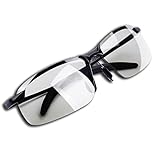
- 【Purchase Information]】This is a photochromic eyeglasses. When exposed to outdoor sunlight, the lenses absorb ultraviolet rays to form a protective layer that changes the color of the lenses. The stronger the UV rays, the darker the color of the protective layer. It is suitable for both daytime and nighttime driving. If you need dark lenses, please choose 【Black Frame/DeepBlack Lens】
- PHOTOCHROMIC TECHNOLOGY: Advanced lenses automatically adapt to changing light conditions, darkening in bright sunlight and lightening indoors for optimal vision throughout the day.Improved comfort and clarity, while reducing glare and haze
- PREMIUM FRAME CONSTRUCTION: Lightweight aluminum magnesium alloy frame with spring hinges provides exceptional durability with flexible temple adjustment.It features a lightweight structure and soft silicone nose pads, ensuring all-day comfort during wear.
- POLARIZED LENS PROTECTION: Polarized lenses eliminate glare from reflective surfaces while blocking harmful UV rays and filtering blue light to reduce eye strain and fatigue
- SEMI-RIMLESS DESIGN: Modern half-frame style offers an unobstructed field of view with sleek, sporty aesthetics suitable for driving, outdoor activities, cycling, running, fishing and everyday wear
Smoking versus edibles: the route changes the answer
The five-to-seven-hour estimate concerns inhaled cannabis and should not be casually applied to edibles. With oral THC, absorption is slower and less predictable, and effects can last longer. The 2021 review found the evidence for oral cannabis less complete than the evidence for inhaled cannabis.
For that reason, someone who ate or drank THC should not simply start a five-hour countdown. The onset may be delayed, the peak may occur later, and residual effects may continue after the person expects the experience to be over. The same caution applies to products described as sublingual unless their timing and dose are clearly understood.
What’s actually slowing this PC down?
Pick the symptom - the matching free tool is one click away.
Why a THC blood or saliva test cannot tell you whether you are safe to drive
THC testing is often misunderstood. After inhalation, THC concentration in blood can fall rapidly, while inactive or less-relevant metabolites may remain detectable for much longer. A positive blood or oral-fluid result can show prior exposure, but it does not automatically establish current driving impairment.
The reverse is also important: a low or falling THC result does not guarantee that a person has recovered enough to drive safely. The CDC explains that it is difficult to connect a particular THC concentration with impairment in an individual driver.
Research involving frequent users the following morning also found no reliable correlation between residual THC concentrations and simulator-driving performance. There is no universally dependable personal “all clear” test based only on a THC number.
What cannabis can affect behind the wheel
The driving concern is not limited to feeling euphoric or visibly intoxicated. According to the CDC, cannabis can affect abilities needed for driving, including:
Do these 3 things before closing this tab:
1Clear out junk files and repair common Windows errors2Fix the driver behind crashes, sound loss and screen glitches3Repair Windows errors before they cause bigger problems- Coordination and movement
- Balance
- Reaction-related skills
- Judgment
- Memory and attention
Driving requires continuous visual scanning, speed control, lane positioning, hazard detection, decision-making, and the ability to respond quickly when another road user makes an unexpected move. A driver may feel calm and confident while still being slower, less attentive, or less accurate.
Rank #4

- 【Purchase Information]】This is a photochromic eyeglasses. When exposed to outdoor sunlight, the lenses absorb ultraviolet rays to form a protective layer that changes the color of the lenses. The stronger the UV rays, the darker the color of the protective layer. It is suitable for both daytime and nighttime driving. If you need dark lenses, please choose 【Color film/ dark black lenses】
- Photochromic Design:Photochromic Sports Sunglasses . These photochromic lenses can automatically adapt to sunlight and UV levels. Enjoy improved comfort and clarity with polarized lenses that reduce glare and haze.
- UV400 Polarizing Lens:Sports Sunglasses feature UV400 Polarized Protective Lenses. Polarizing lenses efficiently block harmful UVA and UVB rays, ensuring complete protection from sunlight.
- The photochromic design can adaptively change the transparency of the lens under outdoor sunlight exposure, making it very suitable for outdoor activities such as cycling, running, fishing, and driving.
- Lightweight Design:Designed with comfort in mind, the glasses feature lightweight construction and soft silicone nose pads for all-day comfort. The special design techniques used ensure a comfortable and secure fit during outdoor activities. Ideal for driving, these glasses filter out dazzling light, providing a safer user experience on the road. Invest in a better and more comfortable outdoor experience .
Alcohol makes the risk worse
Do not combine cannabis with alcohol and then drive. Cannabis and alcohol can each impair driving-related skills, and combined use can increase impairment. The combination also makes it harder for a person to judge whether they are capable of driving.
The same practical rule applies to other impairing drugs, including sedating medications: if more than one substance is involved, the five-hour estimate becomes even less useful. Arrange a sober driver, use a taxi or rideshare, use public transport where available, or postpone the trip.
Independent reader supportYour contribution helps us test, update, and keep practical guides available for everyone.A practical decision checklist
Before considering driving after cannabis, ask:
- How was it consumed? Smoking and vaping are not equivalent to an edible or other oral product when estimating duration.
- How much THC was used? More THC generally means more reason to wait, and a labeled amount may not precisely reflect the dose absorbed by an individual.
- How long has it been? The first several hours after inhalation are the clearest period of concern. Five hours is a review-based minimum estimate for a particular approximate dose, not a target to reach as quickly as possible.
- Do any effects remain? Feeling high, drowsy, slowed, distracted, anxious, dizzy, or unusually confident means do not drive.
- Was alcohol, another drug, or a sedating medicine involved? If yes, do not rely on the cannabis-only estimate.
- Are you rested and physically steady? Poor sleep, impaired balance, or reduced coordination are additional reasons to wait.
- Is the trip demanding? Night driving, severe weather, heavy traffic, unfamiliar roads, and long distances leave less room for error.
If the answer is uncertain, the decision should be not to drive. A sober alternative is safer than trying to estimate impairment from a clock, a home test, or a subjective feeling.
Recommended Free Tools
What the research does—and does not—prove
The evidence supports a cautious, time-based public-health message: after smoking cannabis, measurable driving impairment is most consistently found during the first several hours, and it commonly remains detectable for roughly four to five hours. A 2021 meta-analysis estimated recovery of most skills by about five hours and nearly all by about seven hours after an approximately 20-mg inhaled dose.
It does not prove any of the following:
- That cannabis impairment always lasts exactly five hours.
- That seven hours guarantees safety.
- That a regular user is safe to drive shortly after smoking.
- That a person who feels sober has objectively recovered.
- That a THC blood or saliva concentration proves current impairment.
- That results from smoking can be applied directly to edibles.
- That a simulator result perfectly predicts performance on every real road.
Controlled studies often use selected participants and standardized doses. Real-world products may be more potent, doses may be uncertain, and people may combine cannabis with alcohol or other drugs. The research is therefore best used to guide a conservative decision, not to calculate an exact personal clearance time.
Crash-risk context
Laboratory findings are not the only concern. Epidemiological research links acute cannabis use with increased crash risk, although estimates vary and observational studies have important limitations. A 2025 systematic review and meta-analysis covering 31 studies and 328,388 people found low-certainty evidence of increased risk of crash fatality and injury, while evidence concerning unsafe driving actions was judged very low certainty.
Those certainty ratings mean the precise size of the risk remains difficult to estimate—not that the risk is absent. Combined with the laboratory evidence on reaction, coordination, attention, and judgment, the practical recommendation remains straightforward: do not drive while impaired or while unsure whether impairment has ended.
Best Value
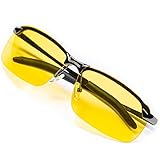
- Stylish Anti-Glare Polarized Driving Glasses: Protect eyes from glare and UV rays with polarized lenses and stylish metal frame.
- Night Vision Polarized Glasses: Enhance visibility in low light conditions with anti-fog coating and yellow tinted lenses.
- Tac Glasses for All Activities: Use these versatile glasses for driving, running, fishing, and more outdoor activities.
- Comfortable Fit for All: Choose from small to large sizes to find the perfect fit for your face.
- Durable and Protective: Made from triacetate cellulose and metal frame to protect your eyes from scratches and impact.
Frequently Asked Questions
Is five hours long enough to drive after smoking cannabis?
Five hours is a population-level estimate for recovery of most driving-related skills after inhaling approximately 20 mg of THC. It is not a guarantee for an individual. Wait longer if the dose was high, the product was potent, you are inexperienced, alcohol or another drug was involved, you are tired, or any effects remain.
Can I drive the morning after smoking cannabis?
Some frequent users in a 2026 simulator study showed no statistically significant impairment 12–15 hours after smoking the previous night, but that finding does not establish safety for occasional users, different doses, edibles, or every real-world driving situation. Consider residual effects, sleep, dose, and use history; do not drive if you feel impaired or uncertain.
Does a THC blood level prove that I am impaired?
No. THC levels can fall quickly after inhalation, metabolites can remain detectable after psychoactive effects decline, and there is no universally reliable concentration that establishes current impairment for every person. A positive result shows exposure, not necessarily present impairment.
Do edibles cause impairment for longer than smoked cannabis?
They can. Oral THC is absorbed more slowly and less predictably, and its effects may last longer. The five-to-seven-hour estimate from the major review concerns inhaled cannabis and should not be used as a simple edible safety timer.
The Tool Desk
Outbyte Driver Updater FREEScan for outdated or missing drivers - takes under a minuteDriver Scan →Outbyte PC Repair FREERepair Windows errors before they cause bigger problemsFix Now →What should I do if I am unsure whether I can drive?
Do not drive. Wait longer and arrange a sober driver, rideshare, taxi, public transportation, or another way to postpone the trip. Do not use confidence, a home THC test, or a single THC concentration as a substitute for a safety decision.
The Bottom Line
Bottom line: After smoking cannabis, the main measurable driving-impairment window is generally the first several hours. A major review estimated that most skills recover in about five hours and nearly all in about seven hours after inhaling roughly 20 mg of THC—but those figures are estimates, not guarantees. Oral cannabis may last longer, regular use does not eliminate immediate impairment, and THC tests cannot provide a dependable personal all-clear. If you still feel any effects or have any doubt, do not drive.
Quick Recap
Product prices and availability are accurate as of the date/time indicated and are subject to change. Any price and availability information displayed on Amazon at the time of purchase will apply.




