A software-defined vehicle (SDV) is a vehicle whose features and behavior are increasingly shaped by software that can be updated after it leaves the factory. Compared with a traditional car, it is designed more like a connected computing platform: its hardware, in-vehicle networks, software, and cloud services work together, and some capabilities can change over the vehicle’s life through over-the-air (OTA) updates. That creates opportunities for improvement and personalization, but also raises demanding questions about safety, security, cost, and long-term software support.
How is an SDV different from a traditional car?
The shift is not simply from physical controls to screens, or from an older engine to an electric one. It is a change in how vehicle functions are built and maintained. In a more traditional architecture, many functions are implemented in separate electronic control units (ECUs), with software closely tied to particular hardware. In an SDV approach, manufacturers aim to separate software from hardware more effectively, consolidate computing where practical, and maintain connected software throughout the vehicle’s lifecycle.
| Dimension | Traditional pattern | SDV direction |
|---|---|---|
| Computing | Many function-specific ECUs, often developed and managed separately. | Functions may be consolidated into domain, zonal, or centralized computing platforms. |
| Software and hardware | Software is often closely tied to a particular ECU or vehicle program. | Reusable software platforms and middleware aim to reduce dependence on specific hardware. |
| Changes after sale | Many changes or repairs require a workshop visit or hardware replacement. | Some changes can be delivered remotely through staged OTA updates, subject to hardware capability and safety validation. |
| Lifecycle operations | Vehicle development and after-sale service are less centered on continuous software operations. | Cloud services can support release management, fleet health, vehicle data, and software updates. |
These are directions, not a binary classification: vehicles combine old and new architectures, and an OTA-capable feature alone does not make a vehicle fully software-defined. Bosch describes the defining trend as software increasingly shaping customer experience and, in some cases, hardware specifications.
What architecture makes an SDV possible?
An SDV depends on a stack of systems rather than a single computer. Its layers need to cooperate while keeping safety-critical functions isolated and dependable.
#1 Best Overall
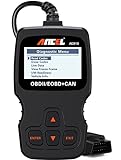
- CEL Doctor: The ANCEL AD310 is one of the best-selling OBD II scanners on the market and is recommended by Scotty Kilmer, a YouTuber and auto mechanic. It can easily determine the cause of the check engine light coming on. After repairing the vehicle's problems, it can quickly read and clear diagnostic trouble codes of emission system, read live data & hard memory data, view freeze frame, I/M monitor readiness and collect vehicle information
- Sturdy and Compact: Equipped with a 2.5 foot cable made of very thick, flexible insulation. It is important to have a sturdy scanner as it can easily fall to the ground when working in a car. The AD310 OBD2 scanner is a well-constructed mechanic tool with a sleek design. It weighs 12 ounces and measures 8.9 x 6.9 x 1.4 inches. Thanks to its compact design and light weight, transporting the device is not a problem. The buttons are clearly labelled and the screen is large and displays results clearly
- Accurate Fast and Easy to Use: The AD310 scanner can help you or your mechanic understand if your car is in good condition, provides exceptionally accurate and fast results, reads and clears engine trouble emission codes in seconds after you fixed the problem. This device will let you know immediately and fix the problem right away without any car knowledge. No need for batteries or a charger, get power directly from the OBDII Data Link Connector in your vehicle
- OBDII Protocols and Car Compatibility: Many cheap scan tools do not really support all OBD2 protocols. AD310 scanner as it can support all OBDII protocols such as KWP2000, J1850 VPW, ISO9141, J1850 PWM and CAN. This device also has extensive vehicle compatibility with 1996 US-based, 2000 EU-based and Asian cars, light trucks, SUVs, as well as newer OBD2 and CAN vehicles both domestic and foreign. Pls confirm with our customer service whether it is compatible with your vehicle before purchasing
- Home Necessity and Worthy to Own: This is an excellent code reader to travel or home with as it weighs less and it is compact in design. You can easily slide it in your backpack as you head to the garage, or put it on the dashboard, this will be a great fit for you. The AD310 is not only portable, but also accurate and fast in performance. Moreover, it covers various car brands and is suitable for people who just need a code reader to check their car
Vehicle hardware and compute
Sensors, actuators, and computing units execute vehicle functions. Manufacturers can retain distributed ECUs, group functions into domain controllers, use zonal controllers, or move more workloads to centralized computers. The appropriate mix depends on the vehicle’s functions, cost and packaging constraints, and safety requirements.
In-vehicle networking
Networks connect sensors and actuators to controllers and compute nodes. As computing becomes more consolidated, these networks must move the required data with sufficient bandwidth and predictable performance.
Software platform and middleware
Operating systems, middleware, virtualization, service interfaces, and applications provide layers between vehicle hardware and software functions. The aim is to make software easier to reuse across hardware variants and vehicle lines. NXP’s CoreRide platform, for example, lists AUTOSAR OS, Integrity, VxWorks, QNX, and Linux among supported environments; that is a vendor platform example, not a claim that every SDV supports all of them.
Cloud and lifecycle operations
Connected cloud services can support vehicle-data management, fleet health, digital twins, software release pipelines, and OTA deployment. These services extend vehicle operations beyond manufacturing, while making connectivity and data governance part of the product architecture.
The Tool Desk
Outbyte PC Repair FREERepair Windows errors before they cause bigger problemsFix Now →Outbyte Driver Updater FREEFix the driver behind crashes, sound loss and screen glitchesFind Drivers →Rank #2

- 【Diagnose Check Engine Light in Seconds – No Mechanic Needed】The FOXWELL NT301 OBD2 scanner instantly reads & clears engine fault codes (DTCs) with one click. Simply plug into the 16-pin DLC port, turn ignition on, and get accurate results within seconds—No prior car knowledge required. Save hundreds on dealership fees by knowing exactly what’s wrong before you visit a shop. The #1 choice car scanner for DIYers and car owners who want to take control of their vehicle’s health
- 【Clear & Reset CEL with Confidence】Unlike cheap code readers that just erase codes temporarily, NT301 works like all professional vehicle code readers: It clears the check engine light only after you’ve fixed the underlying issue. If the problem isn’t fully repaired, the fault code will reappear. So you’ll never get a false pass. Use the foxwell scanner to verify your repair work and drive with peace of mind
- 【Sm-og Check Helper – Know Your Pass/Fail Status Before the Test】With dedicated one-click I/M readiness hotkeys and a simple Red-Yellow-Green LED indicator, you’ll instantly know if your vehicle is ready for annual testing. Built-in speaker provides clear audio feedback. No guesswork—just confidence before you head to the test center. One less thing to worry about when inspection day comes
- 【Advanced OBDII Modes – O- 2 Sensor & EVAP Testing】NT301 go beyond basic code reading with enhanced OBD2 modes. Run an EVAP system check to assess fuel tank condition, and use the O- 2 sensor test to optimize air-fuel ratio, boosting fuel economy, cutting em- issions, and saving you money at the pump. The code reader for cars and trucks is like having a mini em-issions lab in your glove box
- 【Live Data Graphing – Spot Engine Issues in Real Time】View and log live sensor data in easy-to-read graphs with this OBD2 scanner diagnostic tool. Monitor ox- ygen sensors, fuel trims, coolant temperature, RPM, and more to spot suspicious values instantly. This obd scanner gives you professional-grade insight without the pro price tag—a feature you won’t find on basic $20 car code readers
Safety and security controls
When safety-critical functions share computing resources with less critical workloads, the platform needs isolation, validation, redundancy where required, and secure update mechanisms. These are design and assurance requirements, not optional add-ons to an otherwise complete SDV.
Why do zonal and centralized architectures matter?
In a distributed design, many ECUs are placed around the vehicle and dedicated to particular functions. A domain architecture groups functions by area, such as powertrain or infotainment. A zonal architecture groups connections and control by physical region of the vehicle, with zonal controllers linking nearby sensors and actuators to higher-level compute. Centralized compute puts more workloads on a smaller number of powerful computing units. These approaches can be combined rather than treated as mutually exclusive choices.
Zonal and centralized designs can reduce duplication and help software teams coordinate functions across domains. They also make the vehicle’s network and compute platform more consequential: a central unit may host advanced driver-assistance systems (ADAS), infotainment, and vehicle-motion workloads, so allocating resources and separating functions safely become essential. Consolidation does not remove complexity; it shifts complexity into compute, networking, software platforms, validation, and thermal and power management.
McKinsey and the Global Semiconductor Alliance estimated in 2024 that 30 percent of vehicles produced globally would have electrical/electronic (E/E) architectures with zonal controllers by 2032. This is a forecast, not a measure of current adoption.
Outdated Drivers Are Slowing You Down
One free scan finds every outdated or missing driver and matches the right update for your exact hardware.Free scan · exact hardware matchPC Slower Than It Used to Be?
A free scan shows the junk files, broken settings and background clutter dragging Windows down - then fixes them in one click.Free scan · Windows 10 & 11Rank #3
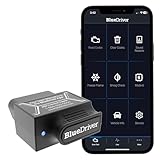
- [Diagnose Like a Pro] BlueDriver Pro is a professional OBD2 scanner and diagnostic tool that helps you scan, understand, and clear vehicle trouble codes with confidence. Turn your phone into a powerful car diagnostic scanner—no guesswork, no unnecessary repairs.
- [Read and Clear More Codes Than Ever] Read and clear more codes than basic car code readers. Access enhanced diagnostics for Check Engine, ABS, SRS, Airbag, TPMS, Transmission.
- [Verified Fixes and Real-Time Data] Get unlimited, technician-verified repair reports matched to your VIN, with definitions, causes, and confirmed fixes. Monitor live vehicle data as you drive, view freeze frames, check smog readiness, and analyze Mode 6 test results.
- [Wireless & Bluetooth Enabled] - Say goodbye to wires. BlueDriver connects with Bluetooth via your phone/tablet to a sensor that plugs into your car's OBDII port. Get all of the capabilities of an expensive code reader & scan tool without any annoying wires.
- [Broad Make & Model Coverage] Strong support for GM, Ford, Stellantis (RAM, Jeep, Chrysler), Toyota, Honda, Nissan, Mazda, Subaru, Hyundai, Mercedes-Benz, BMW, and VW.
What do OTA updates change during a vehicle’s life?
OTA updates let a manufacturer deliver software changes to a vehicle over a network instead of relying on a service visit for every software change. Depending on the vehicle’s hardware, software design, and regulatory and safety constraints, an update may fix a defect, improve an existing function, or enable a feature. Bosch notes that regular updates can maintain or increase a vehicle’s value over its lifecycle; the outcome depends on what the update changes and whether the vehicle’s hardware can support it.
A reliable update program is more than sending a software package. It involves testing, release control, secure delivery, installation handling, and a plan for failures. Manufacturers need to know which software versions are running across a varied fleet, limit the impact of a faulty release, and preserve safety and traceability. OTA reduces dependence on workshop visits for changes it can safely deliver; it cannot upgrade physical components that a feature requires.
What are the main benefits?
- Lifecycle improvement: Software can be refined after production, within the limits of the vehicle’s hardware.
- Faster feature delivery: Staged OTA releases can make some fixes and improvements available without waiting for a workshop appointment.
- Personalization and new business models: Manufacturers may offer features for later activation, temporary use, subscription, or purchase. Availability and terms vary by vehicle and manufacturer.
- Cross-domain coordination: Shared compute can coordinate functions such as ADAS, infotainment, and vehicle motion, where the architecture and safety case allow it.
- Reuse and scale: A common software platform can support multiple models or hardware configurations and reduce duplicated development effort.
What makes SDVs difficult to build and support?
Hardware and software integration
Moving from function-specific ECUs to a scalable platform requires integrating hardware and software that may have been designed separately. NXP identifies hardware-software integration, ECU consolidation, and a platform that scales across low- to high-end vehicle classes as core development challenges. Consolidation can simplify some parts of a vehicle while requiring substantial redesign of the underlying architecture.
Functional safety and interference
Combining infotainment and safety-critical workloads raises the bar for keeping one function from disrupting another. Teams must demonstrate appropriate isolation, validation, and, where needed, redundancy. McKinsey notes that Level 3 and above automated-driving systems require redundancy in compute, actuators, and power supply. Electromagnetic compatibility and end-to-end validation also matter when many systems share a platform.
Do these 3 things before closing this tab:
1Clear out junk files and repair common Windows errors2Fix the driver behind crashes, sound loss and screen glitches3Repair Windows errors before they cause bigger problemsRank #4
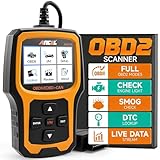
- Understand Your Check Engine Light – The ANCEL AD410 OBD2 scanner helps everyday drivers quickly read and clear engine-related fault codes, view code definitions, and understand why the check engine light is on before visiting a repair shop. With 42,000+ built-in DTC lookups, this car code reader helps reduce guesswork and makes basic vehicle diagnostics easier for beginners and DIY users
- Full OBD2 Diagnostics Made Simple – More than a basic engine code reader, this OBD2 scanner diagnostic tool supports key OBDII functions including reading/clearing codes, live data, freeze frame, I/M readiness, O2 sensor test, EVAP test, vehicle information, and MIL status. It helps you check your car’s condition, verify repairs after the issue is fixed, and communicate with mechanics more confidently
- Live Date & Real-time Vehicle Insights – View real-time engine data such as RPM, coolant temperature, fuel trim, oxygen sensor readings, and other available OBD2 parameters directly on the screen. These live data readings help you better understand how your vehicle is running, spot abnormal patterns, and make more informed repair decisions instead of relying only on a warning light
- Smog Check Readiness At A Glance – Use the I/M readiness function before a smog check or emissions inspection to see whether your vehicle’s monitors are ready. This OBD2 code scanner helps you confirm if recent repairs have brought the system back to a ready state, reducing the chance of failed inspections, retests, wasted trips, and unnecessary inspection fees
- Works With Most OBD2 Vehicles – Compatible with most 1996 and newer U.S.-based OBD2 cars, SUVs, and light trucks, as well as many 2000 and newer EU/Asian OBD2 vehicles. Supports major OBDII protocols including CAN, ISO9141, KWP2000, J1850 VPW, and J1850 PWM. This automotive diagnostic scanner is designed for wide vehicle coverage; please check compatibility with your vehicle before purchase
Cybersecurity and privacy
Connectivity and remote updates create more points that must be protected. Secure vehicle identities, signed updates, monitoring, incident response, and clear data-governance practices are all part of the challenge. A connected vehicle also needs a process for addressing vulnerabilities after sale, not only security checks before launch.
Software complexity and assurance
Continuous delivery across a diverse fleet requires version tracking, regression control, traceability, and reliable recovery if an update fails. Changes to one shared component can affect multiple functions or vehicle models, so release speed has to be balanced with validation and safety evidence.
Organizational change and economics
SDVs alter more than engineering tools. SAE International’s 2024 report, The Software-defined Vehicle: Its Current Trajectory and Execution Challenges, describes changes across OEMs, Tier 1 suppliers, and semiconductor companies in products, processes, organizations, and business models. Manufacturers also have to decide which software capabilities to develop in-house, which to source, and how to support them over a vehicle’s life.
Standards and interoperability
Platforms must work across operating systems, middleware, cloud interfaces, and industry standards. AUTOSAR, COVESA, ISO, IEEE, and SAE are among the relevant standards and organizations identified in ITU-T’s FSTP-SDV work. The ITU-T work item, agreed July 17, 2026, surveys SDV concepts, platforms, hardware, connectivity, cloud vehicle management, standardization activities, industry strategies, startup collaboration, and cloud-provider roles; its scope also reflects the continuing challenge of interoperability.
Free tools Windows power users keep installed
One-click scans. No signup required.
Best Value
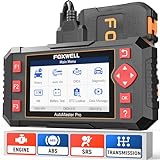
- [Easy to Use—Work Out of the Box] + [FOXWELL 2026 New Version] FOXWELL NT604 Elite scan tool is the 2026 new version from FOXWELL, designed for car owners who want to figure out the cause of issues before fixing car problems by scanning common systems like ABS, SRS, engine, and transmission. The NT604 Elite obd2 scanner diagnostic tool comes with the latest software—no need to waste time downloading software first. Plug the scanner into the OBDII port with OBDII cable to start the diagnosis.
- [Affordable] + [Reliable Car Health Monitor] Will you be confused what happens when the warning light of ABS/SRS/transmission/check engine flashes? Instead of taking your cars to dealership, this FOXWELL scanner will help you do a thorough scanning and detection for your cars and pinpoint the root cause. Note:The device is a diagnostic tool, not a repair tool. To turn off a warning light, you must first physically repair the issue causing it. Only then can the scanner be used to clear the corresponding fault code.
- [5 in 1 Car Diagnostic Scanner] Compared with obd scanners (50-100), NT604 Elite code scanner not only includes their OBDII diagnosis but also serves as ABS/SRS scanner, transmission and check engine code reader. When it’s an odb2 scanner, you can use it to check if your car is ready for annual test through I/M readiness menu. In addition, live data stream, built-in DTC library, data play back and print, all these features are a big plus for it. Note: doesn't support maintenance functions like reset or relearn. For the SRS system, NT604 Elite can read and clear common fault codes not caused by a crash, but crash/collision data cannot be cleared.
- [Fantastic AUTOVIN] + [No extra software fee] Through the AUTOVIN menu, this NT604 Elite car scanner allows you to get your V-IN and vehicle info rapidly, no need to take time to find your V-IN and input one by one. What's more, the NT604 Elite ABS SRS scanner supports 60+ car brands from worldwide (America/Asia/Europe). You don’t need to pay extra software fee. AUTOVIN may not work on some older vehicles or certain vehicle brands. If AUTOVIN fails, please input the vin code manually or go to the Diagnostic Menu to select your vehicle model.
- [Solid protective case KO plastic carrying bag] + [Lifetime update] Almost all same price-level car scanner diagnostic tool only offers plastic bag to hold the scanner.However, NT604 Elite automotive scanner is equipped with solid protective case, preventing your obd2 scanner from damage. Then you don’t need to pay extra money to buy a solid toolbox.
Power, cost, and supplier dependence
Centralized computing can increase performance and integration demands, while affecting bill of materials, energy use, cooling, and supplier choice. Dependence on a platform vendor can also constrain a manufacturer’s roadmap or make long-term support and migration harder. Architecture comparisons therefore need to consider total cost of ownership and control of future changes, not compute performance alone.
Independent reader supportYour contribution helps us test, update, and keep practical guides available for everyone.How should SDV approaches be compared?
There is no single architecture that is best for every vehicle. A useful comparison looks beyond processor specifications and examines how a platform will be developed, validated, updated, and supported.
- Where does it sit on the distributed, domain, zonal, and centralized compute spectrum?
- How portable is the software, and which middleware and operating systems are supported?
- How are functional safety, cybersecurity, and update assurance handled?
- What OTA, cloud, fleet-health, and digital-twin operations are available?
- How do compute performance, power consumption, and thermal limits fit the vehicle?
- What development, simulation, validation, and release-automation tools are provided?
- How well does the platform interoperate with relevant standards and suppliers?
- Who controls the roadmap, and what are the supplier-concentration and long-term cost implications?
What do industry forecasts say—and what do they not say?
Market projections can indicate where suppliers expect investment, but they do not establish how many consumers currently drive SDVs. McKinsey’s 2024 estimates below are forecasts, not measured adoption figures.
| Measure | McKinsey 2024 estimate | How to interpret it |
|---|---|---|
| Vehicles with zonal E/E architecture | 30 percent of globally produced vehicles by 2032, estimated by McKinsey with the Global Semiconductor Alliance. | Forecast of vehicle production architecture, not current SDV penetration. |
| Automotive compute-unit market | $96 billion in 2023 to $148 billion in 2030. | Forecast market value, not revenue guaranteed to any supplier or a consumer adoption measure. |
| Automotive semiconductor market | $60 billion to $140 billion over the decade to 2032. | Forecast market value; it is broader than SDV software platforms alone. |
The direction of travel is toward more software-intensive and connected vehicle architectures, but those projections should not be mistaken for a count of vehicles already delivering a fully software-defined experience.
Recommended Free Tools
Quick Recap
Product prices and availability are accurate as of the date/time indicated and are subject to change. Any price and availability information displayed on Amazon at the time of purchase will apply.




