Recommended Free Tools
IoT helps vehicles and transportation systems share information: onboard sensors and computers collect data, networks carry it to other vehicles or infrastructure, and software uses it for warnings, traffic coordination, fleet operations, and other services. The benefits can be substantial, but they depend on reliable communications, interoperability, privacy protections, and security. Not every connected car has vehicle-to-everything (V2X) capability, and most smart-vehicle functions do not require 5G.
What makes a vehicle “smart” or connected?
A smart vehicle combines onboard sensors, electronic control systems, software, and one or more communications links. It may exchange data with cellular networks, cloud services, GPS-enabled services, other vehicles, or roadside equipment. The exact combination varies by vehicle and service: a car can have internet-connected infotainment or telematics without having V2X communications.
The U.S. Department of Transportation (USDOT) describes connected-vehicle technologies as equipment, applications, or systems that use vehicle-to-everything communications for roadway safety, transportation-system efficiency, or mobility. V2X is an umbrella term for information exchanged between a vehicle and other road users or infrastructure.
What V2X can connect
- Vehicle-to-vehicle (V2V): Vehicles can exchange information such as position, speed, or a safety alert.
- Vehicle-to-infrastructure (V2I): A vehicle can communicate with roadside equipment, such as a traffic signal or connected intersection.
- Vehicle-to-pedestrian or other road user (V2P): Communications can include pedestrians, cyclists, motorcyclists, buses, and trucks, depending on the application and equipment.
V2X can provide a short-range, low-latency information layer that helps warn about a hazard outside a driver’s line of sight. That does not mean a warning is guaranteed: the relevant vehicles or infrastructure need compatible equipment, the communications must work, and a driver or automated system must respond appropriately.
Quick wins for a faster PC:
Repair Windows errors before they cause bigger problemsFix Now →Fix the driver behind crashes, sound loss and screen glitchesFind Drivers →#1 Best Overall

- CEL Doctor: The ANCEL AD310 is one of the best-selling OBD II scanners on the market and is recommended by Scotty Kilmer, a YouTuber and auto mechanic. It can easily determine the cause of the check engine light coming on. After repairing the vehicle's problems, it can quickly read and clear diagnostic trouble codes of emission system, read live data & hard memory data, view freeze frame, I/M monitor readiness and collect vehicle information
- Sturdy and Compact: Equipped with a 2.5 foot cable made of very thick, flexible insulation. It is important to have a sturdy scanner as it can easily fall to the ground when working in a car. The AD310 OBD2 scanner is a well-constructed mechanic tool with a sleek design. It weighs 12 ounces and measures 8.9 x 6.9 x 1.4 inches. Thanks to its compact design and light weight, transporting the device is not a problem. The buttons are clearly labelled and the screen is large and displays results clearly
- Accurate Fast and Easy to Use: The AD310 scanner can help you or your mechanic understand if your car is in good condition, provides exceptionally accurate and fast results, reads and clears engine trouble emission codes in seconds after you fixed the problem. This device will let you know immediately and fix the problem right away without any car knowledge. No need for batteries or a charger, get power directly from the OBDII Data Link Connector in your vehicle
- OBDII Protocols and Car Compatibility: Many cheap scan tools do not really support all OBD2 protocols. AD310 scanner as it can support all OBDII protocols such as KWP2000, J1850 VPW, ISO9141, J1850 PWM and CAN. This device also has extensive vehicle compatibility with 1996 US-based, 2000 EU-based and Asian cars, light trucks, SUVs, as well as newer OBD2 and CAN vehicles both domestic and foreign. Pls confirm with our customer service whether it is compatible with your vehicle before purchasing
- Home Necessity and Worthy to Own: This is an excellent code reader to travel or home with as it weighs less and it is compact in design. You can easily slide it in your backpack as you head to the garage, or put it on the dashboard, this will be a great fit for you. The AD310 is not only portable, but also accurate and fast in performance. Moreover, it covers various car brands and is suitable for people who just need a code reader to check their car
How IoT benefits safety and crash avoidance
Connected information can complement cameras, radar, and other onboard sensors. A vehicle’s own sensors are limited by what they can detect from its position; a V2X message may communicate that another vehicle is braking or that a hazard is ahead, including around an obstruction. This can give a driver or assistance system more time to react, but it is an additional source of information rather than a replacement for direct sensing or attentive driving.
The potential stakes are large. The National Highway Traffic Safety Administration (NHTSA) reported 39,254 people killed in U.S. motor-vehicle crashes in 2024. That national toll is context for why safety technologies matter, not evidence that connected systems have already prevented a particular number of deaths.
NHTSA testing of prototype V2V equipment found that it could track potential forward-collision-warning threats. The testing also exposed challenges in curves and during lane changes, which require further testing. An ITS Deployment Evaluation snapshot reported a 9% decrease in normalized forward-collision-warning conflict rates in one V2X use case. That is a result for that evaluated use case, not a forecast for all vehicles, roads, or V2X deployments.
How connected vehicles can improve traffic and mobility
Vehicles can share position and speed information with other road users or infrastructure, allowing transportation systems to coordinate certain movements and services. One example is signal priority: a connected vehicle can communicate with a traffic signal so that signal timing can support a specific operation, such as a bus route.
Rank #2

- Multi-Functions - Practical Multi-Functions OBD2 code reader features built-in OBD2 DTC lookup library, which help you to determine the cause of the engine light, read code, erase code, view freeze frame, I/M ready, vehicle information, data flow, real-time curve, get vehicle speed information, calculate load value, engine coolant temperature, get engine speed.
- Wide Capability - Supports 9 protocols compatible with most 1996 US-Based, 2000 EU-Based and Asian cars, and newer OBD II & CAN domestic or import vehicles. Supports 6 languages - English,German, Dutch, Spanish, French, Italian.
- 2.8" LCD Display - Designed with a clear display 2.8" Large LCD screen - white backlight and contrast adjustment. No need any battery or charger, OBD reader gets the power directly from your vehicle through the OBDII Data Link Connector.
- Compact Design - Car diagnostic scanner is equipped with a 2.5 feet long cable and made of a very thick flexible insulator.There are 6 buttons on OBD2 Scanner:scroll up/down,enter/exit and buttons that quick query VIN vehicle number& the DTC fault code.
- ABS / Airbag codes NOT Supported - It is able to read and clear check engine information which is part of OBDII system, but it cannot work with non-OBDII systems, including ABS / Airbag / Oil Service Light, etc.
An ITS Deployment Evaluation portal reported a connected-school-bus signal-priority deployment with 40.4% fewer stops and a 13.3% reduction in travel time. Those figures describe that deployment, as reported on the portal in 2024/2025; they should not be treated as results every connected bus or city will achieve.
At a broader level, better information can help agencies and operators understand traffic conditions and coordinate services. USDOT’s connected-vehicle work describes crash-related emergency-response, fatality, injury, and property-damage costs totaling more than $140 billion per year for 2018 conditions. The figure is tied to that source page’s description of 2018, not a current annual estimate.
What IoT changes for fleets and vehicle operations
Telematics can turn vehicle data into operational information for commercial fleets and other vehicle operators. Depending on the system and data available, operators may use it to:
- Plan or adjust routes using location and operating information.
- Schedule maintenance based on vehicle condition or usage.
- Coach drivers using driving and vehicle-operation data.
- Analyze vehicle utilization and identify underused assets.
- Support incident response by locating vehicles and coordinating assistance.
These uses rely on data exchange between vehicles, communications services, and fleet software—the kind of connected-vehicle architecture described by USDOT. The value depends on data quality, coverage, integration with existing systems, and whether the information is used in a way that improves an operation rather than merely collecting more data.
Rank #3

- 【Diagnose Check Engine Light in Seconds – No Mechanic Needed】The FOXWELL NT301 OBD2 scanner instantly reads & clears engine fault codes (DTCs) with one click. Simply plug into the 16-pin DLC port, turn ignition on, and get accurate results within seconds—No prior car knowledge required. Save hundreds on dealership fees by knowing exactly what’s wrong before you visit a shop. The #1 choice car scanner for DIYers and car owners who want to take control of their vehicle’s health
- 【Clear & Reset CEL with Confidence】Unlike cheap code readers that just erase codes temporarily, NT301 works like all professional vehicle code readers: It clears the check engine light only after you’ve fixed the underlying issue. If the problem isn’t fully repaired, the fault code will reappear. So you’ll never get a false pass. Use the foxwell scanner to verify your repair work and drive with peace of mind
- 【Sm-og Check Helper – Know Your Pass/Fail Status Before the Test】With dedicated one-click I/M readiness hotkeys and a simple Red-Yellow-Green LED indicator, you’ll instantly know if your vehicle is ready for annual testing. Built-in speaker provides clear audio feedback. No guesswork—just confidence before you head to the test center. One less thing to worry about when inspection day comes
- 【Advanced OBDII Modes – O- 2 Sensor & EVAP Testing】NT301 go beyond basic code reading with enhanced OBD2 modes. Run an EVAP system check to assess fuel tank condition, and use the O- 2 sensor test to optimize air-fuel ratio, boosting fuel economy, cutting em- issions, and saving you money at the pump. The code reader for cars and trucks is like having a mini em-issions lab in your glove box
- 【Live Data Graphing – Spot Engine Issues in Real Time】View and log live sensor data in easy-to-read graphs with this OBD2 scanner diagnostic tool. Monitor ox- ygen sensors, fuel trims, coolant temperature, RPM, and more to spot suspicious values instantly. This obd scanner gives you professional-grade insight without the pro price tag—a feature you won’t find on basic $20 car code readers
How IoT fits with automated driving
Driver-assistance features and connected-vehicle communications are not the same thing as fully automated driving. A connected warning can inform a driver or an onboard assistance system; it does not by itself make a vehicle autonomous. Automation depends on the vehicle’s capabilities and operating design, while V2X adds a communications channel that may provide information beyond the vehicle’s own sensors.
USDOT expects V2X to help integrate automated vehicles with today’s non-automated fleet, provided interoperability and security are maintained. That is a prospective role: mixed traffic, incompatible systems, and dependable communication all have to be addressed for connected information to work consistently across vehicles and infrastructure.
Does a smart car need 5G?
No. 5G can enable real-time communication between vehicles and infrastructure, as described by the Department of Homeland Security (DHS), but it is not a universal prerequisite for smart-car functions. A vehicle may use onboard sensors, GPS, Wi-Fi, other cellular generations, or short-range V2X communications for different features. The needed connection depends on the application.
Network choice involves trade-offs. A service that depends on timely communication needs suitable latency and reliability, but it also needs coverage and compatible equipment at both ends. More connectivity can enable additional services while creating more exposure to communications outages and cyber threats. A 5G connection alone does not guarantee a safety benefit.
Do these 3 things before closing this tab:
1Repair Windows errors before they cause bigger problems2Scan for outdated or missing drivers - takes under a minute3Clear out junk files and repair common Windows errorsRank #4
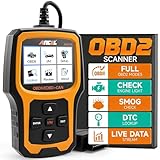
- Understand Your Check Engine Light – The ANCEL AD410 OBD2 scanner helps everyday drivers quickly read and clear engine-related fault codes, view code definitions, and understand why the check engine light is on before visiting a repair shop. With 42,000+ built-in DTC lookups, this car code reader helps reduce guesswork and makes basic vehicle diagnostics easier for beginners and DIY users
- Full OBD2 Diagnostics Made Simple – More than a basic engine code reader, this OBD2 scanner diagnostic tool supports key OBDII functions including reading/clearing codes, live data, freeze frame, I/M readiness, O2 sensor test, EVAP test, vehicle information, and MIL status. It helps you check your car’s condition, verify repairs after the issue is fixed, and communicate with mechanics more confidently
- Live Date & Real-time Vehicle Insights – View real-time engine data such as RPM, coolant temperature, fuel trim, oxygen sensor readings, and other available OBD2 parameters directly on the screen. These live data readings help you better understand how your vehicle is running, spot abnormal patterns, and make more informed repair decisions instead of relying only on a warning light
- Smog Check Readiness At A Glance – Use the I/M readiness function before a smog check or emissions inspection to see whether your vehicle’s monitors are ready. This OBD2 code scanner helps you confirm if recent repairs have brought the system back to a ready state, reducing the chance of failed inspections, retests, wasted trips, and unnecessary inspection fees
- Works With Most OBD2 Vehicles – Compatible with most 1996 and newer U.S.-based OBD2 cars, SUVs, and light trucks, as well as many 2000 and newer EU/Asian OBD2 vehicles. Supports major OBDII protocols including CAN, ISO9141, KWP2000, J1850 VPW, and J1850 PWM. This automotive diagnostic scanner is designed for wide vehicle coverage; please check compatibility with your vehicle before purchase
What limits the benefits of connected vehicles?
V2X benefits are not automatic or uniform. A connected vehicle may be useful only when other vehicles, road users, or roadside infrastructure can exchange compatible messages. Coverage can be uneven, and a system can face technical limits in difficult driving situations. Even when a warning arrives, its value depends on whether the driver understands it and responds in time.
The Government Accountability Office (GAO) identifies deployment barriers that include spectrum sharing, the resources available to state and local agencies, interoperability standards, data security and privacy, driver response to warnings, and uncertainty about liability. These are practical issues: a promising application can be difficult to scale if road authorities cannot fund infrastructure, devices cannot exchange information reliably, or responsibilities for a failure remain unclear.
Independent reader supportYour contribution helps us test, update, and keep practical guides available for everyone.Security and privacy risks to consider
Connected vehicles rely on electronics, sensors, computing systems, and communications, so cybersecurity is integral to safe operation. NHTSA calls cybersecurity critical for advanced safety and automated systems and recommends a risk-based process that is maintained, refreshed, and updated as threats change. Security is therefore an ongoing engineering and operational responsibility, not a one-time setup task.
Privacy is a separate concern. NHTSA notes that precise, real-time geolocation and communications connected through a vehicle can be sensitive personal data. Drivers and fleet operators should understand what information a service collects, how it is used and retained, and who can access it. USDOT says V2X messages can use immediate authentication with privacy protection; that design goal does not remove the need to assess the privacy practices of each connected service.
Best Value
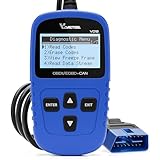
- 【A MUST-HAVE SCANNER TOOL FOR DIYERS】 - VDIAGTOOL VD10 car code reader is an incredibly useful, handheld obd2 scanner for each car owner or hobbyist, even for those with little to no experience when it comes to vehicle mechanics! Similar to a fixd car diagnostic tool, using this car diagnostic scanner is extremely easy. All you have to do is attach it to your car OBDII port and you can diagnose car problems in seconds! Read Codes (DTCs); Clear Codes; Live Data; View Freeze Frame; I/M Readiness; Vehicle Information.
- 【KEEP ENGINE IN GOOD STATUS】 - VDIAGTOOL check engine code reader brings a fast access to scan, read the car fault code, show its definition on the screen instantly, troubleshooting to find the root causes of problems, erase the engine fault code and turn off the MIL (Malfunction Indicator Light). Similar to a fixd car diagnostic tool, this car code reader helps ensure your engine stays in top condition.
- 【READ/CLEAR CODES & DTC LOOKUP】- No search online & saving your time, this vehicle car code reader retrieves generic (P0, P2, P3, and U0), manufacturer specific (P1, P3, and U1) codes, pending codes and displays DTC definitions based on the built-in database(more than 3000 codes) on the TFT screen, find out the root causes and clear the codes after fixed.
- 【ENHANCED OBD2 SCANNER WITH LIVE DATA & RETRIEVE FREEZE FRAME】 - This diagnostic scan tool for accurate diagnosis enables you to retrieve data from vehicle sensors, such as Engine RPM, Intake air temperature, Short/Long term fuel, Misfire data and etc. The freeze frame is stored in the PCM together with the diagnostic trouble code (DTC) related to the fault. Comparable to a fixd car diagnostic tool, the VD10 car code reader car scanner can be a valuable & practical diagnostic aid and also greatly help when diagnosing intermittent problems.
- 【I/M READINESS for THE S-nn-0-g CHECK】- OBDII vehicle may not pass the annual inspection unless the required monitors since reset are complete. So you should at least read the readiness monitors and make sure they are ready. This car obd2 scanner diagnostic tool is equipped with I/M readiness function to check the operations of the e-m-issi0n system on OBD2 compliant vehicles, run I/M monitor readiness test, checking if the pass vehicle s-m-0-g inspection.
DHS also warns that greater connectivity, including 5G-enabled communications, increases cybersecurity and reliability exposure. A robust deployment needs to consider what happens when a network is unavailable, how systems authenticate information, and how software and security controls are maintained over time.
How to evaluate a connected-vehicle system
For a vehicle feature, fleet platform, or public-road deployment, compare the system against the requirements of its actual use rather than the label “connected.” These criteria reflect issues raised by USDOT, NHTSA, GAO, and DHS:
| Evaluation area | What to check |
|---|---|
| Safety performance | What hazard or operational problem is addressed, and what evidence supports the claimed result? Keep pilot or deployment results tied to their specific conditions. |
| Latency and reliability | How quickly must information arrive, how dependable is the communication, and what happens during an outage? |
| Interoperability | Can the vehicle, roadside equipment, and other systems exchange and interpret messages consistently? |
| Cybersecurity and privacy | How are messages authenticated, software and controls updated, location data handled, and access limited? |
| Infrastructure coverage | Where are compatible roadside systems and communications available, and where will the feature not work? |
| Total cost | What are the vehicle, equipment, connectivity, integration, maintenance, and infrastructure costs over time? |
| Updateability | Can software and security protections be maintained as technologies and threats change? |
| Regulatory and liability readiness | Are deployment responsibilities, applicable requirements, and responses to system failures understood? |
What can an existing-car owner do?
An OBD-II telematics adapter can be an entry-level way to collect basic vehicle telemetry from a compatible existing car. It is a data-collection accessory, not a substitute for native V2X, manufacturer-installed safety systems, roadside infrastructure, or professional cybersecurity controls. Before choosing one, check that it is compatible with the vehicle, that cellular coverage and data-plan terms suit the intended use, and that its privacy policy explains what happens to collected data.
Quick Recap
Product prices and availability are accurate as of the date/time indicated and are subject to change. Any price and availability information displayed on Amazon at the time of purchase will apply.




