The Tool Desk
Outbyte PC Repair FREEClear out junk files and repair common Windows errorsFree Scan →Outbyte Driver Updater FREEScan for outdated or missing drivers - takes under a minuteDriver Scan →Buy the cheaper used car only if an independent inspection finds it sound and its full cost fits your budget, including a repair reserve. If repairs, loan costs or reliability risks could wipe out the price savings—or leave you without dependable transportation—keep saving or compare newer and certified pre-owned (CPO) cars. There is no universal age or price cutoff that makes one choice better; compare the actual vehicles and financing offers.
What should you compare before deciding?
Look beyond the asking price and monthly payment. Compare the total cost of owning each candidate and the consequences if it needs repairs or breaks down. Consumer Reports describes ordinary used cars as less expensive upfront but often less reliable, with shorter remaining life and no or limited warranty. CPO cars cost more than ordinary used cars, but are late-model vehicles inspected and backed by a warranty; selection is more limited. New cars generally have the highest purchase price, taxes and insurance, but come with a full warranty and current safety features, alongside greater exposure to depreciation. These are general trade-offs, not guarantees about an individual car. Consumer Reports’ used-car budgeting guide and its new, CPO and used comparison explain the distinctions.



As an Amazon Associate I earn from qualifying purchases.
- Purchase price, taxes, dealer fees and registration
- Loan APR, term, finance charge, down payment and total amount paid
- Insurance and fuel costs
- Likely maintenance and repairs, plus money set aside for unexpected work
- Warranty coverage and what it excludes
- Model reliability, the specific car’s service and title history, safety equipment and recall status
- How much a breakdown would disrupt your work, caregiving or other essential travel
A low monthly payment does not prove a car is affordable: a longer loan can reduce the payment while increasing the total cost of credit. Ask sellers for written out-the-door prices and compare financing by APR, term and total paid, not payment alone. The FTC’s dealer-buying guidance recommends comparing offers from dealerships, banks, credit unions and finance companies.
What’s actually slowing this PC down?
Pick the symptom - the matching free tool is one click away.
How to evaluate a specific used car
- Get the VIN and examine the history. Use it to check title, ownership, accident, repair or salvage information, and search for open recalls. The FTC explains that history reports vary and no single report necessarily contains everything. It lists NMVTIS-approved providers and mentions AutoCheck, Carfax and VinAudit as services that may provide additional information; it does not endorse any company. A report is useful context, not proof of mechanical condition. See the FTC’s used-car guidance.
- Arrange an independent pre-purchase inspection. Have a mechanic you choose examine the car and provide a written condition report with repair estimates. The FTC recommends an inspection even when a dealer says a car is certified or covered by a warranty. If a seller refuses to let you arrange one, reconsider the purchase. Consumer Reports estimated $100–$150 for an inspection in an article updated March 20, 2026; that estimate can vary by location and date, so ask local shops for current quotes. Consumer Reports’ inspection guide covers what to check.
- Check the paperwork and warranty. For a dealer sale, read the Buyers Guide and confirm whether the car is sold “as is” or with a warranty. Dealers generally must display and provide a Buyers Guide for used vehicles they offer, including online sales; Maine and Wisconsin use their own versions. This dealer requirement should not be assumed to apply to private sales. Get every promise in writing and compare it with the contract. The FTC guide to buying from a dealer explains the paperwork.
- Compare real financing offers. Review APR, loan term, down payment, finance charge and total paid for each offer. Calculate the full cost alongside the out-the-door price and ownership expenses; do not decide from the monthly payment alone.
- Match the car to your reliability needs. A cheaper car with uncertain condition may be unsuitable if you cannot absorb repair bills or missing a day of transportation would create serious problems. For a used EV, ask how the battery’s health can be checked for that make and model; Consumer Reports notes that the method varies by manufacturer. Its used-car buying guide discusses model-specific checks.
If a dashboard warning light appears, a basic OBD2 code reader may help capture a code to discuss with a mechanic. Consumer Reports notes that inexpensive readers may show only a general code; a reader does not diagnose every problem or certify a car as healthy. It is not a substitute for the inspection.
#1 Best Overall
When does buying now make sense?
Buying now is defensible when the inspected car’s condition meets your needs, its complete cost fits your budget, and you can keep a realistic reserve for repairs. Compare its written price and financing with other candidates rather than relying on a general rule about age, mileage or what counts as “cheap.”
Keep saving, or consider a CPO or newer vehicle, when the inspection identifies repairs you cannot comfortably pay for, the car’s history or condition remains uncertain, financing makes the total cost unattractive, or unreliable transportation would be especially costly for you. CPO’s inspection and warranty can reduce some uncertainty, but Consumer Reports still recommends an independent inspection for CPO and traditional used cars. The choice is a personal trade-off between upfront cost and the risk and expense of keeping the vehicle dependable—not a guaranteed break-even calculation.
Rank #2
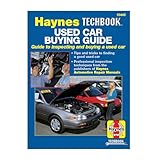
- Step-by-step procedures written from a complete teardown and rebuild, giving you the confidence to tackle repairs at any skill level.
- Over 700+ clear photos and diagrams that simplify complex systems, helping you complete jobs faster and with fewer mistakes.
- Comprehensive troubleshooting and fault-finding guides to quickly diagnose problems and reduce costly downtime.
How much should a “cheap” used car cost?
There is no evidence-based universal price threshold for this decision. Consumer Reports reported a Cox Automotive average used-vehicle listing price of $25,533 in early February 2026, described as nearly identical to the previous year. That is dated national market context—not a local quote, a current price, or a target for an inexpensive car. Check current local listings and written offers for the type of vehicle you need.
Quick Recap
Product prices and availability are accurate as of the date/time indicated and are subject to change. Any price and availability information displayed on Amazon at the time of purchase will apply.




