Short answer: Semi-solid-state batteries have already moved beyond the laboratory. A small number of China-market electric vehicles, including NIO models using a 150-kWh pack, use battery technology marketed as semi-solid or solid-state-like. However, most drivers—particularly outside China—cannot yet buy one, and semi-solid does not mean fully solid-state, automatically cheaper, fireproof, or faster-charging.
The accurate headline is that semi-solid batteries are here in limited production, but not yet a mainstream replacement for conventional lithium-ion batteries.
As an Amazon Associate I earn from qualifying purchases.
What is a semi-solid-state battery?
Most electric vehicles use lithium-ion cells with a predominantly liquid electrolyte. The electrolyte carries lithium ions between the cathode and anode during charging and discharging.
A semi-solid-state battery replaces some of that liquid with a solid, gel, polymer, ceramic, or otherwise immobilized electrolyte structure. The exact design varies considerably, and the terminology is not standardized. “Semi-solid,” “quasi-solid-state,” “solid-liquid,” and even “solid-state” can describe different architectures.
#1 Best Overall

- Model: CR17450
- Voltage: 3.0V; Capacity: 2400mAh
- Type: Non-Rechargeable Lithium Battery
- Application: Used in water meter, meter, gas meter, PLC memory back-up power, public security alarm, instrumentation, automotive electronics equipment, emergency location, special testing electronic equipment and other fields
- Package List: 2 x CR17450 lithium battery
| Battery type | Electrolyte structure | Commercial position |
|---|---|---|
| Conventional lithium-ion | Predominantly liquid electrolyte | Mature, mass-produced technology |
| Semi-solid or quasi-solid | Solid or gel component combined with some liquid electrolyte | Limited vehicle deployment and early commercialization |
| Fully solid-state | Solid electrolyte intended to replace liquid electrolyte throughout the cell | Mostly pilot, prototype, or future-production stage |
| Lithium-metal solid-state | Usually combines a solid electrolyte with a lithium-metal anode | High theoretical potential, but difficult manufacturing and durability challenges |
Solid-state batteries are therefore a family of architectures, not one chemistry. Cathode material, anode design, electrolyte composition, cell format, pressure requirements, thermal management, and pack construction all affect the result.
Are semi-solid batteries already being used in EVs?
Yes—but mainly in limited-production vehicles sold in China. That distinction matters. A production battery fitted to a China-market vehicle is evidence that the technology has reached automotive commercialization. It is not evidence that semi-solid EVs are broadly available worldwide.
NIO’s 150-kWh battery and WeLion cells
NIO offers a 150-kWh battery pack associated with the ET7, ET5, ET5T, and several NIO SUVs. NIO says the pack uses cells with an energy density of 360 Wh/kg at the cell level. The pack also works with NIO’s battery-swapping system, giving the technology a practical use case beyond a demonstration vehicle.
NIO’s official ET7 material lists the 150-kWh version for China and promotes range above 1,000 km under the company’s stated test-cycle or challenge context. That figure should not be treated as equivalent to EPA range in the United States. See NIO’s ET7 specifications and battery technology information.
NIO also makes strong safety statements about the pack. Those statements should remain attributed to NIO: the company says its cell-to-pack pouch battery is designed to prevent thermal runaway. That is different from independently proving that all semi-solid batteries cannot catch fire.
WeLion, NIO’s battery partner, describes semi-solid technology as a way to increase energy density and range. A WeLion datasheet dated October 9, 2024 labels one cell “Semi-Solid-State” and lists 635 Wh/L volumetric energy density. The datasheet does not, by itself, prove that the exact cell is fitted to every currently orderable vehicle, so supplier specifications should be read separately from vehicle-level results.
IM Motors L6
IM Motors announced the L6 with a battery marketed as a “solid-state battery.” The announcement claimed more than 1,000 km of CLTC range, a near-900-volt electrical architecture, and pack-level safety benefits. It also described a solid-electrolyte coating and silicon-carbon composite anode.
The Tool Desk
Outbyte PC Repair FREEClear out junk files and repair common Windows errorsFree Scan →Outbyte Driver Updater FREEScan for outdated or missing drivers - takes under a minuteDriver Scan →This is an important example of why the badge is not enough. Industry descriptions classify some such hybrid designs as semi-solid or semi-solid-like rather than fully solid-state. The company’s own terminology should be preserved but qualified. Read the IM Motors L6 battery announcement and the separate L6 product page for the manufacturer’s claims.
What semi-solid batteries could improve
Higher energy density
The clearest near-term benefit is the potential to store more energy without increasing battery mass or volume. Higher energy density can produce:
Rank #2

- Please confirm compatibility using the fitment guide located in the product images**
- Avoid expensive dealer service charges and easily replace your key fob battery yourself - only takes a few minutes - no programming required
- Compatible with most Kia models including ✔ Sportage, ✔ Sorento (2003-22 only), ✔ Soul, ✔ Forte, ✔ Optima, ✔ K5, ✔ Rio (2005-24), ✔ Sedona, ✔ Niro, ✔ Seltos, ✔ Cadenza, ✔ Carnival, ✔ Stinger, ✔ EV6, ✔ Telluride (20-21 only), ✔ Spectra (02-09), ✔ Rondo, ✔ Amanti, ✔ Borrego, ✔ Soul EV, ✔ Niro EV, ✔ K7 ✔ K900
- NOT COMPATIBLE with ✘ Kia EV9, ✘ 2023-24 Kia Sorento, and ✘ 2022-24 Kia Telluride
- Includes (2) original premium CR2032 3V batteries. Does not include actual key fob
- Longer range from a similarly sized pack.
- A smaller, lighter pack for the same range.
- Lower vehicle mass and potentially better efficiency.
- More packaging flexibility for premium, performance, and commercial vehicles.
- More usable interior or cargo space if the pack can be made smaller.
However, NIO’s 360 Wh/kg figure is a cell-level number. It excludes some or all of the casing, cooling hardware, wiring, busbars, battery-management electronics, structural components, and safety systems. A buyer should compare pack-level figures with pack-level figures—not a cell specification with a rival vehicle’s complete-pack specification.
Potential safety advantages
Reducing the amount of freely moving flammable liquid electrolyte may reduce leakage and change how a thermal event propagates. That could be valuable, but safety remains a system property.
Windows Errors? Fix Them Before They Spread
Repair common Windows errors and clear accumulated junk for a smoother, more stable PC - no reinstall needed.Free scan · no reinstallOutdated Drivers Are Slowing You Down
One free scan finds every outdated or missing driver and matches the right update for your exact hardware.Free scan · exact hardware matchReal-world safety depends on cathode and anode chemistry, separator design, cell pressure, electrolyte stability, cooling, software, crash protection, manufacturing quality, charging conditions, and pack-level isolation. A semi-solid battery may improve particular failure modes without being universally fireproof.
Packaging flexibility
Semi-solid cells may allow different pouch, module, or cell-to-pack designs and may reduce the need for some internal barriers or containment hardware. Whether that produces a meaningful weight or cost advantage depends on manufacturing yield, sealing, pressure management, monitoring, and thermal-control requirements.
What semi-solid batteries do not automatically solve
They are not automatically cheaper
There is no evidence in the supplied research that semi-solid packs are already cheaper than mature LFP or NMC batteries. Early production can involve specialized materials, more complex processing, lower yields, and limited economies of scale.
Higher energy density may arrive before lower cost. A 150-kWh pack can remain expensive even if its cells are lighter, and premium vehicles are the most likely early application.
Quick wins for a faster PC:
Clear out junk files and repair common Windows errorsFree Scan →Fix the driver behind crashes, sound loss and screen glitchesFind Drivers →They are not automatically faster-charging
Electrolyte type alone does not determine charging speed. Charging performance also depends on cell resistance, anode behavior, lithium-plating risk, temperature conditioning, pack voltage, charger output, state of charge, cable limits, and the complete charging curve.
The IM Motors announcement connects the L6 battery with near-900-volt operation and fast charging. WeLion discusses high-rate charging in future technology development. These are company or supplier claims—not universal characteristics of every semi-solid battery.
They do not guarantee longer battery life
Durability depends on the complete cell design and operating conditions. Silicon-rich anodes can expand, lithium-metal anodes can create interface and plating challenges, and high-energy chemistries can impose demanding thermal and mechanical requirements.
Rank #3
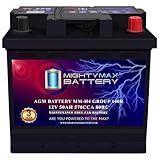
- Fast Starting Power: This 12V 50Ah 570 CCA delivers strong, steady starts is ready for any weather in any season.
- Made to Last: With its 80-minute Reserve Capacity supports longer run times and a longer overall battery lifespan.
- All Power, No Mess AGM Design: Sealed and spill-proof, the MM-H4 is built with high discharge output and deep discharge recovery to keep power steady when it counts.
- Strength That Starts on the Inside: The rugged construction resists shock, vibration, and harsh conditions, delivering reliable performance across a wide range of temperatures and tough environments.
- Tested Tough & Certified Safe: Mighty Max batteries are built in an ISO-certified facility and meet CE standards for quality, safety, and reliability
NIO says one of its battery solutions can remain in service for 15 years while retaining at least 85% capacity. That is a company claim about a specific battery solution, not a guaranteed lifespan for every semi-solid pack.
Do these 3 things before closing this tab:
1Repair Windows errors before they cause bigger problems2Fix the driver behind crashes, sound loss and screen glitches3Clear out junk files and repair common Windows errorsCold weather remains a practical question
Low-temperature range and charging are still important ownership considerations. A solid component does not automatically remove the limitations that affect lithium-ion batteries in cold conditions. Look for independent cold-weather charging and range tests rather than relying on the battery label.
Servicing and recycling may be more complicated
New cell designs can require different diagnostic equipment, disassembly procedures, handling rules, and recycling processes. NIO’s swapping ecosystem can simplify replacement for owners who have access to it, but it also creates dependence on compatible stations and continued manufacturer support.
Why the range numbers need careful reading
A headline such as “1,000 km” is not a universal measurement of how far an EV will travel. NIO and IM Motors use China-market test-cycle information, while European and American buyers may be more familiar with WLTP and EPA ratings.
- Identify the test cycle: EPA, WLTP, CLTC, NEDC, or a real-world test.
- Check the battery size: A 150-kWh pack should not be compared with a 75-kWh pack without considering consumption and weight.
- Identify the measurement level: Cell, module, pack, or complete vehicle.
- Check conditions: Temperature, speed, route, tires, payload, and weather can materially change results.
- Separate maximum from normal use: A challenge run or laboratory figure is not the same as everyday highway range.
- Compare efficiency: Examine kWh/100 km or miles per kWh, not just the range headline.
- Check the trim and ownership model: The battery may be optional, leased, subscription-based, or limited to one version.
- Confirm local support: The vehicle must be orderable, homologated, serviceable, and compatible with local charging infrastructure.
Do not convert CLTC or NEDC to EPA using one fixed universal multiplier. The relationship varies with vehicle design, test conditions, and configuration. NIO’s published material distinguishes battery sizes and China-specific test data, with caveats about road type, weather, loading, tires, and engineering results; its investor filing provides additional model and range context.
Recommended Free Tools
Why China has the most visible deployment
The available evidence shows the strongest early deployment in China. Companies there can combine domestic EV production, local battery suppliers, premium vehicle launches, and—in NIO’s case—a battery-swapping ecosystem.
That does not mean every Chinese battery announcement represents high-volume production. “Mass production” can mean pilot-line output, limited supply for one premium model, meaningful commercial production, or full-scale supply across multiple vehicle lines. Each announcement needs to be evaluated on the actual vehicle, production volume, customer deliveries, and service network.
The manufacturing challenge
Semi-solid batteries are attractive partly because they may be easier to commercialize than fully solid-state cells. They can retain some equipment, materials, and processes from conventional lithium-ion manufacturing. That makes them a potential bridge technology rather than a complete manufacturing reset.
They still face substantial challenges:
- Consistent cell quality and manufacturing yield.
- Low-resistance interfaces between solid and liquid or gel components.
- Expansion and mechanical stress in silicon-rich anodes.
- Pressure management and sealing.
- Moisture sensitivity for some electrolyte materials.
- Scaling pilot output to automotive volumes.
- Long-term warranty validation under real driving conditions.
- Cost control without sacrificing safety or durability.
CATL’s high-energy-density announcements are useful for comparison, but they do not establish that all of CATL’s products are semi-solid. Condensed-matter, sodium-ion, fast-charging, and solid-state technologies should not be treated as interchangeable; see CATL’s technology announcement.
What’s actually slowing this PC down?
Pick the symptom - the matching free tool is one click away.
Rank #4

- 12V 12AH BATTERY REPLACEMENT FOR EV RIDER S34-FD TRANSPORT - 2 PACK
When will semi-solid batteries become mainstream?
The safest answer is scenario-based:
- Already: Limited Chinese production and customer availability in selected vehicles.
- Near term: More premium, specialist, and demonstration vehicles are plausible.
- Later: Broader use depends on cost, cycle life, manufacturing yield, safety validation, and supplier capacity.
- Uncertain: Large-scale availability in the United States and Europe.
Industry forecasts can help explain possible production timelines, but they are not guarantees. The Mitsui Global Strategic Studies Institute report and FEV Consulting’s China automotive report provide useful context; individual company claims should still be checked against first-party vehicle and battery information.
Should you wait for a semi-solid EV?
Waiting may make sense if:
- You prioritize maximum highway range over purchase price.
- You are shopping for a premium EV.
- You accept an early-generation technology and potentially limited model choice.
- The relevant vehicle is actually available in your country.
- You are comfortable with a manufacturer-managed battery ecosystem or swapping network.
- A larger battery’s extra cost is justified by your driving pattern.
Do not wait solely for semi-solid technology if:
- You need a vehicle within the next year or two.
- You live outside the markets where these vehicles are sold.
- Low purchase price is your main priority.
- Home charging already covers your daily driving.
- A conventional LFP EV already provides adequate range and charging speed.
- You want independently established long-term durability data.
- You expect semi-solid technology to make EVs automatically cheaper or maintenance-free.
In many cases, the better purchase is a conventional EV with efficient aerodynamics, strong thermal management, a dependable charging curve, a competitive warranty, and adequate—not maximum—battery capacity. A heavy 150-kWh vehicle may have impressive range while increasing tire wear, braking loads, cost, and material use.
How to separate real progress from battery marketing
When a vehicle is described as “solid-state,” ask:
- Is the electrolyte fully solid, or is liquid or gel still present?
- Is the energy-density figure cell-level or pack-level?
- Is the range CLTC, NEDC, WLTP, EPA, or independently measured?
- Is the battery fitted to customer vehicles or only a pilot fleet?
- What does “mass production” mean in actual annual volume?
- Are safety results independently tested and clearly defined?
- What are the charging curve, cold-weather results, and warranty terms?
- Can owners obtain service, replacement parts, and recycling support locally?
The objection that solid-state batteries have been “coming for years” is fair—but it often refers to fully solid-state batteries. Semi-solid designs can reach production sooner because they are an incremental change from liquid-electrolyte lithium-ion systems.
Free tools Windows power users keep installed
One-click scans. No signup required.
The objection that the technology is “just marketing” is partly valid because manufacturers use the labels inconsistently and many specifications are promotional. But NIO’s 150-kWh program shows that at least some semi-solid technology has progressed into a vehicle battery system rather than remaining a laboratory concept.
Frequently Asked Questions
Are semi-solid-state batteries available in electric cars now?
Yes. The clearest documented examples are limited-production, China-market vehicles, including NIO models associated with its 150-kWh battery. Availability should not be confused with broad global or U.S. retail access.
Is a semi-solid battery the same as a fully solid-state battery?
No. Semi-solid batteries retain some liquid or gel-like electrolyte, while fully solid-state designs aim to use solid electrolyte throughout the cell. Automakers may use “solid-state” as a broader marketing term, so the underlying architecture matters.
Will semi-solid batteries make EVs cheaper?
Not necessarily. Higher energy density may arrive before lower cost, and early production can involve specialized materials, lower yields, and expensive large battery packs.
Does semi-solid mean an EV cannot catch fire?
No. It may improve certain failure modes, but battery safety depends on the chemistry, cell design, cooling system, software, crash protection, manufacturing quality, and pack controls.
Should I wait for a semi-solid EV?
Wait if maximum range and premium technology are priorities and an orderable, serviceable vehicle exists in your market. Otherwise, a well-engineered conventional LFP or NMC EV may offer better value and more predictable ownership today.
The Bottom Line
Bottom line: Semi-solid-state batteries are real and already powering a small number of Chinese EVs, but they are best understood as a bridge toward fully solid-state technology—not a sudden replacement for today’s lithium-ion batteries. Judge the complete vehicle: usable range, efficiency, charging curve, price, warranty, service network, and local availability matter more than the battery label alone.
Quick Recap
Product prices and availability are accurate as of the date/time indicated and are subject to change. Any price and availability information displayed on Amazon at the time of purchase will apply.




