Quick wins for a faster PC:
Scan for outdated or missing drivers - takes under a minuteDriver Scan →Clear out junk files and repair common Windows errorsFree Scan →Fix the driver behind crashes, sound loss and screen glitchesFind Drivers →Short answer: The Rivian-Volkswagen deal is worth up to $5.8 billion, but Volkswagen has not simply paid Rivian a single $5.8 billion cash sum. The package combines a $1 billion convertible investment, approximately $1.3 billion in consideration for Rivian technology licenses and Volkswagen’s 50% stake in the joint venture, up to $2.5 billion in additional Rivian share purchases tied to milestones, and a potentially drawable $1 billion loan facility.
The latest verified financing event in the research reviewed was Volkswagen’s $1 billion purchase of Rivian Class A shares on April 30, 2026, after the venture completed testing milestones. The safest description remains “up to $5.8 billion” because the public filings do not present one consolidated total of every dollar funded as of August 11, 2026.
As an Amazon Associate I earn from qualifying purchases.
What the $5.8 billion headline actually means
The headline figure is a maximum planned commitment, not a completed acquisition and not ordinary sales revenue for Rivian. The transaction is staged through January 2028 at the latest and is designed to release additional capital as Rivian and the joint venture hit specified financial, technical, and production milestones.
Recommended Free Tools
| Part of the package | Amount | What it covers |
|---|---|---|
| Initial Volkswagen investment | $1 billion | An unsecured convertible note invested in Rivian in June 2024. It converted into 95,377,269 Rivian ordinary shares on December 3, 2024. |
| Joint-venture closing consideration | Approximately $1.3 billion | Primarily consideration for licenses to Rivian’s existing electrical architecture and software technology, plus Volkswagen’s 50% equity interest in the joint venture. |
| Additional Rivian equity investments | Up to $2.5 billion | Milestone-linked purchases of Rivian shares. Some tranches have already been completed; the final production-linked tranche is scheduled for no later than January 3, 2028. |
| Joint-venture term-loan facility | Up to $1 billion | Debt financing available to the joint venture. It is a facility that may be drawn, not automatically a $1 billion cash payment already made. |
Those four categories add up to the announced maximum of $5.8 billion. Volkswagen’s 2025 annual report describes the remaining conditional commitment as up to $3.5 billion in equity and debt, including up to $2.5 billion intended for ordinary Rivian shares and a potentially drawable $1 billion loan.
#1 Best Overall

- High density negative paste, improves performance and increases battery life
- Enhanced life alloy or Silver Calcium stamped alloy increases cycle life and improves performance
- Calcium lead positive grid, maximizes conductivity and allows for low resistance
- Robust envelope separator with puncture resistant back, allows for increased acid circulation and prevents shorts. Improved acid circulation, helps the battery to remain cool, and extend battery life
- Vent cap design that resists acid leakage
What Rivian and Volkswagen actually formed
The legal entity is Rivian and Volkswagen Group Technologies, LLC, commonly called RV Tech. Rivian and Volkswagen each hold 50% of the joint venture.
RV Tech is intended to develop the core electronic and software systems for software-defined electric vehicles. Its work includes:
- Rivian’s zonal electrical architecture;
- electronic control units and vehicle network architecture;
- vehicle operating software and related software systems;
- over-the-air update capability; and
- future advanced automated-driving functions, subject to the capabilities eventually engineered, validated, approved, and offered in particular vehicles.
The companies intend to use Rivian’s existing zonal architecture and software stack as the foundation for a modular system that can be adapted across vehicle segments and price points. Volkswagen has said the architecture is intended for vehicles in the Western Hemisphere and could be used across Volkswagen, Audi, Scout, and other future programs. The companies’ joint-venture announcement frames the expected benefits as faster development, greater software capability, scalability, and improved research-and-development efficiency.
The Tool Desk
Outbyte Driver Updater FREEScan for outdated or missing drivers - takes under a minuteDriver Scan →Outbyte PC Repair FREEClear out junk files and repair common Windows errorsFree Scan →Why a 50/50 venture is consolidated by Rivian
There is an important accounting distinction. Rivian’s 2026 annual report identifies RV Tech as a consolidated variable-interest entity and Rivian as its primary beneficiary for accounting purposes. The filing says Rivian’s appointed co-CEO directs the venture’s technical strategy and execution.
That accounting treatment does not mean Rivian owns more than 50% of RV Tech. The companies’ legal ownership is still equal; the consolidation reflects who is considered to control the venture’s relevant activities for financial-reporting purposes.
Details about the venture’s structure and accounting treatment are set out in Rivian’s 2026 annual report.
How the staged funding has progressed
June 2024: Volkswagen makes the initial $1 billion investment
Volkswagen initially invested $1 billion in Rivian through an unsecured convertible note in June 2024. The note later converted into 95,377,269 Rivian ordinary shares on December 3, 2024, according to Volkswagen’s annual report.
Windows Errors? Fix Them Before They Spread
Repair common Windows errors and clear accumulated junk for a smoother, more stable PC - no reinstall needed.Free scan · no reinstallCrashes, No Sound, or Screen Glitches?
Random freezes, missing sound and display glitches usually trace back to one bad driver. Find and replace yours safely.Free scan · under a minuteRank #2

- Fast Starting Power: This 12V 70Ah 760 CCA delivers strong, steady starts is ready for any weather in any season.
- Made to Last: With its 120-minute Reserve Capacity supports longer run times and a longer overall battery lifespan.
- All Power, No Mess AGM Design: Sealed and spill-proof, the MM-H6 is built with high discharge output and deep discharge recovery to keep power steady when it counts.
- Strength That Starts on the Inside: The rugged construction resists shock, vibration, and harsh conditions, delivering reliable performance across a wide range of temperatures and tough environments.
- Tested Tough & Certified Safe: Mighty Max batteries are built in an ISO-certified facility and meet CE standards for quality, safety, and reliability
A convertible investment is not the same as a conventional loan that Rivian must repay at maturity if it converts. Once converted, it becomes equity ownership and can increase the investor’s stake while adding to the company’s share count.
November 2024: The joint venture launches
The companies finalized and launched RV Tech on November 12–13, 2024, announcing a total transaction size of up to $5.8 billion.
At closing, Volkswagen invested approximately $1.3 billion, principally for licenses to Rivian’s existing architecture technology and for its 50% interest in the joint venture. Rivian separately reported receiving approximately $1.295 billion for intellectual property licensed to Volkswagen.
December 2024: The convertible note becomes Rivian equity
On December 3, 2024, the initial convertible note converted into the 95,377,269 ordinary shares described above. This completed the first stage of Volkswagen’s direct equity investment in Rivian.
What’s actually slowing this PC down?
Pick the symptom - the matching free tool is one click away.
March and June 2025: The financial milestone is met
Rivian says the financial milestone was achieved on March 31, 2025. On June 30, 2025, Volkswagen provided another $1 billion. In exchange, Rivian issued $750 million of Class A common stock; Rivian recorded the remaining $250 million as a premium or deferred-revenue component under the transaction terms.
This is one reason the headline should not be read as a simple sequence of cash infusions all classified in the same way on Rivian’s income statement. The transaction mixes equity issuance, technology-license consideration, and amounts accounted for under the joint-venture arrangements.
March and April 2026: Testing milestones unlock another $1 billion
RV Tech announced on March 27, 2026, that it had successfully completed winter testing for its production-intent zonal architecture. The reference vehicles were associated with Volkswagen, Audi, and Scout and were evaluated over several months in Phoenix, Arizona, and Arjeplog, Sweden.
Rank #3

- Premium Batteries CR2032 Replacement are compatible with most 2003-2024 Volkswagen key fobs remotes. Possiblly compatible with VW key fobs before 2003; check fitment guide.
- Fast & Easy Self-Installation: Replace key fob battery in minutes; no programming required. Check the detailed guide below in the description.
- Industrial-Strength Batteries: Superior performance and lifespan; compatible with the Volkswagen car models mentioned below in the description.
- More Value: Includes batteries, ensuring long-lasting performance for your key fobs, remotes, and more (tons of uses).
- Disclaimer: Check fitment guide in images and description to guarantee compatibility with VW key fob model. Key fob batteries use by date is: 12/31/2033 (8-year shelf life).
The testing covered hardware-software interaction for all-wheel drive, traction control, driving performance, and over-the-air functionality. Volkswagen reported hundreds of tests and validation cycles. Rivian’s subsequent April 30, 2026 Form 8-K states that the required testing milestones had been achieved in March.
Free tools Windows power users keep installed
One-click scans. No signup required.
On April 30, Volkswagen provided another $1 billion, and Rivian issued 62,889,522 Class A shares at $15.90 per share. For existing Rivian shareholders, this is an equity issuance rather than operating revenue: it brings additional capital to Rivian but also increases the number of shares outstanding.
By January 3, 2028: The production-linked tranche
Rivian’s filing describes a further $460 million payment in exchange for $250 million of Class A common stock when the start-of-production milestone is reached, or on January 3, 2028, at the latest, depending on which event occurs first under the agreement.
The public documents identify this as the final stated milestone-linked tranche in the structure. Whether all of the potential funding is ultimately drawn depends on the applicable contractual conditions and milestones.
What has—and has not—been paid
The most accurate way to discuss the money is to separate four different financial concepts:
- Cash or other consideration paid to Rivian: This includes the initial convertible investment, the consideration associated with the technology licenses, and milestone-linked purchases of Rivian shares.
- Funding committed to RV Tech: The joint venture has its own capital and operating needs, including the potential $1 billion term-loan facility.
- Equity consideration: When Volkswagen receives Rivian shares in exchange for funding, the transaction strengthens Rivian’s balance sheet but is not ordinary revenue from selling vehicles or software services.
- Development fees: Fees paid to support work on the shared technology stack are separate from the $5.8 billion headline commitment.
For that reason, these formulations are accurate:
- Accurate: “Volkswagen and Rivian have announced a joint-venture package worth up to $5.8 billion.”
- Accurate: “The deal combines equity investments, technology-license consideration, joint-venture funding, and debt financing.”
- Misleading: “Volkswagen paid Rivian $5.8 billion in cash.”
- Misleading: “Rivian booked $5.8 billion in sales from Volkswagen.”
The filings reviewed do not provide one single consolidated figure for the cumulative amount funded through August 11, 2026. The individual tranches and their accounting treatment are disclosed separately, so the maximum-commitment language is more reliable than claiming that the full $5.8 billion has already changed hands.
How RV Tech’s development costs are shared
The venture’s operating economics extend beyond the headline investment. Rivian’s annual report says that development services benefiting the general technology stack are funded 75% by Volkswagen and 25% by Rivian through 2028.
Rank #4

- Fast Starting Power: This 12V 60Ah 680 CCA delivers strong, steady starts is ready for any weather in any season.
- Made to Last: With its 100-minute Reserve Capacity supports longer run times and a longer overall battery lifespan.
- All Power, No Mess AGM Design: Sealed and spill-proof, the MM-H5 is built with high discharge output and deep discharge recovery to keep power steady when it counts.
- Strength That Starts on the Inside: The rugged construction resists shock, vibration, and harsh conditions, delivering reliable performance across a wide range of temperatures and tough environments.
- Tested Tough & Certified Safe: Mighty Max batteries are built in an ISO-certified facility and meet CE standards for quality, safety, and reliability
Beginning in 2029, the parties are expected to share those fees equally. Volkswagen is also expected to pay an additional $100 million per year above its equal share because it has the larger vehicle portfolio. Work that benefits only one party is to be paid entirely by that party.
This arrangement gives RV Tech a continuing funding mechanism while the shared architecture is developed. It also means that the eventual financial impact of the partnership cannot be judged solely by adding the publicly advertised investment headline.
Why Volkswagen wants the partnership
Volkswagen’s strategic goal is to gain access to Rivian’s software and zonal electrical architecture without developing every element independently. A common architecture could allow several brands to share underlying electronics and software while retaining different vehicle designs, features, and brand identities.
The potential advantages for Volkswagen include:
- Development speed: A mature architecture may shorten the time required to develop future software-defined EV platforms.
- Software capability: Rivian brings experience with a centralized software stack and over-the-air vehicle updates.
- Scale: A modular system could be adapted to multiple vehicle sizes, prices, and brands.
- Cost efficiency: Shared engineering work could reduce duplicated research and development across programs.
- Regional product coverage: Volkswagen has described the collaboration as focused on vehicles for the Western Hemisphere.
Those are strategic reasons for entering the deal, not proof that every Volkswagen, Audi, or Scout EV will use identical software, launch on schedule, or deliver the financial savings the companies hope to achieve.
Why the partnership matters to Rivian
For Rivian, the arrangement provides more than a one-time financing event. It gives the company staged capital, a major technology customer, and a route to spread its electrical architecture and software beyond Rivian-branded vehicles.
The partnership may help Rivian:
- fund development while it scales its own vehicle operations;
- generate technology-license and development-service activity;
- use Volkswagen’s manufacturing, platform, and vehicle-program expertise;
- increase the potential volume over which its software and electrical architecture can be deployed; and
- reduce the risk that the company must finance every architecture-development expense alone.
However, the deal does not guarantee that Rivian will become profitable, that its vehicles will launch successfully, or that Volkswagen’s future programs will generate the expected demand. It also involves additional Rivian share issuance, which can dilute existing shareholders even as it provides the company with needed capital.
Do these 3 things before closing this tab:
1Scan for outdated or missing drivers - takes under a minute2Repair Windows errors before they cause bigger problems3Fix the driver behind crashes, sound loss and screen glitchesWhat the winter-testing milestone proves—and what it does not
The March 2026 announcement is meaningful evidence that RV Tech completed a defined development and validation stage. Testing in Phoenix and Arjeplog exposed the production-intent zonal architecture to different operating conditions and examined systems including all-wheel drive, traction control, vehicle dynamics, and over-the-air functionality.
Best Value
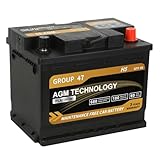
- ✅ Perfect Fit & Compatibility: BCI Group Size 47 (H5), 12V 60Ah, 680CCA, 100RC. Dimensions: 9.52" L x 6.89" W x 7.48" H. Terminal: Tapered terminal (Left negative (-), Right positive (+)). Ensure proper fit by comparing the size, terminal position, and CCA with your original battery. This ensures compatibility and avoids any fitment issues for your vehicle.
- ✅ Reliable Starting Power in All Conditions: Delivers 680 Cold Cranking Amps (CCA) for reliable engine starts, even in freezing weather. This automotive battery is built to perform consistently within a wide temperature range from -22°F to 158°F, withstanding short-term extremes from -40°F to 75°F, ensuring maximum performance no matter the weather.
- ✅ Advanced AGM Technology for High Performance: Specially designed for vehicles with start-stop technology and those requiring greater power, this AGM battery delivers up to 2X the cycle life of conventional batteries. With its high-density negative paste, it ensures improved conductivity, longer battery life, and faster recharge times. Maintenance-free design—no need to add liquid or water.
- ✅ Durable & Safe Design: This group 47 battery is 18X more vibration-resistant than standard batteries, ensuring a longer service life and reliable performance. Its leak-proof, non-spillable design offers enhanced safety, and the absence of free acid guarantees stable performance, preventing acid leakage and internal corrosion. Ideal for tough conditions.
- ✅ Not for Deep Cycle Applications: Please note that this is a starting battery and is not designed for deep-cycle applications such as solar or marine use. It is ideal for vehicles with higher electrical accessory loads or those that need a high CCA starting battery with enhanced cyclic performance. Verify that the battery type and specifications match your vehicle's requirements.
It does not establish that:
- a final production vehicle is already available to consumers;
- a Volkswagen, Audi, Scout, or Rivian model has entered series production using the complete joint-venture stack;
- every future vehicle will provide a particular automated-driving level;
- the architecture has completed every regulatory, durability, cybersecurity, or production-validation requirement; or
- the joint venture has delivered a consumer vehicle.
Volkswagen described the tested vehicles as reference vehicles and the architecture as a foundation for future electric vehicles. The milestone should therefore be reported as successful technical testing—not as a vehicle-launch announcement.
Deal timeline at a glance
| Date | Event |
|---|---|
| June 2024 | Volkswagen makes an initial $1 billion convertible investment in Rivian. |
| November 12–13, 2024 | The companies finalize and launch RV Tech and announce a transaction worth up to $5.8 billion. |
| December 3, 2024 | The convertible note converts into 95,377,269 Rivian ordinary shares. |
| March 31, 2025 | Rivian’s financial milestone is achieved. |
| June 30, 2025 | Volkswagen provides $1 billion in the first additional milestone-linked investment. |
| November 12, 2025 | Volkswagen reports that RV Tech has more than 1,500 employees and is preparing Volkswagen, Audi, and Scout reference vehicles for winter testing. |
| March 2026 | Rivian achieves the testing milestones. |
| March 27, 2026 | RV Tech announces successful completion of winter testing. |
| April 30, 2026 | Volkswagen provides another $1 billion and receives 62,889,522 Rivian Class A shares. |
| By January 3, 2028 | The final stated $460 million production-linked payment is scheduled for the earlier of the relevant start-of-production milestone or January 3, 2028. |
What to watch next
The next meaningful questions are not simply whether Volkswagen will “pay the rest.” They are whether RV Tech converts the validated architecture into production-ready systems and whether those systems appear in actual vehicles.
- Start of production: The final stated $460 million tranche is tied to this milestone.
- Vehicle-program adoption: Watch for authoritative announcements identifying production vehicles and the specific technology they use.
- Software delivery: Future releases should clarify which over-the-air, electronic-control, and driver-assistance features reach customers.
- Funding and dilution: Rivian’s filings will show additional share issuances and their effect on the company’s capital structure.
- Operating economics: Development fees and the division of costs after 2028 will indicate how the venture is being funded beyond the initial headline commitment.
- Loan utilization: The existence of a $1 billion facility does not tell us whether the joint venture has drawn the full amount.
Sources and terminology
The transaction structure and milestone history are based primarily on Volkswagen’s 2025 annual report, Rivian’s 2026 annual report, and Rivian’s April 30, 2026 Form 8-K. The companies’ technical objectives and winter-testing update come from Volkswagen’s announcements about the joint venture and RV Tech’s winter testing.
Frequently Asked Questions
Did Volkswagen pay Rivian the full $5.8 billion?
No. The $5.8 billion is the maximum planned value of a staged package. It includes equity investments, technology-license consideration, a joint-venture interest, and a potentially drawable loan facility. The public filings reviewed do not provide one consolidated total showing that the full amount has been funded.
What is RV Tech?
RV Tech is the legal name commonly used for Rivian and Volkswagen Group Technologies, LLC. Rivian and Volkswagen each own 50%. The venture is developing electrical architecture, electronic control systems, vehicle networking, and software for future software-defined electric vehicles.
Does winter testing mean a Volkswagen or Scout vehicle using Rivian technology is on sale?
No. The March 2026 testing announcement concerned production-intent reference vehicles and a development milestone. It did not announce a completed consumer vehicle, a production launch, or a specific automated-driving capability.
How does the deal affect Rivian shareholders?
Milestone-linked investments that are exchanged for Rivian shares provide capital to Rivian but increase the number of shares outstanding. The effect on individual shareholders depends on the company’s total share count, valuation, future performance, and the terms of each issuance.
The Bottom Line
Bottom line: Rivian and Volkswagen have created a 50/50 technology joint venture backed by a staged package worth up to $5.8 billion. The figure is best understood as a mixture of equity, intellectual-property licensing, joint-venture funding, and possible debt—not as a $5.8 billion cash payment or proof that a finished joint-venture vehicle is already on the road.
Quick Recap
Product prices and availability are accurate as of the date/time indicated and are subject to change. Any price and availability information displayed on Amazon at the time of purchase will apply.




