What’s actually slowing this PC down?
Pick the symptom - the matching free tool is one click away.
PC-12 is the development effort behind the next heavy-duty diesel engine-oil category transition, now described as API CL-4 and API FB-4. First licensing for both categories is stated as January 1, 2027. That is a category licensing date—not a deadline for every off-highway machine to switch oils. Equipment makers and fleet service teams should prepare clear, model-specific guidance on approved categories and viscosity grades.
What PC-12 means
“PC” means “proposed category” in the development name. The new categories are CL-4 and FB-4; the earlier labels PC-12A and PC-12B have been superseded in current descriptions by those category names. The transition concerns oil performance specifications and product development. It does not, by itself, change the service instructions for a particular engine.
For context, API says CK-4 applies to high-speed four-stroke diesel engines designed to meet 2017 model-year on-highway and Tier 4 non-road standards, as well as earlier model-year engines. API describes FA-4 as limited to certain XW-30 oils for selected high-speed four-stroke engines designed for 2017 model-year on-highway greenhouse-gas standards, and tells users to consult the engine maker. Those existing categories illustrate why a new category name alone cannot determine which oil belongs in a specific machine. API’s category guidance
How CL-4 and FB-4 differ
| Category | Role in the transition | Viscosity direction | Compatibility and off-highway implications | First licensing |
|---|---|---|---|---|
| CL-4 | New C-category described as replacing CK-4 | Higher-viscosity branch in Shell’s explanation | Shell describes it as backward-compatible with CK-4 and relevant to construction and off-highway equipment. That category-level description is not approval for every engine or grade. | January 1, 2027, as stated by Shell |
| FB-4 | New F-category described as replacing FA-4 | Lower-viscosity branch intended for selected newer platforms | Do not assume backward compatibility or general off-highway suitability; use only where the engine maker specifies it. | January 1, 2027, as stated by Shell |
Shell says CL-4 oils are being developed for “a wide range of heavy-duty applications, including construction and off-highway equipment.” That is Shell’s explanation of the category’s intended reach, not an API guarantee that every off-highway engine can use any CL-4 oil. Shell’s PC-12 explanation
Recommended Free Tools
#1 Best Overall
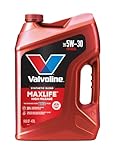
- Formulated for engines with 75,000 miles or more, Valvoline MaxLife High Mileage synthetic blend is formulated with seal conditioners to help prevent oil leaks and reduce oil consumption
- Delivers 20% better wear protection and 15% better sludge defense than industry standards to help prevent engine breakdown
- Extra detergents safeguard against friction, corrosion and deposits to keep high-mileage engines clean
- Advanced friction-fighting additives help maximize performance and improve fuel efficiency
- Provides performance benefits for high mileage, new and re-built engines alike
Why off-highway OEMs need to prepare
Off-highway manufacturers and service organizations will need to clarify factory-fill choices, lubricant approvals, service-manual language, dealer advice, and maintenance instructions for mixed fleets. The transition is particularly relevant where a fleet includes engines of different ages or designs: one category change does not establish a single oil choice for all of them.
Chevron Principal Engineer Shawn Whitacre, chair of the ASTM Heavy-Duty Engine Oil Classification Panel, described mixed-age fleets and off-highway needs as considerations in category development: “One of the requirements we have is to account for the needs of fleets that have a mix of older and newer vehicles, and to be mindful of the off-highway segment that does not have the same fuel economy demands as on-highway trucks.” Chevron’s March 22, 2024 PC-12 update
Rank #2

- Designed for vehicles with 75,000 miles or more, Valvoline MaxLife Full Synthetic High Mileage Motor Oil helps maximize engine life and performance for the many miles still ahead
- Formulated with seal conditioners to help prevent oil leaks, reduce oil consumption, and improve fuel economy
- Delivers 50% stronger wear protection than industry standards for superior defense against friction and wear
- Provides 20% stronger sludge defense than industry standards to protect against harmful buildup and deposits
- Offers 2.5X better heat protection than industry standards to safeguard engines in extreme conditions
This makes “on notice” a call to publish usable guidance, not evidence that every OEM has selected a category or issued a rollout schedule. No model-by-model off-highway approval list is established here.
What the 2027 date does—and does not—tell you
Shell states January 1, 2027 as the first licensing date for CL-4 and FB-4. Licensing is not the same as immediate, universal shelf availability: the date does not establish when every brand, viscosity grade, or distributor will offer product. Chevron’s March 2024 article projected availability around first licensing, but that older projection is not confirmation of current inventory.
The Tool Desk
Outbyte Driver Updater FREEScan for outdated or missing drivers - takes under a minuteDriver Scan →Outbyte PC Repair FREERepair Windows errors before they cause bigger problemsFix Now →Rank #3
- Formulated for engines with 75,000 miles or more, Valvoline MaxLife High Mileage synthetic blend is formulated with seal conditioners to help prevent oil leaks and reduce oil consumption
- Delivers 20% better wear protection and 15% better sludge defense than industry standards to help prevent engine breakdown
- Extra detergents safeguard against friction, corrosion and deposits to keep high-mileage engines clean
- Advanced friction-fighting additives help maximize performance and improve fuel efficiency
- Provides performance benefits for high mileage, new and re-built engines alike
Chevron’s March 2024 account also linked development to anticipated 2027 regulatory requirements and cited a NOx limit of 0.035 grams per horsepower-hour, described then as 75% below the allowance in effect at the time. That is historical context from Chevron’s article, not a statement of current law for every jurisdiction or off-highway application. Chevron’s account of the 2027 driver
How to choose oil for equipment you operate
- Check the engine manual and current OEM lubricant bulletin. Use the specified performance category and viscosity grade; API advises users to follow the vehicle or engine maker’s recommendations. API category guidance
- Match both requirements. A category-level backward-compatibility description does not override a specific manufacturer approval, viscosity requirement, or service instruction.
- Do not infer FB-4 suitability from the PC-12 name. It is the lower-viscosity branch for selected newer platforms, not a universal replacement for current or legacy engine oils.
- Ask the OEM or authorized service channel when guidance is unclear. For mixed fleets, keep requirements tied to the engine or machine model rather than adopting one oil choice fleet-wide.
- Confirm actual product status before purchasing for a future service. The first licensing date alone does not confirm that a particular licensed product is available from a local supplier.
Benefits are goals, not universal fleet results
Sources describe improved oxidation resistance and wear protection, support for aftertreatment durability, and potential fuel-economy opportunities from lower-viscosity oils as design aims or anticipated features. Chevron said improved oxidation stability might enable OEMs to extend drain intervals. That possibility is not a guaranteed interval change, measured saving, or demonstrated service-life improvement for every off-highway engine. Follow the equipment maker’s maintenance schedule unless it publishes a revised instruction for the specific application.
Quick Recap
Rank #4

- 6X better wear protection on critical engine parts than industry standards**
- 1.3X better sludge protection than industry standards*
- 3X Stronger against viscosity breakdown than leading full synthetic^
- Protection for 10,000 miles between oil changes
- Meets or exceeds the following specifications: API SP/SN PLUS/SN | ILSAC GF-6 | GM dexos1 Gen 3 | Meets Ford WSS-M2C947-B1 | Meets Ford WSS-M2C962-A1 |
Product prices and availability are accurate as of the date/time indicated and are subject to change. Any price and availability information displayed on Amazon at the time of purchase will apply.




